


You glance in the mirror and freeze. A vivid red patch stares back from the white of your eye. No pain, no warning, just an alarming splash of colour that makes you wonder what happened while you slept. This startling sight is a subconjunctival haemorrhage, where a tiny blood vessel bursts beneath the clear surface of your eye. Despite the dramatic appearance, most cases heal on their own within two weeks and cause no lasting damage.
The good news is that you can usually manage this at home with simple steps: rest, gentle care and watching for any changes. In rare cases, though, a busted blood vessel signals something more serious that needs medical attention. Knowing the difference protects your vision and gives you peace of mind.
This guide walks you through five practical steps to handle a broken blood vessel in your eye. You’ll learn what causes it, how to spot warning signs, ways to speed healing and when to book an appointment with an eye specialist. By the end, you’ll know exactly what to do next.
What it is, causes, and how serious it is
A subconjunctival haemorrhage is the medical term for a broken blood vessel in your eye. This happens when a tiny capillary beneath the conjunctiva (the clear membrane covering the white of your eye) ruptures and leaks blood. The blood then pools in the space between the conjunctiva and the sclera, creating that alarming red patch you saw this morning. Your conjunctiva cannot absorb blood quickly, so the redness stays visible until your body gradually reabsorbs it over the coming days or weeks.

Why blood vessels burst overnight
Several everyday actions can cause these delicate vessels to break while you sleep or just before you wake up. Straining during a bowel movement, violent coughing fits or powerful sneezing can spike the pressure in your blood vessels enough to rupture them. Rubbing your eyes vigorously during the night (often due to allergies or dry eyes) creates friction that damages capillaries. Some people unknowingly rub their eyes in their sleep, especially if they suffer from conditions like blepharitis or seasonal hay fever.
Blood-thinning medications such as aspirin, warfarin or newer anticoagulants make bleeds more likely because they prevent blood from clotting efficiently. High blood pressure weakens vessel walls over time, leaving them vulnerable to sudden bursts. Diabetes affects small blood vessels throughout your body, including those in your eyes. Physical trauma (even minor bumps to your face or head) can trigger a bleed, as can forceful vomiting or heavy lifting at the gym.
When you woke up with a busted blood vessel in your eye, any of these triggers might have been the cause, often without you realising it happened.
Contact lens wearers face higher risk because lenses can irritate the eye’s surface, and insertion or removal sometimes scrapes the conjunctiva. Age plays a role too: after 65, your blood vessels become more fragile and prone to breaking.
How serious it really is
The vast majority of subconjunctival haemorrhages are completely harmless and resolve without treatment. Your vision stays clear because the blood sits outside your eyeball on the surface, not inside the eye or across your cornea. You should feel no pain, no itching and notice no discharge. Think of it like a bruise on your skin: it looks dramatic but heals naturally as your body breaks down and reabsorbs the blood.
Complications are rare but do exist. If you experience sharp eye pain, vision changes, light sensitivity or the red patch appeared after significant head trauma, you need urgent medical assessment. These signs could indicate more serious conditions like hyphema (blood inside the eye’s anterior chamber) or damage to deeper structures. Frequent recurrences suggest underlying clotting disorders or uncontrolled hypertension that require investigation by your doctor.
Step 1. Check for urgent warning signs
Before you settle in to wait out the healing process, you need to rule out serious complications that demand immediate medical attention. Most subconjunctival haemorrhages cause no other symptoms, but a small percentage signal deeper problems that threaten your vision. Taking five minutes now to check yourself systematically can prevent permanent damage and give you confidence about what to do next.
Perform a careful self-assessment
Stand in front of a mirror in good lighting and examine your affected eye closely. Look at the size and location of the red patch: is it confined to one area, or does it spread around your entire eyeball? Note whether both eyes are affected or just one. Check if you can see any swelling around your eyelid or if the skin near your eye looks bruised.
Cover your unaffected eye and test your vision in the affected eye. Read text on your phone or a book at normal distance. Your vision should remain completely clear with no blurriness, dark spots or missing areas in your field of view. Move your eyes in all directions (up, down, left, right) and confirm that movement feels normal without pain or restriction. Gently press on your closed eyelid: you should feel no tenderness or unusual pressure inside your eye.
Recognise symptoms that need urgent care
Seek immediate medical attention if you experience sharp or throbbing eye pain that persists or worsens over the first few hours. This differs from mild scratchiness, which is normal. Visit an emergency department straight away if you notice vision changes such as blurred sight, double vision, new floaters (dark specks drifting across your view) or flashes of light.
Other red flags include excessive tearing, thick discharge (yellow or green), significant swelling of your eyelid or the feeling that something is stuck in your eye that won’t flush out. If the red patch appeared immediately after head trauma or a direct blow to your face, you need assessment even without other symptoms, as internal injuries may not show up immediately.
Woke up with a busted blood vessel in eye after vomiting, lifting weights or a head injury? Treat this as urgent and book an appointment with your GP or visit an emergency department today.
People taking blood thinners who develop multiple bleeds in both eyes within days should contact their doctor to review their medication dosage. Diabetics who notice frequent eye bleeds need to discuss blood sugar control with their healthcare team, as poor glucose management weakens blood vessels throughout your body.
Step 2. Soothe and protect your eye at home
Once you’ve confirmed that your symptoms don’t require urgent care, you can start simple treatments at home to support healing and ease any mild discomfort. Most subconjunctival haemorrhages heal naturally without medical intervention, but the right home care can reduce irritation and help you feel more comfortable while your body reabsorbs the blood. The following steps work best when you start them within the first day of noticing the redness.
Apply cold compresses in the first 24 hours
Place a clean, soft cloth under cold running water, wring it out thoroughly and fold it into a comfortable pad. Close your affected eye and rest the damp cloth gently over your eyelid for five to ten minutes. Remove the compress for five minutes, then repeat the cycle three to four times in one sitting. You can do this every few hours during the first day after you woke up with a busted blood vessel in your eye.

Cold therapy helps by constricting blood vessels around the injury site, which may slow any ongoing bleeding and reduce mild swelling if present. Never apply ice directly to your eyelid, as extreme cold can damage delicate skin. Always use a barrier like a cloth or a commercial cold pack wrapped in a thin towel. If you notice the cold causes discomfort or makes your eye water excessively, stop the treatment immediately.
Switch to gentle warm compresses
After the first 24 hours have passed, swap to warm compresses to encourage your body’s natural healing process. Soak a clean flannel or cotton pad in warm (not hot) water, test the temperature on your inner wrist to ensure it won’t burn your skin, then place it over your closed eyelid for five to ten minutes. The warmth dilates blood vessels and improves circulation, helping your system break down and reabsorb the trapped blood faster.
Repeat this warm compress routine two to three times daily throughout the healing period. You can continue until the redness fades completely, which typically takes seven to fourteen days for small bleeds.
Gentle warmth speeds healing by boosting blood flow to the area, but excessive heat can irritate your eye further, so always check the temperature first.
Use lubricating drops for comfort
Purchase preservative-free artificial tears from any pharmacy without a prescription. These drops add moisture to your eye’s surface and wash away irritants that might cause you to rub your eye. Instil one to two drops into your affected eye three to four times throughout the day, or more often if you work at a computer screen or in air-conditioned environments that dry your eyes.
Tilt your head back slightly, pull down your lower eyelid to create a small pocket, and squeeze the bottle gently so one drop falls into that pocket. Close your eye for a few seconds to spread the liquid across your eyeball. Avoid touching the dropper tip to your eye or eyelashes to prevent contamination. Refrigerating the drops can add a soothing, cooling sensation when you apply them.
Protect your eye from irritation
Keep your hands away from your face and resist the urge to rub your affected eye, even if it feels slightly scratchy. Rubbing can rupture more capillaries or introduce bacteria that lead to infection. If you wear contact lenses, switch to glasses until the redness disappears completely, as lenses can trap debris against your eye and slow healing.
Wear wraparound sunglasses outdoors to shield your eye from dust, wind and UV rays. Avoid smoky rooms, chlorinated swimming pools and situations where airborne particles might irritate your eye. Get adequate sleep each night, as rest supports your immune system and tissue repair processes.
Step 3. Watch how the redness changes
Monitoring your eye’s healing progress helps you confirm that recovery is on track and alerts you to any problems that need professional attention. A subconjunctival haemorrhage follows a predictable healing pattern much like a bruise on your skin, with the blood gradually breaking down and changing colour before it disappears completely. Tracking these changes each day gives you peace of mind and helps you identify the rare cases where healing stalls.
Check your eye at the same time daily
Set aside two minutes each morning to examine your affected eye in good natural light near a window. Use the same mirror at roughly the same time to ensure consistent comparisons. Take a photo with your smartphone held at the same distance each day, as pictures provide an objective record that’s easier to compare than memory alone. Note the size of the red patch and whether it’s shrinking, staying the same or spreading.
Record your observations in a simple table on your phone or paper:
| Date | Colour | Size | Any symptoms |
|---|---|---|---|
| Day 1 | Bright red | 5mm patch | Mild scratchiness |
| Day 3 | Dark red | Same | None |
| Day 7 | Pink/yellow | Smaller | None |
This log becomes invaluable if you need to discuss your progress with a doctor later.
Understand the typical healing timeline
Small bleeds (a few millimetres across) usually fade within seven to ten days, while larger patches can take two to three full weeks. During the first few days after you woke up with a busted blood vessel in your eye, the redness may look slightly darker before it starts to lighten. This darkening is normal as blood settles and begins to break down.
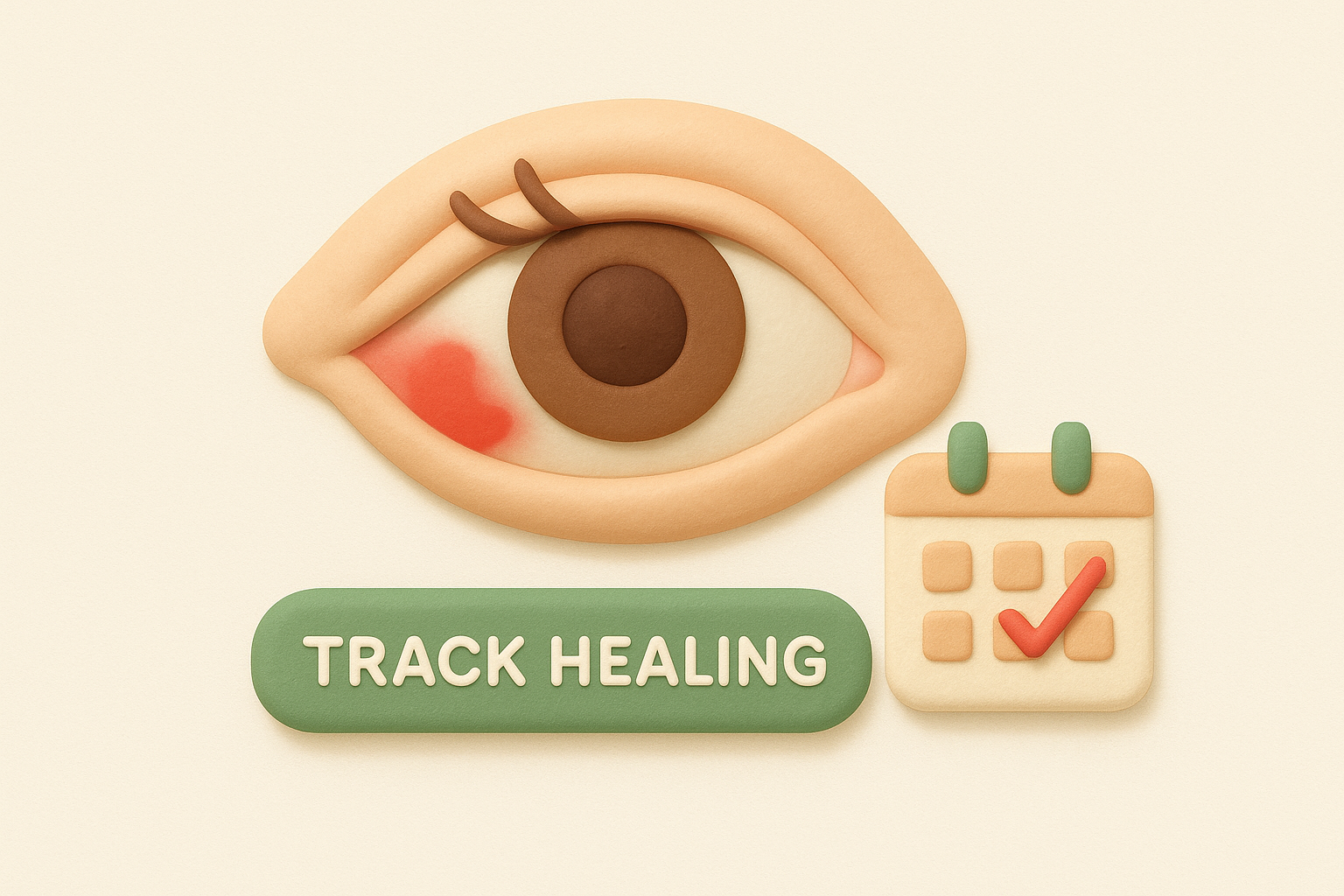
Around day five to seven, you’ll notice the bright red shifts to pink or rust-coloured, then progresses to a yellowish tint similar to an ageing bruise. The patch shrinks from the edges inward, often leaving a small yellow spot at the centre that fades last.
Your body reabsorbs blood at its own pace, so don’t worry if your eye takes the full three weeks to clear completely.
Recognise when to seek help
Contact your GP or eye specialist if the redness hasn’t improved at all after fourteen days, or if it spreads and becomes larger rather than smaller. New symptoms appearing during healing, such as pain, vision changes or discharge, warrant immediate assessment regardless of how long you’ve been monitoring.
Step 4. Tackle causes and reduce future risk
Understanding what caused your subconjunctival haemorrhage helps you prevent another one from happening. While some bleeds occur randomly, many result from identifiable triggers that you can modify or avoid with simple changes to your daily routine. Taking action now reduces your risk of waking up with a busted blood vessel in your eye again, protects your overall health and gives you control over factors that stress your blood vessels.
Manage blood pressure and blood thinners
Check your blood pressure at home using an automatic monitor or book an appointment with your GP for a reading. High blood pressure weakens blood vessel walls throughout your body, including those delicate capillaries in your eyes. Aim for readings below 120/80 mm Hg for most adults, though your doctor may set different targets based on your age and health conditions.
If you take blood-thinning medications such as aspirin, warfarin, rivaroxaban or apixaban, review your dosage with your GP or pharmacist. These drugs prevent dangerous clots but also make bleeding more likely. Your healthcare team can assess whether your current dose remains appropriate or needs adjustment. Never stop taking prescribed blood thinners without medical supervision, as this can trigger serious complications like stroke or heart attack.
Simple lifestyle changes support healthy blood pressure: reduce your salt intake to less than 5 grams daily, exercise for 30 minutes most days of the week, limit alcohol to two standard drinks per day and maintain a healthy weight for your height.
Address straining and sudden pressure spikes
Constipation forces you to strain during bowel movements, spiking pressure in your blood vessels and rupturing fragile capillaries. Increase your fibre intake to 25-30 grams daily by eating more vegetables, fruits, whole grains and legumes. Drink at least eight glasses of water throughout the day to soften stools naturally. If constipation persists, ask your pharmacist about gentle stool softeners.
Control severe coughing fits by treating underlying respiratory conditions promptly. See your GP if you develop a persistent cough that lasts more than three weeks. Seasonal allergies that trigger sneezing need management with antihistamines or nasal sprays prescribed by your doctor.
When you reduce straining and pressure spikes, you protect those tiny blood vessels from the sudden forces that cause them to burst.
Protect your eyes from trauma and irritation
Stop rubbing your eyes, even when they feel itchy or tired. Treat dry eyes with preservative-free artificial tears four times daily, especially if you work at computers for long periods. Manage allergies with antihistamine eye drops to reduce the urge to rub. If you wake at night rubbing your eyes unconsciously, apply lubricating ointment before bed to keep your eyes moist.
Wear protective eyewear during activities that risk eye injury: safety glasses for DIY projects, sports goggles for cricket or squash and wraparound sunglasses when mowing the lawn or working in dusty environments. Switch contact lenses to glasses if you frequently experience irritation, and always wash your hands before handling lenses.
Track patterns to identify your triggers
Keep a simple diary recording each bleed’s date and what you were doing in the 24 hours before it appeared. Note activities like heavy lifting, violent sneezing, alcohol consumption or medication changes. After three or four entries, patterns emerge that reveal your personal triggers, allowing you to modify specific behaviours that put you at risk.
Step 5. Know when to see an eye specialist
While most subconjunctival haemorrhages heal without medical intervention, certain situations demand professional assessment from an ophthalmologist. Recognising these scenarios early protects your vision and identifies underlying conditions that need treatment. Your GP can provide an initial evaluation, but an eye specialist has specialised equipment and training to diagnose serious problems that general practitioners might miss.
Signs that need specialist assessment
Book an appointment with an eye specialist if the redness persists beyond three weeks without any visible improvement, as this suggests complications or an underlying condition preventing normal healing. Seek assessment if you develop recurrent bleeds (three or more episodes within six months) even when you cannot identify a trigger, since repeated haemorrhages may signal blood disorders, uncontrolled diabetes or other systemic problems.

You need urgent specialist care if new symptoms appear during the healing period: sudden vision loss, severe eye pain that doesn’t respond to over-the-counter pain relief, sensitivity to light or a feeling of pressure building inside your eyeball. Contact an ophthalmologist immediately if you notice blood pooling in front of your iris (the coloured part of your eye), as this indicates a hyphema rather than a simple subconjunctival haemorrhage and requires emergency treatment to prevent permanent damage.
When you experience unexplained repeat bleeds or any vision changes, specialist assessment becomes essential rather than optional.
How to book and what to expect
Ask your GP for a referral to an ophthalmologist in your area, or contact Bright Sight Eye Specialists directly to schedule a comprehensive eye examination. Bring a list of your medications, including supplements and over-the-counter drugs, plus your medical history noting conditions like diabetes, high blood pressure or clotting disorders.
During your appointment, the specialist will examine your eye using a slit lamp (a microscope with a bright light) to inspect blood vessels and check for tears or abnormalities in your conjunctiva. They may measure your intraocular pressure to rule out glaucoma and examine your retina to assess blood vessel health throughout your eye. Expect the consultation to last 30 to 45 minutes, with some tests requiring dilating drops that temporarily blur your vision.

Looking after your eyes
Most cases of waking up with a busted blood vessel in your eye resolve naturally within two to three weeks without lasting damage to your vision. The dramatic red appearance often causes unnecessary alarm, but simple home treatments like warm compresses and artificial tears support comfortable healing while your body reabsorbs the trapped blood. Following the five steps in this guide gives you a clear action plan: rule out urgent problems, protect your eye during recovery, monitor healing progress, address underlying causes and recognise when specialist care becomes necessary.
Prevention relies on managing blood pressure and medications, reducing strain during physical activities and protecting your eyes from trauma and irritation. Regular eye examinations catch early signs of diabetes, hypertension and blood vessel problems before they cause complications. If you experience recurrent bleeds, persistent redness beyond three weeks or any vision changes, schedule a comprehensive eye assessment at Bright Sight Eye Specialists to identify underlying conditions and protect your long-term eye health.