


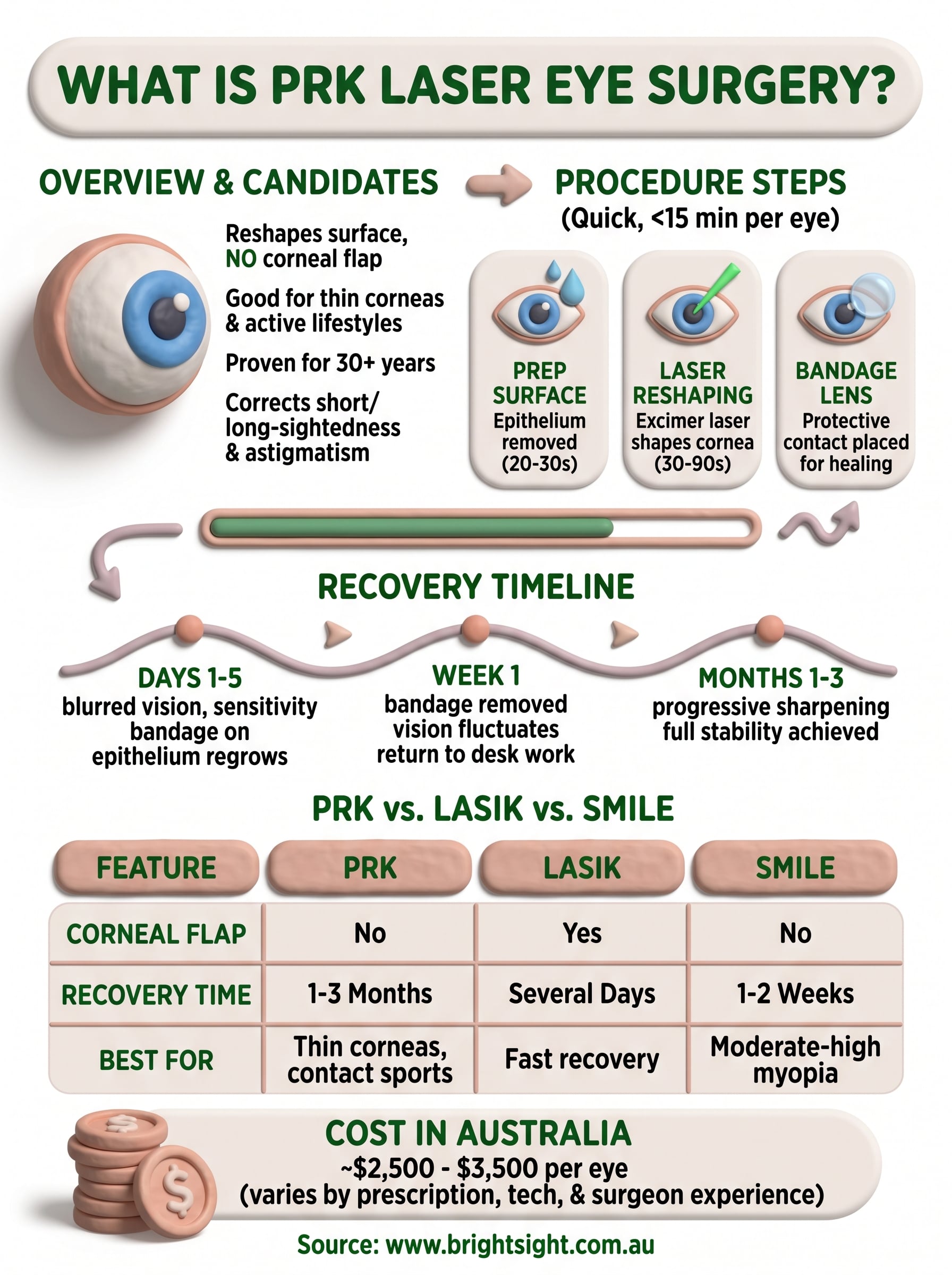
If you’ve been told you’re not a candidate for LASIK, that doesn’t mean laser vision correction is off the table. PRK (photorefractive keratectomy) laser eye surgery is a proven alternative that reshapes the cornea to correct short-sightedness, long-sightedness, and astigmatism, without creating a corneal flap. It’s been performed safely for over 30 years and remains a first-choice option for many patients.
PRK works by gently removing the outer layer of the cornea (the epithelium) before using an excimer laser to reshape the underlying tissue. The result is clearer vision without glasses or contact lenses. While recovery takes a bit longer than LASIK, the outcomes are comparable, and for people with thinner corneas or certain lifestyle needs, PRK is often the better option.
At Bright Sight Eye Specialists in Randwick, Dr. Capucine Odouard performs PRK and other refractive laser procedures at Sydney Surgical Centre and Sydney Eye Hospital. This article covers how PRK works step by step, what recovery actually looks like, how it compares to LASIK and SMILE, and what you can expect to pay in Australia.
Why PRK laser eye surgery matters
Understanding what is PRK laser eye surgery helps you see beyond the more familiar name of LASIK and consider which procedure genuinely suits your eyes. PRK was the first form of laser refractive surgery to gain widespread clinical use, predating LASIK by several years. Its long track record means surgeons have decades of safety data behind it, and visual outcomes are consistently comparable to those of newer procedures when patients are properly selected.
Who is a candidate for PRK?
Not everyone qualifies for LASIK, and PRK fills that gap directly. If your corneas are too thin for a LASIK flap, or if you have surface irregularities that rule out flap-based surgery, PRK is often the recommended path. It’s also the preferred choice for people in high-impact occupations or contact sports, where a corneal flap could be dislodged by physical trauma, such as military personnel, martial artists, or contact sport athletes.
People with mild to moderate short-sightedness, long-sightedness, or astigmatism typically achieve excellent results. Your surgeon at Bright Sight will assess your corneal thickness, pupil size, and overall eye health before confirming whether PRK suits your specific needs. A thorough pre-operative assessment matters here because patient selection directly influences your outcome.
PRK remains one of the most clinically validated forms of laser vision correction available, with outcomes that match LASIK over the long term.
Why the absence of a flap matters
The key structural difference in PRK is that no corneal flap is created at any stage of the procedure. Instead, the outer epithelial layer is removed, and the excimer laser works directly on the corneal surface. This eliminates the small but real risk of flap-related complications such as dislodgement, striae, or incomplete healing.
For patients with dry eye tendencies, PRK also causes less disruption to the corneal nerves compared to LASIK, which helps reduce post-operative dryness in many cases. Recovery takes longer than LASIK, but the cornea heals as a single intact structure. Many surgeons consider this a stronger long-term outcome for the right patient profile, particularly those planning physically demanding activities.
How PRK works step by step
PRK is a straightforward outpatient procedure that takes less than 15 minutes per eye. Understanding what is PRK laser eye surgery at a procedural level helps set realistic expectations before you walk through the door on the day.
Preparing the corneal surface
Your surgeon applies anaesthetic eye drops to numb the eye completely before anything else. Once the eye is comfortable and held open with a small speculum, the epithelium (the thin outer skin of the cornea) is removed. Your surgeon at Bright Sight does this either with a fine brush, a blunt instrument, or dilute alcohol solution. The process takes only 20 to 30 seconds, and you feel no pain.
The epithelium regenerates fully within a few days, which is why PRK recovery takes longer than LASIK.
The laser reshaping stage
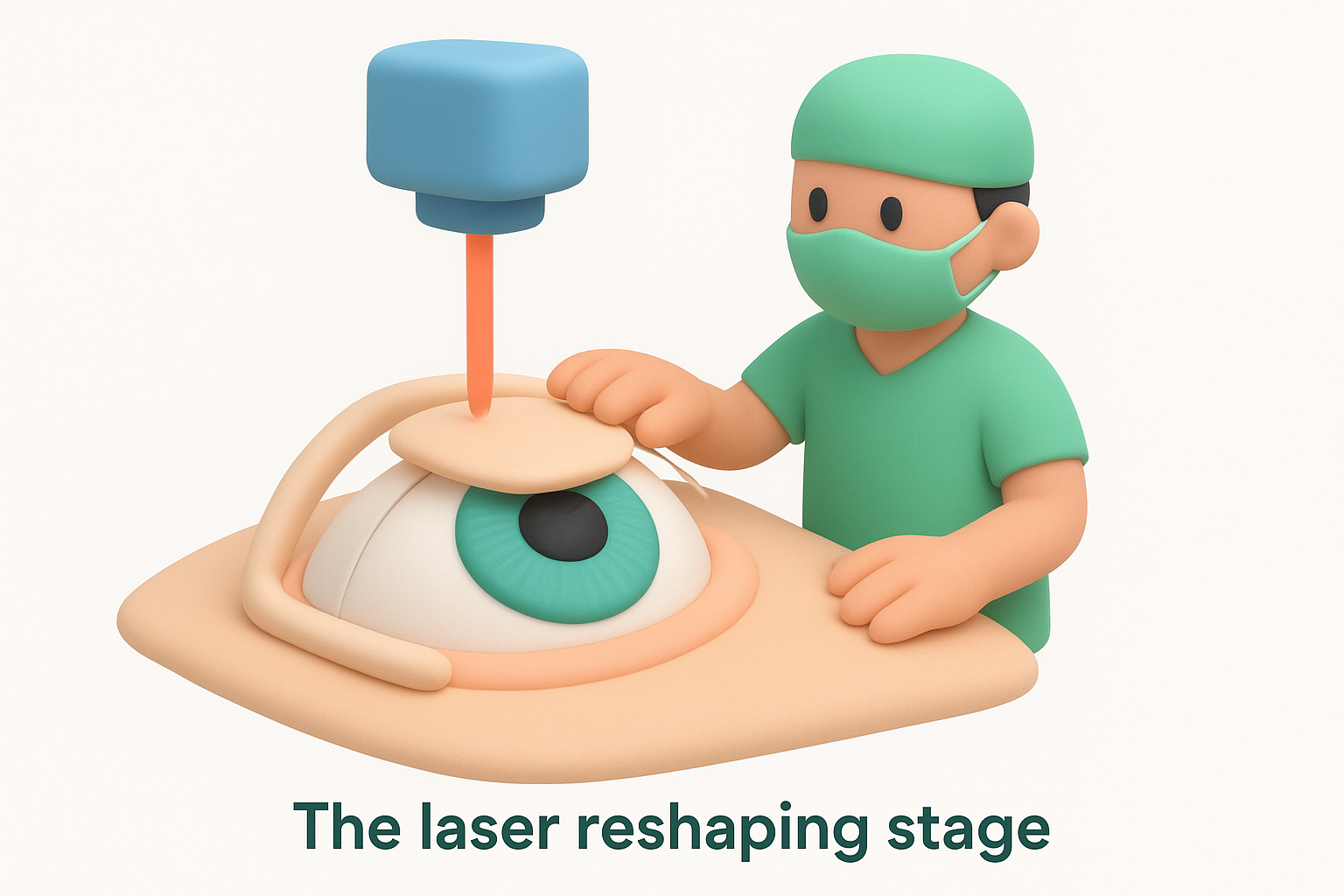
With the epithelium cleared, the excimer laser is applied directly to the corneal surface. You focus on a fixed light while the laser delivers precisely calculated pulses, each one removing microscopic amounts of tissue to reshape the cornea’s curvature. The laser itself runs for 30 to 90 seconds depending on your prescription. Once complete, your surgeon places a bandage contact lens over the eye to protect the surface while the epithelium regrows. You then rest briefly before going home with a friend or family member.
Recovery timeline and aftercare
PRK recovery takes longer than LASIK because your body needs to regrow the epithelium from scratch. Most patients experience blurred vision, light sensitivity, and mild discomfort for the first three to five days while that outer layer rebuilds. This is the part of understanding what is PRK laser eye surgery that surprises people most, as the procedure itself is quick but the healing phase demands patience.
The first week
Your bandage contact lens stays in place for four to five days until the epithelium has fully closed over. During this time, your vision will fluctuate, and your eye may feel gritty or sensitive to light. Your surgeon prescribes antibiotic and anti-inflammatory drops that you’ll apply several times a day to support healing and reduce infection risk. Avoid rubbing your eyes, swimming, and dusty environments until your surgeon confirms the surface has healed.
Most patients return to desk work within five to seven days, though vision quality continues improving over several weeks.
Months one to three
Your visual acuity sharpens progressively over the first one to three months as the cornea stabilises. Some patients notice fluctuations in clarity during this period, which is completely normal and not a sign of a problem. Full visual stability typically arrives between six weeks and three months post-surgery. Continued use of lubricating drops keeps the surface comfortable and actively supports the corneal healing process throughout this phase.
PRK vs LASIK vs SMILE
When weighing up what is PRK laser eye surgery against other options, the key differences come down to how the cornea is accessed and how long recovery takes. All three procedures use laser technology to correct refractive errors, but each follows a different surgical approach that makes one more suitable than another depending on your individual anatomy.
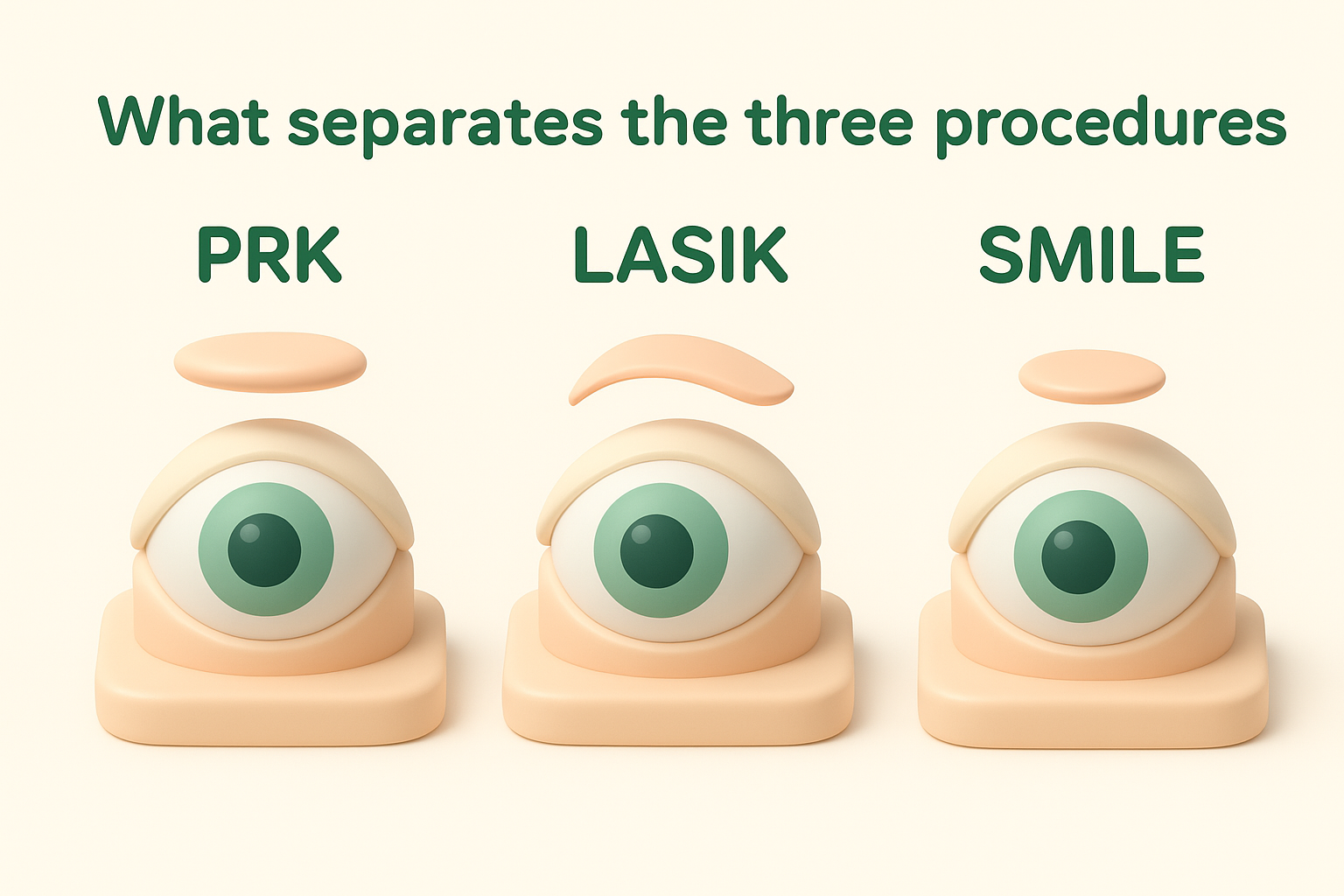
What separates the three procedures
The table below shows the core differences at a glance:
| PRK | LASIK | SMILE | |
|---|---|---|---|
| Corneal flap | No | Yes | No |
| Recovery time | 1 to 3 months | Several days | 1 to 2 weeks |
| Dry eye risk | Lower | Higher | Lower |
| Best for | Thin corneas, contact sports | Fast recovery needs | Moderate to high myopia |
LASIK creates a thin hinged flap in the cornea before applying the laser, which allows faster visual recovery but carries a small risk of flap-related complications. SMILE is a newer, minimally invasive technique that removes a small disc of corneal tissue through a tiny incision, with no flap and no epithelial removal.
Choosing the right procedure for your eyes
Your surgeon selects the procedure based on corneal thickness, prescription strength, and lifestyle factors. PRK suits patients with thinner corneas or physically demanding lifestyles. LASIK suits those prioritising fast recovery. SMILE is a strong option for higher myopia in patients with adequate corneal depth.
No single procedure is universally best. The right choice is the one matched carefully to your corneal profile and daily life.
Costs in Australia and what affects price
PRK in Australia typically costs between $2,500 and $3,500 per eye, depending on the surgeon’s experience, the technology used, and the complexity of your prescription. The total quoted price should include your pre-operative assessment, the procedure itself, and follow-up appointments, so always confirm exactly what is covered before you commit to any clinic.
Most private health insurers classify laser vision correction as elective surgery, which means out-of-pocket costs apply in the majority of cases.
What drives the price up or down
Several factors shift the final cost higher or lower. Understanding what is PRK laser eye surgery in financial terms helps you ask the right questions when comparing options. The main variables include:
- Prescription complexity: Higher corrections require more laser time and greater tissue removal.
- Laser platform: Newer wavefront-guided or topography-guided systems often carry a premium but can deliver sharper outcomes for patients with irregular corneas.
- Surgeon experience: Specialists with advanced training typically charge more, and that reflects their clinical results.
- Post-operative care: Some clinics include follow-up appointments in the base price; others bill separately.
What to expect at Bright Sight
At Bright Sight Eye Specialists in Randwick, Dr. Capucine Odouard provides transparent, itemised pricing before any procedure takes place. You receive a full quote after your pre-operative assessment, covering all stages of care with no hidden fees added later.
Booking an assessment is the only way to get an accurate figure for your specific prescription and corneal profile. Costs quoted without a proper examination are rarely reliable.
Next steps for clearer vision
Now that you understand what is PRK laser eye surgery, the most useful next step is a proper pre-operative assessment with an experienced surgeon. No amount of online research replaces an examination of your actual corneal profile, prescription, and eye health. Your suitability for PRK, LASIK, or SMILE depends on measurements only a specialist can take.
At Bright Sight Eye Specialists in Randwick, Dr. Capucine Odouard offers thorough refractive assessments before recommending any procedure. She takes the time to explain your options clearly, answer your questions honestly, and match the right technique to your individual anatomy and lifestyle. You leave the consultation knowing exactly what is involved, what to expect during recovery, and what the procedure will cost with no surprises afterwards.
If you’re ready to move forward, book a consultation with Dr. Capucine Odouard and take the first practical step towards clearer vision.