


If you’ve noticed a fleshy, wedge-shaped growth creeping across the white of your eye towards your cornea, you’re probably wondering what is a pterygium in the eye, and whether it’s something to worry about. Often called "surfer’s eye," a pterygium is a common condition here in Australia, where high UV exposure and outdoor lifestyles put our eyes at particular risk.
A pterygium is benign, but that doesn’t mean it’s harmless. Left untreated, it can cause persistent irritation, redness, and blurred vision, and in some cases, it can distort the shape of your cornea enough to affect your sight. The good news is that effective treatments exist, from conservative management to surgical removal.
At Bright Sight Eye Specialists in Randwick, Dr Rahul Dubey and Dr Capucine Odouard treat pterygia regularly, offering patients across Sydney’s Eastern Suburbs clear guidance on when to monitor and when to act. In this article, we’ll walk you through exactly what a pterygium is, what causes it, how to recognise the symptoms, and what your treatment options look like.
Why a pterygium matters for your vision
Many people dismiss a pterygium as a cosmetic concern, but understanding what is a pterygium in the eye goes well beyond appearance. This growth originates in the conjunctiva, the thin membrane covering the white of your eye, and slowly extends across the transparent cornea that sits in front of your iris and pupil. Because your cornea is responsible for focusing light onto your retina, any tissue encroaching on it can interfere directly with how clearly you see.
How a pterygium physically changes your eye
A pterygium is not simply sitting on the surface of your eye. It actually invades the layers of the cornea, embedding itself into the tissue as it grows. This is what sets it apart from a simple cyst or skin growth. The pterygium brings with it blood vessels and fibrous tissue, which is why an affected eye often looks persistently red and inflamed, even when there is no underlying infection present.
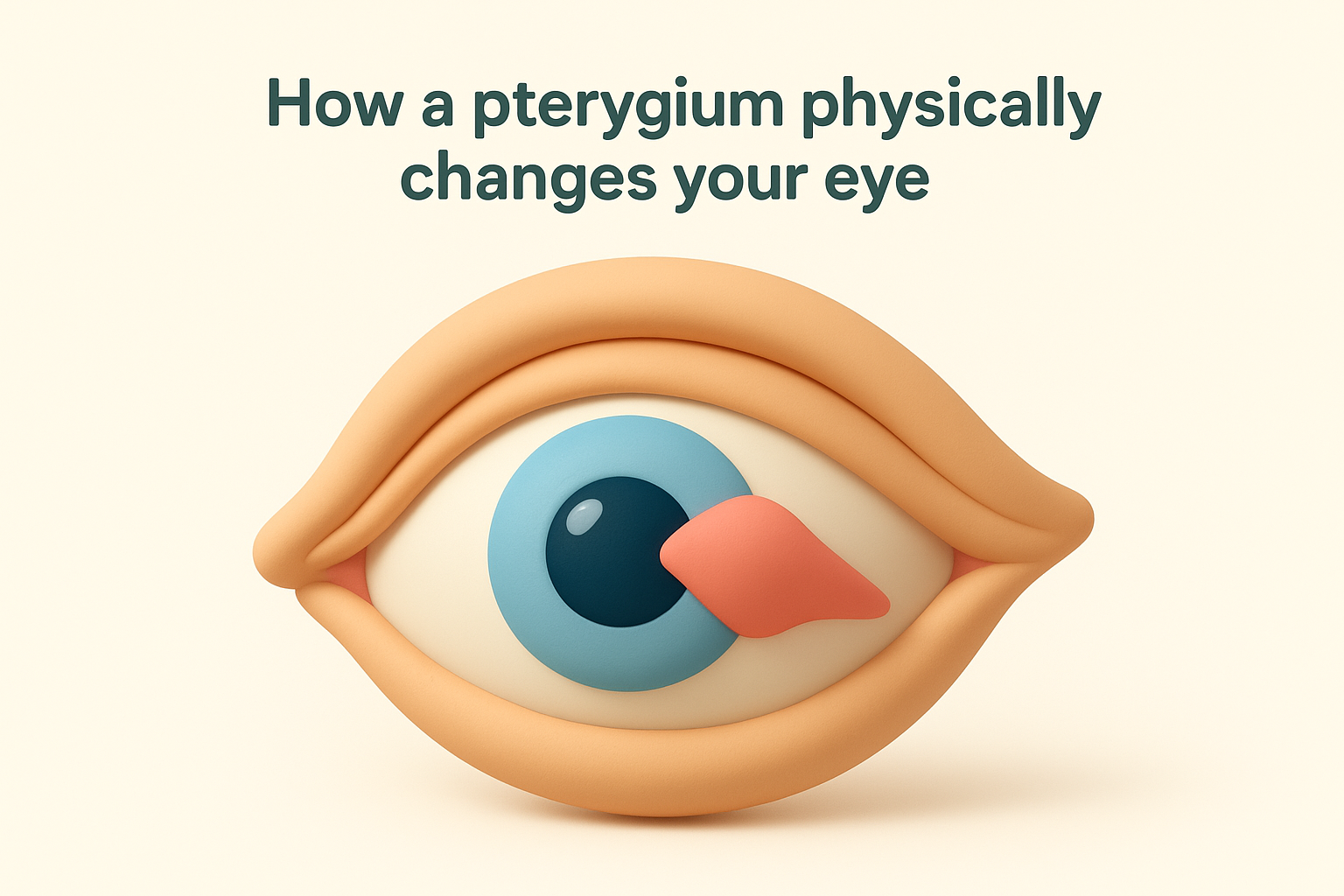
The closer the pterygium grows towards the centre of your cornea, the greater the risk to your central vision.
As the pterygium advances, it pulls and distorts the corneal surface around it. This mechanical tension is what leads to irregular astigmatism, a refractive error that standard glasses often struggle to fully correct.
The link between pterygium and astigmatism
Astigmatism caused by a pterygium is different from the common type you may have had since childhood. Instead of a smooth, predictable curve, your cornea develops an irregular shape caused by the fibrous tissue tugging unevenly across the surface. Your optometrist might pick this up during a routine refraction, finding that your prescription keeps shifting without a straightforward explanation.
Left unchecked, significant astigmatism can develop even before the pterygium reaches your central cornea. That means your vision may worsen well before the growth looks visually large enough to cause concern. Regular monitoring by an eye specialist is the only reliable way to track these changes and make an informed decision about when intervention is genuinely needed.
Why early review protects your long-term sight
Waiting until symptoms become severe before seeking advice is a common mistake. Scarring from a long-standing pterygium can persist even after the growth itself is removed, which means earlier assessment generally leads to better outcomes. Your eye specialist can measure the exact size and position of the pterygium, monitor its rate of growth, and advise you before it reaches a stage where your vision is permanently affected.
What causes a pterygium and who is at risk
UV radiation is the leading cause of pterygium, and Australia’s intense sunlight makes this a particularly relevant issue for anyone spending time outdoors. When you understand what is a pterygium in the eye and how it develops, the connection to sun exposure becomes clear. The conjunctival cells respond to chronic UV damage by growing abnormally, eventually pushing across the corneal surface in that characteristic wedge shape.
UV radiation as the primary driver
Prolonged, repeated exposure to ultraviolet light triggers changes in the conjunctival tissue that allow abnormal cell growth to begin. Wind, dust, and dry environmental conditions accelerate this process by creating additional irritation to the eye surface. Reflected UV, particularly from sand, water, and concrete, adds to the cumulative damage, which is why people who spend time near the coast or in open environments face a higher risk than those who work primarily indoors.
Wearing UV-blocking sunglasses and a broad-brimmed hat outdoors significantly reduces your lifetime UV exposure and lowers your pterygium risk.
Who is most at risk in Australia
Outdoor workers such as tradies, farmers, and fishermen represent a high-risk group, given their extended hours in direct sunlight without adequate eye protection. Surfers, swimmers, and cyclists face similar exposure patterns, which is precisely why the condition earned the nickname "surfer’s eye" in the first place.
Age also plays a role. Pterygia are more commonly diagnosed in adults between 20 and 50, suggesting that cumulative sun exposure over decades is a key factor rather than a single acute event. Having fair skin or light-coloured eyes may also increase your individual sensitivity to UV-related eye damage.
Signs, symptoms, and how an eye specialist diagnoses it
Recognising the symptoms early gives you a better chance of managing the condition before it affects your vision. Many people notice a pterygium well before it causes any real discomfort, simply because the visible growth on the eye surface is hard to miss. Understanding what is a pterygium in the eye means knowing both what it looks like and what it feels like.
What you might notice first
The most obvious sign is a triangular or wedge-shaped pinkish growth on the white of your eye, usually on the side closest to your nose. Alongside this, you might experience persistent redness, itching, or a gritty sensation, as though something is stuck in your eye even when nothing is there. Some people also notice increased sensitivity to wind, bright light, or dry conditions, which can make spending time outdoors genuinely uncomfortable.
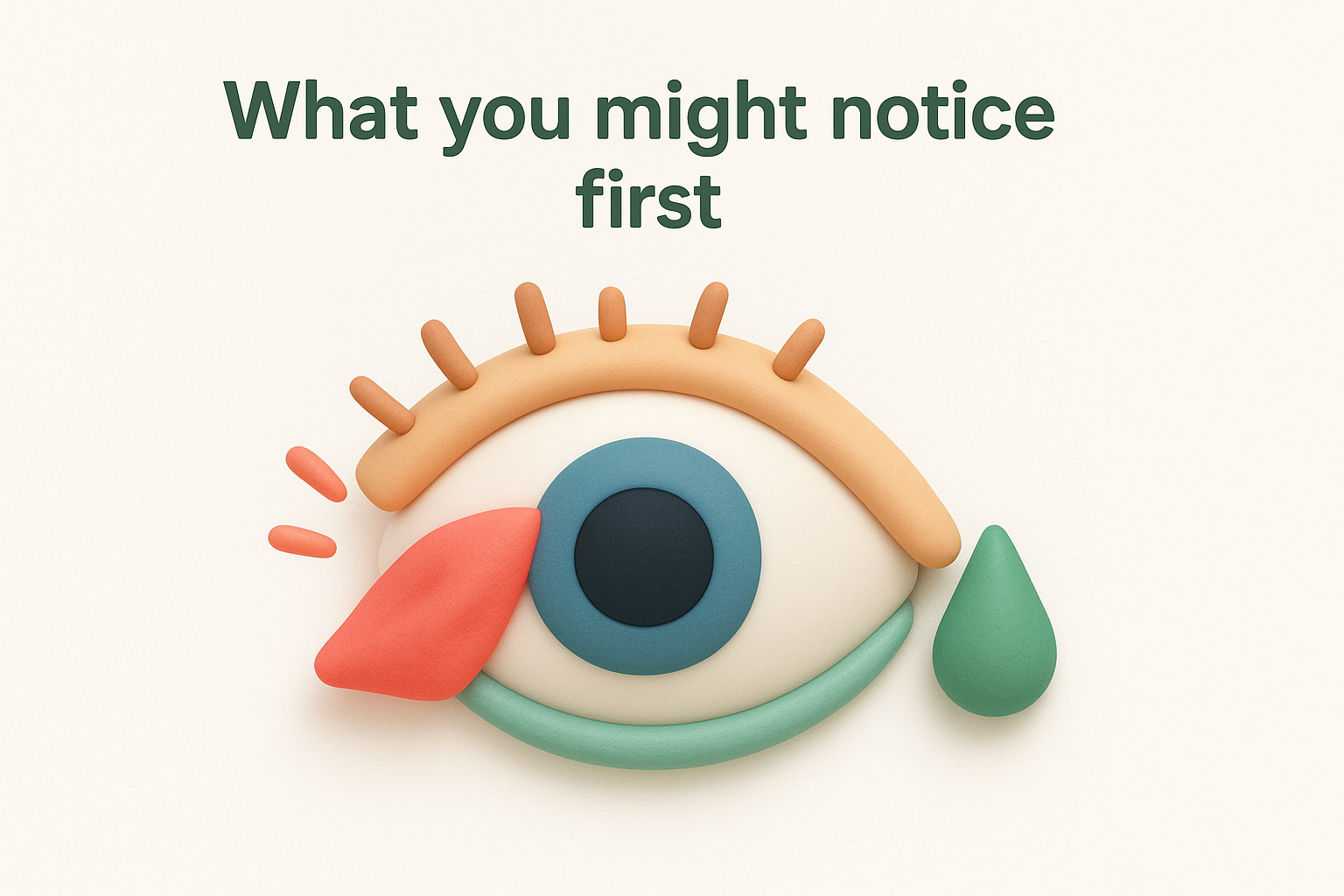
As the pterygium grows larger, blurred or distorted vision can develop, particularly if the growth begins pulling on your cornea. You may also find that your glasses prescription changes more frequently than expected, which is often the first sign that astigmatism is developing.
If your vision is changing alongside a visible growth on your eye, see an eye specialist rather than waiting for your next routine optometrist appointment.
How an eye specialist confirms the diagnosis
Your eye specialist will examine your eye using a slit-lamp microscope, which provides a magnified, detailed view of the pterygium’s position, size, and depth of corneal involvement. They will also measure your corneal topography to map any surface distortion and track astigmatism over time. These assessments give your specialist the full picture they need to recommend the right course of action for your individual situation.
Treatment options that can ease symptoms and slow growth
Not every pterygium requires surgery, and understanding what is a pterygium in the eye includes knowing that many cases can be managed conservatively for months or even years. Your eye specialist will tailor a treatment plan based on how large the growth is, how fast it is progressing, and what symptoms you are experiencing day to day.
Managing mild symptoms without surgery
For a small, stable pterygium, the priority is reducing surface irritation and protecting your eye from further UV damage. Lubricating eye drops are the most commonly recommended starting point, as they relieve the gritty, dry sensation that many people find most bothersome. Preservative-free artificial tears used regularly throughout the day can make a noticeable difference, particularly in dry or windy conditions that tend to aggravate symptoms.
Wearing UV-blocking wraparound sunglasses outdoors is equally important, as continued sun exposure accelerates growth. A broad-brimmed hat adds an extra layer of protection, especially in the middle of the day when UV levels in Australia are at their highest.
Consistent use of lubricating drops and quality sunglasses can keep a mild pterygium stable and symptom-free for years.
When short-term anti-inflammatory treatment helps
If your pterygium becomes acutely inflamed or particularly red, your specialist may prescribe a short course of topical anti-inflammatory or steroid eye drops to settle the irritation. These are not a permanent solution and are used carefully to avoid long-term side effects such as raised eye pressure. Your specialist will monitor your response closely and adjust the plan if needed.
When pterygium surgery makes sense and what to expect
Surgery is not the first step for every pterygium, but there are clear situations where it becomes the most sensible option. If you are wondering what is a pterygium in the eye and whether yours needs removing, the decision usually comes down to how much the growth is affecting your vision and quality of life rather than its size alone.
Signs that surgery is the right call
Your eye specialist will recommend surgery when the pterygium is encroaching on your visual axis, causing significant astigmatism, or producing symptoms that no longer respond to conservative management. Persistent redness, chronic discomfort, and rapidly progressive growth are all indicators that monitoring alone is no longer sufficient. Some patients also opt for surgery for cosmetic reasons, particularly when the growth has become visually prominent and is affecting their confidence.
Your specialist will assess corneal topography measurements alongside your symptoms before recommending surgery, so the decision is always based on objective data as well as how you feel day to day.
What the surgical procedure involves
Pterygium removal is performed under local anaesthetic as a day procedure, meaning you go home the same day. Your surgeon removes the pterygium and then covers the area with a conjunctival autograft, a small piece of tissue taken from the white of your own eye. This graft technique significantly reduces the risk of the pterygium growing back compared to older surgical methods.
Recovery typically involves using antibiotic and anti-inflammatory eye drops for several weeks, and most patients notice a dramatic improvement in comfort within the first few days. Full visual recovery and surface healing generally take four to six weeks, depending on the size of the original growth.

Next steps for your eye health
Now that you understand what is a pterygium in the eye and how it can affect your sight, the most important thing you can do is get a proper assessment sooner rather than later. A small, slow-growing pterygium monitored from an early stage gives your specialist far more options than one that has already distorted your cornea or caused lasting astigmatism.
At Bright Sight Eye Specialists in Randwick, Dr Rahul Dubey and Dr Capucine Odouard see patients from across Sydney’s Eastern Suburbs and beyond, providing thorough slit-lamp examinations and clear advice on whether your pterygium needs treatment now or simply regular review. If you have noticed a growth on your eye, changing vision, or persistent redness and irritation, do not delay seeking specialist input. Earlier review almost always leads to a simpler, more effective outcome and better long-term protection for your sight.
Book an appointment with our team today and take a confident first step towards protecting your eye health.