


Vitreoretinal surgeons are ophthalmologists with specialised training in treating conditions affecting the retina, vitreous, and macula. These are the delicate structures at the back of your eye responsible for capturing light and sending visual signals to your brain. When something goes wrong in this area, you need more than a regular eye doctor. You need someone who can perform microsurgery with precision and skill.
This article explains what these specialists do and when you should see one. You’ll learn about common retinal conditions that require surgical intervention, the procedures they perform, and what recovery looks like. We’ll also cover how to choose the right surgeon for your needs. If you’ve been referred to a retina specialist or you’re experiencing sudden changes in your vision, this guide will help you understand what’s ahead.
What a vitreoretinal surgeon actually does
Vitreoretinal surgeons perform microsurgery on the back of your eye, where the most critical structures for vision live. They treat conditions that affect your retina (the light-sensing tissue), your macula (the central part of the retina responsible for sharp vision), and the vitreous (the gel-like substance filling your eye). These specialists use advanced surgical techniques and equipment that allow them to operate on structures smaller than a grain of rice.
Specialised training and expertise
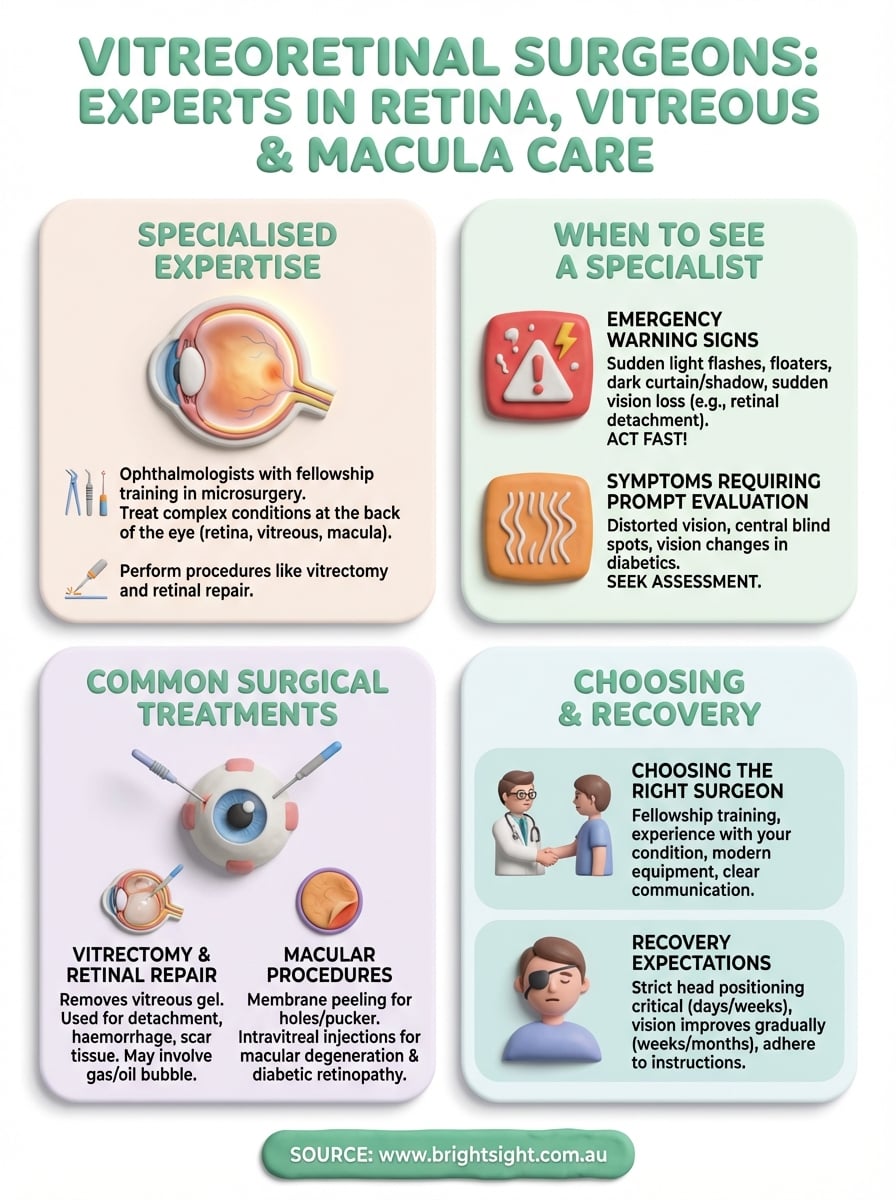
Your vitreoretinal surgeon has completed years of additional training beyond standard ophthalmology. After medical school and a general ophthalmology residency, they undertake a fellowship in vitreoretinal surgery lasting one to two years. During this time, they master delicate procedures like retinal detachment repair, macular hole surgery, and treatment for severe diabetic eye disease. This level of training means they can handle the most complex cases that other eye doctors cannot.
These specialists represent the highest level of surgical expertise in ophthalmology.
Surgical skills and technology
The procedures these surgeons perform require extraordinary precision and the use of microscopic instruments. They work through incisions smaller than a millimetre, often while looking through a surgical microscope that magnifies the retina up to 30 times. Modern vitreoretinal surgeons use laser technology, micro-forceps, and fibre-optic lighting systems during surgery. They also perform intravitreal injections to treat conditions like macular degeneration and diabetic retinopathy. Some procedures require removing and replacing the vitreous gel, while others involve delicate membrane peeling or laser photocoagulation to seal retinal tears. Your surgeon may also use sophisticated imaging technology before and during surgery to guide their work and achieve the best possible outcomes for your vision.
Signs you need to see a retina specialist
Certain symptoms signal problems with your retina that require immediate specialist attention. Your regular optometrist or ophthalmologist may refer you to vitreoretinal surgeons when they detect conditions beyond their scope of treatment. Understanding these warning signs helps you act quickly when your vision is at risk.

Emergency warning signs
You need to see a retina specialist immediately if you experience sudden flashes of light accompanied by floaters, a dark curtain or shadow moving across your vision, or a sudden decrease in vision. These symptoms often indicate retinal detachment, which requires urgent surgical intervention to prevent permanent vision loss. Time matters critically in these cases.
Any sudden change in your vision requires immediate medical attention.
Symptoms requiring prompt evaluation
Distorted vision where straight lines appear wavy or bent suggests macular problems that need specialist assessment. You should also seek evaluation if you notice a dark or empty spot in your central vision, difficulty reading despite correct glasses, or gradual vision loss that doesn’t improve with new prescriptions. People with diabetes experiencing vision changes or those diagnosed with macular degeneration need regular monitoring by a retina specialist to prevent complications.
Common procedures and surgical treatments
Vitreoretinal surgeons perform several sophisticated procedures to repair damage and restore vision. The type of surgery you need depends on your specific condition and the severity of the damage to your retina or macula. Most procedures involve microsurgery performed under local anaesthetic with sedation, allowing you to return home the same day.
Vitrectomy and retinal repair
Vitrectomy removes the vitreous gel from your eye to access the retina underneath. Surgeons use this procedure to repair retinal detachment, where they may inject gas or silicone oil to hold your retina in place while it heals. They also perform vitrectomy to treat vitreous haemorrhage (bleeding inside the eye) or to remove scar tissue pulling on your retina. The procedure involves making tiny incisions and using microsurgical instruments to work inside your eye.
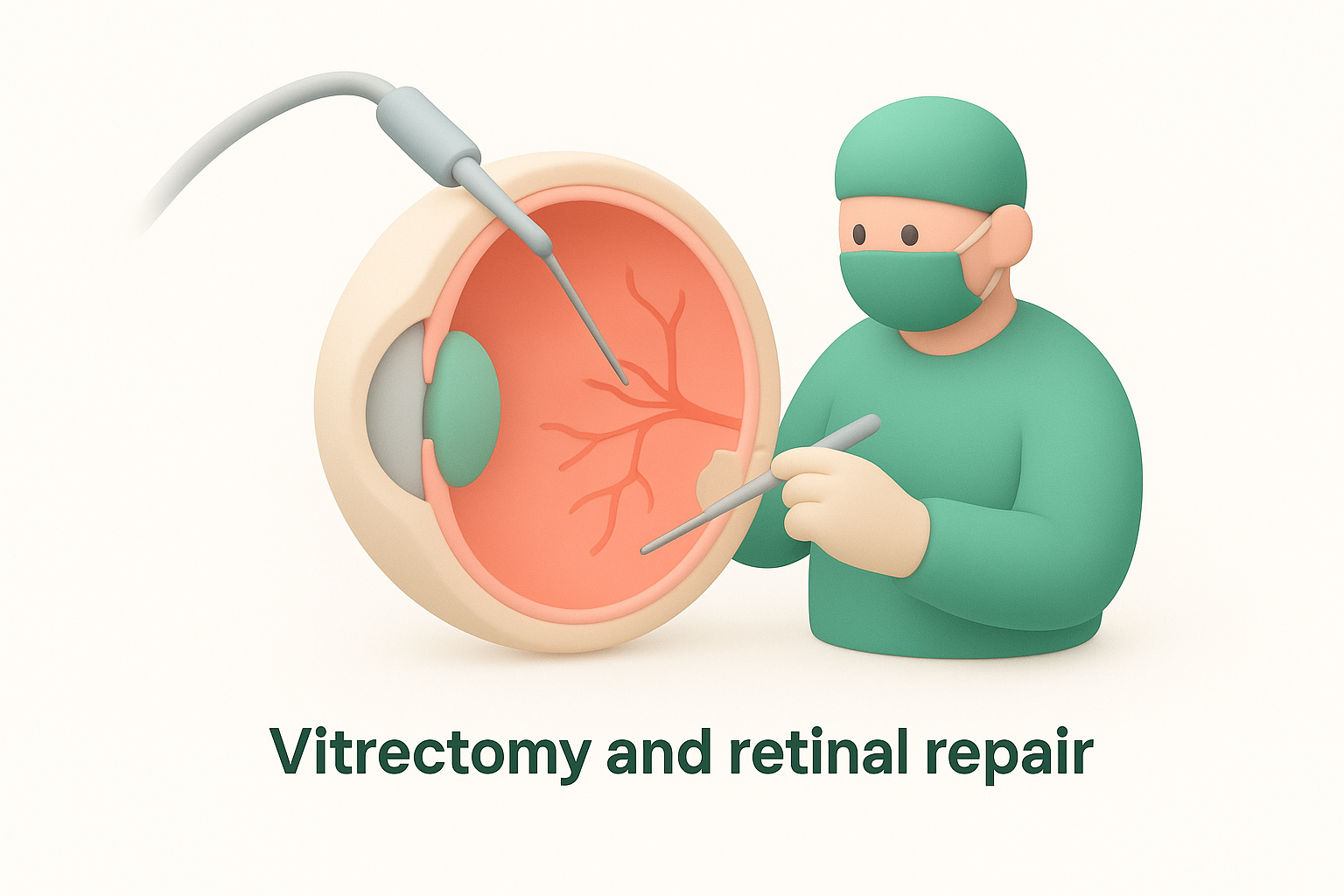
Vitrectomy forms the foundation for most retinal surgical repairs.
Macular procedures
Surgeons treat macular holes and epiretinal membranes through delicate membrane peeling techniques during vitrectomy. These conditions cause distorted central vision, and removing the abnormal tissue allows your macula to flatten and heal. Another common treatment involves intravitreal injections for macular degeneration and diabetic retinopathy, where medication is injected directly into your eye to reduce swelling and prevent abnormal blood vessel growth.
How to choose the right vitreoretinal surgeon
Selecting the right specialist makes a significant difference to your surgical outcome and overall experience. You want someone with proven expertise, modern equipment, and a patient-centred approach. Start by asking your referring optometrist or ophthalmologist for recommendations, as they understand which vitreoretinal surgeons deliver the best results for specific conditions.
Qualifications and experience
Your surgeon should have completed fellowship training in vitreoretinal surgery beyond their standard ophthalmology qualifications. Ask about their experience with your specific condition, particularly how many procedures like yours they perform each year. Surgeons who regularly operate on complex cases develop superior skills and achieve better outcomes. Check if they maintain active involvement in continuing education and stay current with the latest surgical techniques.
Experience with your specific condition matters more than general expertise.
Location and accessibility
Choose a surgeon who operates at a reputable eye hospital or surgical centre with modern equipment and experienced support staff. Consider the location’s convenience for both your surgery and follow-up appointments, as you’ll need multiple visits during recovery. Ask about appointment availability and whether the practice offers clear communication about fees and private health insurance options. Transparent pricing and accessible care make your treatment journey smoother.
What to expect during recovery and aftercare
Recovery from retinal surgery requires patience and careful adherence to your surgeon’s instructions. Your vitreoretinal surgeons will provide specific guidelines based on the procedure you’ve had, as different conditions require different recovery protocols. Most patients return home the same day with detailed aftercare instructions and scheduled follow-up appointments.
Immediate post-surgery period
You’ll need to maintain specific head positioning for several days or weeks after surgery, particularly if your surgeon used gas or oil to support your retina. This positioning allows the bubble to press against the correct area of your retina while it heals. Your eye may feel uncomfortable, and you’ll use prescribed eye drops to prevent infection and reduce inflammation.
Following positioning instructions precisely determines your surgical success.
Long-term recovery timeline
Vision improvement occurs gradually over several weeks to months, depending on your condition and the extent of repair needed. You’ll attend multiple follow-up appointments where your surgeon monitors healing and checks for complications. Most people resume normal activities within two to four weeks, though you must avoid heavy lifting, swimming, and flying (if gas was used) during early recovery. Your surgeon will tell you when you can safely drive again.
Taking care of your vision
Your retina and macula are irreplaceable structures that deserve proactive protection and timely specialist care when problems arise. Understanding when to seek help from vitreoretinal surgeons can mean the difference between preserving your sight and permanent vision loss. Regular eye examinations with your optometrist help detect early warning signs before they become emergencies, giving you the best chance of successful treatment.
Don’t wait if you notice sudden changes in your vision, persistent floaters, or distorted sight. These symptoms require immediate professional assessment, not a wait-and-see approach. Early intervention often leads to better surgical outcomes and faster recovery times.
If you’re experiencing vision problems or need expert care for a retinal condition, Bright Sight Eye Specialists provides comprehensive vitreoretinal care in Sydney’s Eastern Suburbs. Dr. Rahul Dubey combines advanced surgical expertise with patient-centred treatment, offering transparent pricing and accessible specialist care when your vision needs it most.