


When something goes wrong at the back of your eye, the retina or the vitreous gel that fills it, you need more than a general eye check. You need a vitreoretinal specialists, a surgeon trained specifically to diagnose and treat conditions in this delicate, vision-critical part of the eye. These are the specialists who handle retinal detachments, macular holes, diabetic eye disease, and a range of other sight-threatening problems that require precise surgical or medical intervention.
Understanding what a vitreoretinal specialist actually does, and recognising when you should see one, can make a real difference to your outcome. Early referral matters, particularly for conditions where even short delays can lead to permanent vision loss. Yet many people aren’t sure what sets these specialists apart from a general ophthalmologist, or what to expect from a consultation.
At Bright Sight Eye Specialists in Randwick, Dr Rahul Dubey provides expert vitreoretinal care, including surgery for retinal detachment, epiretinal membrane, macular hole, vitreous haemorrhage, and floaters. Trained at the internationally recognised Moorfields Eye Hospital in London, Dr Dubey brings that depth of sub-specialist experience to patients across Sydney’s Eastern Suburbs and regional Australia. This article explains what vitreoretinal specialists do, the conditions they treat, and how to know when it’s time to book an appointment.
Why vitreoretinal specialists matter
The retina is a thin layer of light-sensitive tissue lining the back of your eye, and it converts everything you see into signals your brain can interpret. Any damage to this tissue can directly affect your central or peripheral vision, often in ways that are difficult or impossible to reverse without prompt, skilled treatment. A vitreoretinal specialist focuses exclusively on this part of the eye, which means their surgical precision and diagnostic knowledge go far beyond what a general ophthalmologist routinely develops.
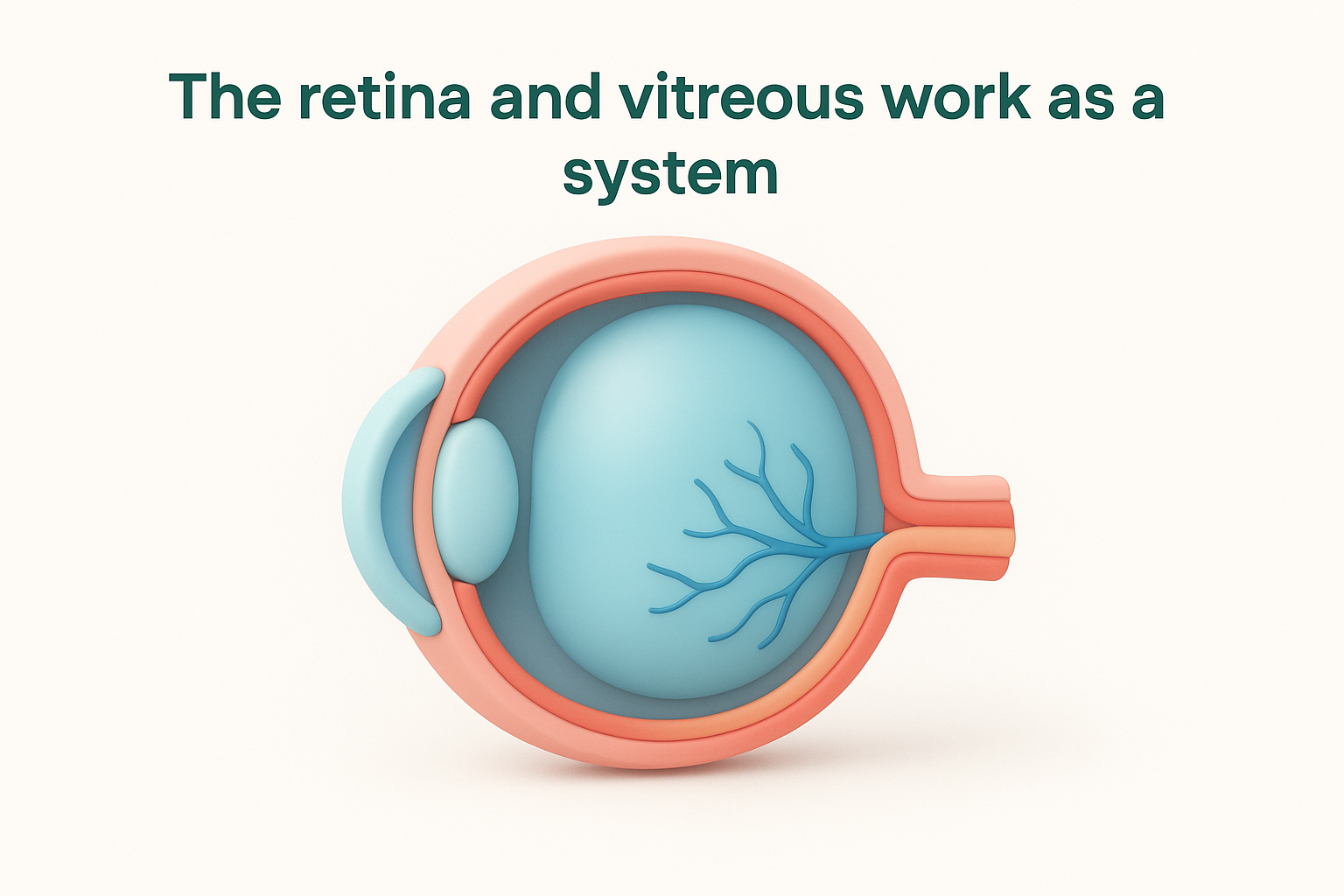
The retina and vitreous work as a system
Your retina doesn’t function in isolation. The vitreous gel, which fills the space between your lens and retina, exerts constant physical tension on the retinal surface. When that gel ages, shrinks, or bleeds, it can pull on the retina and trigger serious problems including tears, detachments, or haemorrhage. Understanding how these two structures interact is central to treating disease at the back of the eye, and it’s precisely why this field exists as its own distinct specialty within ophthalmology.
Conditions at the back of the eye can deteriorate rapidly, and the gap between same-week surgery and a delayed appointment can mean the difference between full recovery and permanent vision loss.
Why sub-specialisation produces better outcomes
Vitreoretinal specialists complete several years of additional fellowship training after general ophthalmology, focusing specifically on surgical and medical management of the posterior segment of the eye. This means they carry out high-volume, technically demanding procedures using imaging and surgical equipment that most general eye clinics don’t have on site. Patients benefit from that concentrated experience because surgeon case volume directly affects complication rates, the accuracy of diagnosis, and the precision of surgical repair.
What a vitreoretinal specialist treats
Vitreoretinal specialists handle a specific range of conditions that affect the posterior segment of the eye. These aren’t minor complaints; they are structural and vascular problems that can permanently change your vision if left untreated or managed by a clinician who lacks the sub-specialist training to intervene accurately.
Conditions that require specialist care
The most common presentations include retinal detachment, epiretinal membrane, macular hole, vitreous floaters, and vitreous haemorrhage. Dr Dubey also treats diabetic retinopathy, retinal vein occlusion, central serous retinopathy, and age-related macular degeneration that has progressed to a point requiring surgery or intravitreal injections.
Many of these conditions share overlapping symptoms, which is why an accurate diagnosis from a trained specialist matters far more than waiting to see if things resolve on their own.
Each condition demands a different clinical approach, ranging from microsurgery to precisely placed injections delivered directly into the eye. Some patients need both at different stages of their disease. What connects every case is the requirement for specialist imaging, surgical precision, and structured follow-up that a dedicated vitreoretinal service provides.
When to see one and warning symptoms
Several retinal conditions develop quickly and without pain, which means by the time you notice something is wrong, the situation may already be urgent. Knowing the specific symptoms that require immediate action gives you the best chance of protecting your vision before any damage becomes permanent.
Symptoms that need same-week attention
If you notice a sudden increase in floaters, flashes of light in your vision, or a shadow moving across your visual field, contact an eye specialist the same day. These are the hallmark warning signs of retinal detachment, and waiting even a few days can allow the detachment to reach the macula, which carries a significant risk of permanent central vision loss.

A painless shadow or curtain across your sight is a medical emergency until a specialist confirms otherwise.
When to act even without obvious symptoms
Blurred or distorted central vision, straight lines that appear wavy, or a grey patch in the centre of your sight all point toward macular disease. You should also seek a review if you have diabetes or a family history of retinal conditions, since both groups carry a higher risk and benefit from earlier involvement from vitreoretinal specialists, even before clear symptoms appear.
How to choose the right vitreoretinal specialist
Not every ophthalmologist has the sub-specialist training to handle retinal surgery, so your first filter should be whether the surgeon completed a dedicated vitreoretinal fellowship. This additional training, typically one to two years beyond general ophthalmology, focuses entirely on the posterior segment and produces clinicians who carry out high volumes of technically demanding procedures every year.
Questions worth asking before you book
Before committing to a consultation, confirm the following with the practice:
- Did the surgeon complete a vitreoretinal fellowship at a recognised institution?
- What is their annual surgical volume for the procedure you need?
- Do they offer on-site retinal imaging and access to a surgical facility?
- Is the referral pathway clear if your condition changes urgently?
What strong vitreoretinal specialists have in common
Surgeon reputation matters, but so does access to equipment and structured follow-up. Look for a specialist who uses current imaging technology such as OCT, offers clear pricing, and explains your diagnosis without vague language. Dr Dubey trained at Moorfields Eye Hospital, one of the world’s most respected ophthalmology centres, and brings that standard of care to Randwick.
Choosing a specialist with genuine sub-specialty training reduces your risk of complications and improves the accuracy of your diagnosis from the first appointment.
What to expect at your visit and aftercare
Your first appointment with a vitreoretinal specialist typically runs 60 to 90 minutes and covers more ground than a standard eye check. The specialist will dilate your pupils, examine the retina in detail, and review imaging such as OCT scans before discussing a treatment plan with you.
Your initial consultation
Expect the specialist to ask about your symptom history, general health, and any medications you currently take. If surgery is recommended, they will walk you through the procedure, expected recovery time, and what your vision may look like in the weeks ahead. Clear, direct communication at this stage is a strong indicator that you are in the right place.
A good vitreoretinal specialist explains your diagnosis in plain language so you can make an informed decision about your care.
Recovery and follow-up care
Recovery timelines vary depending on the procedure. After vitrectomy surgery, you may need to hold a specific head position for several days, and driving restrictions apply during early healing.
Your specialist will schedule structured follow-up appointments to monitor healing, check intraocular pressure, and confirm the retina remains stable. Following post-operative instructions closely is the single most important thing you can do to protect your outcome.

Next steps for your vision
Retinal conditions rarely give you much warning, and the difference between a good outcome and permanent vision loss often comes down to how quickly you act. If you have noticed any of the symptoms described in this article, or if you have diabetes, a family history of retinal disease, or simply haven’t had a thorough posterior eye examination, now is the right time to seek a specialist review.
Vitreoretinal specialists bring a level of surgical precision and diagnostic depth that general eye care cannot match. At Bright Sight Eye Specialists in Randwick, Dr Rahul Dubey offers expert assessment and treatment for the full range of retinal and vitreous conditions, supported by advanced imaging and a clear, structured approach to your care. Telehealth options are also available for patients in regional Australia.
Take the next step and book a consultation with Dr Rahul Dubey to protect the vision you have.