


Most people don’t think about their eyes until something goes wrong. A bit of blurriness gets blamed on tiredness. Floaters get ignored. A missed eye check turns into two years, then five. But vision eye health isn’t something that holds steady on its own, it shifts gradually, often without obvious warning signs, and the earlier you act, the more options you have to protect it.
Conditions like macular degeneration, diabetic eye disease, and cataracts don’t always announce themselves with dramatic symptoms. By the time you notice a real change, structural damage may already be underway. That’s exactly why a proactive approach, regular check-ups, smart daily habits, and knowing when to see a specialist, makes such a measurable difference to long-term outcomes.
At Bright Sight Eye Specialists in Randwick, Dr Rahul Dubey and Dr Capucine Odouard see patients across the Eastern Suburbs of Sydney at every stage of eye health, from early screening through to advanced surgical treatment. This guide draws on that clinical experience to walk you through practical, evidence-based steps you can take right now to safeguard your sight for years to come.
What long-term eye health really means
Long-term eye health isn’t just about having a strong prescription or avoiding glasses. It means maintaining the structural integrity of your eyes over decades, so that your retina, lens, optic nerve, and cornea keep functioning well as you age. Most vision eye health problems don’t develop overnight. They build slowly over years, shaped by genetics, lifestyle choices, and how consistently you engage with specialist care.
The goal isn’t to react to eye disease when it arrives. It’s to reduce your risk, catch changes early, and keep your treatment options open.
What your eyes are actually at risk from
The conditions that cause permanent vision loss in adults are largely preventable or manageable when caught early. Diabetic retinopathy, age-related macular degeneration, cataracts, and glaucoma are the most common culprits in Australia, and each one can progress silently for years before you feel any difference. Here is a quick breakdown:
| Condition | What it affects | Key risk factor |
|---|---|---|
| Macular degeneration | Central vision | Age, genetics, smoking |
| Diabetic retinopathy | Retinal blood vessels | Blood sugar control |
| Glaucoma | Optic nerve | Raised eye pressure |
| Cataracts | Lens clarity | Age, UV exposure |
Why "I can still see fine" isn’t enough
Many of these conditions take vision before you notice anything unusual. Your brain compensates well, filling in gaps and adjusting to gradual changes, so you can lose a significant portion of your peripheral or central vision without registering it day to day.
Waiting until your sight clearly feels affected often means waiting too long, with fewer treatment options available and more complex recovery ahead.
Step 1. Book the right eye checks
Knowing you should get your eyes checked is one thing. Knowing who to see and how often is what actually protects your vision eye health over the long term. A standard optometrist visit is a useful starting point, but if you have risk factors like diabetes, a family history of glaucoma, or you’re over 50, you need a specialist eye examination, not just a basic prescription review.
A referral to an ophthalmologist from your GP or optometrist is often fully or partly covered by Medicare, so cost is rarely a barrier to getting the right care.
Recommended check-up frequency by age and risk
Your screening schedule should match your personal risk profile, not just your age. If you fall into a higher-risk group, annual specialist reviews give clinicians the best chance of catching early changes before they become irreversible. Use this as a practical guide:
| Group | Recommended frequency |
|---|---|
| Adults under 40, no risk factors | Every 2 years |
| Adults 40-60 | Every 1-2 years |
| Over 60 | Annually |
| Diabetes or family history of eye disease | Annually or as advised by your specialist |
Step 2. Protect your eyes from UV and injury
UV radiation is one of the most preventable causes of long-term eye damage, yet most people underestimate it. Prolonged sun exposure accelerates cataract development and raises your risk of macular degeneration, both of which affect your vision eye health over time. Wearing quality sunglasses isn’t optional if you spend time outdoors in Australia, especially given the high UV index across much of the country.
Choose sunglasses rated to Australian Standard AS/NZS 1067:2016, with category 2, 3, or 4 lenses for adequate UV protection in bright conditions.
Choosing the right protective eyewear
Not all sunglasses offer equal protection. Look for wraparound frames that block light from the sides, and pair them with a broad-brimmed hat on bright days. For high-risk situations, these are the key protections to have in place:
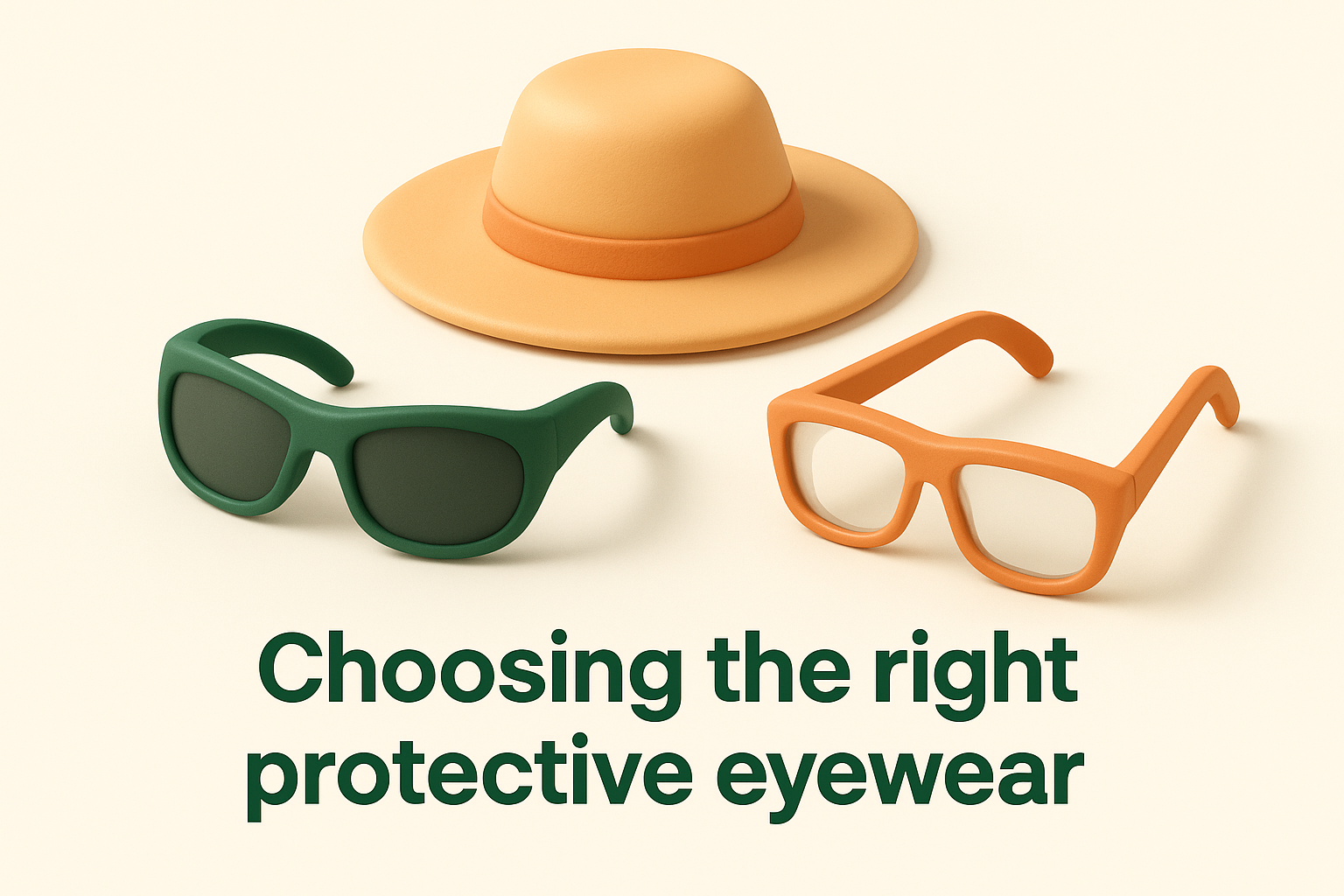
- Sunglasses: category 3 or 4 lenses (AS/NZS 1067:2016)
- Workplace or sport: safety glasses (AS/NZS 1337)
- Outdoors: broad-brimmed hat combined with sunglasses
Eye injuries from foreign objects or impact are a leading cause of preventable vision loss in working-age adults in Australia.
Step 3. Eat, move, and quit smoking
What you eat, how much you move, and whether you smoke all have a direct impact on your vision eye health. Your retinal blood vessels are among the smallest in the body, making them highly sensitive to poor circulation and oxidative stress. These are lifestyle factors you can act on now, before any condition takes hold.
Smoking doubles your risk of age-related macular degeneration, making it the most modifiable risk factor for vision loss in Australia.
Build an eye-healthy diet
Lutein, zeaxanthin, omega-3 fatty acids, and vitamins C and E all support retinal function and slow age-related decline. Adding these foods to your weekly meals is one of the most practical steps you can take:

- Leafy greens (spinach, kale): rich in lutein and zeaxanthin
- Oily fish (salmon, sardines): high in omega-3s
- Citrus fruit and capsicum: strong vitamin C sources
- Nuts and seeds: provide vitamin E and zinc
Exercise regularly and stop smoking
Regular moderate exercise lowers intraocular pressure, which directly reduces your glaucoma risk. Aim for 30 minutes of activity most days of the week. Quitting smoking is equally urgent: it restricts blood flow to the retina and accelerates both macular degeneration and cataract development over time.
Step 4. Use screens and contacts safely
Digital screen use and contact lens habits have a direct effect on your vision eye health day to day. Screens don’t cause permanent damage, but they do drive digital eye strain, which produces headaches, dry eyes, and blurred vision that compound over time if you don’t manage them actively.
The 20-20-20 rule is simple and effective: every 20 minutes, look at something 20 metres away for 20 seconds to give your focusing muscles a break.
Contact lens hygiene
Wearing contact lenses beyond their recommended period or sleeping in them raises your risk of serious corneal infections, some of which cause permanent corneal scarring. Follow these practical steps to keep your eyes safe:
- Replace lenses on schedule (daily, fortnightly, or monthly as prescribed)
- Never sleep in lenses unless your specialist has specifically approved extended-wear lenses
- Wash hands thoroughly before handling lenses
- Use fresh solution each time and replace your case monthly
Step 5. Act fast on warning signs
Some changes in your vision eye health demand immediate attention, not a wait-and-see approach. Symptoms like sudden vision loss, a new shower of floaters, flashing lights, or a dark curtain moving across your visual field can signal a retinal detachment or other acute emergency that requires same-day treatment.
Delaying by even 24 to 48 hours with certain retinal conditions can mean the difference between preserving your central vision and losing it permanently.
Warning signs that need urgent care
Knowing which symptoms require urgent action protects you from preventable, permanent damage. If you experience any of the below, contact an ophthalmologist or go to an emergency eye clinic immediately, rather than waiting for a routine appointment:
- Sudden loss of vision in one or both eyes
- A dark curtain or shadow appearing across your visual field
- A sudden large increase in floaters or new flashing lights
- Severe eye pain combined with redness or nausea
- Unexplained double vision
Next steps for lifelong eye health
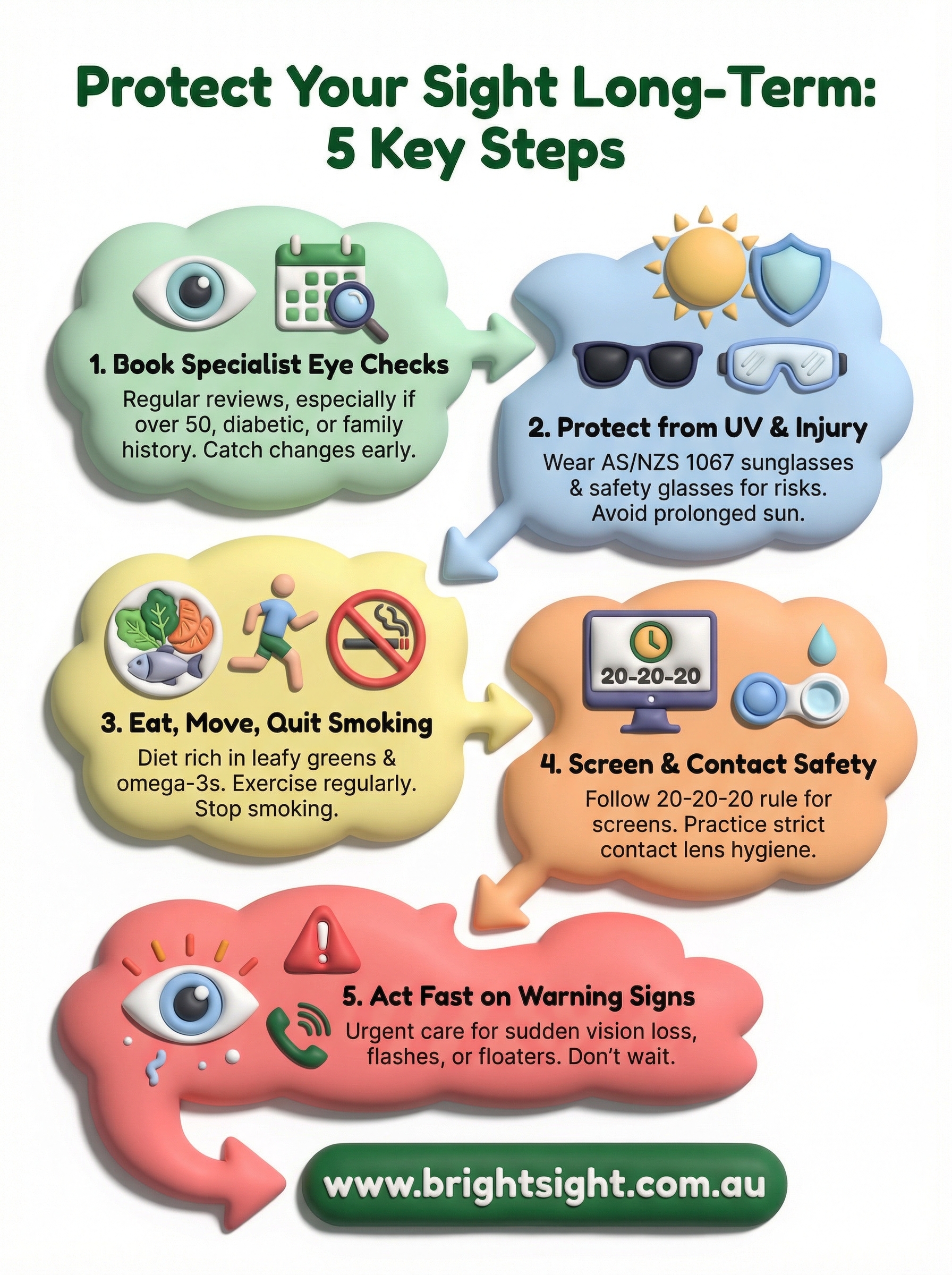
Protecting your vision eye health long-term comes down to consistent action across several areas: regular specialist check-ups, UV protection, a diet that supports retinal function, safe screen and contact lens habits, and quick response to warning signs. None of these steps are complicated, but all of them require you to stay engaged with your eye health rather than waiting for problems to surface.
Your next practical step is to book a specialist eye examination if you haven’t had one in the past two years, or sooner if you have diabetes, a family history of eye disease, or you’re over 50. The earlier a specialist reviews your eyes, the more options you have to protect what you have.
The team at Bright Sight Eye Specialists in Randwick is ready to help. Book an appointment with Dr Dubey or Dr Odouard to take the first step towards long-term eye health today.