


When your eyesight starts to change or you notice something unusual with your eyes, knowing which vision expert to consult can feel overwhelming. From optometrists to ophthalmologists, the eye care field includes various professionals with different qualifications and specialities. Choosing the right specialist matters, especially when you’re dealing with conditions that require surgical intervention or ongoing medical management.
If you’re in Randwick or the Eastern Suburbs of Sydney and experiencing eye problems, this guide breaks down the types of eye care professionals available, when to see each one, and what to expect from your visit. At Bright Sight Eye Specialists, Dr Rahul Dubey and Dr Capucine Odouard provide comprehensive surgical and medical eye care for conditions ranging from cataracts and macular degeneration to diabetic eye disease and corneal conditions. Understanding your options helps you take the right step toward protecting your vision.
What a vision expert is in eye care
A vision expert in the eye care field refers to any professionally trained specialist who diagnoses and treats conditions affecting your eyesight. The term covers several different types of professionals, each with distinct qualifications, training levels, and areas of focus. While you might use the phrase generally to describe anyone who works with eyes, the medical reality involves specific roles with clear boundaries.
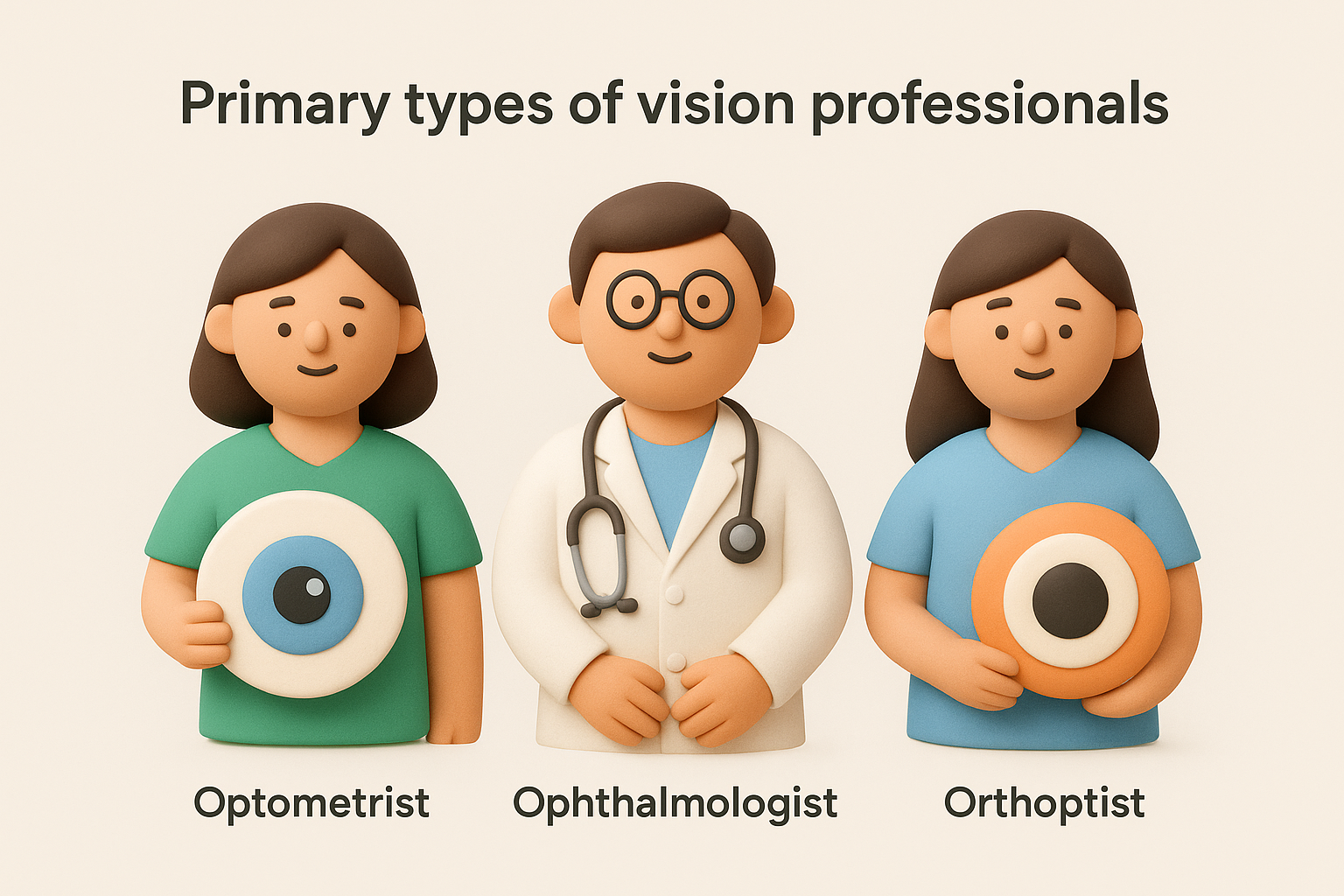
Primary types of vision professionals
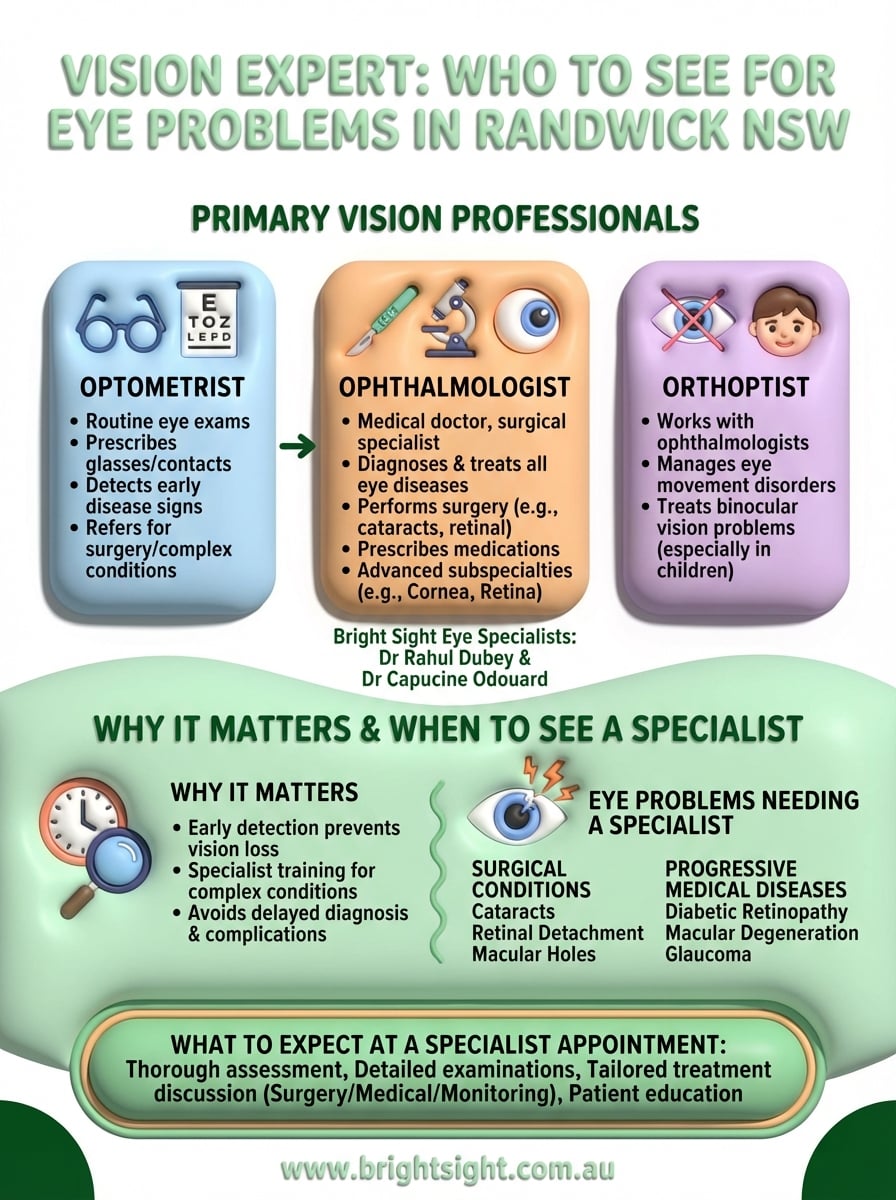
Your eye care typically involves three main professional categories. Optometrists complete university degrees in optometry and handle routine eye examinations, prescribe glasses and contact lenses, and detect early signs of eye disease. Ophthalmologists are medical doctors who specialise in eye surgery and complex medical treatments after completing medical school and advanced surgical training. Orthoptists work alongside ophthalmologists to manage eye movement disorders and binocular vision problems, particularly in children.
Understanding which professional matches your specific needs saves time and ensures you receive appropriate care from the outset.
Surgical vs non-surgical expertise
The distinction between surgical and non-surgical vision experts matters when you’re dealing with conditions that might require intervention. Non-surgical professionals manage your eye health through examinations, prescriptions, and monitoring of stable conditions. They refer you onwards when they detect problems beyond their scope. Surgical specialists like Dr Dubey and Dr Odouard at Bright Sight Eye Specialists perform procedures ranging from cataract removal and retinal surgery to corneal grafts and laser vision correction. These ophthalmologists also provide ongoing medical management for conditions like diabetic retinopathy, macular degeneration, and glaucoma, combining surgical skill with comprehensive medical treatment.
Why getting the right eye professional matters
Your choice of eye care professional directly affects treatment outcomes and the long-term health of your vision. Seeing someone without the appropriate qualifications for your condition can mean delayed diagnosis, missed surgical opportunities, or complications that could have been prevented. Each type of eye specialist trains in different areas, and matching your needs with their expertise ensures you receive care backed by the right knowledge and experience.
Early detection prevents vision loss
Many serious eye conditions develop gradually without obvious symptoms until they’ve caused permanent damage. A qualified vision expert detects subtle changes during examinations that you might not notice yourself. Conditions like glaucoma, diabetic retinopathy, and macular degeneration require early intervention to preserve your sight, and only appropriately trained professionals can identify these diseases in their treatable stages.
Catching problems early often means the difference between simple treatment and complex surgery or irreversible vision loss.
Specialist training for complex conditions
When you need surgery or medical management for advanced eye disease, the level of specialised training becomes critical. Ophthalmologists complete years of surgical education beyond medical school, focusing specifically on intricate eye procedures. Dr Dubey’s training at Moorfields Eye Hospital and Dr Odouard’s advanced qualifications in corneal surgery exemplify the depth of expertise required for conditions like retinal detachment, complex cataracts, or corneal transplants.
Optometrist vs ophthalmologist vs surgeon
Understanding the differences between these professionals helps you navigate the eye care system efficiently. An optometrist holds a university degree in optometry and manages your routine eye health, prescribes glasses and contact lenses, and screens for common eye diseases. Optometrists refer you to a specialist when they detect conditions requiring surgery or advanced medical treatment. They form your first line of eye care for general vision concerns.
When you need a medical specialist
An ophthalmologist is a medical doctor who completes additional years of surgical training specifically in eye care. These vision expert professionals diagnose and treat all eye diseases, perform surgery, and prescribe medications. At Bright Sight Eye Specialists, both Dr Dubey and Dr Odouard are ophthalmologists who specialise in surgical procedures like cataract removal, retinal surgery, and corneal transplants.
Your optometrist typically coordinates your care by referring you to an ophthalmologist when surgical intervention or complex medical management becomes necessary.
Surgical subspecialists
Some ophthalmologists further specialise in specific surgical areas. Retinal surgeons focus on conditions affecting the back of your eye, whilst corneal specialists handle diseases of the eye’s front surface. Dr Dubey’s expertise in macular and retinal surgery and Dr Odouard’s corneal surgery qualifications represent this advanced subspecialisation level. This focused training ensures you receive the most current surgical techniques for complex conditions.
Eye problems that need a specialist in Randwick
Certain eye conditions require immediate referral to a surgical vision expert rather than ongoing optometric care. These problems involve structural changes, disease progression, or complications that need medical intervention or surgery. Recognising when your symptoms indicate a specialist-level condition helps you access appropriate treatment without delay.
Conditions requiring surgery
Cataracts develop when your eye’s natural lens becomes cloudy, affecting your vision quality and daily activities. Surgical removal with lens implant remains the only effective treatment. Retinal detachment presents as sudden flashes, floaters, or a curtain across your vision and requires emergency surgery to prevent permanent blindness. Macular holes, epiretinal membranes, and pterygium also need surgical correction by trained ophthalmologists at Bright Sight Eye Specialists.

Progressive medical eye diseases
Diabetic retinopathy, macular degeneration, and glaucoma require ongoing specialist management combining monitoring, laser treatment, and injections. These conditions cause irreversible vision loss without timely intervention. Dr Dubey and Dr Odouard provide comprehensive treatment for these diseases, including intravitreal injections for macular degeneration and diabetic eye disease, along with laser procedures to slow disease progression.
Early referral to a specialist prevents complications that could compromise your sight permanently.
What to expect at an eye specialist appointment
Your first visit to a vision expert at Bright Sight Eye Specialists follows a structured process designed to thoroughly assess your condition. Dr Dubey or Dr Odouard will review your medical history, current symptoms, and any referral information from your optometrist or GP. The appointment typically runs longer than a routine optometry visit because it involves detailed examinations and discussion of treatment options tailored to your specific needs.
The initial consultation process
You’ll spend time explaining your symptoms and concerns whilst the specialist reviews your eye health history, medications, and family history of eye disease. This discussion helps identify potential causes and guides the examination focus. Dr Dubey and Dr Odouard prioritise patient education, ensuring you understand what’s happening with your eyes before discussing treatment approaches.
Understanding your condition before deciding on treatment empowers you to participate actively in your eye care decisions.
Diagnostic tests and examinations
The specialist performs several targeted tests depending on your condition. These include visual acuity checks, pressure measurements, slit lamp examination of your eye’s structures, and dilated fundus examination to view your retina. For surgical conditions, you’ll receive detailed imaging such as OCT scans for retinal problems or corneal topography for refractive surgery planning. The specialist explains findings immediately and discusses whether you need surgery, medical treatment, or ongoing monitoring.
Next steps
Your eye health deserves attention from qualified professionals who understand the complexity of vision problems. Finding the right vision expert means matching your specific condition with the appropriate level of expertise, whether that’s routine care from an optometrist or surgical intervention from an experienced ophthalmologist. Bright Sight Eye Specialists provides comprehensive surgical and medical eye care in Randwick, combining advanced technology with patient-centred treatment approaches.
Dr Rahul Dubey and Dr Capucine Odouard bring extensive surgical training and subspecialist expertise to conditions ranging from cataracts and macular degeneration to corneal disease and diabetic retinopathy. Their practice serves patients across the Eastern Suburbs of Sydney with transparent pricing, including no-gap options for insured patients, and telehealth consultations for regional communities.
If you’re experiencing changes in your vision or have been referred by your optometrist, contact Bright Sight Eye Specialists to arrange a consultation and receive the specialist care your eyes need.