


If you’ve been diagnosed with type 2 diabetes, you’ve likely heard that it can affect your eyes. But understanding exactly what type 2 diabetes vision changes look and feel like, and knowing when something needs urgent attention, is a different matter entirely. Some changes are temporary and linked to blood sugar fluctuations. Others signal progressive damage to the retina that, without treatment, can lead to permanent sight loss.
The challenge is that many diabetic eye conditions develop silently. By the time you notice blurred vision or dark spots, the disease may already be well established. That’s why early detection matters so much. At Bright Sight Eye Specialists in Randwick, Dr. Rahul Dubey specialises in diabetic eye disease management, including intravitreal injections, laser treatment, and retinal surgery for patients across Sydney’s Eastern Suburbs and beyond.
This article explains the specific ways type 2 diabetes affects your eyesight, the warning signs you shouldn’t ignore, and when to act to protect your vision. Whether you’re newly diagnosed or have been managing diabetes for years, this is information worth having.
Why type 2 diabetes affects your vision
When blood sugar remains persistently elevated, it damages the small blood vessels throughout your body. The ones inside your eyes are among the most vulnerable. This vascular damage is the fundamental reason type 2 diabetes vision problems develop, and it affects multiple structures within the eye simultaneously. Your eyes rely on a dense network of tiny capillaries for their oxygen and nutrient supply, so when those capillaries become compromised, the effects spread across the retina and beyond.
How blood sugar weakens blood vessels
High blood sugar causes the walls of your capillaries to weaken, swell, and leak. In the eyes, this leakage allows fluid and blood to seep into surrounding tissue, interfering with the way your retina receives and transmits visual information. Your body responds by attempting to grow new replacement blood vessels, but these new vessels are structurally fragile and bleed easily. This sets up a damaging cycle that worsens with each year of poorly managed blood sugar.
The longer blood sugar levels stay uncontrolled, the greater the cumulative damage to the blood vessels inside your eyes.
Vessel damage accumulates silently over years. Many people with type 2 diabetes have significant retinal changes visible on examination long before they notice any shift in their sight. This silent progression is exactly what makes regular screening so critical.
The role of fluid build-up in the macula
The macula sits at the centre of your retina and handles sharp, detailed vision, including tasks like reading, driving, and identifying faces. When leaking vessels allow fluid to pool in the macula, it swells. This condition, called diabetic macular oedema, distorts and blurs central vision in ways your peripheral vision simply cannot compensate for.
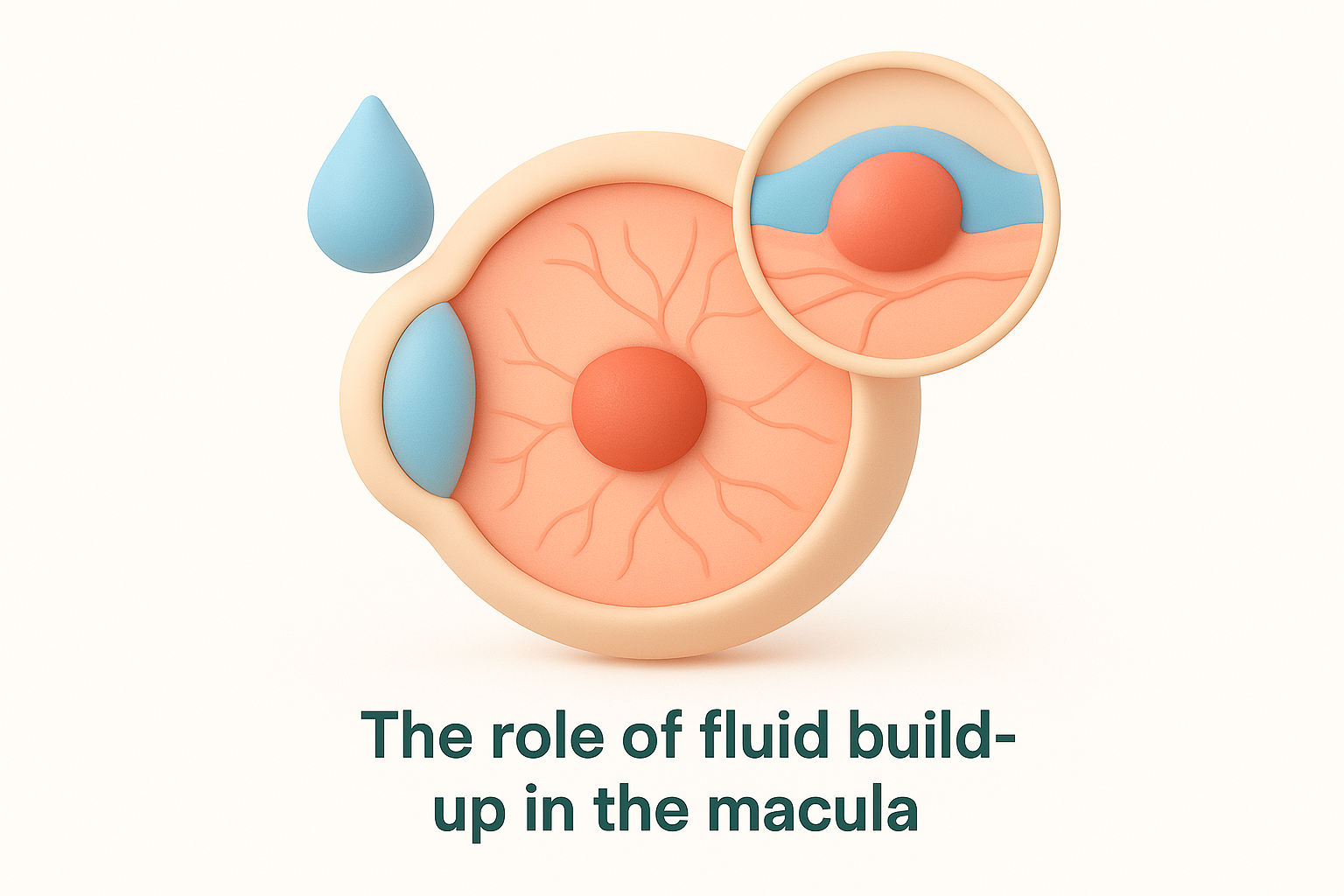
Diabetic macular oedema is one of the most common causes of preventable vision loss in type 2 diabetes. Detected early, it responds well to targeted treatment. When diagnosis is delayed, the damage becomes harder to reverse and the outlook for full visual recovery worsens considerably.
Vision changes you might notice
Not all type 2 diabetes vision changes are obvious, and some are easier to dismiss than others. Symptoms range from mild and temporary to sudden and serious, so knowing what to look for gives you a better chance of acting before lasting damage sets in.
Blurred or fluctuating vision
Blood sugar spikes cause the lens inside your eye to swell temporarily, shifting your focus and blurring your sight. You might notice this after meals or during periods of poor glucose control. The blurring usually settles once blood sugar stabilises, but it signals that your levels need closer attention and better management.
If blurred vision comes on suddenly or fails to improve after blood sugar normalises, treat it as urgent and seek an eye review without delay.
Floaters, dark spots, and patchy sight
Vitreous floaters are threads, specks, or shadows that drift across your field of view. In type 2 diabetes, a sudden surge in floaters or the appearance of dark patches can indicate bleeding from fragile blood vessels inside the eye. Reduced central vision or difficulty reading fine print may point to fluid build-up at the macula. Any of these changes deserve a prompt eye assessment. Look out for:
- A sudden increase in floaters or new dark shadows
- A blurry or missing patch in your central vision
- Difficulty reading text that was recently clear
Diabetic eye conditions to know about
Several distinct conditions sit under the umbrella of diabetic eye disease, and each one affects your vision differently. Understanding what each condition involves helps you recognise symptoms earlier and have more informed conversations with your eye specialist.
Diabetic retinopathy
Diabetic retinopathy is the most common diabetic eye condition and develops in stages. In the early stage, called non-proliferative retinopathy, vessel walls weaken and form tiny bulges that leak fluid or blood. As the condition progresses to proliferative retinopathy, abnormal new vessels grow across the retina and into the vitreous. These fragile vessels bleed easily, causing sudden vision loss or the appearance of dense floaters.
Diabetic retinopathy affects roughly one in three people with diabetes globally, and type 2 diabetes vision loss from this condition is largely preventable with early treatment.
Cataracts and glaucoma
People with type 2 diabetes are significantly more likely to develop cataracts at a younger age than those without the condition. High blood sugar alters the chemistry of the lens, causing it to cloud earlier. Diabetes also raises your risk of glaucoma, a condition where elevated pressure inside the eye damages the optic nerve over time.
Both conditions progress gradually, so symptoms can be easy to overlook. Watch for:
- Gradual clouding or haziness across your visual field
- Increased sensitivity to glare or bright lights
- Slow narrowing of your peripheral vision
When to act and what counts as urgent
Knowing when to call your eye specialist versus waiting for a routine appointment is one of the most practical things you can do to protect your type 2 diabetes vision. Some symptoms need attention within hours. Others need a booking within days or weeks. The distinction matters because acting at the right time can be the difference between recovering your sight and losing it permanently.
Symptoms that need same-day attention
Some changes in your vision require you to seek help on the same day they appear. Do not wait to see if these resolve on their own.
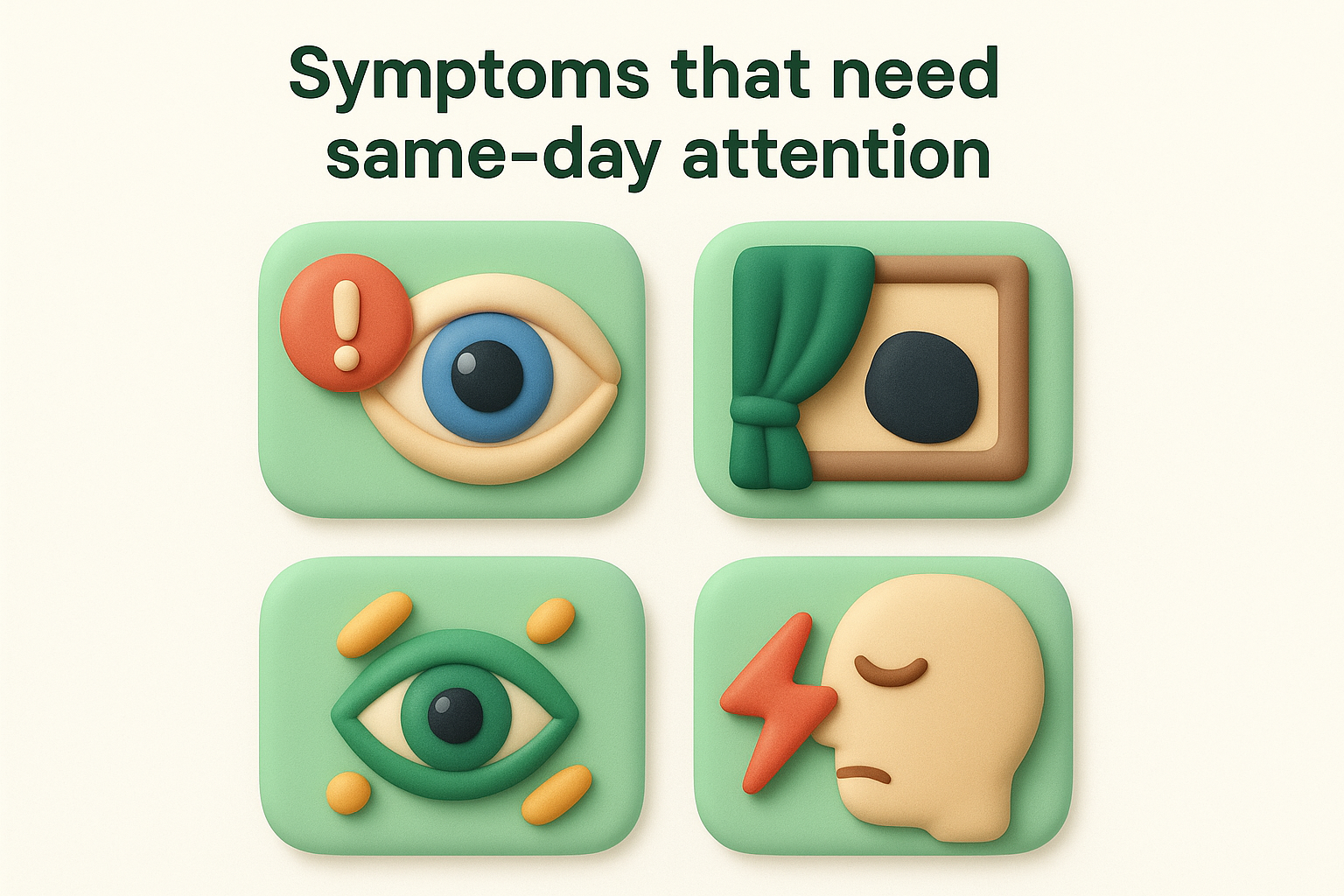
- Sudden, severe blurring that comes on without warning
- A dark curtain or shadow spreading across part of your visual field
- A rapid increase in floaters combined with flashes of light
- Complete or near-complete loss of vision in one or both eyes
Any sudden change in vision linked to diabetes should be treated as urgent until an eye specialist confirms otherwise.
Symptoms that need a prompt but non-emergency appointment
Not every new symptom signals a crisis, but some changes still require attention within days rather than weeks. Gradual blurring that does not settle after blood sugar stabilises, difficulty reading text that was previously clear, or mild new floaters that persist all warrant a prompt review. These symptoms may indicate early retinal changes or macular fluid that responds well to treatment when caught quickly.
How eye checks and treatments work in Australia
Australia has a well-structured system for detecting and managing type 2 diabetes vision complications. Diabetes Australia recommends a dilated eye examination at least once every two years for people with type 2 diabetes, and annually if you already have signs of retinal disease. Your GP or optometrist can refer you to an ophthalmologist for a more detailed assessment when they spot early changes.
What screening involves
During a dilated retinal examination, your specialist uses drops to widen your pupils and then examines the retina using specialised lenses and imaging equipment. Optical coherence tomography (OCT) produces detailed cross-sectional scans of your macula, allowing early detection of fluid build-up before you notice any shift in your sight. The process is painless and typically takes under an hour.
Treatment options available
When diabetic retinopathy or macular oedema is confirmed, several effective treatments are available through specialist practices in Australia. Intravitreal injections deliver anti-VEGF medication directly into the eye to reduce abnormal vessel growth and clear fluid from the macula. Laser treatment seals leaking vessels and slows disease progression. For more advanced cases, vitreoretinal surgery addresses bleeding or retinal detachment directly.
Most treatments are covered, at least partially, through Medicare or private health insurance, so discuss your cover options with your specialist before your appointment.
At Bright Sight Eye Specialists in Randwick, Dr. Rahul Dubey delivers all of these treatment pathways within a single specialist practice, reducing the need for multiple referrals across different providers.

Next steps for protecting your sight
Managing type 2 diabetes vision starts with one straightforward habit: keeping your eye appointments even when your sight feels normal. Annual or biennial retinal examinations catch changes before they cause symptoms, and that early window is exactly when treatment works best. If you have already noticed any of the warning signs described in this article, book a specialist review now rather than waiting for your next scheduled check.
Your blood sugar management directly influences how quickly eye disease progresses, so working with your GP or endocrinologist to tighten your glucose control is as important as any eye treatment. Blood pressure and cholesterol management matter just as much. Taken together, these steps significantly reduce your risk of serious sight loss over time.
If you are based in Sydney’s Eastern Suburbs or surrounding areas, book an appointment with Bright Sight Eye Specialists to get your eyes assessed by an experienced retinal specialist.