


If you’ve been diagnosed with type 2 diabetes, your eyesight may not be the first thing on your mind. But it should be. Type 2 diabetes and vision problems are closely linked, and without proper management, high blood sugar can quietly damage the delicate blood vessels inside your eyes, often before you notice any symptoms at all.
Diabetic eye disease is one of the leading causes of preventable blindness in Australia. The good news? Early detection and consistent monitoring make a significant difference. When caught early, most diabetes-related eye conditions can be treated effectively, helping you hold on to clear, functional vision for the long term.
At Bright Sight Eye Specialists in Randwick, Dr. Rahul Dubey and Dr. Capucine Odouard regularly treat patients with diabetic retinopathy and other diabetes-related eye conditions, using advanced diagnostics and treatments including laser therapy and intravitreal injections. This article explains exactly how type 2 diabetes affects your eyes, what warning signs to watch for, and the steps you can take right now to protect your sight.
Why type 2 diabetes can affect your vision
Your eyes depend on a vast network of tiny blood vessels to stay nourished and functioning. When you have type 2 diabetes, persistently high blood glucose levels put those vessels under constant stress, causing them to weaken, swell, leak, or grow in abnormal patterns over time. This process can begin long before you notice any change in your sight.
The role of blood vessels in your sight
Sitting at the back of your eye, the retina contains some of the smallest and most fragile blood vessels in the human body. These vessels convert light into the electrical signals your brain reads as vision. When excess glucose circulates in your bloodstream, it damages the vessel walls, making them far more likely to leak fluid into the surrounding retinal tissue and distort the images you see.
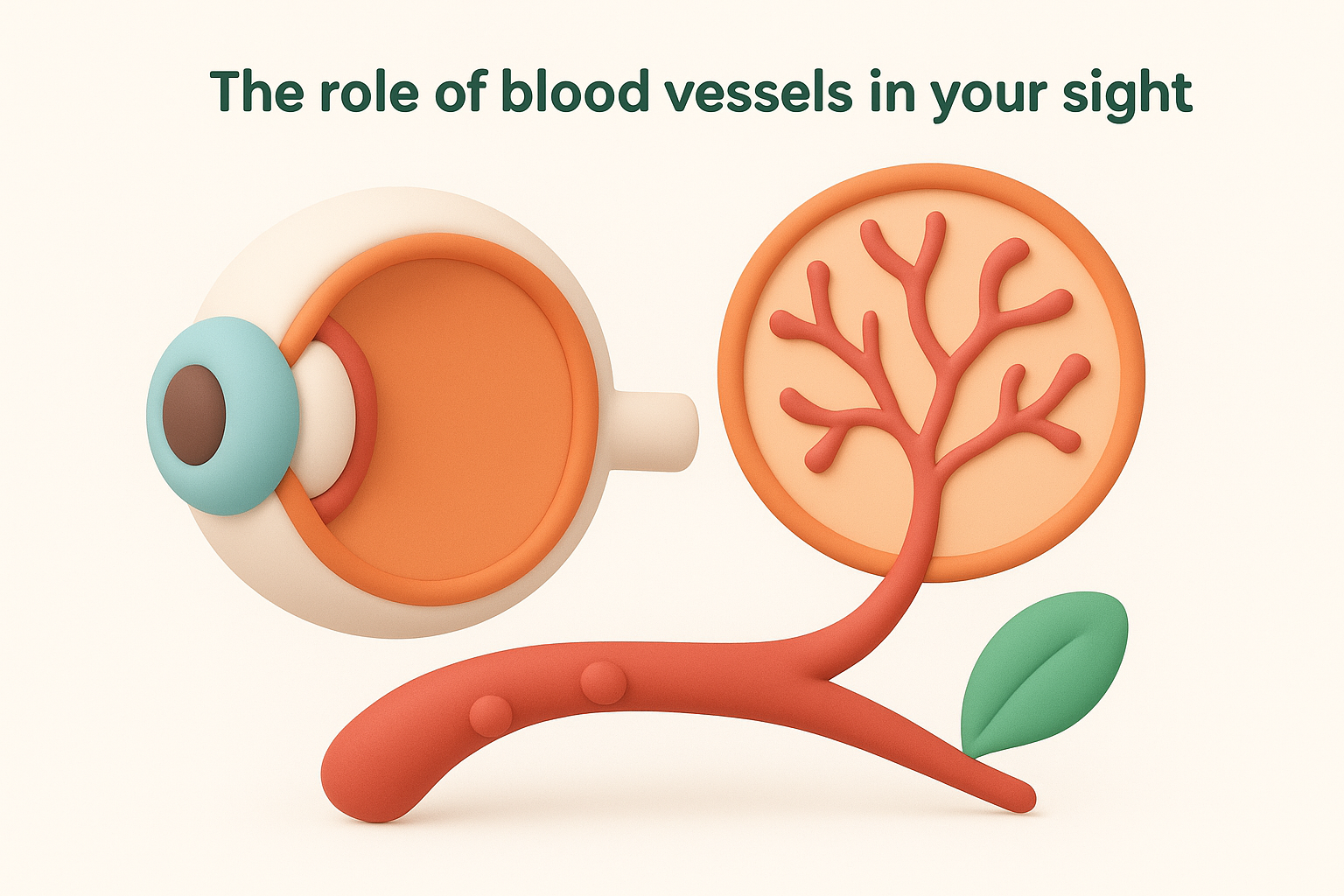
Diabetic damage to retinal blood vessels often begins years before you experience any noticeable vision changes, which is why regular eye checks matter even when your sight feels perfectly fine.
Why the damage builds up silently
The link between type 2 diabetes and vision loss is particularly dangerous because the early stages produce no pain and no obvious symptoms. Your eyes can lose significant function before you become aware of a problem. Chronically elevated glucose also affects the lens of your eye, the optic nerve, and the fluid drainage channels, meaning diabetes can drive multiple eye conditions at the same time rather than just one.
Over time, these cumulative changes cause permanent structural damage that becomes much harder to treat. The longer blood sugar remains poorly controlled, the greater the risk, which is why understanding this process early puts you in a far stronger position to protect your sight.
How blood sugar swings cause blurry vision
When your blood sugar rises sharply, your eyes respond almost immediately. High glucose levels cause the lens of your eye to swell as fluid shifts in and out with changing sugar concentrations. This swelling distorts the way light focuses onto the retina, producing that familiar blurry or fluctuating vision many people with type 2 diabetes notice throughout the day.
Why the lens is particularly vulnerable
The lens sits inside your eye and focuses incoming light. Unlike most tissues, it cannot replace damaged cells easily, so repeated swelling from blood sugar fluctuations gradually affects its flexibility and clarity. Once the lens stiffens or clouds over time, your vision does not simply bounce back when glucose settles.
Blurry vision that clears up after you manage your blood sugar may feel harmless, but repeated fluctuations are doing cumulative damage to the lens and surrounding structures.
The difference between temporary and lasting change
Short-term blurry vision can improve once your glucose levels stabilise, giving the false impression that your eyes are fine. But repeated fluctuations accumulate damage that does not simply reverse on its own.
Managing type 2 diabetes and vision problems means recognising that temporary improvement is not the same as structural recovery. If your vision changes frequently with your blood sugar, that pattern is itself a warning sign worth raising with your eye specialist.
The main diabetic eye conditions to know
Type 2 diabetes and vision loss are connected through several distinct conditions, each affecting a different part of your eye. Understanding these helps you recognise what your eye specialist is looking for during a diabetic eye check.
Diabetic retinopathy
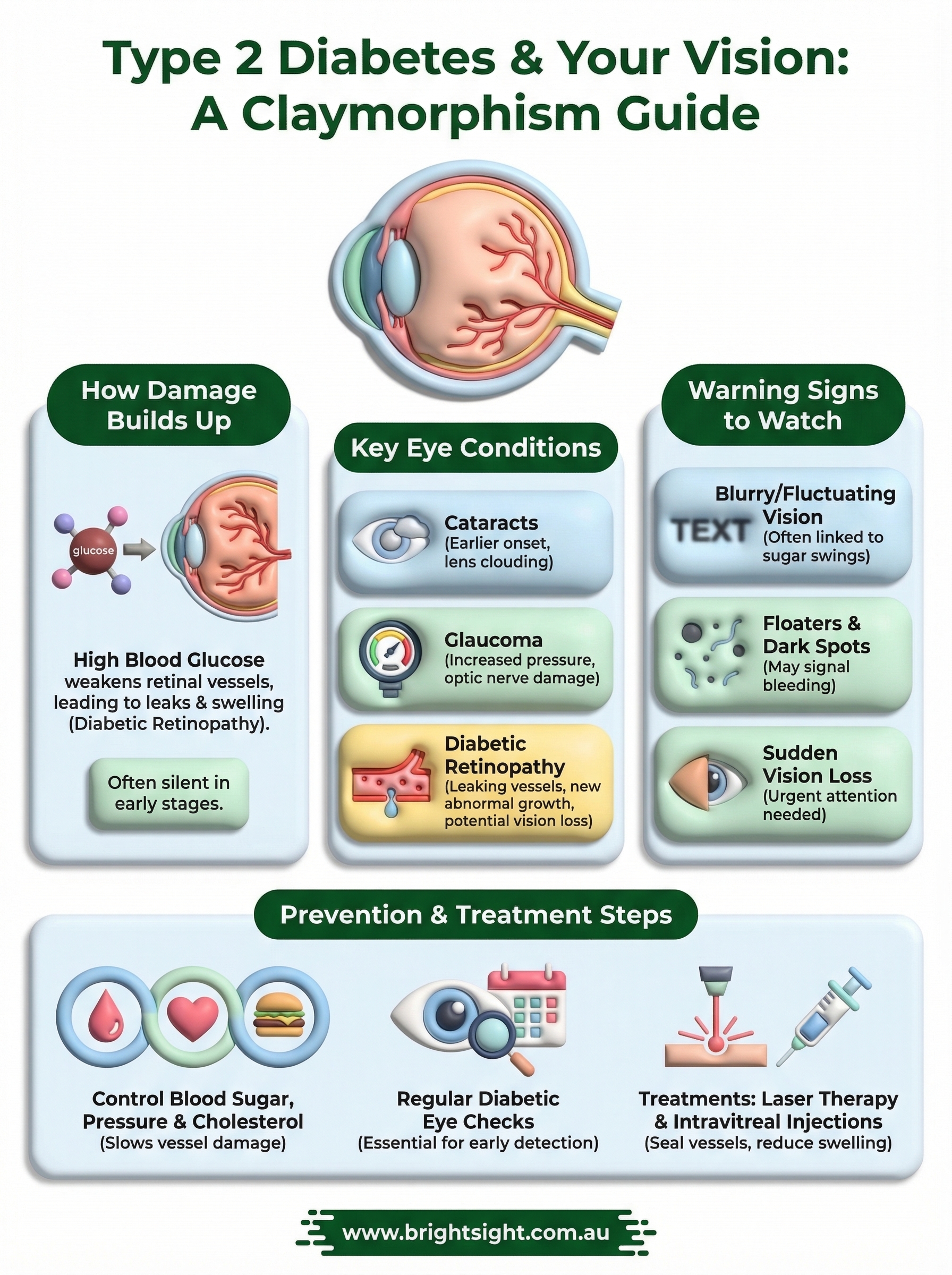
Diabetic retinopathy is the most common diabetes-related eye disease in Australia. It develops when damaged retinal blood vessels leak fluid or bleed into the retina. In its advanced stage, called proliferative retinopathy, your eye grows fragile new vessels that bleed easily and can lead to severe vision loss. Diabetic macular oedema, a build-up of fluid at the central retina, often occurs alongside retinopathy and directly affects your ability to read and see fine detail.
Retinopathy can reach an advanced stage without causing pain or noticeable vision changes, which is why regular screening is essential even when your sight feels normal.
Other conditions linked to diabetes
People with type 2 diabetes carry a significantly higher risk of developing cataracts at a younger age than the general population. Cataracts cause your lens to cloud over, reducing contrast and clarity. Glaucoma risk also increases with diabetes, as raised pressure inside the eye gradually damages the optic nerve and narrows your visual field from the outside in, often without any early warning.
Symptoms and warning signs you should not ignore
Because diabetic eye disease rarely causes pain, it can progress significantly before you notice anything wrong. The connection between type 2 diabetes and vision loss becomes clearer when you know exactly what changes to watch for, rather than waiting until your sight is already compromised.
Early signs that need attention
Blurry or fluctuating vision that shifts throughout the day, difficulty reading fine print, and colours appearing washed out can all signal early retinal changes. You may also notice dark spots, floaters, or small specks drifting across your visual field, which can indicate bleeding inside the eye.

If you notice sudden flashes of light or a significant increase in floaters, treat it as urgent and contact an eye specialist the same day.
When to seek urgent care
Some symptoms demand immediate attention rather than a routine appointment. Contact your eye specialist urgently if you experience any of the following:
- Sudden loss of central or peripheral vision
- A dark curtain or shadow appearing across part of your sight
- Rapid deterioration in your ability to see fine detail
Waiting on these signs significantly increases your risk of permanent vision loss that even advanced treatment cannot fully reverse.
How to prevent and treat vision loss from diabetes
Preventing vision loss from diabetes starts with two actions that work in parallel: controlling your blood sugar and attending regular diabetic eye examinations. Neither works as well without the other, and combining both gives you the strongest defence against the conditions that link type 2 diabetes and vision deterioration over time.
Keep blood sugar, blood pressure, and cholesterol in check
Stable blood glucose levels slow the damage to retinal blood vessels significantly and reduce your risk of developing retinopathy or macular oedema. Managing blood pressure and cholesterol alongside your glucose targets offers even greater protection, as all three directly contribute to vessel damage inside the eye. Your GP and diabetes specialist can help you set clear, measurable targets and adjust your plan when needed.
Consistent control of all three markers, not just blood sugar alone, gives you the best chance of keeping your retinal blood vessels intact for longer.
Treatments available when damage is found
When your eye specialist detects early retinal changes, treatment options include laser therapy to seal leaking vessels and intravitreal injections that reduce swelling and halt abnormal vessel growth. Finding problems early consistently leads to less invasive treatment and significantly better long-term outcomes.
Next steps for protecting your sight
The connection between type 2 diabetes and vision loss is real, but it is not inevitable. Consistent blood sugar management combined with regular eye examinations gives you the best possible chance of keeping your sight intact for decades to come. Early action beats reactive treatment every time.
Starting now makes a genuine difference. Book a diabetic eye check if you have not had one in the past 12 months, or sooner if you have noticed any changes in your vision, including blurring, floaters, or fluctuating clarity. Your optometrist can refer you to a specialist if retinal changes are detected.
At Bright Sight Eye Specialists in Randwick, Dr. Rahul Dubey and Dr. Capucine Odouard offer comprehensive diabetic eye assessments and treatment, including laser therapy and intravitreal injections. Taking one step today protects the vision you rely on tomorrow. Contact Bright Sight Eye Specialists to book your appointment.