


If you’ve noticed your vision going soft or hazy, and you also live with type 2 diabetes, the two are very likely connected. Type 2 diabetes and blurry vision often go hand in hand because fluctuating blood sugar levels directly affect how your eyes focus. Sometimes it’s temporary, a sign that glucose levels need better control. Other times, it signals something more serious, like diabetic retinopathy, a condition that can permanently damage your sight if left untreated.
The good news is that early action makes a real difference. Understanding why blurry vision happens with type 2 diabetes puts you in a stronger position to protect your eyes long-term. Whether the issue is a short-term fluctuation or the start of structural changes inside the eye, knowing when to see a specialist matters.
At Bright Sight Eye Specialists in Randwick, Dr Rahul Dubey and Dr Capucine Odouard regularly treat patients with diabetes-related eye conditions, from early screening through to advanced retinal surgery and intravitreal injections. This article explains the causes behind diabetic blurry vision, the risks involved, and the practical steps you can take to keep your eyesight intact.
Why type 2 diabetes can blur your vision
High blood sugar affects your eyes in two distinct ways, and understanding both helps explain why type 2 diabetes and blurry vision so often appear together. One is reversible and linked to fluctuating glucose levels; the other involves permanent structural damage to the blood vessels inside your eye.
How blood sugar changes your lens
When your blood glucose rises sharply, fluid shifts into the lens of your eye. This causes the lens to swell slightly, which changes how it bends light. The result is blurred focus that can shift between your near and distance vision, sometimes within hours of a meal or after starting new diabetes medication. Stabilising your blood glucose usually resolves this type of blurring within a few weeks, once your body re-adjusts.
If you’ve just started insulin or changed your diabetes medication and your vision has blurred, wait a few weeks before updating your glasses prescription, as it may correct itself once glucose levels settle.
How diabetes damages the retina over time
The more serious cause is diabetic retinopathy, a condition where persistently high blood sugar weakens the tiny blood vessels that supply your retina. These vessels can leak fluid, bleed, or grow new fragile vessels that distort vision. Early-stage retinopathy often produces no noticeable symptoms at all, which is exactly why regular eye checks matter so much for anyone with type 2 diabetes. Left untreated, the damage can lead to significant or permanent vision loss.
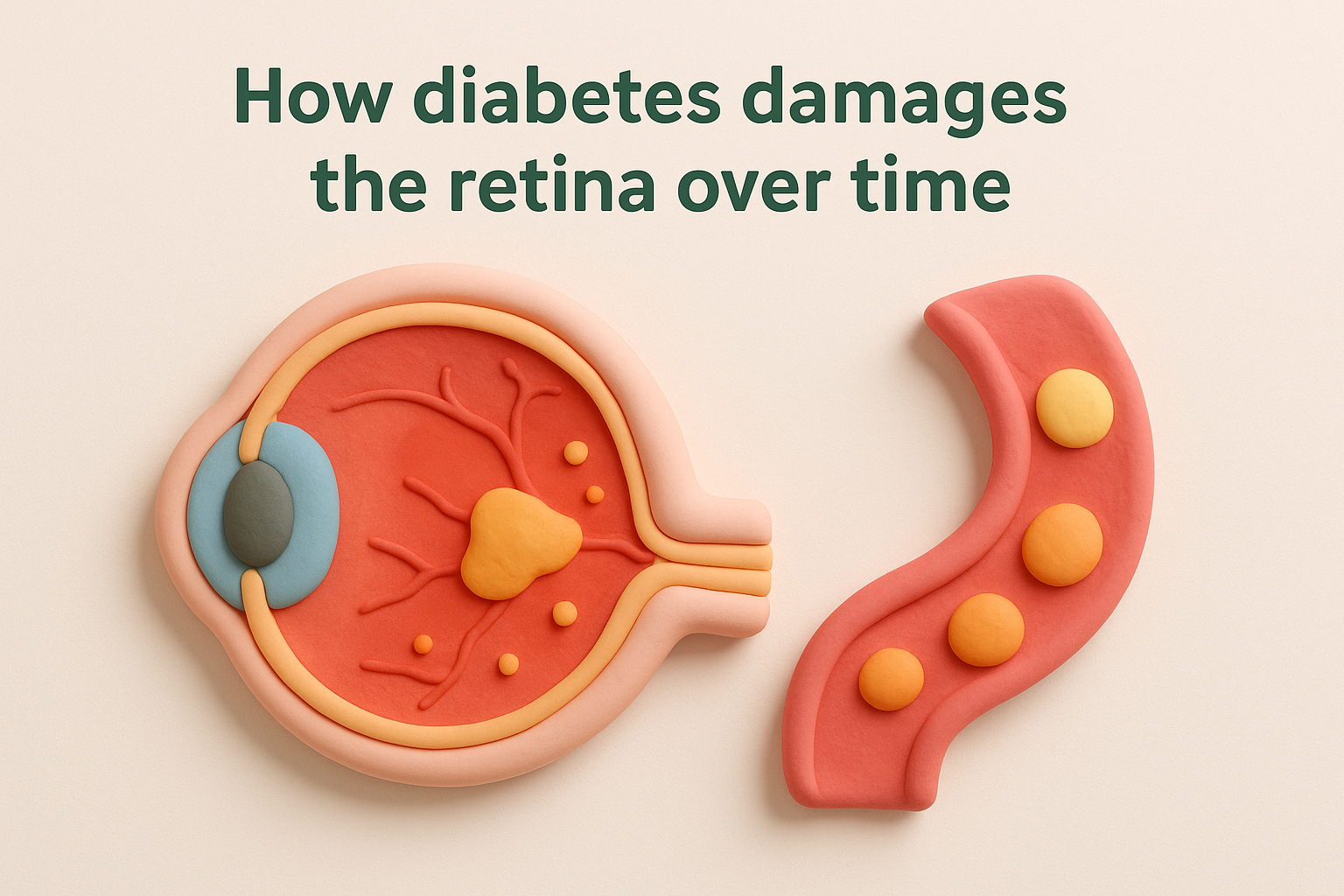
Your macula, the central part of the retina responsible for sharp, detailed vision, is particularly vulnerable. Diabetic macular oedema occurs when fluid builds up in this area, causing central vision to become blurred or distorted. This condition affects a significant proportion of people with long-standing type 2 diabetes, and intravitreal injections are now the standard treatment to reduce that swelling and preserve vision.
What blurry vision in diabetes feels like
Not all blurry vision feels the same, and with type 2 diabetes and blurry vision, the experience can vary depending on what’s actually causing it. Some people describe a general haziness, as if they’re looking through a smudged window. Others notice that text becomes harder to read, or that objects at a distance lose their sharpness. The blurring may affect one eye or both.
How the blurring tends to behave
If the cause is a blood sugar spike, the blur often shifts throughout the day, getting worse after meals and improving as glucose levels come back down. You might find your vision is clearer in the morning and noticeably worse by the evening after eating.
If your vision changes noticeably depending on what you’ve eaten, that pattern itself is worth reporting to your doctor.
When the cause is diabetic macular oedema or retinopathy, the blurring tends to be more consistent. It may also come with distortion, where straight lines appear wavy, or with dark patches appearing in your central field of view. Unlike glucose-related blurring, this type does not resolve on its own and requires assessment and treatment from an eye specialist to prevent lasting damage.
When blurry vision becomes an emergency
Some vision changes linked to type 2 diabetes and blurry vision are serious enough to need same-day medical attention. Not every blur is an emergency, but certain symptoms signal that something acute is happening inside your eye that will not improve on its own or wait for a routine appointment.
Warning signs that need same-day attention
If you notice any of the symptoms below, contact an eye specialist or present to an emergency department the same day:
- Sudden loss of vision in one or both eyes
- A dark curtain or shadow moving across your visual field
- A rapid increase in floaters, particularly when combined with flashing lights
- Bleeding visible inside your eye, which may appear as a dark red haze
These symptoms can indicate a retinal detachment or vitreous haemorrhage, both of which are sight-threatening conditions requiring urgent assessment and often surgical treatment. People with diabetes carry a higher risk of both because fragile new blood vessels can bleed or exert traction on the retina with no prior warning signs at all.
If you notice a sudden shower of floaters or flashing lights, treat it as an emergency and seek assessment within hours, not days.
How doctors diagnose the cause
When you present with type 2 diabetes and blurry vision, an eye specialist needs to determine whether the blur stems from a temporary glucose-related shift or from structural damage inside your eye. The assessment is straightforward and non-invasive.
What happens during a diabetic eye examination
Your specialist will dilate your pupils using eye drops, which widens them enough to allow a clear view of the retina, macula, and optic nerve at the back of your eye. This lets the doctor directly inspect the blood vessels for signs of leakage, swelling, or abnormal vessel growth linked to diabetic retinopathy.
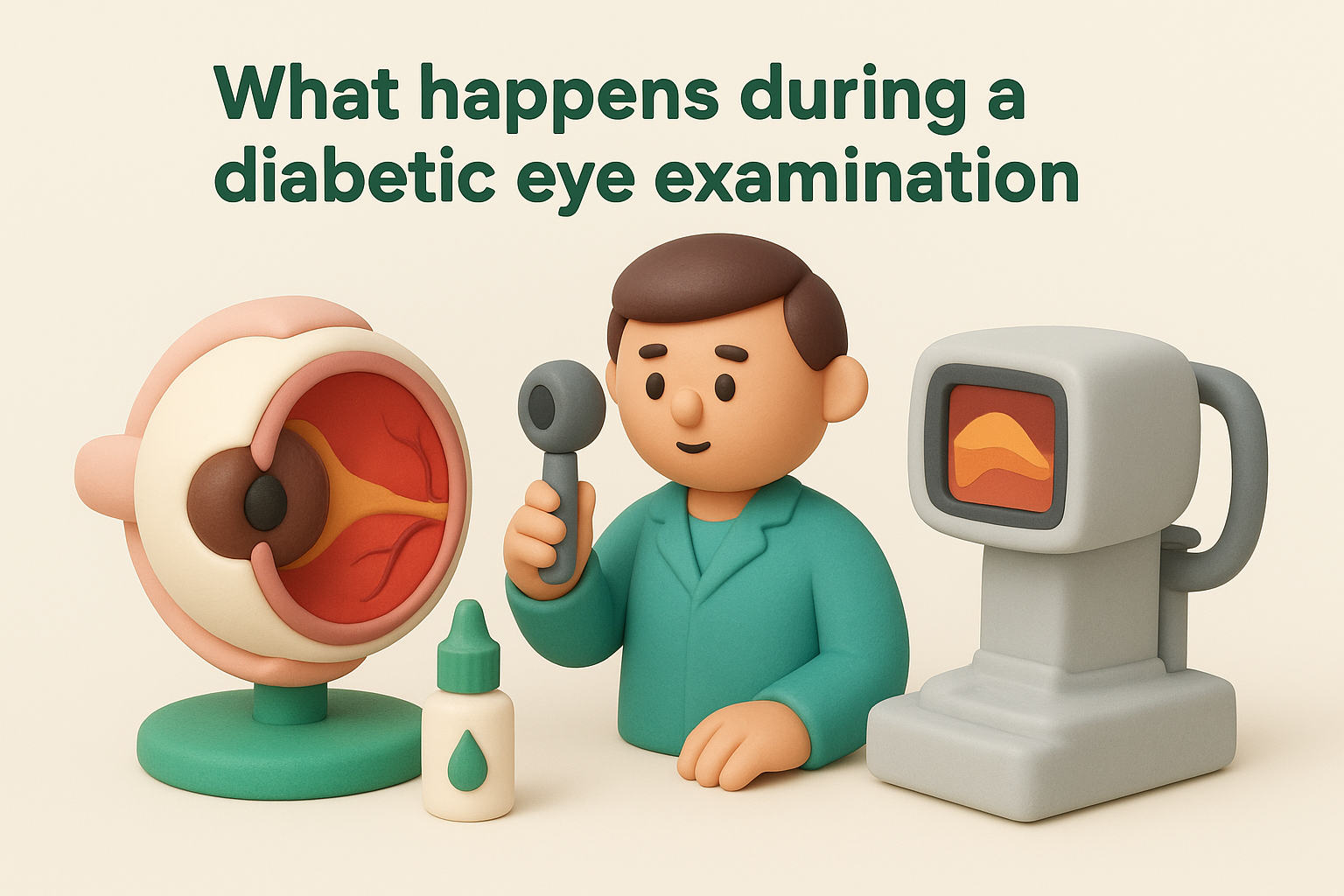
Dilation takes around 20 to 30 minutes to take full effect, so arrange for someone to drive you home afterwards as your near vision will be temporarily blurred.
If retinopathy or macular oedema is suspected, your specialist may also use optical coherence tomography (OCT), a painless scan that produces detailed cross-sectional images of the macula. This helps measure the exact degree of swelling and guides treatment decisions. Fundus photography can also be taken to document and monitor any changes over time, giving your specialist a baseline to compare against at future appointments.
How to fix and prevent blurry vision
Managing type 2 diabetes and blurry vision requires action on two fronts: controlling your blood sugar to prevent further damage, and treating any existing structural changes to the back of your eye. The approach depends on what is causing the blur.
Control your blood sugar first
Tightening your glucose control is the single most effective step you can take to protect your vision long-term. Work with your GP or endocrinologist to bring your HbA1c into a safe range, and monitor your blood pressure and cholesterol too, since both amplify the damage that high glucose causes to your retinal blood vessels.
Even modest improvements in blood sugar control can slow or halt the progression of diabetic eye disease.
Get treatment for retinal changes
If your specialist finds diabetic macular oedema or retinopathy, lifestyle changes alone are not enough. Intravitreal injections of anti-VEGF medication reduce retinal swelling and stop fragile new vessels from forming.
Regular monitoring every six to twelve months gives your eye specialist the chance to catch any progression early and adjust your treatment plan before significant vision loss occurs. Laser treatment may also be recommended depending on the type and stage of retinal damage present.

Next steps to protect your sight
The connection between type 2 diabetes and blurry vision is well established, but the outcome depends heavily on how early you act. Routine eye checks, stable blood glucose, and prompt treatment when problems arise are the three things that make the biggest difference to your long-term vision.
If you have not had a dilated eye exam in the past twelve months, now is the right time to book one. Early diabetic retinopathy produces no symptoms, which means the only way to catch it before it causes damage is through regular specialist assessment. Your optometrist can refer you, or you can contact a retinal specialist directly.
At Bright Sight Eye Specialists in Randwick, Dr Rahul Dubey and Dr Capucine Odouard provide thorough diabetic eye assessments and a full range of treatment options, from monitoring through to retinal surgery and intravitreal injections. Book an appointment today to take the next step in protecting your sight.