


Choosing the eye specialists who will care for your vision is one of the most important health decisions you’ll make. Your eyes aren’t something you get a second chance with, and the difference between a good outcome and a great one often comes down to who’s holding the surgical instruments and how well they communicate with you before, during, and after treatment.
Whether you’ve been referred by your optometrist or GP for cataracts, a retinal condition, or macular degeneration, you’re likely weighing up your options and wondering what actually matters when selecting an ophthalmologist. Qualifications? Technology? Location? Cost transparency? The answer is all of the above, and a few things that aren’t always obvious from a website or a waiting room brochure. Getting this choice right means less stress, clearer expectations, and better results.
At Bright Sight Eye Specialists in Randwick, Dr Rahul Dubey and Dr Capucine Odouard see firsthand how much patients benefit when they feel informed and confident in their care team. That experience shaped this guide. Below, we’ll walk you through exactly what to look for in an eye specialist, from training and subspecialty expertise to pricing transparency and patient-centred communication, so you can make a decision you feel genuinely good about.
What eye specialists do and who they are
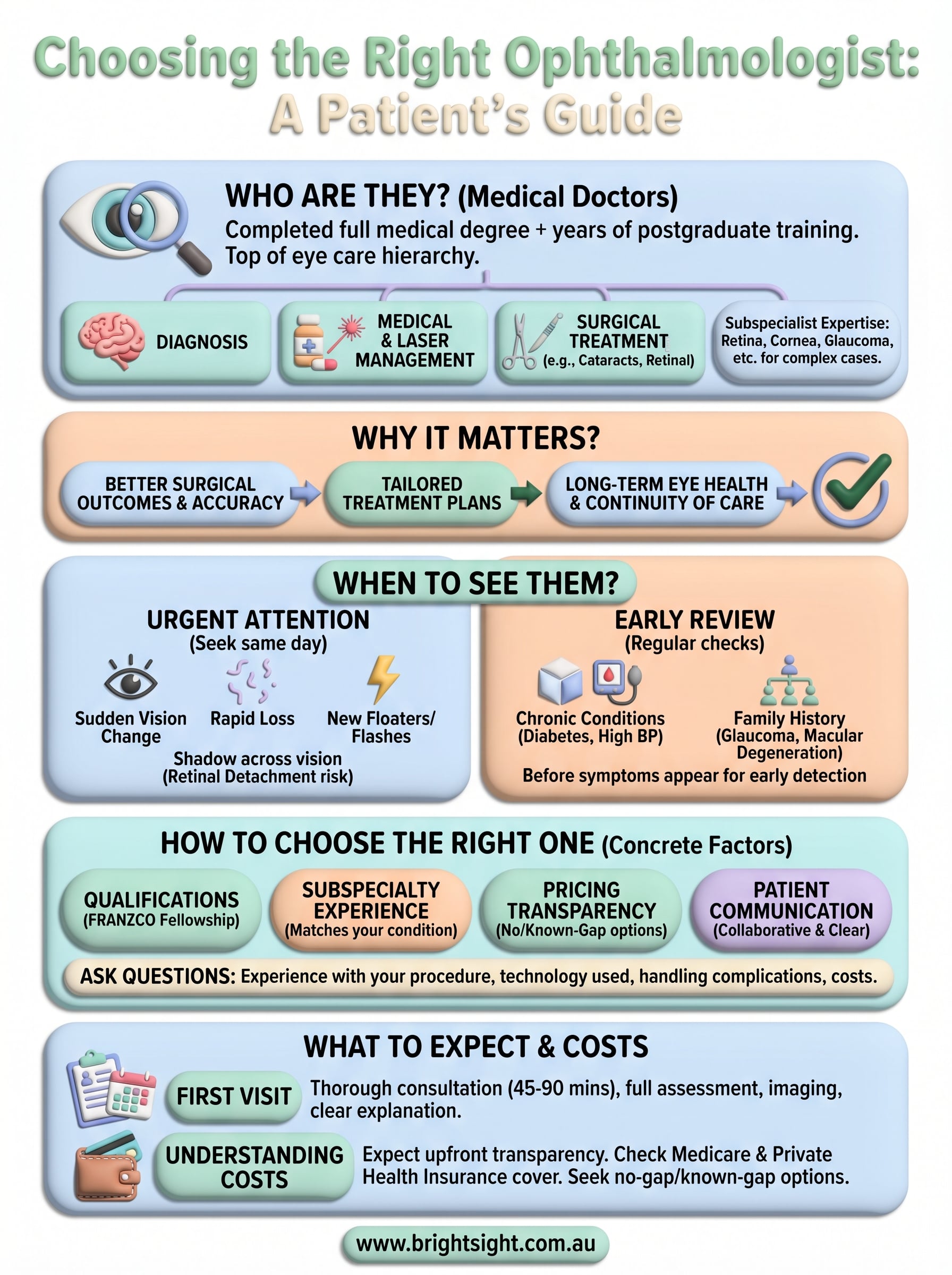
The term "eye specialist" covers a range of professionals, but ophthalmologists sit at the top of that clinical hierarchy. They are medical doctors who completed a full medical degree before undertaking years of postgraduate training specifically in the diagnosis, medical management, and surgical treatment of eye conditions. This sets them apart from optometrists, who primarily perform vision assessments and prescribe glasses or contact lenses, and from orthoptists, who focus on eye movement disorders and visual rehabilitation.
The different types of eye care professionals
Understanding who does what helps you identify exactly which professional you need for your situation. Your optometrist is typically your first point of contact for routine eye health. If they detect something that requires further investigation or treatment, they refer you to an ophthalmologist. Within ophthalmology, many surgeons develop subspecialty expertise in specific areas, such as the retina, cornea, or glaucoma. This matters because a surgeon who focuses daily on one area of the eye develops a depth of skill that a generalist cannot match.
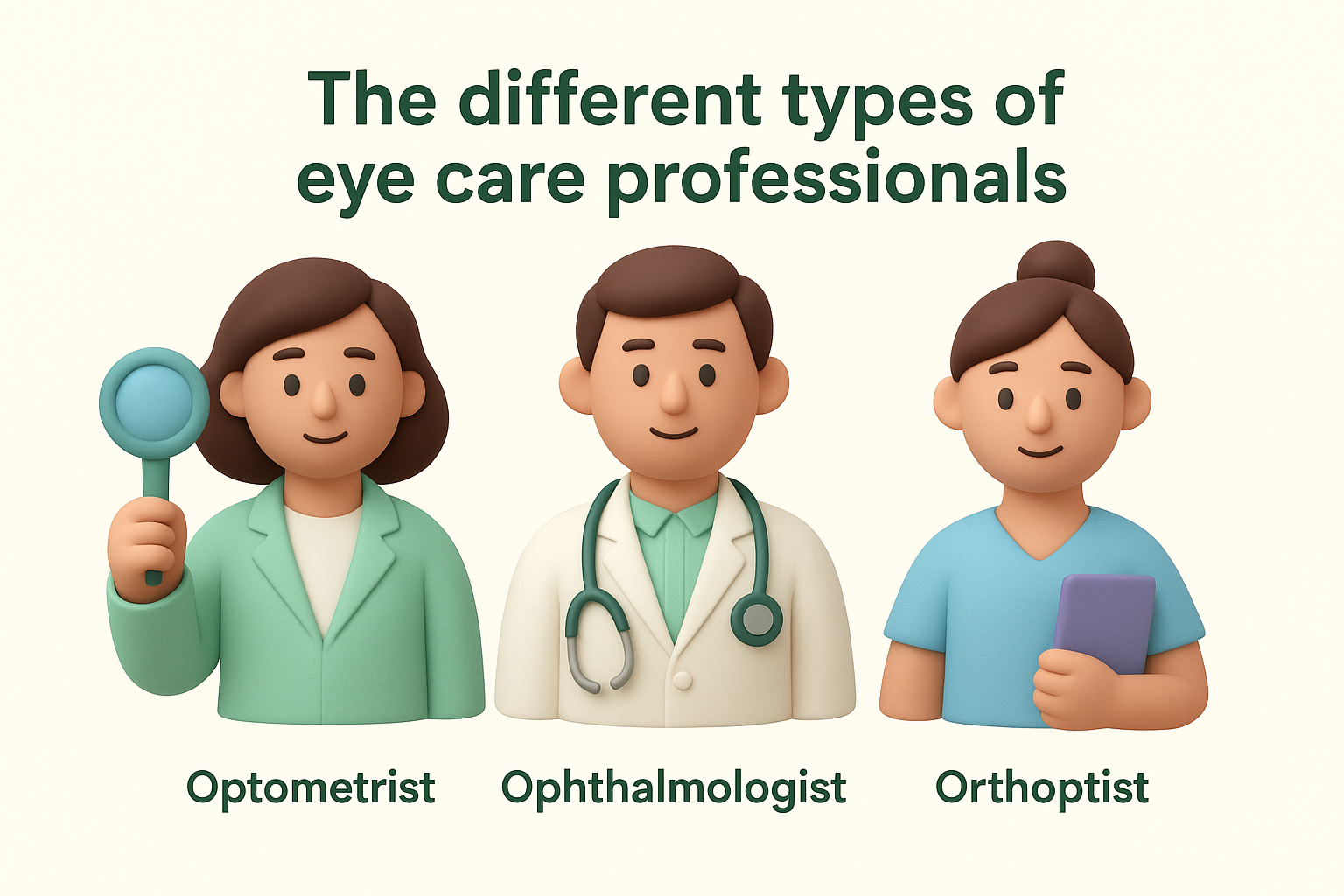
Choosing a subspecialist for a complex condition, such as a macular hole or retinal detachment, significantly improves the chances of a successful outcome.
What ophthalmologists actually treat
The eye specialists you encounter in a hospital or private clinic manage conditions ranging from cataracts and macular degeneration to diabetic eye disease, retinal detachment, and corneal disorders. They also perform refractive procedures like LASIK and SMILE for patients who want freedom from glasses. Treatment options span medical management, laser therapies, intravitreal injections, and microsurgery, depending on the condition. Because ophthalmologists are trained physicians first, they can also identify systemic diseases, such as diabetes or high blood pressure, through changes visible in the eye.
Why choosing the right ophthalmologist matters
Your vision is not something you can afford to hand over to the wrong person. Surgical outcomes, treatment accuracy, and your ability to recover well all depend on the skill and communication style of the ophthalmologist you choose. A poorly matched specialist can mean a delayed diagnosis, an unsuitable treatment plan, or a surgical result that simply doesn’t suit your needs or lifestyle.
The impact on your long-term eye health
Long-term eye health is built on correct diagnoses and timely intervention. When you select the eye specialists who genuinely understand your condition and your goals, you reduce the risk of complications and improve the chances of reaching the vision outcome you want. A patient seeking freedom from glasses, for instance, needs a surgeon who listens carefully and recommends the right lens implant for their daily activities, not just the most common option off the shelf.
The relationship between you and your ophthalmologist should feel collaborative, not transactional.
Continuity of care matters just as much as the initial appointment. An ophthalmologist who follows your case over time can track subtle changes in your eye health and adjust your treatment plan before a small problem becomes a serious one.
When to see an ophthalmologist
Not every eye concern requires a trip to a specialist, but some do, and waiting too long can cost you vision that might otherwise have been saved. The eye specialists manage conditions that go well beyond what routine optometry can address. Knowing when to escalate your care is a practical step that protects your long-term sight.
Symptoms that warrant urgent attention
Sudden changes in your vision should never be ignored. If you experience a rapid loss of vision, a shower of new floaters, flashes of light, or a curtain-like shadow across your visual field, seek assessment from an ophthalmologist the same day if possible. These symptoms can indicate retinal detachment or vitreous haemorrhage, both of which require prompt surgical intervention.
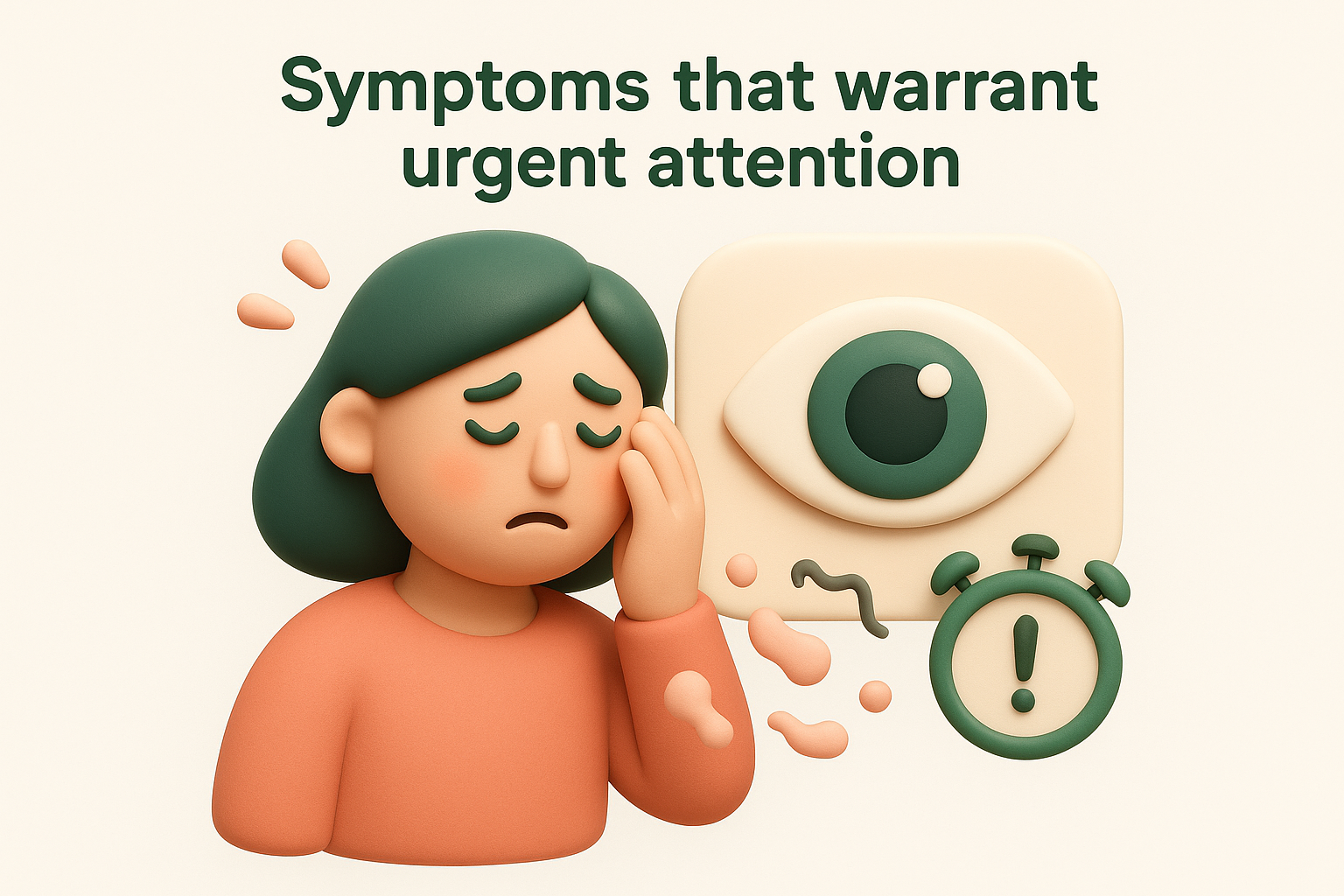
Delaying treatment for retinal detachment by even a few days can mean the difference between full vision recovery and permanent sight loss.
Conditions that benefit from early review
Chronic conditions such as diabetes, high blood pressure, and a family history of glaucoma or macular degeneration are all strong reasons to see an ophthalmologist regularly, even before you notice any symptoms. Early detection through dilated retinal examination allows treatment to begin before irreversible damage occurs.
How to choose the right ophthalmologist
Selecting the right ophthalmologist comes down to a handful of concrete factors you can research and verify well before your first appointment. Start by confirming the surgeon holds Fellowship of the Royal Australian and New Zealand College of Ophthalmologists (FRANZCO), the standard qualification for practising ophthalmologists in Australia. Beyond credentials, look for subspecialty training that directly matches your specific condition, whether that’s the retina, cornea, or lens.
A surgeon who has completed fellowship training at an internationally recognised institution, such as Moorfields Eye Hospital in London, brings clinical exposure that directly benefits your outcomes.
Questions to ask before you commit
When you contact the eye specialists you are considering, come prepared with specific questions. Ask about their experience with your exact procedure, the technology they use, and how they handle complications. A confident, transparent surgeon answers these clearly and without hesitation. Pricing transparency is also a fair question at this stage, particularly around gap fees and what your private health insurance covers.
- How many procedures like mine do you perform each year?
- What lens options suit my lifestyle for cataract surgery?
- Do you offer no-gap or known-gap pricing for insured patients?
- Who manages my aftercare if you are unavailable?
What to expect and what it may cost
Your first appointment with the eye specialists is typically a thorough consultation, not a rushed five-minute check. You can expect a full clinical assessment that may include dilated pupil examination, imaging of the retina or macula, and a detailed discussion of your diagnosis and treatment options. Most initial consultations last 45 to 90 minutes.
What happens at your first visit
Bring a list of your current medications and any previous eye records you have. Your surgeon will explain findings clearly and outline a recommended plan. You will have time to ask questions before committing to anything.
Come prepared by bringing:
- Previous optical prescriptions or reports
- Your Medicare card and private health insurance details
- A list of any medications you currently take
Understanding costs and gap fees
Pricing transparency is something you should expect upfront from any reputable ophthalmologist. In Australia, many procedures are partially covered by Medicare and private health insurance, but gap fees vary. At Bright Sight, most surgical procedures are offered as no-gap or known-gap for insured patients, which means you receive a clear cost estimate before any treatment begins.
Knowing your out-of-pocket costs in advance removes financial stress and lets you focus entirely on your recovery.
Next steps for your eye care
You now have a clear picture of what separates a good ophthalmologist from the right one for your specific situation. Qualifications, subspecialty experience, transparent pricing, and genuine patient communication are the markers that matter most when making this decision. Acting on that knowledge sooner rather than later protects the vision you currently have and gives you the best possible chance of improving it.
The eye specialists at Bright Sight in Randwick combine internationally recognised surgical training with a patient-centred approach that keeps you informed at every stage of your care. Whether you are managing a chronic condition like diabetic eye disease, exploring your options for cataract surgery, or simply seeking a thorough assessment of your eye health, both Dr Dubey and Dr Odouard are ready to help you move forward with confidence.
Take the first step and book a consultation with Bright Sight Eye Specialists today. Clear, honest answers about your eye health are one appointment away.