


Noticing a bright red patch in your newborn’s eye can be alarming for any parent. This condition, known as subconjunctival hemorrhage infant, is actually more common than many parents realise, and in most cases, it’s completely harmless.
A subconjunctival haemorrhage occurs when a small blood vessel breaks beneath the thin, clear membrane (conjunctiva) covering the white of the eye. In newborns, this often happens during the pressure and stress of delivery. While the appearance may look distressing, the eye itself remains unaffected, and the condition typically resolves without treatment.
At Bright Sight Eye Specialists, Dr. Rahul Dubey and our team understand that any change to your baby’s eyes can cause concern. This article explains what causes this condition in infants, how long healing typically takes, and when you might need to consult an eye specialist.
What infant subconjunctival haemorrhage is
Your baby’s eye has a thin, transparent membrane called the conjunctiva that covers the white part of the eye (sclera). This membrane contains tiny blood vessels that supply oxygen and nutrients to the surface tissues. When one of these delicate vessels breaks, blood leaks into the space between the conjunctiva and the sclera, creating what medical professionals call a subconjunctival haemorrhage.
In infants, this condition differs from a bruise or more serious eye injury. The blood stays confined to the surface layer of the eye, never entering the eye itself or affecting the structures responsible for vision. Your baby’s lens, retina, and optic nerve remain completely protected and unaffected by this surface bleeding.
The affected area
You’ll notice the redness appears only on the white portion of your baby’s eye, never on the coloured part (iris) or the black pupil. The haemorrhage creates a flat, bright red patch that doesn’t bulge or raise above the surface. Some infants develop a small spot, while others may have bleeding that covers a larger section of the white area.
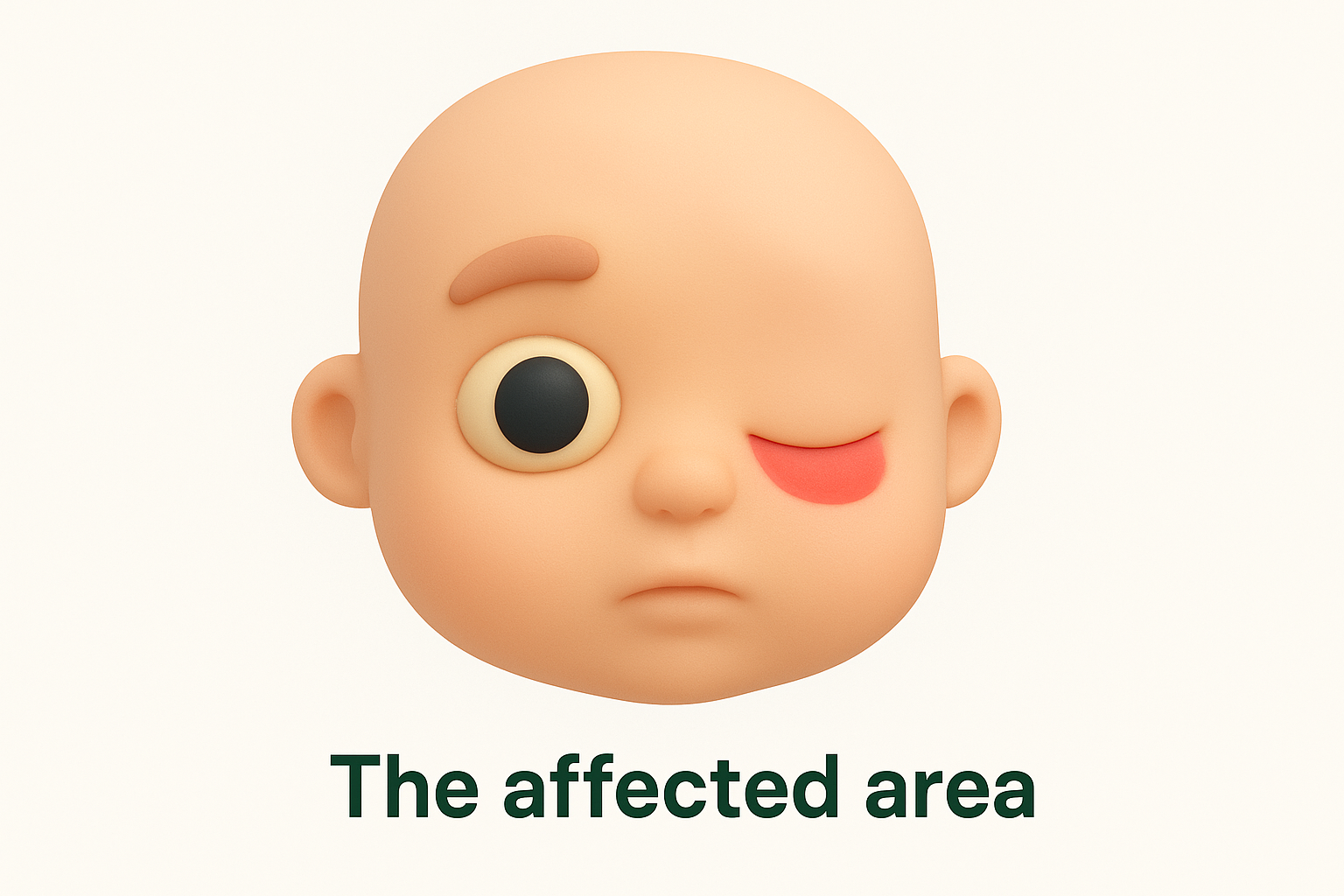
The blood sits between two layers of tissue at the front of the eye, similar to how a blood blister forms under skin, but without any pain or swelling.
What parents typically observe
Your infant won’t show any signs of discomfort or vision changes from the haemorrhage itself. The eye won’t tear excessively, and your baby won’t rub or touch the affected area more than usual. Most parents only notice the condition when they look directly at their baby’s face, as the subconjunctival hemorrhage infant presents purely as a visual change without other symptoms.
Why it happens in infants
The physical stress of childbirth causes most cases of subconjunctival hemorrhage infant conditions. During delivery, your baby experiences intense pressure changes as they move through the birth canal, which can strain the delicate blood vessels in their eyes. This pressure becomes particularly pronounced during vaginal deliveries, though infants born via caesarean section can also develop these haemorrhages, albeit less frequently.
Birth process pressure
Vaginal delivery places significant compressive forces on your baby’s head and face. The squeezing and pushing during labour can temporarily increase blood pressure in the vessels of the eyes, causing them to rupture. Forceps or vacuum-assisted deliveries create additional mechanical stress, making haemorrhages more likely to occur in these situations.
Research shows that up to 20% of newborns develop some degree of subconjunctival haemorrhage following birth, with most cases appearing within the first few days of life.
Other triggers in newborns
Beyond birth trauma, your infant might develop this condition from vigorous crying or intense coughing. These actions temporarily spike pressure in the blood vessels of the face and eyes. Severe sneezing fits or straining during bowel movements can produce similar effects, though birth remains the most common cause you’ll encounter with newborns.
Healing time and what you can do at home
Your baby’s subconjunctival hemorrhage infant condition will heal completely on its own without any medical intervention. The blood typically begins to fade within 7 to 14 days, though some cases may take up to three weeks to resolve entirely. The redness gradually lightens, often turning yellow or brown before disappearing, similar to how a bruise changes colour as it heals.
Natural healing process
The body reabsorbs the blood through normal metabolic processes, breaking down the red blood cells and clearing them away. You won’t see the redness shrink from the edges inward; instead, the entire affected area lightens uniformly over time. Your infant’s eye doesn’t require any special treatment, and the healing occurs at a steady pace regardless of intervention.
Simple home care steps
You don’t need to apply any drops, ointments, or compresses to your baby’s eye. The best approach involves normal care routines while avoiding rubbing or touching the affected area. Keep your infant’s nails trimmed short to prevent accidental scratching, and continue with regular feeding and sleep schedules.
The haemorrhage poses no risk to your baby’s vision or eye health, and no home remedies will speed up the natural healing process.
When to worry and get urgent help
Most subconjunctival hemorrhage infant cases require no medical attention and resolve without complications. However, certain warning signs indicate you should seek immediate professional care for your baby. These symptoms suggest the bleeding might stem from a more serious underlying condition rather than simple birth trauma.
Signs requiring urgent evaluation
Contact your paediatrician or visit an emergency department if your baby develops vision changes, such as not tracking objects or failing to make eye contact. Watch for excessive tearing, persistent eye discharge, or swelling of the eyelids that wasn’t present initially. Any signs of pain in your infant, including constant crying, rubbing at the eyes, or sensitivity to light, warrant immediate assessment.
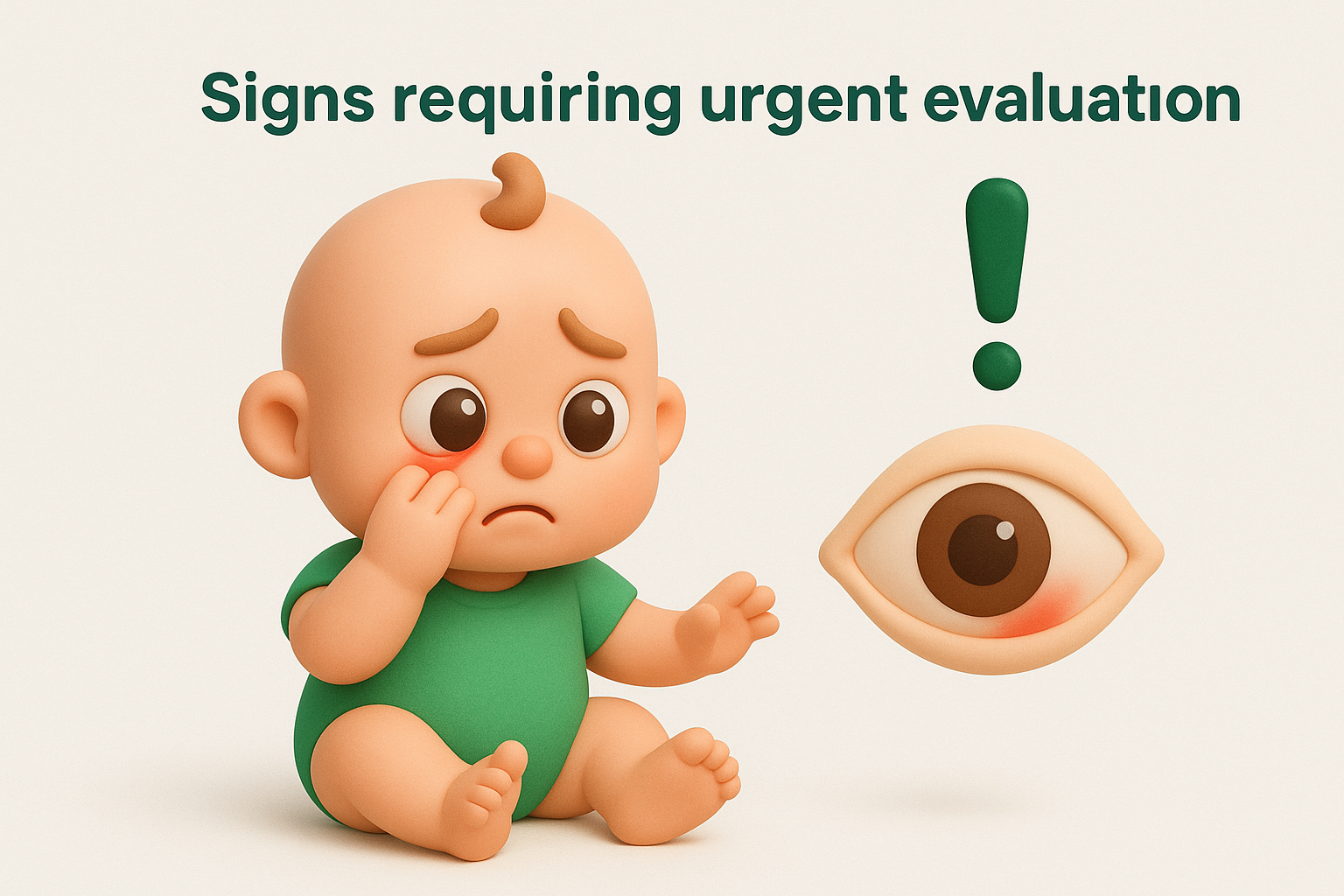
If the redness appears alongside bruising elsewhere on your baby’s body or the haemorrhage occurs days or weeks after birth without an obvious trigger like severe coughing, seek medical evaluation promptly.
Multiple or recurring haemorrhages
Your baby developing haemorrhages in both eyes simultaneously or experiencing repeated episodes requires medical investigation. These patterns might indicate blood clotting disorders or other systemic conditions that need proper diagnosis and management. A specialist can determine whether underlying health issues contribute to the bleeding and recommend appropriate treatment if necessary.
How doctors diagnose and treat it
Your doctor diagnoses a subconjunctival hemorrhage infant condition through a straightforward visual examination of your baby’s eye. The specialist uses a bright light and magnification to observe the extent and location of the bleeding. This painless assessment takes only minutes and causes no discomfort to your infant.
Visual examination process
During the examination, your doctor checks whether the haemorrhage remains confined to the conjunctiva or affects deeper structures. They assess your baby’s pupil responses and eye movements to ensure the condition hasn’t impacted visual function. The specialist also reviews your infant’s birth history, noting any delivery complications that might explain the bleeding.
Most cases of subconjunctival haemorrhage infant conditions require no treatment beyond observation, as the body naturally reabsorbs the blood within two to three weeks.
Standard treatment approach
Your doctor won’t prescribe medication or eye drops for an uncomplicated haemorrhage. The treatment consists entirely of watchful waiting, allowing natural healing to occur. Specialists schedule follow-up appointments only if the bleeding doesn’t improve within three weeks or if your baby develops new symptoms. Your paediatrician may recommend additional testing if the haemorrhage appears alongside other concerning signs, ensuring no underlying bleeding disorders require attention.

A calm plan for the next 24 hours
Your baby’s subconjunctival hemorrhage infant condition needs no immediate treatment in most cases. Over the next day, observe your infant’s normal behaviour patterns, checking that they feed well, sleep comfortably, and respond to your voice and face as usual. The red patch will remain visible, but it shouldn’t cause any discomfort or vision problems for your newborn.
Continue your regular care routine without applying drops or ointments to the affected eye. Keep your baby’s nails trimmed to prevent accidental scratching. Monitor for any warning signs like swelling, discharge, or changes in your baby’s eye movements. If you notice anything unusual or feel concerned about your infant’s eyes, contact Bright Sight Eye Specialists for expert assessment and reassurance. Your peace of mind matters, and our team understands the natural worry that comes with any change to your baby’s health.