


A steroid shot in eye, formally known as an intravitreal or periocular steroid injection, is one of the most effective treatments available for inflammatory and swelling-related conditions that threaten your vision. If your ophthalmologist has recommended this procedure, or you’re researching it ahead of an appointment, it’s normal to have questions about what it involves and whether it’s safe.
Conditions like macular oedema, uveitis, diabetic eye disease, and retinal vein occlusion can cause fluid build-up and inflammation deep inside the eye. Oral or topical medications don’t always reach these structures effectively. A steroid injection delivers anti-inflammatory medication directly where it’s needed, reducing swelling and helping to protect or restore sight. For many patients, it’s a straightforward procedure that takes only minutes, though the decision to proceed should always be made with a clear understanding of both the benefits and the risks.
At Bright Sight Eye Specialists in Randwick, Dr Rahul Dubey and Dr Capucine Odouard regularly perform intravitreal injections for a range of retinal and macular conditions. Our approach centres on transparent communication, we want you to understand exactly what’s happening, why it’s recommended, and what recovery looks like before you sit in the treatment chair. This article covers the key uses for steroid eye injections, how the procedure works step by step, potential side effects to be aware of, and what to expect during your recovery.
Why a steroid shot in the eye is used
Your eye is a remarkably precise structure, and inflammation or excess fluid can disrupt that precision in a matter of days. When the tissues inside your eye become inflamed or swollen, the delicate cells responsible for central and detailed vision can be compressed, starved of oxygen, or directly damaged. The result is blurred vision, distortion, or in severe cases, permanent sight loss if the underlying cause isn’t treated promptly and effectively.
How inflammation damages your vision
Inflammation is your body’s natural response to injury, infection, or disease, but inside the eye, it works against you. The eye has limited internal space, and when inflammatory proteins, white blood cells, or excess fluid accumulate in the vitreous cavity or beneath the retina, the resulting pressure and chemical signals begin to damage photoreceptor cells. The macula, the small central area of the retina responsible for reading and fine detail, is particularly vulnerable to swelling, a condition called macular oedema.
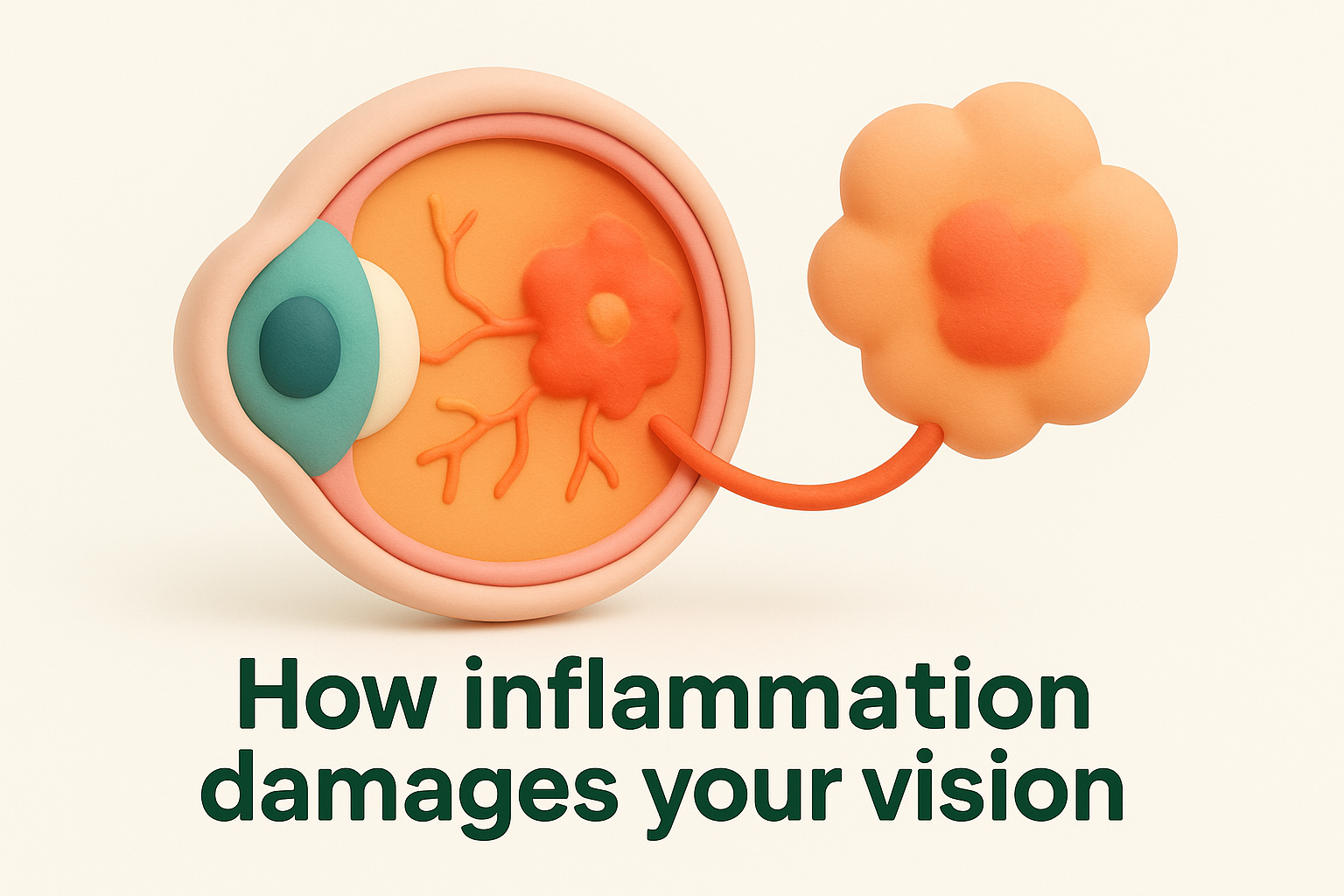
When macular oedema develops, the layers of the retina separate and thicken with trapped fluid. This distorts the signals your eye sends to your brain, which is why you may notice straight lines appearing wavy or colours looking washed out. Left untreated, even short periods of macular swelling can lead to irreversible cell death and long-term vision impairment.
Why topical drops often fall short
Eye drops work well for surface-level conditions like conjunctivitis or mild anterior inflammation. However, the back of the eye sits behind multiple protective barriers, including the blood-retinal barrier, which tightly controls what enters the retinal tissue. When you apply steroid drops to the front of your eye, very little of the active medication actually reaches structures like the retina, vitreous, or choroid.
Oral steroids can reach the back of the eye, but they carry significant systemic side effects when used long-term, including elevated blood sugar, weight gain, and bone density loss. For conditions requiring sustained anti-inflammatory action in a specific area, neither drops nor tablets deliver medication efficiently enough to be relied on as a standalone treatment.
Delivering medication directly to the site of disease allows for a higher local concentration of the drug with a much lower total dose, which substantially reduces the risk of whole-body side effects.
What corticosteroids actually do inside the eye
A steroid shot in eye treatment works by flooding the target tissue with corticosteroid molecules that bind to receptors inside cells and switch off the chemical signals driving inflammation. Specifically, corticosteroids suppress the production of prostaglandins, cytokines, and other inflammatory mediators that cause blood vessels to leak and tissues to swell.
By reducing vascular leakage, the injected steroid allows excess fluid to be reabsorbed from the retinal layers and vitreous cavity. Over days to weeks, the macula or inflamed tissue thins back toward its normal profile, the photoreceptors begin functioning more accurately, and your visual clarity can improve substantially. In many cases, a single injection produces measurable gains in visual acuity, though some conditions require a course of injections over several months.
The decision to recommend this treatment always depends on weighing the expected benefit against your individual risk profile. Factors like your eye pressure, lens status, and the severity of your underlying condition all influence which steroid, which delivery route, and which dosing interval your specialist will choose for you.
Conditions it can treat
A steroid shot in eye treatment is not a single-purpose procedure. Your specialist may recommend it for several distinct conditions, all of which share one common problem: damaging inflammation or fluid accumulation that standard eye drops and oral medications cannot adequately address.
Macular oedema
Macular oedema is the most common reason an ophthalmologist recommends an intravitreal steroid injection. It occurs when fluid leaks from damaged retinal blood vessels and pools in the layers of the macula, causing the tissue to thicken and distort your central vision. The condition can develop as a complication of diabetic retinopathy, retinal vein occlusion, or cataract surgery, and in each case the swelling follows the same destructive pattern.
Without treatment, the sustained pressure of trapped fluid damages photoreceptor cells. A steroid injection reduces the vascular leakage driving that fluid build-up, allowing the retinal layers to dry out and thin back toward a healthy profile. In many patients, measurable improvement in visual sharpness follows within weeks of the first injection.
Macular oedema is one of the leading causes of preventable vision loss in people with diabetes, making prompt diagnosis and targeted treatment essential.
Uveitis
Uveitis is inflammation of the uvea, the middle layer of the eye that includes the iris, ciliary body, and choroid. It can affect the front, middle, or back of the eye, and in its posterior and intermediate forms it sits too deep for surface drops to reach effectively. Without sufficient anti-inflammatory treatment, uveitis causes permanent scarring, cataract formation, and glaucoma.
Steroid injections placed around or inside the eye deliver a concentrated dose directly to the inflamed tissue. Your specialist will choose the injection site based on which part of the uvea is involved, and in chronic cases a slow-release steroid implant may be considered to maintain consistent drug levels over months.
Diabetic eye disease and retinal vein occlusion
Both diabetic eye disease and retinal vein occlusion cause abnormal blood vessel behaviour that leads to leakage, swelling, and in advanced cases, new fragile vessel growth. Steroids reduce the inflammatory signals that promote this leakage and help stabilise vision while your specialist assesses whether additional treatments like laser therapy or anti-VEGF injections are also needed.
Retinal vein occlusion, where a blocked vein causes back-pressure and haemorrhage, frequently produces macular oedema as a secondary complication. In these cases, a steroid injection addresses the swelling directly and can produce rapid gains in your vision that other treatments alone may not achieve.
Types of steroid eye injections and implants
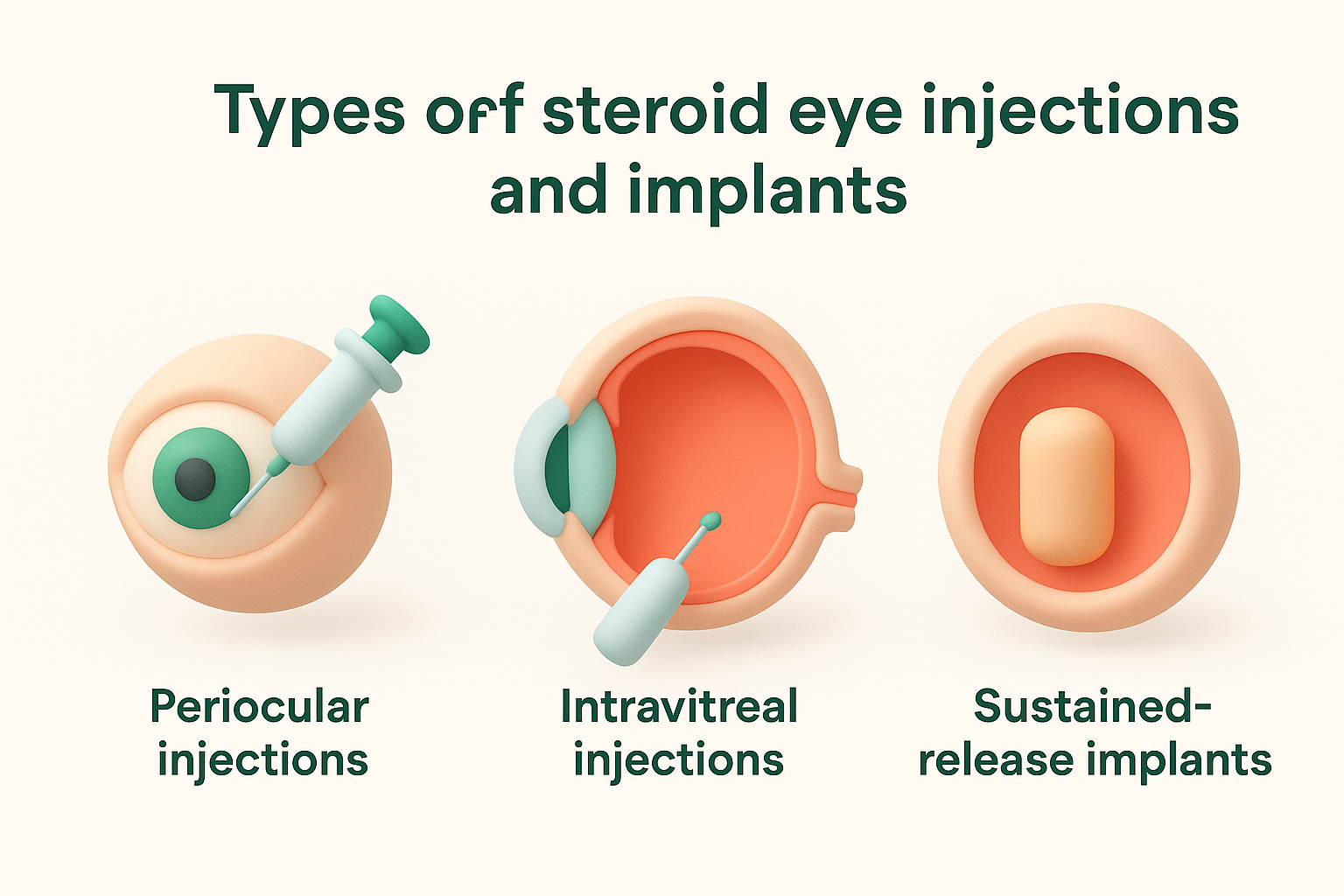
Not every steroid shot in eye treatment is delivered the same way. The route your specialist chooses depends on which part of the eye is affected, how severe the condition is, and how long the anti-inflammatory effect needs to last. Understanding the key differences between each approach helps you ask better questions before your appointment.
Periocular injections
A periocular injection places the steroid around the outside of the eye, rather than inside it. Your specialist injects the medication into the tissue immediately surrounding the eyeball, usually into the sub-Tenon’s space, which is the layer beneath the thin membrane covering the white of the eye. From there, the drug diffuses inward toward the uvea and retina over time.
Periocular injections carry a lower risk of serious complications than direct intraocular delivery, which makes them a preferred starting point for conditions like intermediate uveitis. However, because the steroid must travel through tissue to reach its target, the concentration achieved at the retina is generally lower than what an intravitreal injection produces.
Intravitreal injections
An intravitreal injection delivers the steroid directly into the vitreous cavity, the gel-filled space that occupies the back portion of the eye. This route achieves a high local drug concentration right at the retina and macula, making it the most common approach for macular oedema caused by diabetes, retinal vein occlusion, or post-surgical swelling.
The two most widely used corticosteroids for intravitreal delivery in Australia are triamcinolone acetonide, a suspension that provides weeks to months of effect, and dexamethasone, which is often delivered via a biodegradable implant. Your specialist will select the agent based on your diagnosis, your lens status, and your history of eye pressure responses to steroids.
Patients who have had a cataract removed and replaced with an intraocular lens generally tolerate intravitreal steroids better than those who still have their natural lens, because the lens itself is the structure most susceptible to steroid-induced cataract formation.
Sustained-release implants
For conditions requiring long-term inflammation control, such as chronic non-infectious uveitis, a sustained-release implant may be inserted into the eye during a minor procedure. These small devices sit inside the vitreous cavity and release a controlled dose of steroid over several months or years, removing the need for repeated injections.
The fluocinolone acetonide implant, for example, can provide up to three years of continuous drug delivery from a single insertion. Your specialist will weigh this option carefully, as prolonged steroid exposure increases the risk of raised eye pressure and cataract formation over time.
How the procedure works step by step
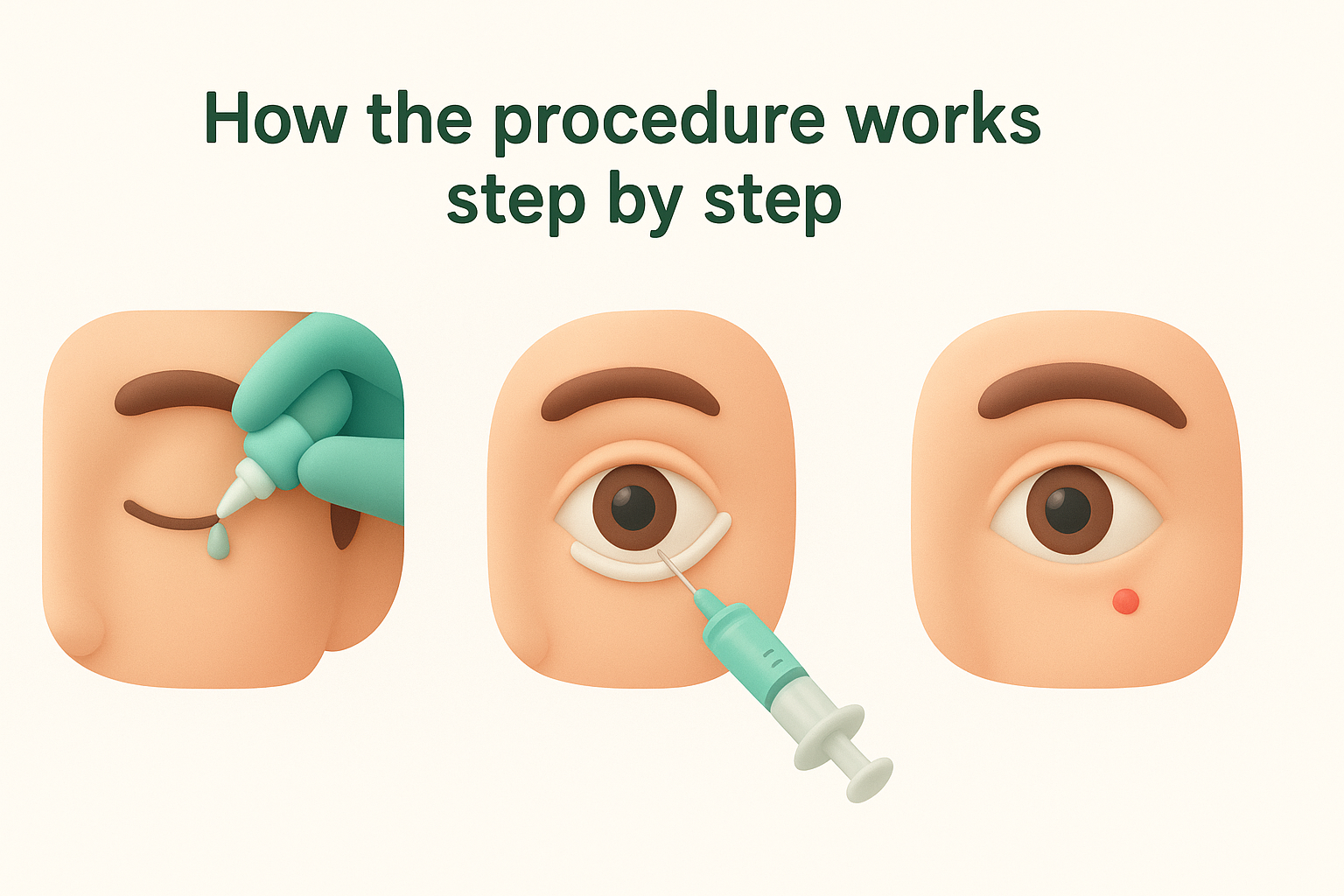
A steroid shot in eye treatment follows a consistent sequence of steps that your specialist performs in a clinical setting, usually a procedure room at a specialist eye centre or surgical facility. The entire process typically takes less than 15 minutes from preparation to completion, and most patients find it far less confronting than they expected before their first appointment.
Preparation and anaesthesia
Before the injection begins, your specialist or nurse will clean the skin around your eye and apply anaesthetic drops to the surface of the eyeball. These drops take effect within about a minute and numb the conjunctiva, which is the thin tissue through which the needle will pass. In some cases, a small injection of local anaesthetic is also placed near the eye for additional comfort, though for most intravitreal procedures the drops alone are sufficient.
Your eye will then be cleaned with a dilute antiseptic solution called povidone-iodine to reduce the risk of infection. A small sterile drape is placed around your eye, and a speculum is positioned between your eyelids to hold them open gently so you do not need to consciously stop yourself from blinking during the procedure.
Keeping still during the injection is far easier than most patients anticipate, because the speculum does all the work and the anaesthetic drops remove any sharp sensation.
Delivering the injection
Your specialist will ask you to look in a specific direction to allow precise placement of the needle. The injection site is measured carefully, usually a few millimetres from the edge of the cornea, to ensure the needle enters the vitreous cavity cleanly. The needle used is very fine, and most patients describe the sensation as mild pressure rather than pain.
The steroid medication is delivered in a small volume of fluid over a few seconds. Once the needle is withdrawn, your specialist applies gentle pressure to the injection site with a cotton tip to minimise any bleeding from surface vessels.
After the injection in clinic
Immediately after the procedure, your specialist checks your eye pressure and inspects the front of the eye to confirm the injection was well tolerated. You may notice a small red patch on the white of your eye at the injection site, which is a surface bruise caused by minor bleeding and resolves on its own within one to two weeks.
Your vision may appear slightly blurry or you might see a few new floaters in the minutes following the injection. These are normal short-term effects as the medication disperses through the vitreous cavity.
What the injection feels like and how long it lasts
Most people approach their first steroid shot in eye treatment with genuine anxiety, and most leave wondering what all the worry was about. The combination of anaesthetic drops and precise technique means that the procedure is far more tolerable than the idea of a needle near your eye suggests. Understanding what to expect at each stage helps you stay calm and still, which makes the process smoother for both you and your specialist.
During the injection
Once the anaesthetic drops take effect, the surface of your eye loses most of its sensation within about 60 seconds. When the needle enters the eye wall, the dominant feeling for most patients is a sense of mild pressure rather than a sharp or painful sting. Some people notice a brief awareness of something touching the eye, but very few describe it as genuinely painful.
The actual injection takes only a few seconds. Your specialist controls the needle with precision, and the speculum holding your eyelids open removes any pressure to keep still through willpower alone.
The most common reaction patients report after their first injection is surprise at how quick and comfortable the procedure actually was.
Immediately after the injection
In the first few minutes after the needle is withdrawn, your vision in the treated eye will likely blur temporarily. You may also notice one or more new floaters drifting across your visual field. Both effects occur because the injected fluid disperses through the vitreous cavity and settles over the course of 20 to 30 minutes as you rest in the clinic.
Your eye may feel mildly gritty or irritated for a few hours once the anaesthetic drops wear off. A mild over-the-counter painkiller is usually all that is needed, and most patients find the discomfort has passed entirely by the following morning.
How long the effect lasts
The duration of a steroid injection depends on the specific agent and formulation your specialist uses. Triamcinolone acetonide, a commonly used suspension, typically maintains its anti-inflammatory effect for six weeks to three months, depending on the dose and your individual response. Dexamethasone delivered via a biodegradable implant provides a more predictable release profile, with measurable effect lasting around three to four months in most patients.
Your specialist will schedule a follow-up appointment to assess your response and determine whether a further injection is needed. Some conditions require a series of injections spaced over several months before the underlying disease is sufficiently controlled.
Risks, side effects, and warning signs
Every steroid shot in eye treatment carries a risk profile your specialist weighs carefully before recommending the procedure. Most patients experience only minor, short-lived side effects. However, understanding the full range of possible outcomes, from the routine to the rare, allows you to monitor your own recovery confidently and act quickly if something changes.
Common side effects after injection
The most frequent side effect is a temporary rise in eye pressure, known as ocular hypertension. Corticosteroids can reduce the drainage of fluid from the eye, causing pressure to build inside the vitreous cavity over days to weeks following the injection. Your specialist monitors this at follow-up appointments using tonometry, and in most cases the pressure normalises without intervention or responds promptly to pressure-lowering eye drops.
Repeated steroid injections also accelerate cataract formation in the natural lens of the eye. If you still have your own lens rather than a surgical implant, your specialist will factor this into the decision about frequency and duration of treatment. Surface redness at the injection site, mild grittiness, and brief visual blur are expected short-term effects that resolve within hours to days and do not require medical attention.
Serious complications to know about
Endophthalmitis is the most serious complication associated with any intraocular injection. It is a bacterial or fungal infection inside the eye that can cause rapid, severe vision loss if not treated within hours of symptom onset. The condition is rare, occurring in roughly one in 3,000 injections when antiseptic technique is followed correctly, but it requires emergency treatment with intravitreal antibiotics.
Retinal detachment and vitreous haemorrhage are additional, uncommon risks. Both involve structural disruption to the back of the eye and present with sudden increases in floaters, flashes of light, or a shadow spreading across your visual field. Prompt assessment is critical in either case.
The risk of serious complications is low when the procedure is performed in a properly equipped setting by an experienced specialist following strict sterile protocols.
Warning signs that need urgent attention
Most people recover uneventfully, but certain symptoms should prompt you to contact your specialist immediately rather than waiting for your next scheduled appointment. Seek urgent care if you experience any of the following after your injection:
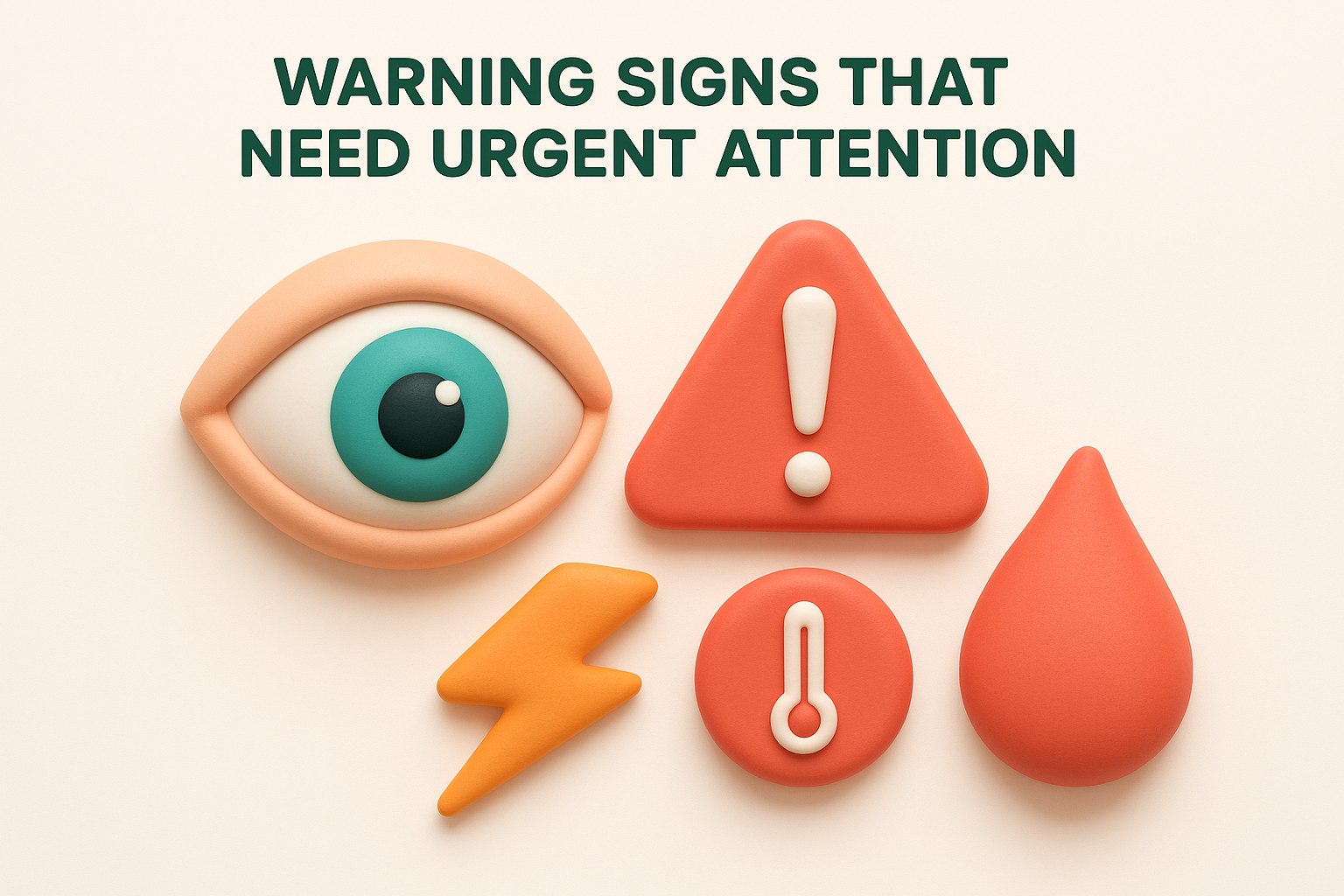
- Sudden, severe pain in the treated eye that worsens rather than settles
- Rapid loss or blurring of vision not present immediately after the procedure
- Increasing redness, discharge, or sensitivity to light developing 24 to 48 hours post-injection
- A dark shadow or curtain appearing at any edge of your visual field
- Sudden onset of many new floaters or flashing lights
Recovery and aftercare at home
Recovery after a steroid shot in eye treatment is generally straightforward, and most people return to their normal routine within a day or two. The steps you take at home in the first week following the procedure directly influence your risk of complications, so it is worth knowing exactly what to do and what to avoid before you leave the clinic.
What to do in the first 24 to 48 hours
Your eye will likely feel mildly gritty or sensitive for the first several hours after the anaesthetic drops wear off. Keeping the area clean and avoiding any unnecessary contact with the treated eye is the most important action you can take during this period. If your specialist has prescribed antibiotic drops, start using them as directed and continue for the full course, even if your eye already feels comfortable.
Completing the full course of prescribed antibiotic drops is one of the simplest ways to reduce your risk of post-injection infection.
Most people find that resting quietly for the remainder of the injection day allows any mild discomfort and temporary visual blur to settle without interference. You can read, watch television, or use a screen, but avoid rubbing your eye under any circumstances.
Activities to avoid while your eye heals
Certain activities carry a higher risk of introducing bacteria or placing mechanical stress on the treated eye during the healing window. Your specialist will give you specific guidance, but the general restrictions that apply after most intravitreal injections include:
- Swimming and spa use for at least one week after the injection
- Wearing eye makeup until your specialist confirms the injection site has healed
- Rubbing or pressing on the treated eye, even if it feels itchy or irritated
- Participating in contact sports or activities with a high risk of impact to the face for at least a week
Medication and eye drop instructions
If you are using pressure-lowering drops or anti-inflammatory drops in addition to any antibiotic prescription, organise your medications before your appointment so you are not searching for them when you return home. Store all drops as directed on the packaging, as some require refrigeration while others do not.
Take note of any scheduled follow-up appointments and attend them even if your vision feels improved. Your specialist needs to measure your eye pressure and assess the retina to confirm the treatment is working as intended and that no complications have developed silently in the weeks following the injection.
Alternatives and when steroids are not the best option
A steroid shot in eye treatment is highly effective for many conditions, but it is not always the most appropriate first choice. Your specialist will consider your full clinical picture, including your eye pressure history, lens status, and diagnosis, before deciding whether a steroid injection or an alternative treatment better matches your situation.
Anti-VEGF injections
For conditions driven by abnormal blood vessel growth and leakage, such as wet age-related macular degeneration and some forms of diabetic macular oedema, anti-VEGF injections are often preferred over steroids as a first-line treatment. These medications block the vascular endothelial growth factor protein that stimulates leaky new vessel formation, targeting the root cause of fluid build-up rather than suppressing the inflammatory response downstream.
Anti-VEGF agents carry a much lower risk of raising eye pressure or accelerating cataract formation, which makes them particularly well-suited for patients who have responded poorly to steroids in the past or who already have elevated intraocular pressure. Your specialist may use both treatments together in certain cases, or switch between them based on how your retina responds over time.
Anti-VEGF therapy has become the standard first-line treatment for wet macular degeneration precisely because it preserves vision effectively while avoiding the pressure and lens risks associated with prolonged steroid use.
When your eye pressure is already elevated
If you have pre-existing glaucoma or a history of steroid-induced pressure spikes, your specialist will weigh the risk of a further pressure rise very carefully. Corticosteroids reduce fluid drainage from the eye in a subset of patients, a response known as being "steroid responsive", and repeated injections in these individuals can cause sustained pressure elevation that damages the optic nerve.
In these circumstances, your specialist may trial a lower-potency steroid, choose an anti-VEGF agent instead, or add pressure-lowering drops prophylactically around the time of the injection. Monitoring your pressure closely after any steroid treatment is essential if this risk applies to you.
Laser therapy and surgical options
For certain conditions, laser treatment or vitreoretinal surgery offers a more definitive solution than repeated injections. Focal laser photocoagulation can seal leaking vessels in diabetic maculopathy, while pars plana vitrectomy addresses tractional retinal issues that no injectable medication can resolve on its own.
Your specialist will discuss whether a surgical or laser approach removes the need for ongoing injections entirely, or whether it works best alongside injection-based therapy to give your eye the most complete treatment available for your specific condition.

When to speak with an eye specialist
If your optometrist or GP has flagged a retinal or macular condition, or if your vision has changed noticeably in recent weeks, booking an appointment with a specialist sooner rather than later gives you the best chance of protecting your sight. A steroid shot in eye treatment can produce meaningful improvements in vision when used at the right stage of disease, but timing matters enormously. Delaying assessment allows swelling and inflammation to cause damage that becomes progressively harder to reverse.
Both Dr Rahul Dubey and Dr Capucine Odouard at Bright Sight Eye Specialists in Randwick provide thorough assessments and clear explanations of all available treatment options, including injection-based therapies, laser, and surgery. You do not need to arrive with a confirmed diagnosis, only a concern about your vision. If you are ready to take the next step, book a consultation with our specialist team at Bright Sight today.