


Spots and floaters in vision appear as small shapes that drift across your field of view. These tiny specks, threads, or cobweb-like shadows move when you try to look at them directly. Most people notice them when looking at something bright like a white wall or clear sky. Floaters form when the gel inside your eye breaks down and creates clumps that cast shadows on your retina. While they can be annoying, most floaters are harmless and part of natural ageing.
This guide explains why floaters appear, when they signal a serious problem, and what treatment options exist. You’ll learn the warning signs that require immediate medical attention, who faces higher risk, and what specialist surgeons can do for persistent cases. We’ll also clear up common myths about natural remedies. Whether you’ve just noticed your first floater or you’ve been living with them for years, you’ll find practical information to help you understand what’s happening in your eyes and when to seek professional care.
Why you see spots and floaters in your vision
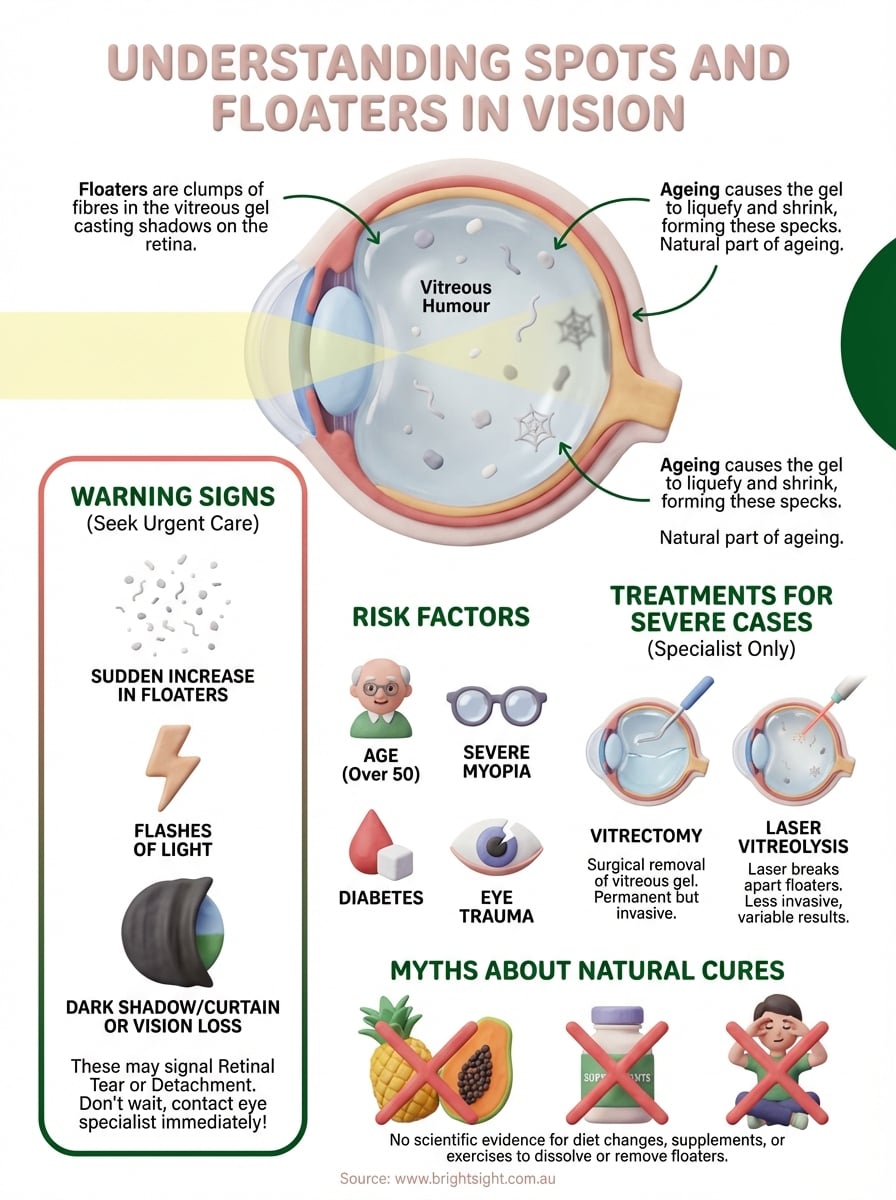
The vitreous humour fills most of your eyeball with a clear, gel-like substance that helps maintain your eye’s shape. When you’re young, this gel stays thick and firmly attached to the retina at the back of your eye. As you age, the vitreous begins to liquefy and shrink away from the retinal surface. During this process, tiny fibres within the gel clump together and create the spots and floaters in vision that drift across your sight. These clumps remain suspended in the liquid portion of the vitreous, moving as your eyes move.

The role of vitreous gel changes
Your vitreous gel undergoes significant changes throughout your lifetime, particularly after age 50. The gel transforms from a solid, jelly-like consistency into a more liquid state. This liquefaction happens gradually and allows protein fibres and collagen strands to break free from their original structure. When these fibres cluster together, they become dense enough to block light passing through your eye. Some people experience a sudden increase in floaters when the vitreous completely detaches from the retina, a condition called posterior vitreous detachment.
Most cases of vitreous detachment occur naturally and don’t damage your vision, though they create noticeable floaters that may take months to settle.
What causes the shadows you see
Light enters your eye through the cornea and passes through the vitreous before reaching the retina. Any clumps or strands floating in this path will cast tiny shadows onto the retinal surface, which your brain interprets as moving spots. The floaters appear to dart away when you try to look directly at them because your eye movements cause turbulence in the liquid vitreous. Bright backgrounds like white walls or blue skies make these shadows more obvious since the contrast increases between the dark shapes and the bright light behind them. Different types of floaters create distinct patterns: protein deposits appear as dots, collagen strands look like threads, and larger clumps resemble cobwebs or clouds drifting through your vision.
How to tell if your floaters require urgent care
Most floaters don’t require immediate medical attention, but certain warning signs indicate a retinal emergency that needs treatment within hours. A sudden increase in the number of floaters signals that something has changed rapidly in your vitreous or retina. You should seek urgent care if you notice new floaters accompanied by flashes of light, a dark curtain or shadow blocking part of your vision, or a sudden decrease in visual clarity. These symptoms suggest that your retina may have torn or detached, which can lead to permanent vision loss without prompt surgical intervention.
Warning signs that demand immediate attention
Contact an eye specialist immediately if you experience a shower of new floaters that appear suddenly, especially if they look like hundreds of tiny specks. Flashes of light in your peripheral vision combined with new floaters indicate that your retina is being pulled or torn. Any shadow or veil that moves across your field of view requires emergency assessment, as this typically means your retina has begun to detach. Don’t wait until the next day or assume the symptoms will resolve on their own.
Even if you’re not certain whether your symptoms warrant urgent care, contact an eye specialist immediately since retinal tears can progress to full detachment within hours.
The difference between normal floaters and emergency symptoms lies in the sudden onset and accompanying visual changes. Gradual spots and floaters in vision that remain stable over months rarely indicate serious problems, whereas rapid changes always require professional evaluation.
Who is at higher risk for developing eye floaters
Age stands as the primary risk factor for developing eye floaters, with most people experiencing them after age 50. However, certain medical conditions and lifestyle factors can increase your likelihood of developing floaters earlier in life or in greater numbers. Understanding your personal risk helps you recognise when new floaters might indicate a more serious underlying problem requiring professional assessment.
Age-related risk factors
Your risk of developing spots and floaters in vision increases significantly after you reach 50 years old, when the vitreous gel begins its natural liquefaction process. People over 60 experience posterior vitreous detachment more frequently, which often produces a sudden increase in visible floaters. Severe short-sightedness (myopia) accelerates vitreous changes and typically causes floaters to appear at younger ages, sometimes even in your 20s or 30s. If you’ve undergone cataract surgery, you face higher risk because the procedure can disturb the vitreous and trigger early detachment.
Medical conditions that increase floater risk
Diabetes damages the blood vessels in your retina, potentially causing bleeding into the vitreous that creates numerous dark spots in your vision. Inflammatory conditions like uveitis cause white blood cells to float in the vitreous, appearing as hazy spots. Eye injuries or trauma can tear the vitreous or retina, releasing debris that forms persistent floaters.
Regular eye examinations become essential if you have diabetes or severe myopia, as these conditions require monitoring for complications beyond normal age-related floaters.
How specialist surgeons treat persistent floaters
Specialist surgeons offer treatment only when floaters significantly interfere with your daily activities and quality of life. Most cases of spots and floaters in vision don’t require surgical intervention, but your surgeon may recommend procedures if the floaters obstruct your central vision or create constant visual disturbance. Two main surgical approaches exist for treating problematic floaters: vitrectomy and laser vitreolysis. Your specialist will assess the severity, location, and impact of your floaters before suggesting either option.
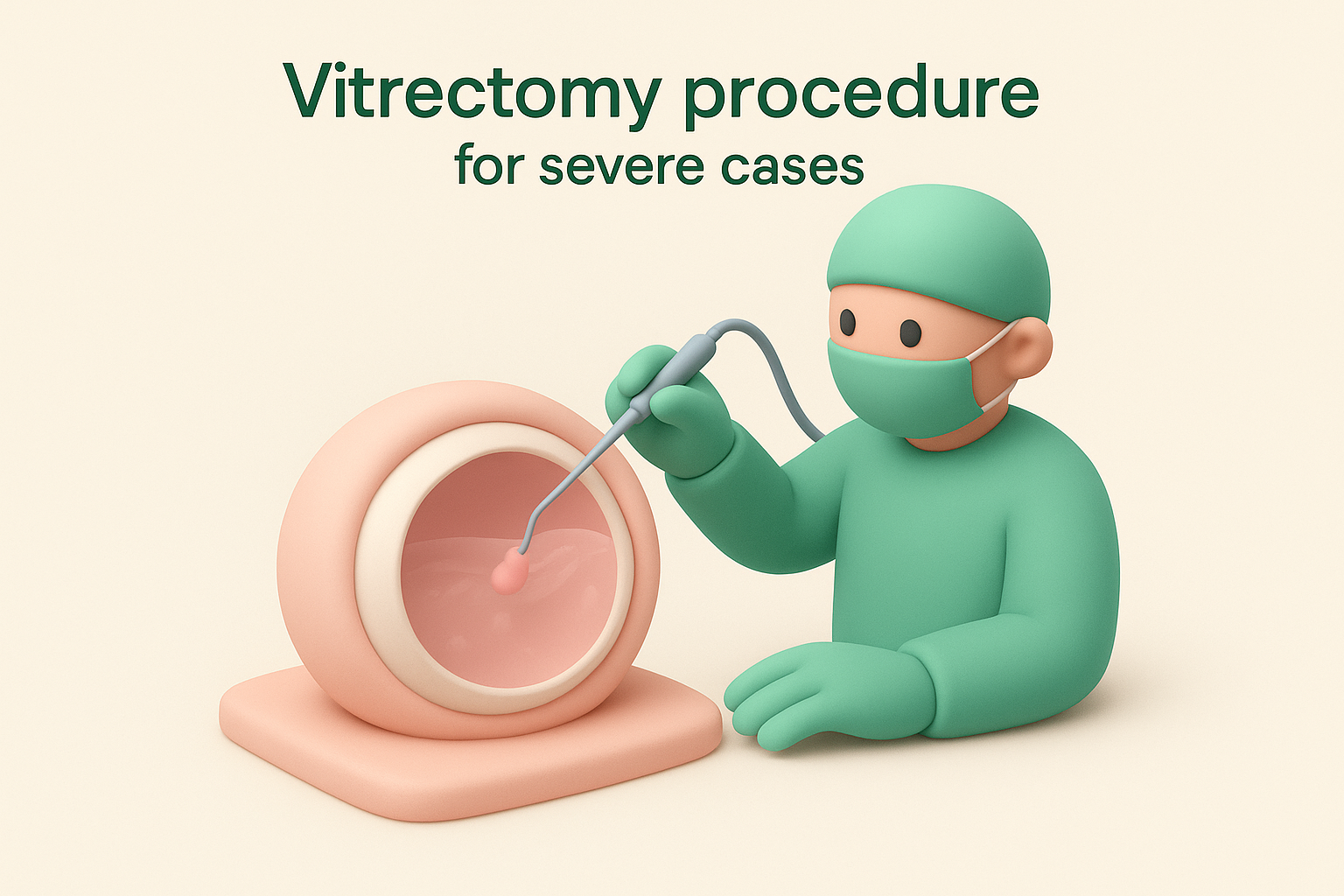
Vitrectomy procedure for severe cases
Vitrectomy removes the vitreous gel containing the floaters and replaces it with a clear saline solution that maintains your eye’s shape. Surgeons perform this operation under local or general anaesthesia through tiny incisions in the white of your eye. The procedure eliminates floaters permanently by removing the substance where they float, though it carries risks including retinal detachment, bleeding, infection, and accelerated cataract formation. Your surgeon typically reserves vitrectomy for the most severe cases where floaters block significant portions of your vision.
Recovery from vitrectomy usually takes several weeks, during which you’ll need to follow specific activity restrictions and use prescribed eye drops to prevent complications.
Laser treatment as a less invasive option
Laser vitreolysis uses a YAG laser to break apart or vaporise floaters without removing the vitreous. Your surgeon aims the laser at individual floaters to fragment them into smaller pieces that become less noticeable. This outpatient procedure takes about 20 minutes and causes minimal discomfort, though it works best for larger, well-defined floaters located away from your retina and lens. Results vary between patients, with some experiencing significant improvement whilst others notice little change in their symptoms.
Common myths about natural cures for floaters
The internet overflows with claims about natural remedies that supposedly eliminate floaters, yet none of these methods have scientific evidence supporting their effectiveness. You cannot dissolve or remove spots and floaters in vision through diet changes, supplements, or eye exercises. Whilst these myths persist online, they waste your time and money whilst potentially delaying necessary medical evaluation. Understanding which treatments lack scientific backing helps you focus on realistic expectations and proven medical interventions when needed.
The pineapple and papaya myth
Many websites claim that eating pineapple or papaya dissolves eye floaters because these fruits contain bromelain and papain enzymes. This myth suggests that these enzymes break down the protein clumps causing floaters. No scientific studies support this claim, and the enzymes in these fruits work in your digestive system, not inside your eye. Your body digests these enzymes long before they could reach the vitreous gel. Eating tropical fruits benefits your overall health but won’t eliminate existing floaters.
Supplement and hydration claims
Vitamin supplements marketed for eye health won’t remove floaters that already exist in your vitreous, though proper nutrition supports general eye health. Similarly, drinking more water doesn’t flush floaters from your eye since the vitreous doesn’t work like your kidneys or bloodstream. Eye exercises and massage techniques also fail to remove floaters because physical manipulation cannot break up or dissolve the protein clumps floating in your vitreous gel.
The only proven treatments for problematic floaters remain surgical interventions performed by qualified eye specialists, not dietary changes or supplements.
Final thoughts on vision floaters
Most people develop spots and floaters in vision as a natural part of ageing, and these typically pose no threat to your eyesight. The key lies in recognising warning signs that distinguish normal floaters from serious retinal problems requiring immediate medical care. Sudden increases in floaters, flashes of light, or shadows moving across your vision demand urgent professional assessment to prevent permanent vision loss.
Living with floaters becomes easier once you understand their cause and realise that most gradually become less noticeable over months or years. Your brain often learns to ignore them during daily activities, though this adaptation period varies significantly between individuals. Regular eye examinations remain essential for monitoring changes and catching potential complications before they progress to serious problems affecting your sight.
If floaters interfere with your daily activities or you notice sudden changes in your vision, contact Bright Sight Eye Specialists for a comprehensive assessment. Professional evaluation provides peace of mind and ensures you receive appropriate treatment when needed for optimal long-term eye health.