


A specialist for eye doctor is an ophthalmologist. This is a medical doctor who completed years of additional training after medical school to diagnose and treat eye conditions. They can perform surgery, prescribe medications, and manage complex eye diseases like cataracts, glaucoma, and retinal problems. You might also encounter optometrists and optical dispensers who provide eye care, but only ophthalmologists have the medical training to perform surgery and treat serious eye conditions.
This guide explains how to choose the right eye specialist in Sydney. You’ll learn the difference between eye care professionals, when you need a referral, what conditions require an ophthalmologist, and how Medicare and private health insurance work for eye care. We’ll also cover what to expect during your first appointment and how to find a qualified specialist in the Eastern Suburbs and greater Sydney area.
Why choosing the right eye specialist matters
Your choice of eye specialist directly affects your diagnosis accuracy and treatment outcomes. Many eye conditions show no symptoms in their early stages, and a qualified ophthalmologist can detect problems like glaucoma or diabetic retinopathy before they damage your vision permanently. Choosing the right specialist for eye doctor needs means you receive appropriate care from the start, rather than bouncing between practitioners or delaying necessary treatment.

Early detection protects your vision
Ophthalmologists use advanced diagnostic equipment that optometrists don’t typically have access to. They can perform detailed retinal imaging, optical coherence tomography (OCT), and visual field tests to catch conditions in their earliest stages. Early intervention often prevents vision loss that would otherwise be irreversible, particularly with conditions like macular degeneration and glaucoma where damage accumulates over time.
The difference between seeing an ophthalmologist at the first sign of a problem versus waiting can mean the difference between preserving your sight and permanent vision loss.
Getting appropriate care saves time and money
Seeing the wrong type of eye care professional first wastes your time and medical expenses. You may need additional referrals, repeat appointments, and delayed treatment while your condition progresses. Starting with the right specialist ensures you receive comprehensive care immediately, whether that means surgery, medical management, or ongoing monitoring of your eye health.
How to know which eye doctor you need in Sydney
Your symptoms and the urgency of your condition determine which specialist for eye doctor you should see first. Most people start with an optometrist for routine eye tests and minor issues, then receive a referral to an ophthalmologist when needed. However, certain symptoms require immediate ophthalmologist care, bypassing the usual referral pathway. Understanding this distinction saves you time and protects your vision.
Your symptoms guide your choice
Sudden vision changes demand urgent attention from an ophthalmologist. If you experience flashes of light, a curtain or shadow blocking your vision, sudden loss of sight, or a dramatic increase in floaters, contact an ophthalmologist directly or visit an emergency department. These symptoms often indicate retinal detachment, which requires immediate surgical intervention to prevent permanent blindness.
Gradual changes typically start with your optometrist. Blurry vision that develops slowly, difficulty reading, or noticing halos around lights at night warrant an optometry appointment first. Your optometrist will test your vision, check for common conditions, and refer you to an ophthalmologist if they detect cataracts, glaucoma, or retinal problems requiring surgical or advanced medical management.
Regular optometry checks catch problems early, but ophthalmologists provide the surgical and medical expertise needed for complex conditions.
Start with your optometrist for initial checks
Optometrists handle routine eye care including prescribing glasses, fitting contact lenses, and screening for eye diseases. They use specialised equipment to photograph your retina and measure eye pressure during standard eye tests. Your optometrist will refer you to an ophthalmologist when they spot concerning changes or when your condition needs surgery or complex treatment.

When you need direct access to an ophthalmologist
You can bypass your optometrist in genuine emergencies involving eye injuries, chemical burns, or sudden vision loss. Most ophthalmology practices accept urgent referrals from emergency departments. Patients with diabetes, high blood pressure, or existing eye conditions often benefit from direct ophthalmologist care, particularly if you already have established retinal disease requiring ongoing monitoring and treatment.
Types of eye specialists in Australia
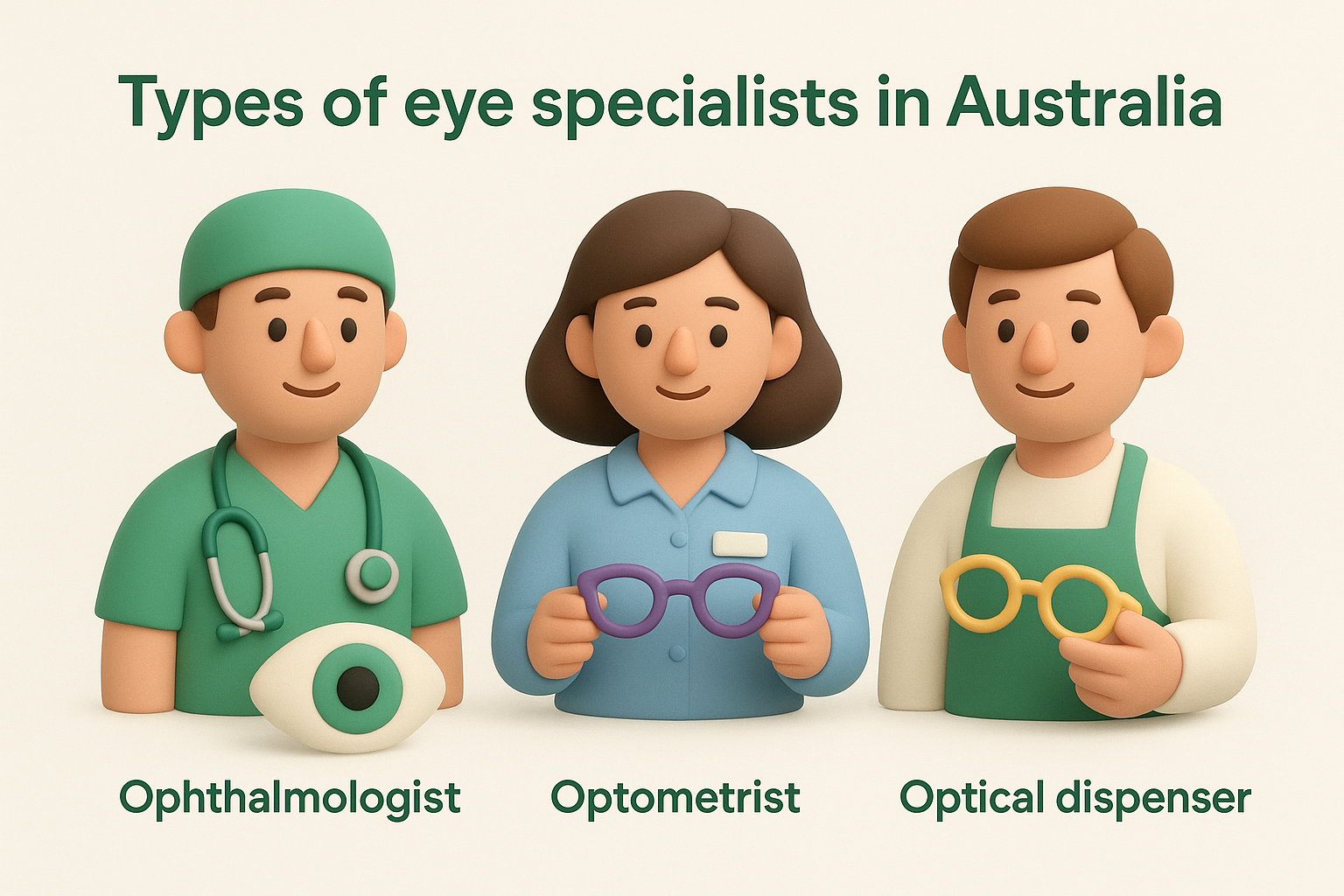
Australia has three main types of eye care professionals: ophthalmologists, optometrists, and optical dispensers. Each serves a distinct role in protecting your vision, and understanding these differences helps you access the right specialist for eye doctor needs at the right time. Ophthalmologists hold medical degrees with surgical training, whilst optometrists provide primary eye care and optical dispensers fit and supply eyewear based on prescriptions.
Ophthalmologists: surgical eye specialists
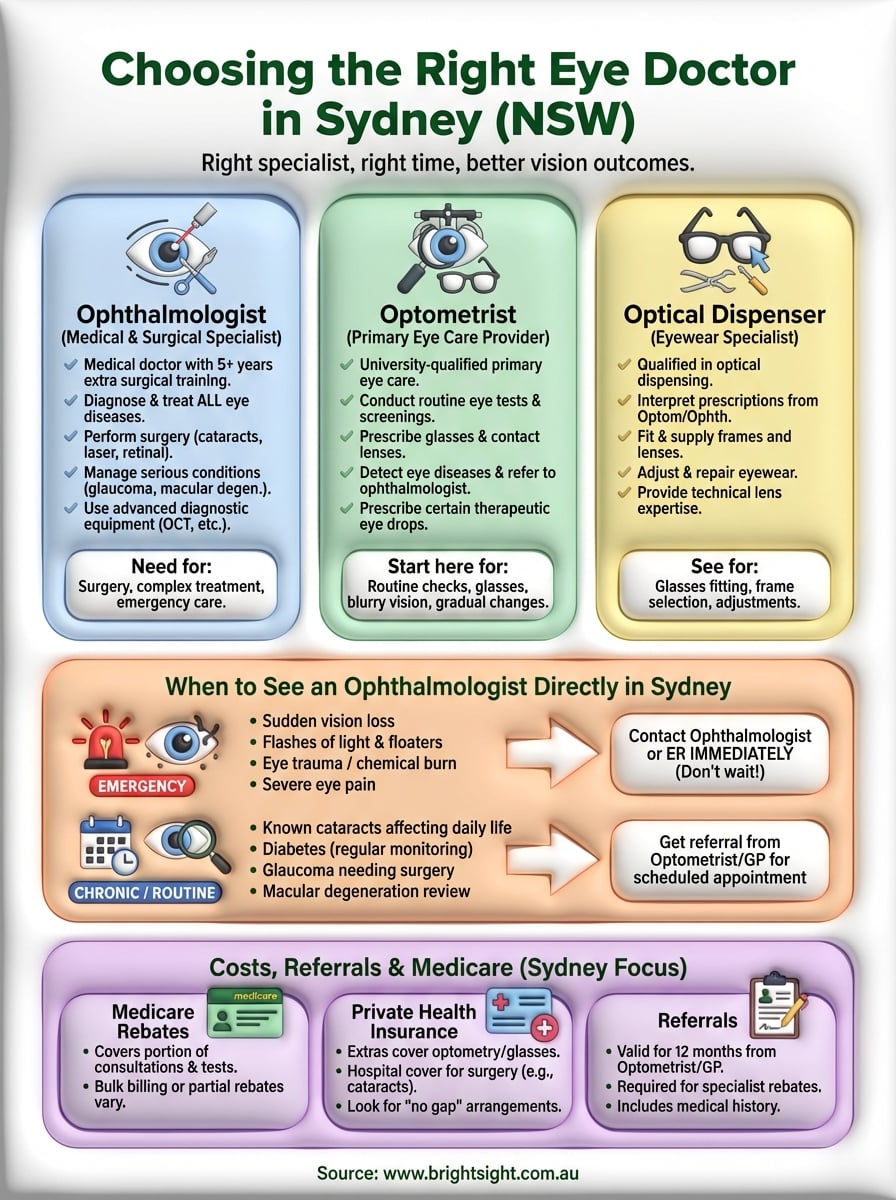
Ophthalmologists are medical doctors who completed five additional years of specialised training through the Royal Australian and New Zealand College of Ophthalmologists (RANZCO) after their medical degree. They diagnose and treat all eye diseases, perform surgery, and prescribe medications. You need an ophthalmologist for conditions like cataracts, glaucoma, retinal detachment, macular degeneration, and diabetic retinopathy requiring surgical or complex medical intervention.
These specialists use advanced diagnostic equipment including optical coherence tomography (OCT), fluorescein angiography, and surgical microscopes. They perform procedures ranging from cataract surgery and laser treatments to complex retinal operations and corneal transplants.
Only ophthalmologists have the medical training and surgical qualifications to operate on your eyes and manage serious eye diseases.
Optometrists: primary eye care providers
Optometrists complete university-level qualifications in optometry and register with the Optometry Board of Australia to practise legally. They conduct comprehensive eye examinations, prescribe glasses and contact lenses, and detect eye diseases during routine testing. Your optometrist screens for conditions like glaucoma, cataracts, and retinal problems, then refers you to an ophthalmologist when surgical or advanced medical care becomes necessary.
Optometrists also prescribe certain therapeutic eye drops for infections, inflammation, and minor conditions. They monitor chronic conditions under ophthalmologist guidance and provide ongoing care for stable eye diseases.
Optical dispensers: eyewear specialists
Optical dispensers complete qualifications in optical dispensing and supervised placement training. They interpret prescriptions written by optometrists or ophthalmologists, help you select appropriate frames and lenses, and ensure your glasses fit correctly. These professionals adjust and repair eyewear but don’t examine eyes or diagnose conditions.
Optical dispensers work closely with optometrists in retail optometry practices, providing technical expertise about lens options, coatings, and frame materials suited to your prescription and lifestyle needs.
When to see an ophthalmologist in NSW
Specific symptoms and conditions determine when you need ophthalmologist care in New South Wales. Some situations require immediate attention without waiting for your regular optometrist appointment, whilst others involve scheduled visits for ongoing management. Understanding which category your symptoms fall into ensures you receive timely treatment and prevents unnecessary vision loss.
Emergency eye symptoms requiring immediate care
You need urgent ophthalmologist attention if you experience sudden vision loss, eye trauma, chemical burns, or severe eye pain. Flashes of light combined with floaters, a shadow or curtain blocking your vision, or suddenly seeing many new floaters indicate possible retinal detachment requiring emergency surgery. Contact an ophthalmologist directly or visit your nearest emergency department immediately, as delays of even hours can result in permanent vision damage.
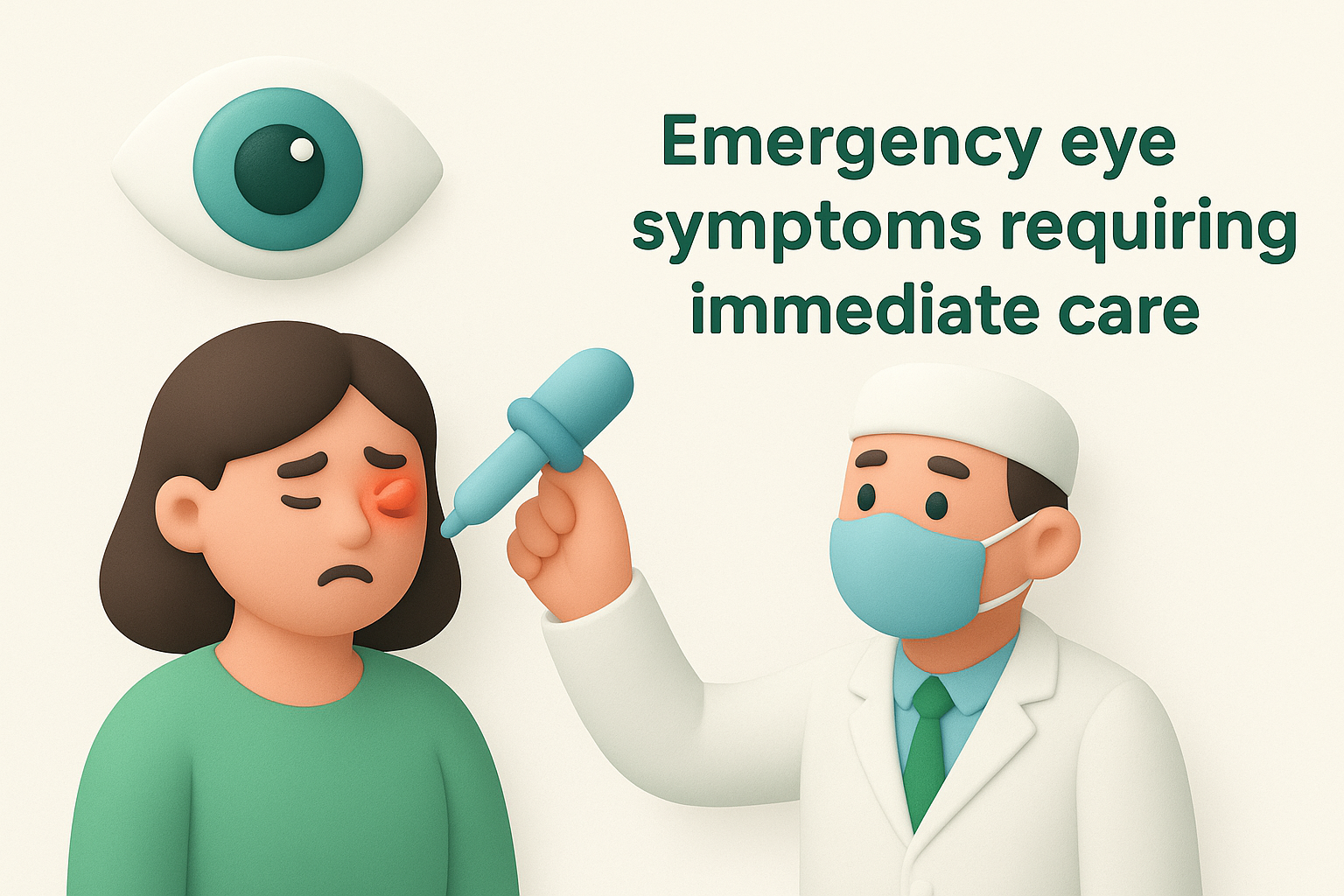
Eye injuries from sports, workplace accidents, or foreign objects penetrating the eye also demand immediate specialist care. Chemical splashes require urgent irrigation and ophthalmologist assessment to prevent corneal damage and scarring that affects your vision permanently.
Emergency eye conditions often have narrow treatment windows, making immediate specialist care critical for preserving your sight.
Scheduled visits for chronic conditions
Your optometrist will arrange ophthalmologist referrals when they detect cataracts affecting your daily activities, glaucoma requiring surgical management, or retinal changes needing specialist assessment. Patients with diabetes need regular ophthalmologist monitoring even without symptoms, as diabetic retinopathy causes damage before you notice vision changes. Regular specialist appointments also benefit people with macular degeneration, previous retinal surgery, or family histories of serious eye disease requiring ongoing surveillance and preventive treatment.
Costs, referrals and Medicare in Sydney
Understanding costs and Medicare coverage helps you plan your ophthalmologist visits without financial surprises. Most specialist consultations require a valid referral from your optometrist or GP, which remains active for 12 months from the issue date. Medicare provides rebates for ophthalmologist consultations and many procedures, though gap payments vary between practices and specialists across Sydney.
How Medicare covers ophthalmologist visits
Medicare rebates cover a portion of your specialist for eye doctor consultations and necessary diagnostic tests. Standard consultations typically attract bulk billing or partial rebates, depending on the ophthalmologist’s billing arrangements. Public hospital ophthalmology services usually involve no out-of-pocket costs, though waiting times can extend several months for non-urgent conditions.
Private health insurance and gap payments
Your private health insurance extras cover optometry visits and glasses, whilst hospital cover pays for surgical procedures like cataract operations. Many Sydney ophthalmologists offer “no gap” arrangements with major insurers for standard cataract surgery, meaning you pay nothing beyond your excess. Premium lens implants and advanced surgical options often incur additional costs not covered by insurance or Medicare.
Private health insurance significantly reduces your out-of-pocket costs for ophthalmology procedures, particularly surgeries requiring hospital admission.
Getting your referral in Sydney
Your optometrist provides referrals after detecting conditions requiring specialist care during routine eye tests. GP referrals work equally well if you’ve discussed eye symptoms during a standard consultation. Referrals include your medical history and test results, helping the ophthalmologist understand your condition immediately. You can see any ophthalmologist with a valid referral, giving you freedom to choose specialists based on location, expertise, and recommendations from your referring practitioner.
Next steps for your eyes
Protecting your vision starts with choosing the right specialist for eye doctor needs based on your symptoms and condition. Schedule regular eye tests with your optometrist every two years, or annually if you’re over 65 or have diabetes. Your optometrist will refer you to an ophthalmologist when they detect conditions requiring surgical or complex medical treatment.
Keep track of changes in your vision and don’t wait for scheduled appointments if you notice sudden problems. Contact an ophthalmologist immediately for emergency symptoms like flashes, floaters, or vision loss. Preventive care costs far less than treating advanced eye disease, and early detection often means simpler treatments with better outcomes.
If you need cataract surgery, retinal care, or treatment for macular degeneration in Sydney’s Eastern Suburbs, Bright Sight Eye Specialists offers comprehensive ophthalmology services with transparent pricing and no-gap options for insured patients.