


If you’re considering SMILE laser vision correction, one of the first questions on your mind is likely about SMILE eye surgery recovery time, and rightly so. Knowing what to expect after the procedure helps you plan time off work, arrange transport, and feel confident walking into your appointment.
The good news is that SMILE (Small Incision Lenticule Extraction) is a minimally invasive procedure with one of the fastest recovery profiles among refractive surgeries. Most people notice a significant improvement in their vision within the first 24 to 48 hours, though full stabilisation takes a little longer.
At Bright Sight Eye Specialists in Randwick, Dr Capucine Odouard performs SMILE surgery and guides each patient through their personalised recovery plan. Below, we’ve mapped out a clear timeline of what recovery looks like, from the first few hours post-op through to full visual stabilisation, along with practical tips to support smooth healing.
What affects SMILE recovery time
SMILE eye surgery recovery time varies from person to person, and understanding the factors behind that variation helps you set realistic expectations. Several elements influence how quickly your vision clears and how smoothly your eye heals in the days and weeks after surgery.
Your prescription strength
Your pre-surgery prescription plays a direct role in how long recovery takes. Higher prescriptions, particularly for myopia above -6.00 dioptres, require the removal of a larger lenticule of corneal tissue, which means your eye has more work to do during the healing process. Patients with milder prescriptions typically notice clearer vision sooner and experience less post-operative haze.
The stronger your prescription, the more corneal tissue is involved, and the more patience you may need in the first week or two.
Your age and baseline eye health
Younger eyes tend to heal faster, though SMILE is highly effective across a broad adult age range. If you have pre-existing conditions such as dry eye syndrome, your recovery may feel slower, since the eye’s surface can take longer to restabilise. Conditions like blepharitis or meibomian gland dysfunction are worth treating before surgery, as healthier eyes at baseline consistently show smoother recoveries.
How closely you follow aftercare instructions
This is one factor entirely within your control. Using your prescribed eye drops on schedule reduces inflammation and lowers the risk of infection, both of which directly affect how clearly and quickly your vision recovers. Avoiding eye rubbing in the first few weeks is equally important, since the corneal pocket created during SMILE is still integrating during that period. Patients who stick to their post-operative care plan reliably recover faster than those who skip steps or return to strenuous activity too soon.
SMILE recovery timeline and vision milestones
Understanding the smile eye surgery recovery time in clear stages makes it far easier to know what is normal and what to flag with your surgeon. Recovery is not a single event but a gradual process, and most patients move through predictable phases from the first hours after surgery through to full visual stabilisation.
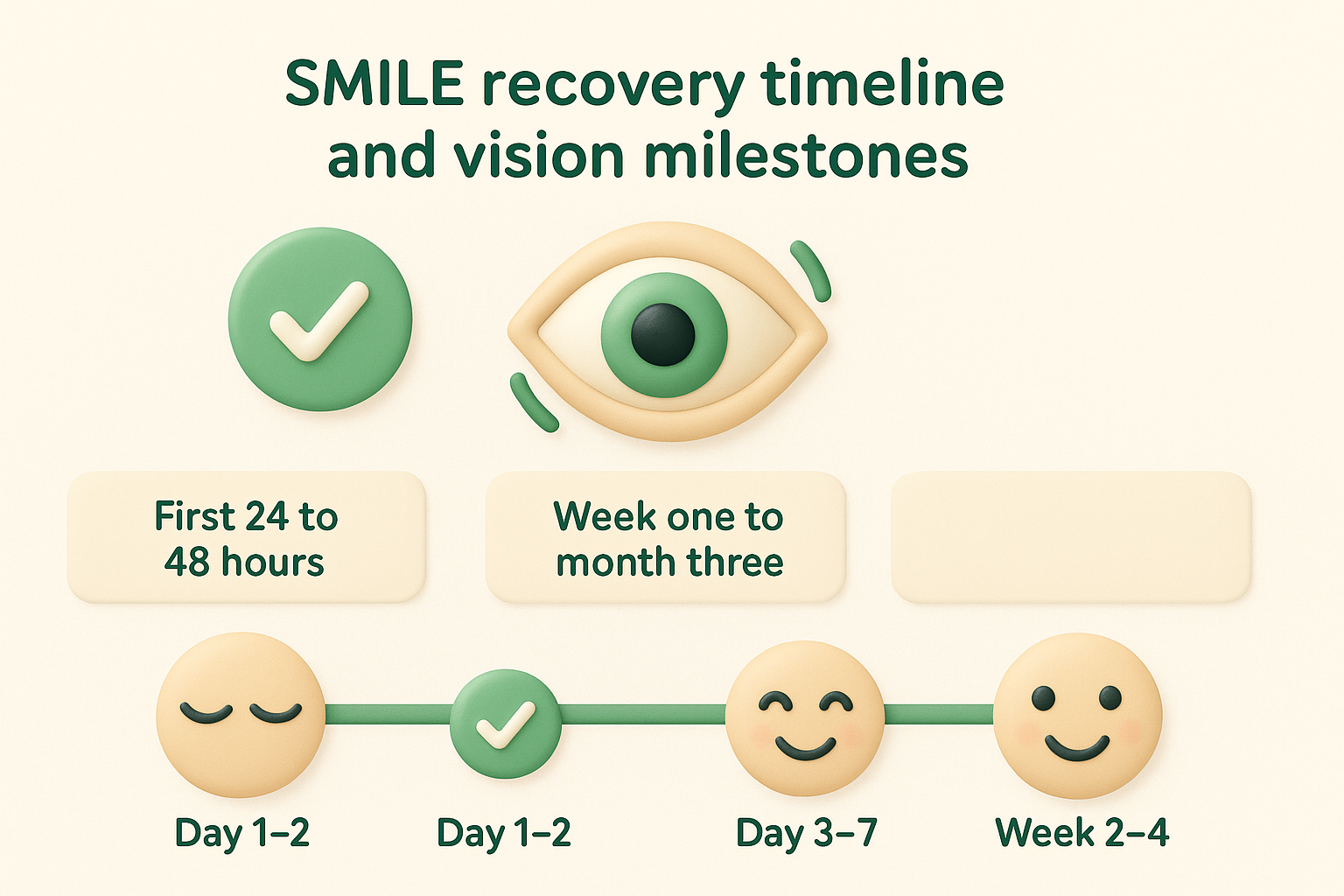
First 24 to 48 hours
Your vision will likely be blurry or hazy immediately after the procedure, which is completely expected. Most patients notice a meaningful improvement within the first day, though some fluctuation between clear and slightly foggy vision is normal at this stage. Your eye may feel gritty or sensitive to bright light, both of which typically settle within a day or two.
Week one to month three
| Time after surgery | What to expect |
|---|---|
| Day 1–2 | Significant improvement, some visual fluctuation |
| Day 3–7 | Vision continues to sharpen; dryness may peak |
| Week 2–4 | Steady stabilisation; most daily tasks feel comfortable |
| Month 1–3 | Full visual stabilisation for the majority of patients |
Most patients reach functional, driving-standard vision within the first week, though complete stabilisation can take up to three months for some.
When you can drive, work and exercise
One of the most practical parts of planning your smile eye surgery recovery time is knowing exactly when you can return to your normal routine. The answer depends on both your rate of healing and the specific demands of each activity.
Driving
You cannot drive yourself home on the day of surgery, so arrange a lift in advance. Most patients are cleared to drive within 24 to 48 hours, once their surgeon confirms their vision meets the legal standard at their first post-operative check. Do not get behind the wheel before that appointment, even if your vision feels sharp.
Never assume your vision is good enough to drive before your surgeon gives you the go-ahead.
Returning to work
Office-based and desk work is generally comfortable to resume within one to two days for most patients. If your role involves prolonged screen use, plan for more frequent breaks in the first week, as your eyes may tire more easily while they adapt.
Exercise and physical activity
Light walking is fine from day one, but you should avoid swimming, contact sports, and gym sessions involving heavy exertion for at least two weeks. Sweat and water entering the eye during early healing raises the risk of irritation and infection, so err on the side of caution.
Aftercare tips to heal well
How well you follow your aftercare routine has a direct impact on your smile eye surgery recovery time. Small, consistent habits in the first few weeks make a measurable difference to how clearly and comfortably your vision settles.

Use your eye drops consistently
Your surgeon will prescribe antibiotic and anti-inflammatory eye drops to use for a set period after surgery. Use them exactly as directed, at the correct intervals, and do not stop early even if your eye feels fine. Artificial tear drops are equally important during this phase, since SMILE can temporarily reduce tear film stability and cause dryness that blurs vision.
Skipping prescribed drops is one of the most common reasons patients experience a slower or rougher recovery.
Protect your eyes from irritants
Dusty environments, smoke, and swimming pools carry a real risk of introducing bacteria or particles to your healing cornea. Wear wrap-around sunglasses outdoors for at least the first two weeks, both for UV protection and to shield your eyes from wind. Avoid rubbing your eyes under any circumstances during the early recovery period, even if they feel itchy or gritty.
Rest your eyes from screens
Screen fatigue is more pronounced in the first week after surgery. Break up extended screen sessions with the 20-20-20 rule: every 20 minutes, look at something 20 metres away for 20 seconds. This reduces strain and helps your eyes maintain comfortable, consistent focus as they settle.
Warning signs and follow-up appointments
Knowing what falls outside normal smile eye surgery recovery time is just as important as following your aftercare routine. Most side effects, such as mild dryness, light sensitivity, and occasional blurring, resolve on their own. Others require prompt attention from your surgeon.
Signs that need prompt attention
Pain, sudden vision loss, or a significant increase in redness are not typical recovery symptoms and should never be dismissed as normal. Contact your surgeon immediately if you notice any of the following:
- Severe or worsening eye pain that does not ease within the first 24 hours
- A sudden or marked decrease in vision after an initial period of improvement
- Discharge, swelling, or increasing redness around the eye
- Seeing flashes of light or a new onset of floaters
If something feels wrong, contact your surgeon before your next scheduled appointment rather than waiting.
Your follow-up schedule
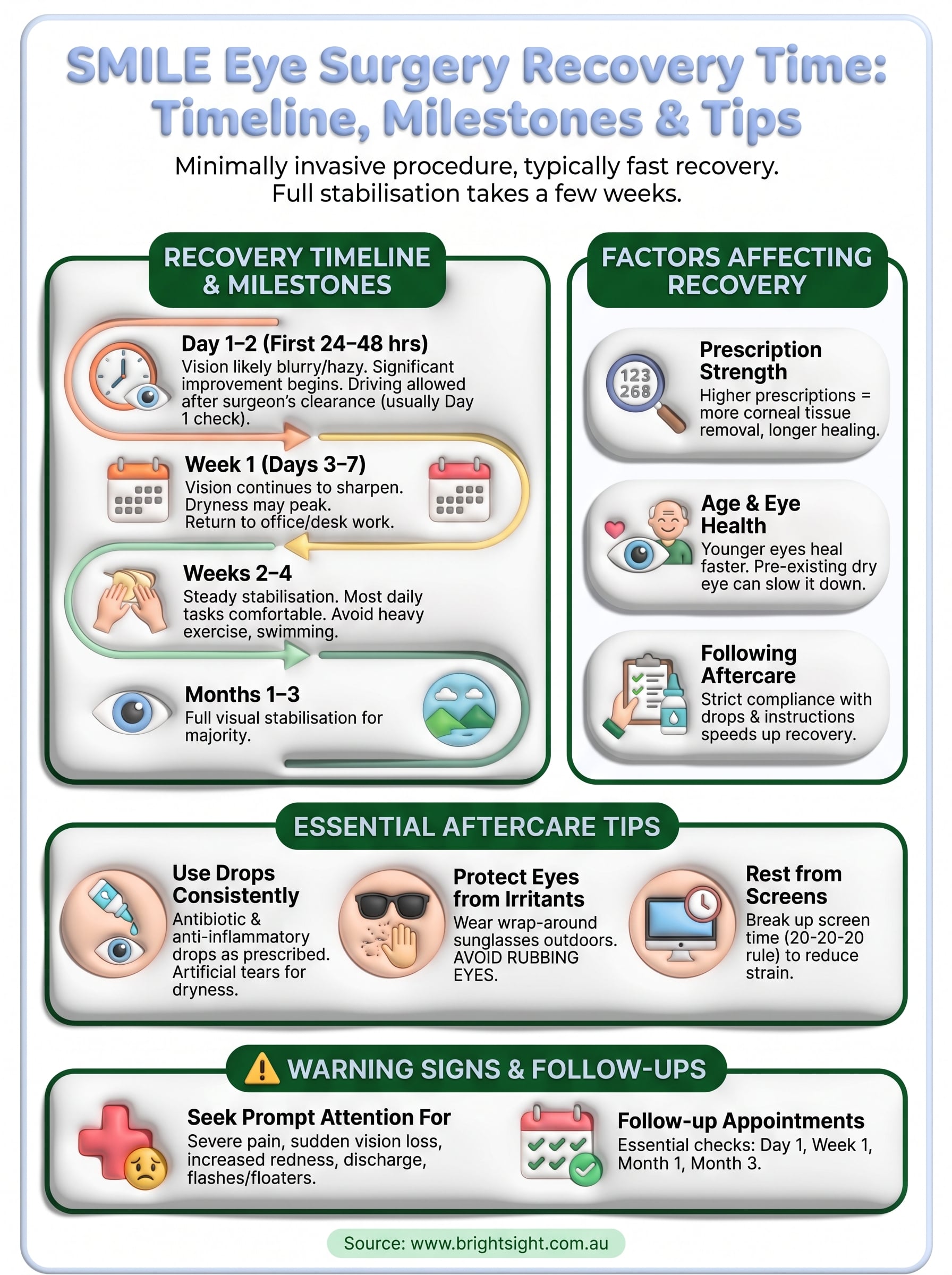
Your follow-up appointments are built into your recovery, not optional extras. You will typically have a check the day after surgery, again at one week, and at one and three months. These visits let your surgeon confirm your vision is stabilising correctly and catch any issues early, before they affect your outcome.
Next steps
SMILE eye surgery recovery time is shorter than many patients expect, and the process becomes even more manageable when you know what to anticipate at each stage. Most people are back to their daily routine within a day or two, with full visual stabilisation arriving gradually over the following weeks.
Your recovery outcome depends heavily on two things: choosing a surgeon with genuine experience in SMILE, and following your aftercare plan without shortcuts. Both matter equally, and neither works well without the other.
If you are weighing up whether SMILE is the right procedure for your prescription and lifestyle, the best next step is a thorough consultation. Dr Capucine Odouard at Bright Sight Eye Specialists in Randwick assesses each patient individually, explains your options clearly, and sets realistic expectations before you commit to anything. Book a consultation with Dr Odouard to find out whether SMILE is suitable for you.