


Retina and macula specialists are ophthalmologists who focus on the back of your eye. The retina is the light-sensitive tissue that captures what you see, while the macula sits at its centre and handles your sharp, detailed vision. These specialists diagnose and treat conditions affecting these delicate structures, from age-related macular degeneration to diabetic eye disease and retinal detachment. They use advanced imaging technology and perform specialised surgery when needed.
Finding the right specialist in Sydney means comparing clinics, understanding what treatments they offer, and knowing what you’ll pay. This guide walks you through how to choose a retina and macula specialist in Sydney’s Eastern Suburbs and beyond. You’ll learn which conditions they treat, what tests and procedures to expect, and how Medicare and private health insurance cover the costs. We’ll also show you what makes one clinic different from another, so you can book an appointment with confidence.
Why retina and macula specialists matter
Your retina and macula control everything you rely on for reading, driving, and recognising faces. When something goes wrong with these structures, you need more than routine eye care. Retina and macula specialists complete years of additional training beyond standard ophthalmology, learning microsurgical techniques and advanced imaging that most eye doctors never use. They see complex cases every day and know how to spot the subtle warning signs of serious conditions before you lose vision permanently.
When general eye care isn’t enough
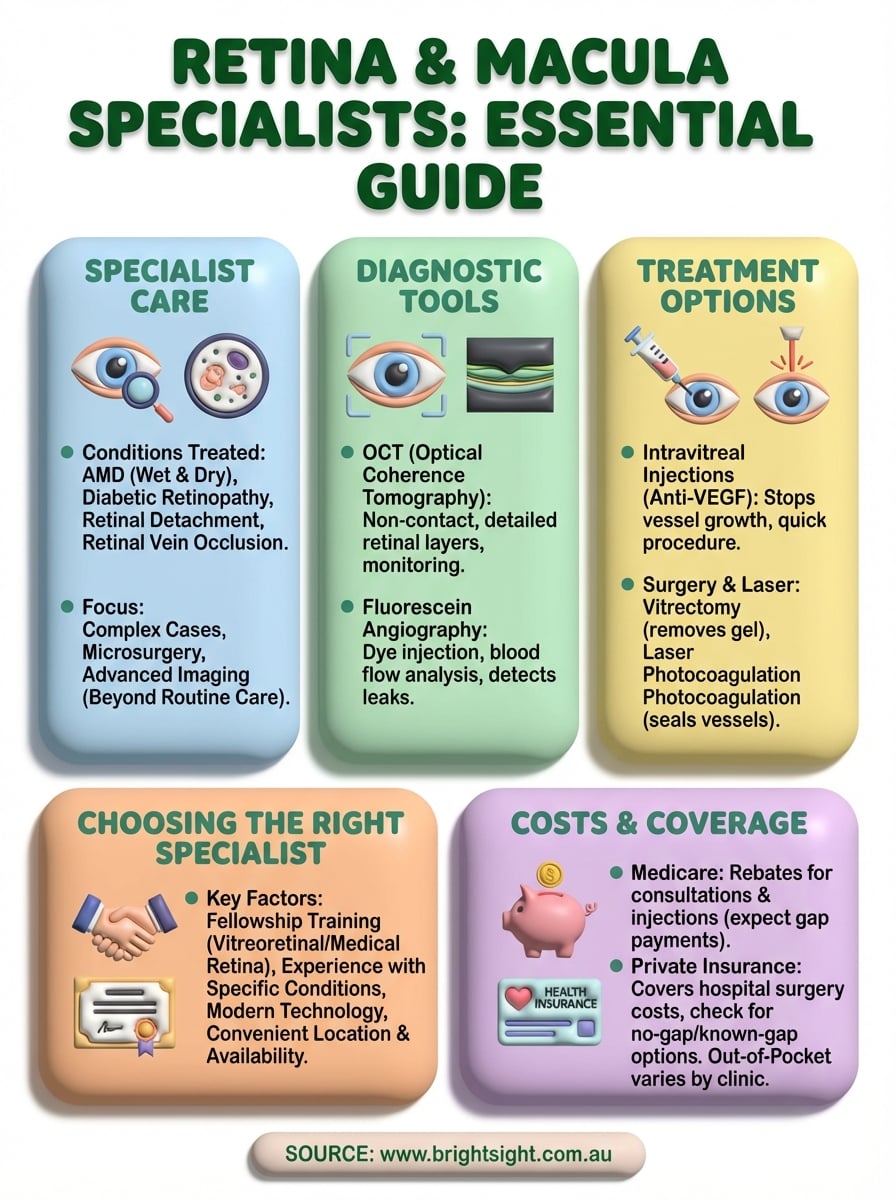
Your optometrist can detect early signs of retinal problems during a routine eye test, but they can’t perform the injections, laser treatments, or surgery you might need. General ophthalmologists handle cataracts and glaucoma well, yet they rarely manage the intricate challenges of macular degeneration or retinal detachment. Retina and macula specialists use equipment like optical coherence tomography (OCT) and fluorescein angiography to see layers of your retina in microscopic detail. They decide whether you need intravitreal injections to stop abnormal blood vessel growth or emergency vitrectomy surgery to reattach your retina.
Delaying specialist care can mean the difference between preserving your central vision and facing permanent blind spots.
Conditions like diabetic retinopathy and retinal vein occlusion progress quickly. You need someone who treats these diseases daily, understands which cases can wait, and knows when to act immediately.
How to choose a retina and macula specialist in Sydney
Choosing the right retina and macula specialist starts with checking their qualifications and subspecialty training. You want someone who completed a fellowship specifically in vitreoretinal or medical retina surgery, preferably at a recognised institution. Look for specialists who treat the specific condition you have every week, not just occasionally. Their website should list the conditions they manage most often and the procedures they perform regularly.
Check their training and experience
Fellowship training matters because it shows the specialist spent years focusing purely on retina and macula diseases after their general ophthalmology training. Ask where they trained and how many similar cases they’ve treated in the past year. Specialists who lecture or publish research often stay current with the latest treatments, though this isn’t the only measure of skill. You can also check if they belong to professional bodies like the Royal Australian and New Zealand College of Ophthalmologists (RANZCO) or the Australian and New Zealand Society of Retina Specialists.

Consider location and appointment availability
Clinics in Sydney’s Eastern Suburbs like Randwick, Bondi Junction, or nearby areas offer convenience if you need regular monitoring or multiple injections. Retina and macula specialists often work from several locations, so check which days they’re at each clinic. You’ll want somewhere accessible if you need emergency treatment for a sudden retinal detachment or floaters that appear overnight, as these conditions require urgent assessment.
Choosing a specialist close to home makes ongoing treatment easier, especially when you need injections every few months.
Factor in parking, public transport access, and whether the clinic offers Saturday or evening appointments.
Look at technology and treatment options
Modern retina and macula specialists use OCT imaging to track changes in your macula over time and adjust treatment accordingly. Ask if the clinic performs the specific procedure you need on-site, such as intravitreal injections, laser photocoagulation, or vitrectomy surgery. Some specialists focus purely on medical retina (injections and monitoring), while others perform complex surgery. Transparent pricing matters too, particularly for procedures not fully covered by Medicare. Check whether they offer gap-free options or clear quotes before you commit.
Common retina and macula conditions and tests
Retina and macula specialists diagnose and manage a specific range of conditions that threaten your central or peripheral vision. Age-related macular degeneration (AMD) affects your sharp, detailed vision and becomes more common after 50, appearing in two forms: dry AMD with gradual thinning of the macula, or wet AMD with abnormal blood vessel growth. Diabetic retinopathy damages blood vessels in your retina when high blood sugar levels remain uncontrolled, leading to leaking, swelling, or even bleeding that blurs your sight. You might not notice symptoms in the early stages, which makes regular screening crucial if you have diabetes or a family history of AMD.
Age-related macular degeneration and diabetic retinopathy
AMD progresses slowly in its dry form, causing straight lines to appear wavy or creating blank spots in your central vision. The wet form develops faster and needs urgent treatment to prevent permanent vision loss. Your specialist monitors dry AMD closely and recommends specific vitamins, diet changes, and lifestyle adjustments that may slow progression. Wet AMD requires intravitreal injections of anti-VEGF medication to stop new blood vessel growth and preserve the vision you still have.
Diabetic retinopathy often shows no symptoms until it reaches advanced stages, when you might see floaters, dark spots, or blurred vision. Your retina specialist checks for microaneurysms, haemorrhages, and macular oedema using detailed imaging. Early detection through regular eye examinations lets specialists treat the condition with laser photocoagulation or injections before you lose vision permanently. Tight blood sugar control remains the most effective way to prevent diabetic eye disease from worsening.
Retinal detachment and retinal vein occlusion
Retinal detachment happens when your retina pulls away from the underlying tissue that supplies oxygen and nutrients, creating a medical emergency. You’ll notice sudden flashes of light, a shower of floaters, or a curtain-like shadow across your vision. Specialists need to reattach your retina surgically within days to prevent permanent blindness in that eye. High myopia, previous eye surgery, and eye trauma increase your risk.
Retinal vein occlusion blocks blood flow in the veins that drain your retina, causing sudden, painless vision loss in one eye. The blockage leads to bleeding and swelling in your macula, which requires prompt injection therapy. Branch retinal vein occlusion affects part of your retina, while central retinal vein occlusion impacts the entire eye and carries a worse prognosis.
Diagnostic tests retina specialists use
Optical coherence tomography (OCT) creates cross-sectional images of your retina, showing each layer in microscopic detail. Your specialist uses OCT to measure macular thickness, detect fluid accumulation, and track changes after treatment. The scan takes seconds and requires no contact with your eye, making it the primary tool for monitoring AMD, diabetic macular oedema, and epiretinal membranes.
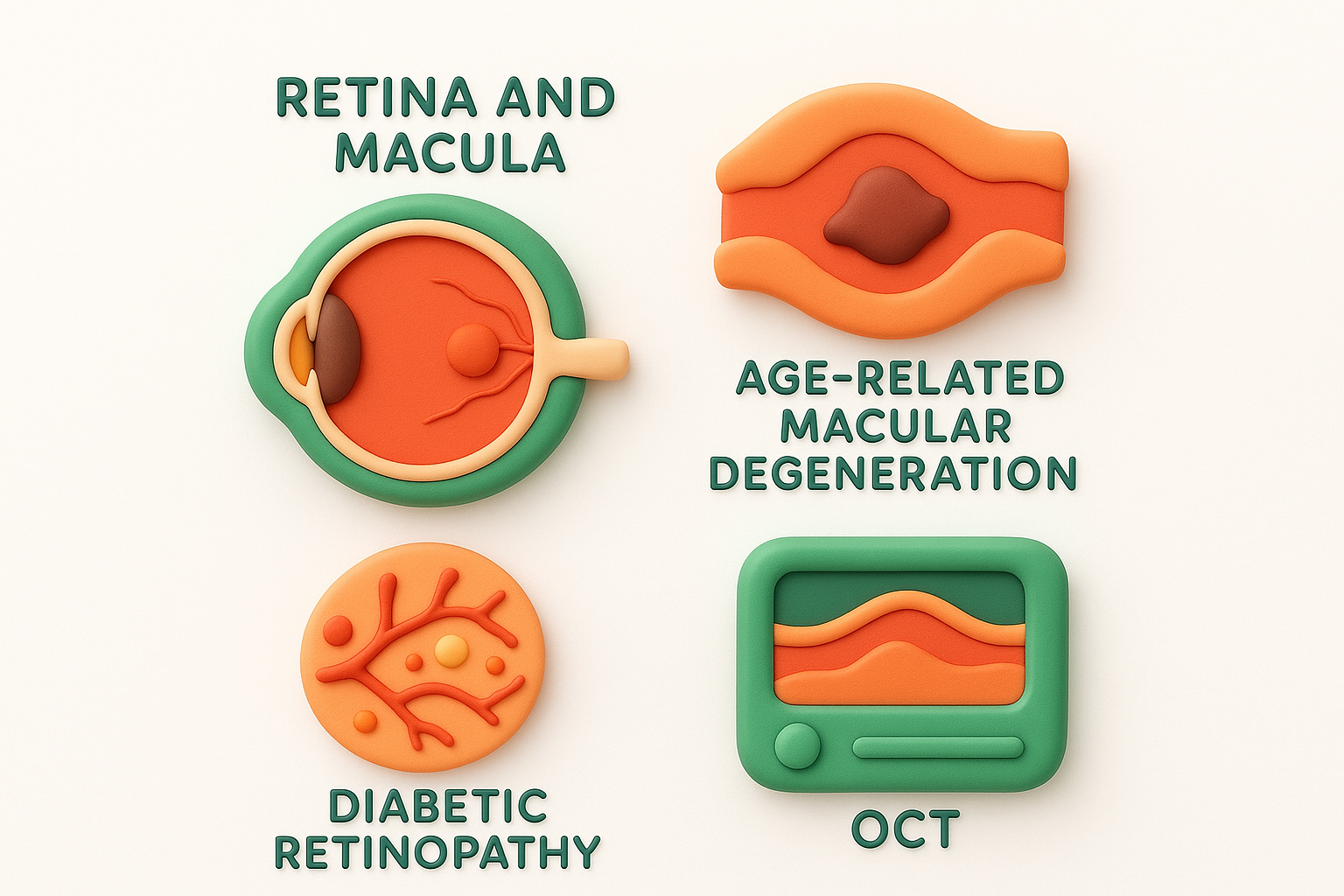
OCT imaging lets specialists see problems developing months before they affect your vision, giving you the best chance of successful treatment.
Fluorescein angiography involves injecting dye into your arm and photographing it as it flows through blood vessels in your retina. This test shows leaking vessels, areas of poor blood flow, and abnormal vessel growth. Your specialist orders it when planning laser treatment or investigating unexplained vision loss. The test takes about 30 minutes, and you’ll need someone to drive you home because the drops used to dilate your pupils blur your vision temporarily.
Treatment options and surgery in Sydney clinics
Retina and macula specialists in Sydney offer both non-surgical treatments like intravitreal injections and surgical procedures including vitrectomy. Your treatment depends on which condition you have, how far it’s progressed, and whether you need immediate intervention or ongoing management. Most specialists perform injections in their consulting rooms during regular appointments, while surgery takes place in a hospital or dedicated day surgery facility with microsurgical equipment.
Intravitreal injections and anti-VEGF therapy
Intravitreal injections deliver medication directly into your vitreous cavity, the gel-filled space inside your eye. Your specialist uses these injections to treat wet AMD, diabetic macular oedema, and retinal vein occlusion by stopping abnormal blood vessel growth and reducing swelling. The procedure takes only a few minutes in the consulting room after your specialist applies numbing drops and cleans the injection site. You’ll feel pressure but no pain, and you can return to normal activities the same day.
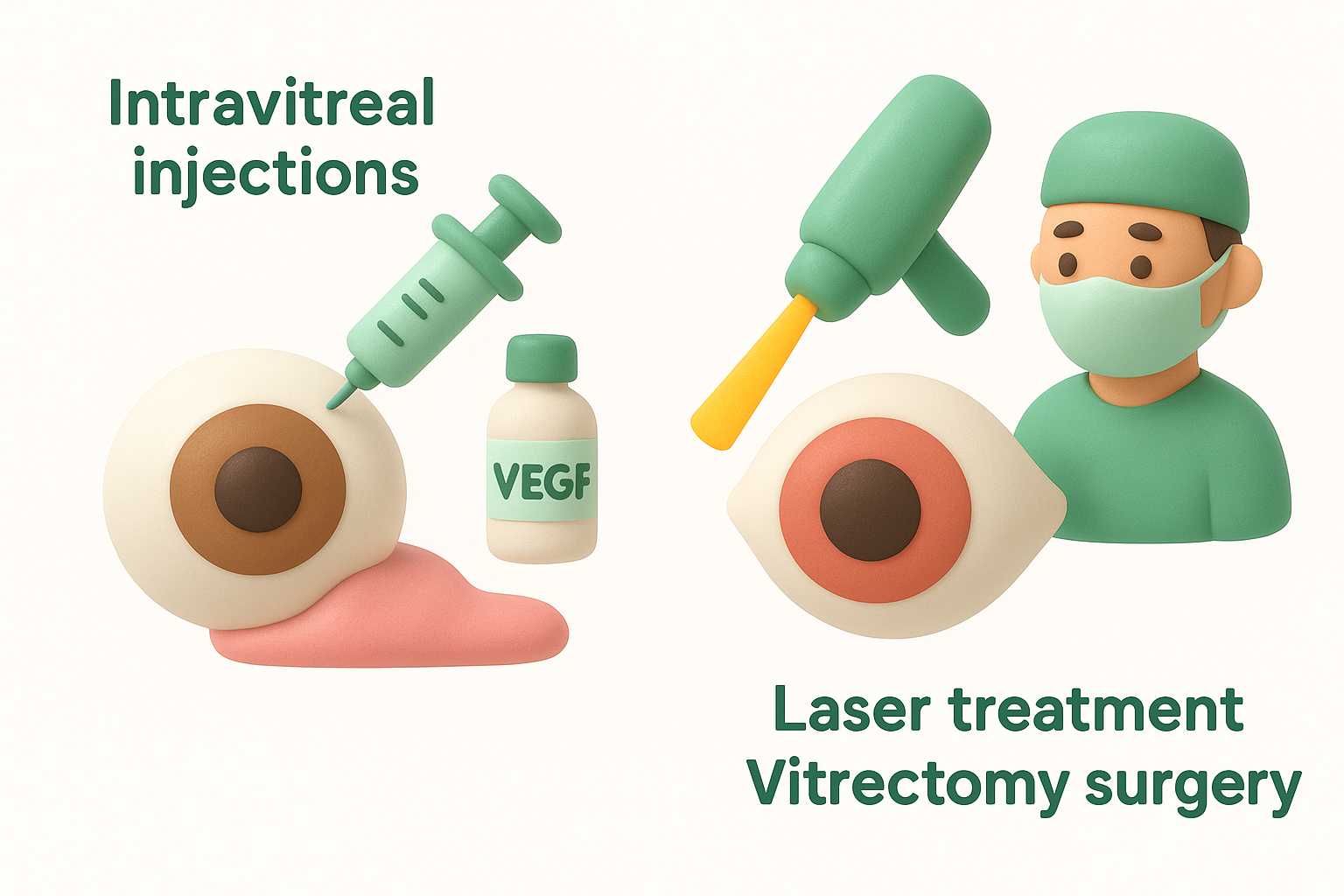
Anti-VEGF medications like aflibercept, ranibizumab, and bevacizumab block vascular endothelial growth factor, the protein that triggers new blood vessel formation in your retina. Most patients need injections every four to eight weeks initially, with the frequency reducing once the condition stabilises. Your specialist monitors your response using OCT scans at each visit to determine whether you need another injection or can extend the interval between treatments.
Regular injection therapy preserves the vision you have and often improves it, but you need to maintain the treatment schedule your specialist recommends.
Laser treatment and vitrectomy surgery
Laser photocoagulation seals leaking blood vessels or creates small burns that reduce abnormal vessel growth in your retina. Your specialist uses focal laser for specific leaks in diabetic retinopathy or scatter laser (panretinal photocoagulation) to treat widespread vessel problems. The procedure happens in the clinic with your eye numbed, and you’ll see bright flashes of light as the laser fires. Recovery takes a few days, though your vision might blur temporarily.
Vitrectomy surgery removes the vitreous gel from your eye when you have a retinal detachment, macular hole, epiretinal membrane, or severe vitreous haemorrhage. Your specialist performs this microsurgery under local or general anaesthetic, using instruments thinner than a human hair to peel membranes, remove scar tissue, or reattach your retina. Gas bubble or silicone oil might fill your eye temporarily to hold your retina in position while it heals. You’ll need to position your head face-down for several days after surgery if you have a macular hole, and you’ll avoid flying until the gas bubble dissolves completely.
Costs, Medicare and private health insurance
Understanding what you’ll pay for retina and macula care in Sydney depends on whether you have private health insurance, which Medicare items your specialist bills, and whether your procedure happens in a public or private hospital. Most initial consultations and follow-up appointments attract Medicare rebates, though you’ll often pay a gap between what Medicare covers and what specialists charge. Procedures like intravitreal injections and surgery cost more, and the out-of-pocket amount varies significantly between clinics.
Medicare coverage for specialist appointments and procedures
Medicare covers part of your specialist consultation fees through the Medicare Benefits Schedule (MBS), with the rebate depending on whether you’re a new or existing patient and how complex your appointment is. You’ll receive around 85% of the scheduled fee for consultations, leaving you to pay the difference if your specialist charges above the Medicare rate. Most retina and macula specialists in Sydney charge above the schedule fee, creating a gap payment that ranges from $50 to $200 per visit.

Intravitreal injections and laser treatments attract Medicare item numbers that provide partial rebates, typically covering 75% of the scheduled fee for in-rooms procedures. Your specialist bills Medicare directly if they’re bulk-billing, meaning you pay nothing, though few retina specialists offer this option for injection therapy. Surgery performed in a public hospital through the public system costs you nothing, but waiting times can stretch for months depending on urgency.
Private health insurance and gap payments
Private health insurance with hospital cover pays for surgery in private hospitals and day surgery facilities, letting you choose your surgeon and avoid public hospital waiting lists. Your level of cover determines whether you pay a gap for the surgeon’s fee, anaesthetist, and facility charges. Many retina and macula specialists offer no-gap or known-gap arrangements with major health funds, meaning you’ll know your exact out-of-pocket cost before surgery.
Check whether your health fund has a gap-cover agreement with your specialist before booking surgery, as this can save you thousands of dollars.
Extras cover doesn’t typically help with specialist fees or procedures, though it might contribute towards your optometrist visits for routine monitoring.
Understanding out-of-pocket costs in Sydney
Initial specialist consultations in Sydney’s Eastern Suburbs typically cost between $250 and $400, with Medicare rebating approximately $85 to $150 depending on the item number. Each intravitreal injection costs around $150 to $300 out-of-pocket after Medicare rebates. Vitrectomy surgery in a private hospital ranges from $3,000 to $8,000 for the surgeon’s fee alone, plus separate anaesthetist and hospital facility charges. Your total out-of-pocket costs depend heavily on your insurance arrangements and whether your specialist participates in gap-cover schemes.
Next steps for your eye care
You now understand what retina and macula specialists treat, how to choose one in Sydney, and what to expect with costs and treatments. Regular eye examinations remain your best defence against vision-threatening conditions, particularly if you’re over 50, have diabetes, or notice sudden changes like floaters or flashes of light. Book an appointment with a specialist as soon as you notice symptoms or if your optometrist refers you, because early treatment preserves more vision than waiting until the problem worsens.
Bright Sight Eye Specialists in Randwick offers comprehensive retina and macula care with transparent pricing and no-gap options for insured patients. Dr Rahul Dubey treats the full range of conditions discussed in this guide, from macular degeneration to retinal detachment, using advanced imaging and surgical techniques. The clinic serves Sydney’s Eastern Suburbs with a focus on patient education and accessible specialist care.