


If you’ve noticed your vision slipping, whether from cataracts, macular changes, or simply getting older, you’ve probably searched for ways to restore eye sight. The internet is full of promises: eye exercises, supplements, miracle drops. Some of these have a grain of truth. Most don’t. And the difference matters, because delaying the right treatment can cost you vision you won’t get back.
At Bright Sight Eye Specialists in Randwick, Dr Rahul Dubey and Dr Capucine Odouard help patients across Sydney’s Eastern Suburbs navigate exactly this question every day. From advanced cataract surgery with premium lens options to retinal and macular treatments, we see first-hand what actually restores functional vision, and what’s a waste of time and money. Our approach is grounded in evidence, not hype.
This guide breaks down the realistic options for improving your sight. We’ll cover what lifestyle changes can genuinely help, which medical treatments deliver results, and where popular advice falls short. Whether you’re exploring your options for the first time or weighing up surgery, you’ll leave with a clear picture of what’s worth pursuing, and practical next steps to protect the vision you have.
What "restoring eyesight" can mean
People use the phrase restore eye sight to mean very different things. For some, it means correcting a refractive error like short-sightedness or astigmatism. For others, it means recovering from a retinal condition or slowing macular degeneration. These are fundamentally different problems with fundamentally different solutions, and conflating them leads people to waste time on treatments that simply don’t apply to their situation.
Reversible vision loss vs. permanent damage
Some causes of blurry or reduced vision are straightforward to fix. Cataracts are the clearest example: once removed and replaced with an intraocular lens, most patients experience a dramatic improvement in clarity, often better than they’ve had in years. Refractive errors (short-sightedness, long-sightedness, astigmatism) are correctable with glasses, contact lenses, or laser surgery like LASIK, PRK, or SMILE. Dry eye can blur vision temporarily, and treating the underlying cause often restores comfortable, clear sight quickly.
If your vision loss has a correctable cause, the right treatment can genuinely restore functional sight, sometimes completely.
Other conditions cause irreversible damage to the retina or optic nerve. Advanced macular degeneration destroys central vision in ways that current medicine cannot fully repair. Severe diabetic retinopathy can lead to permanent scarring or retinal detachment. In these cases, the realistic goal is to halt progression and preserve the vision you still have, not to undo damage that’s already done. That is still enormously valuable, and early treatment makes a significant difference to long-term outcomes.
| Category | Examples | Realistic goal |
|---|---|---|
| Fully reversible | Cataracts, refractive error, dry eye | Full or near-full restoration |
| Partially reversible | Early macular degeneration, epiretinal membrane | Significant improvement |
| Permanent but manageable | Advanced AMD, severe diabetic retinopathy | Halt progression, protect remaining vision |
Why timing changes everything
Many conditions sit in a middle ground: the damage is ongoing but not yet severe, and your window to act effectively is still open. Wet macular degeneration responds well to intravitreal injections when caught early. A retinal tear can be lasered before it becomes a full detachment. Epiretinal membranes can be removed surgically to reduce visual distortion. In each case, acting sooner preserves more function. Waiting, even a few months, can shift a reversible problem into a permanent one, which is why knowing your category matters before you spend time on lifestyle fixes or supplements.
Step 1. Rule out serious causes of blurry vision
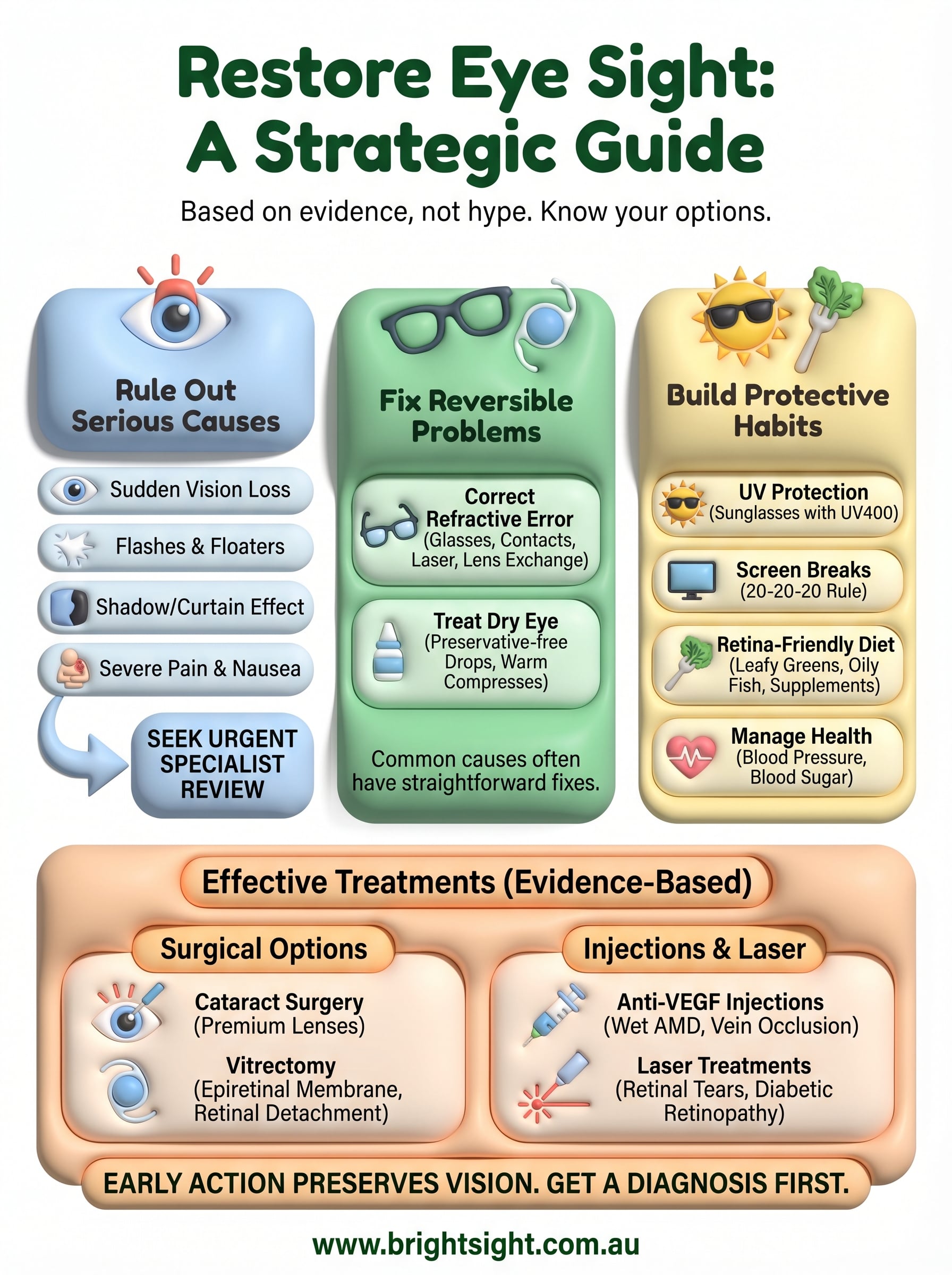
Before you focus on lifestyle changes or supplements, confirm that nothing serious is driving your blurred or reduced sight. Sudden vision changes, double vision, or vision loss in one eye can signal a medical emergency, including retinal detachment, stroke, or acute glaucoma. These conditions demand prompt specialist attention, not a trip to the pharmacy.
If your vision changed suddenly or significantly over a short period, see an eye specialist before doing anything else.
Warning signs that need urgent review
Some symptoms should prompt you to seek same-day care. Flashes of light, a sudden shower of new floaters, or a shadow at the edge of your vision are classic signs of retinal detachment. Similarly, sharp eye pain combined with blurred vision and nausea can indicate acute angle-closure glaucoma, which causes permanent damage within hours if left untreated.
Symptoms that require urgent review include:
- Sudden loss of vision in one or both eyes
- A dark curtain or shadow moving across your visual field
- A sudden burst of new floaters or light flashes
- Severe eye pain with headache or vomiting
- Double vision with no obvious cause
What a specialist will check
Your eye specialist will measure your visual acuity, intraocular pressure, and retinal health through a dilated eye examination. This lets the doctor examine your optic nerve, macula, and peripheral retina directly. Getting this assessment done accurately is the first step in any real plan to restore eye sight, because treating the wrong problem wastes time and risks further damage.
Key checks in a standard eye exam include:
- Visual acuity (reading chart)
- Slit-lamp examination of the front of the eye
- Dilated fundus examination of the retina and optic nerve
- Intraocular pressure measurement
Step 2. Fix the common reversible problems
Once you’ve confirmed there’s no urgent underlying condition, you can address the most common, correctable causes of reduced vision. Many people put up with blurry sight for months or years without realising a straightforward fix is available. Getting the right diagnosis first tells you exactly which category your problem falls into, so you aren’t spending money and energy on the wrong solution.
Correct your refractive error first
An outdated glasses or contact lens prescription is one of the most overlooked causes of poor vision in adults. Your prescription can shift gradually over time, making the decline easy to dismiss as tiredness or ageing. Book an updated refraction test with your optometrist and confirm whether your current lenses still match your eyes. If you want to restore eye sight without relying on glasses long-term, refractive surgery options such as LASIK, PRK, or SMILE are worth discussing with a specialist who can assess your corneal thickness and tear film health before recommending anything.
Refractive lens exchange is worth considering for people over 45 who want to correct their prescription and address early lens changes at the same time.
Treat dry eye properly
Dry eye is consistently under-treated despite being a very common cause of fluctuating or blurry vision. Start with preservative-free lubricating drops used consistently throughout the day, not just when your eyes feel uncomfortable. Warm compresses applied to closed eyelids for ten minutes each morning help unblock the meibomian glands that produce the oily layer of your tear film. If drops alone aren’t resolving the problem within four to six weeks, a specialist can assess whether prescription treatments or in-clinic procedures are the appropriate next step.
Step 3. Build habits that protect your vision
No lifestyle habit will restore eye sight from a cataract or a retinal detachment, but consistent daily choices can meaningfully slow how quickly conditions progress and reduce your risk of developing new problems. Think of this step as protecting the vision you’ve worked to preserve, not as a substitute for medical treatment.
The best time to build protective habits is before you notice a problem, but starting now still makes a measurable difference.
Reduce UV and screen-related stress on your eyes
Ultraviolet exposure accelerates lens clouding and raises your risk of macular damage over time. Wear sunglasses with full UV400 protection outdoors every day, not just at the beach. For screen use, follow the 20-20-20 rule: every 20 minutes, look at something 20 feet away for 20 seconds. This reduces ciliary muscle fatigue and cuts down on the dry eye symptoms caused by reduced blinking during screen time.
Eat to support your retina
Lutein and zeaxanthin, found in leafy greens like kale and spinach, concentrate directly in the macula and help filter damaging blue light. Oily fish provides omega-3 fatty acids that support tear film stability and retinal cell health. If your diet is inconsistent, a supplement containing lutein (10mg) and zeaxanthin (2mg) daily is a reasonable addition, particularly if you have a family history of macular degeneration.
Key habits worth building into your routine:
- Eat leafy greens at least three times per week
- Add two portions of oily fish per week (salmon, sardines, mackerel)
- Avoid smoking, which roughly doubles your risk of macular degeneration
- Keep blood pressure and blood sugar under control with your GP’s guidance
Step 4. Know what treatments actually work
Medical and surgical treatments are the only interventions with robust clinical evidence behind them when it comes to actually restoring or preserving meaningful vision. Knowing which options apply to your condition saves you from chasing unproven alternatives that delay effective care.
Surgical options with strong evidence
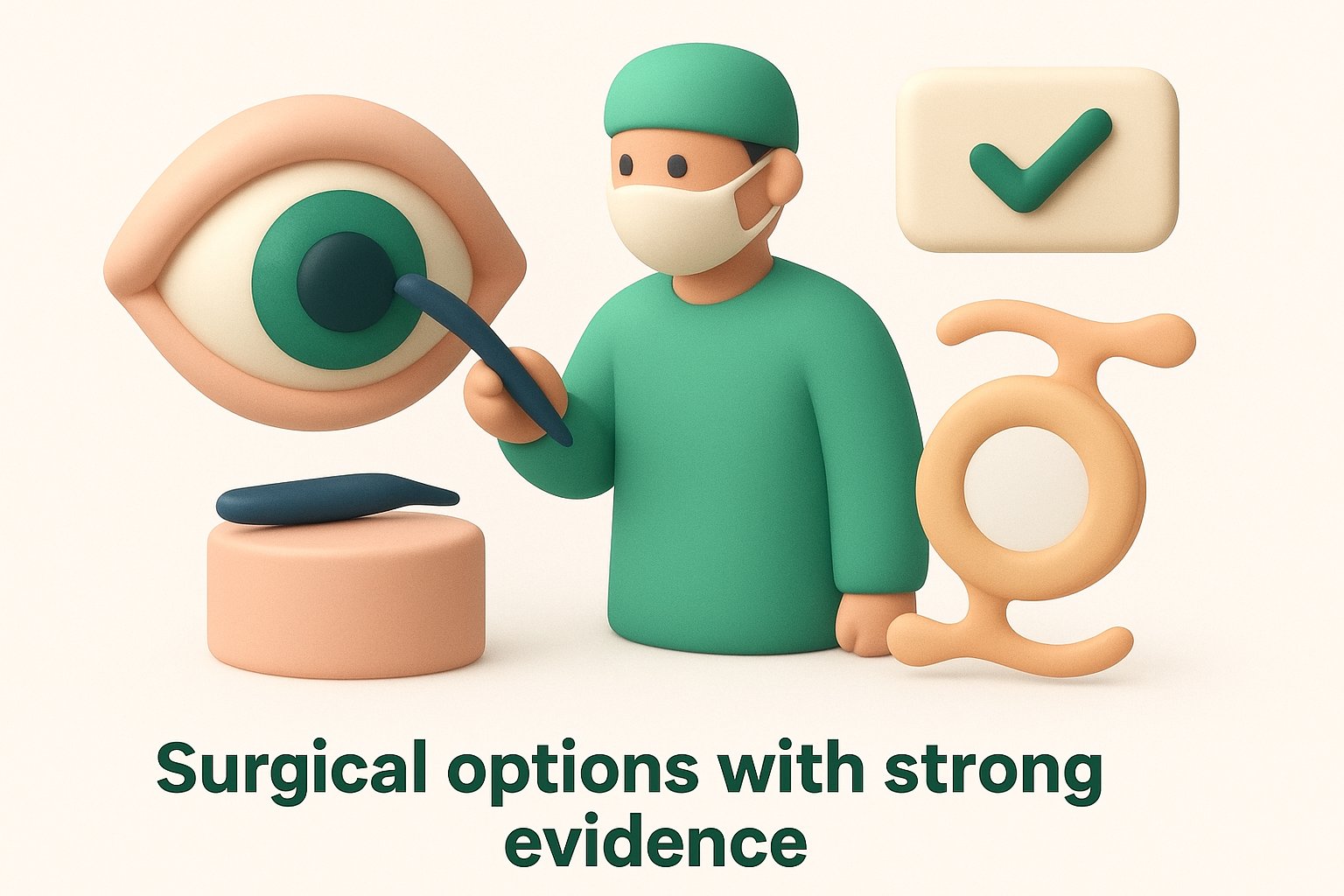
Cataract surgery is one of the most successful procedures in modern medicine, with outcomes consistently showing significant improvement in visual acuity for the vast majority of patients. During the procedure, your clouded natural lens is removed and replaced with an intraocular lens implant. Premium options, including multifocal and extended depth-of-focus (EDOF) lenses, can reduce or eliminate your dependence on glasses for distance, intermediate, and near tasks. Vitrectomy surgery, used to treat epiretinal membrane, macular hole, and retinal detachment, also delivers strong functional results when performed before irreversible damage sets in.
The earlier you address a surgical condition, the more of your sight the surgeon has to work with.
Injections and laser treatments
Intravitreal injections of anti-VEGF medication are the standard of care for wet macular degeneration and retinal vein occlusion. These injections slow or halt the abnormal blood vessel growth that destroys central vision, and many patients see a measurable improvement after several treatment cycles. Laser treatments are used for retinal tears, certain types of diabetic retinopathy, and some cases of central serous retinopathy. The key point is that these treatments work best when started early, which is why waiting to "see if things improve on their own" is rarely the right call if you want to restore eye sight effectively.
Your next best move
The most important thing you can do right now is get a clear diagnosis from an eye specialist. Everything else in this guide, whether that’s dietary changes, correcting your prescription, or exploring surgical options, depends on knowing exactly what is driving your reduced vision. Without that foundation, you are essentially guessing, and guessing costs time that your eyes may not have.
Restoring eye sight is genuinely possible for many conditions, but the outcome depends heavily on how early you act. Cataracts, refractive errors, wet macular degeneration, epiretinal membrane, and retinal tears all respond far better to treatment when caught before significant damage accumulates. Waiting for symptoms to worsen is the single most common reason patients lose vision they could have kept.
If you are based in Sydney’s Eastern Suburbs and want expert advice tailored to your situation, book a consultation with Dr Dubey or Dr Odouard at Bright Sight Eye Specialists in Randwick.