


You wake up, look in the mirror, and spot a bright red blood stain covering part of the white of your eye. It looks dramatic and might make you panic. But in most cases, it’s just a burst blood vessel under the clear surface that covers your eye. The medical term is subconjunctival haemorrhage. When one of these tiny vessels breaks, blood leaks out and gets trapped between two thin layers, creating that shocking red patch.
This guide walks you through everything you need to know about red blood stains in the eye. You’ll discover what causes them, how to care for your eye at home, when they signal something serious, and how long they take to heal. We’ll also cover other conditions that cause a red eye with blood and when you should book an appointment with an eye specialist.
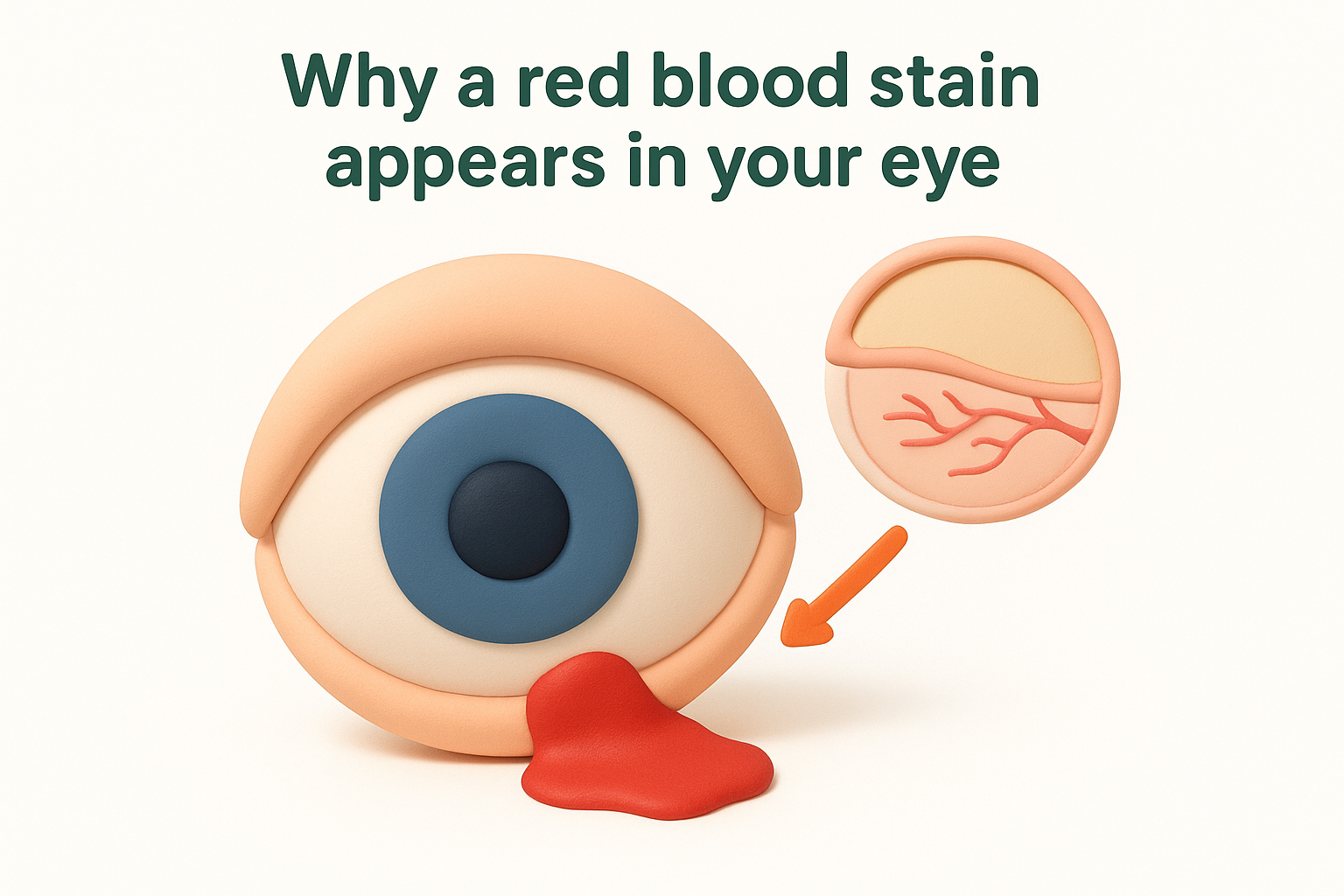
Why a red blood stain appears in your eye
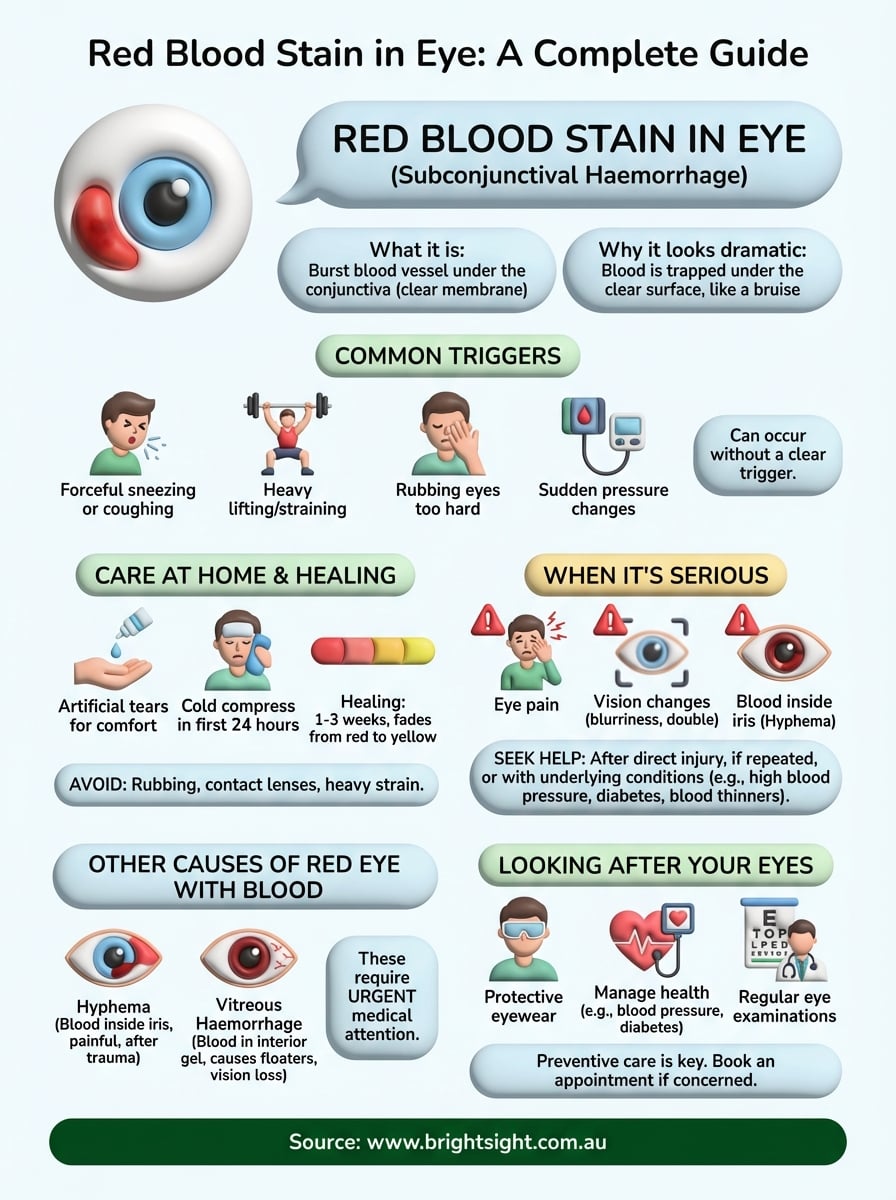
The white part of your eye sits beneath a thin, clear membrane called the conjunctiva. This membrane contains hundreds of tiny blood vessels that carry oxygen and nutrients. When one of these fragile vessels breaks, blood leaks out and spreads between the conjunctiva and the white surface below. Your eye can’t absorb this blood quickly, so it pools there and creates that alarming red patch you see in the mirror.
The common triggers
Blood vessels in your eye can burst from even minor pressure changes. Forceful sneezing or coughing ranks among the most common causes, as these actions briefly spike the blood pressure in your head and eyes. Straining on the toilet, heavy lifting, or intense vomiting create similar pressure surges that can pop a vessel.
Rubbing your eyes too hard can also cause a red blood stain in eye, especially if you wear contact lenses that create friction. Some people develop these blood patches after bumping their eye or getting poked accidentally. Certain medications like blood thinners (warfarin or aspirin) make your vessels more prone to bleeding, while conditions like diabetes or high blood pressure increase your risk.
In many cases, the blood vessel breaks without any obvious trigger at all.
When pressure builds suddenly
Your body experiences rapid blood pressure changes throughout the day. Bending forward to tie your shoes, laughing hard at a joke, or even playing a wind instrument can create enough force to rupture a delicate eye vessel. These everyday activities rarely cause problems, but occasionally the timing and pressure combine to break a vessel and create that distinctive red patch.
How to care for a red blood stain in your eye
Most red blood stains in your eye heal on their own without any medical treatment. The blood gradually breaks down and gets reabsorbed by your body over one to three weeks. You don’t need medication or special procedures in the majority of cases. Your eye does the work naturally, similar to how a bruise on your skin fades over time.
Home treatment steps
Keep your eye comfortable while it heals. Artificial tears (lubricating eye drops) help if you feel any mild scratchiness or dryness. These drops soothe irritation without interfering with the healing process. Apply them three to four times daily or whenever your eye feels uncomfortable.
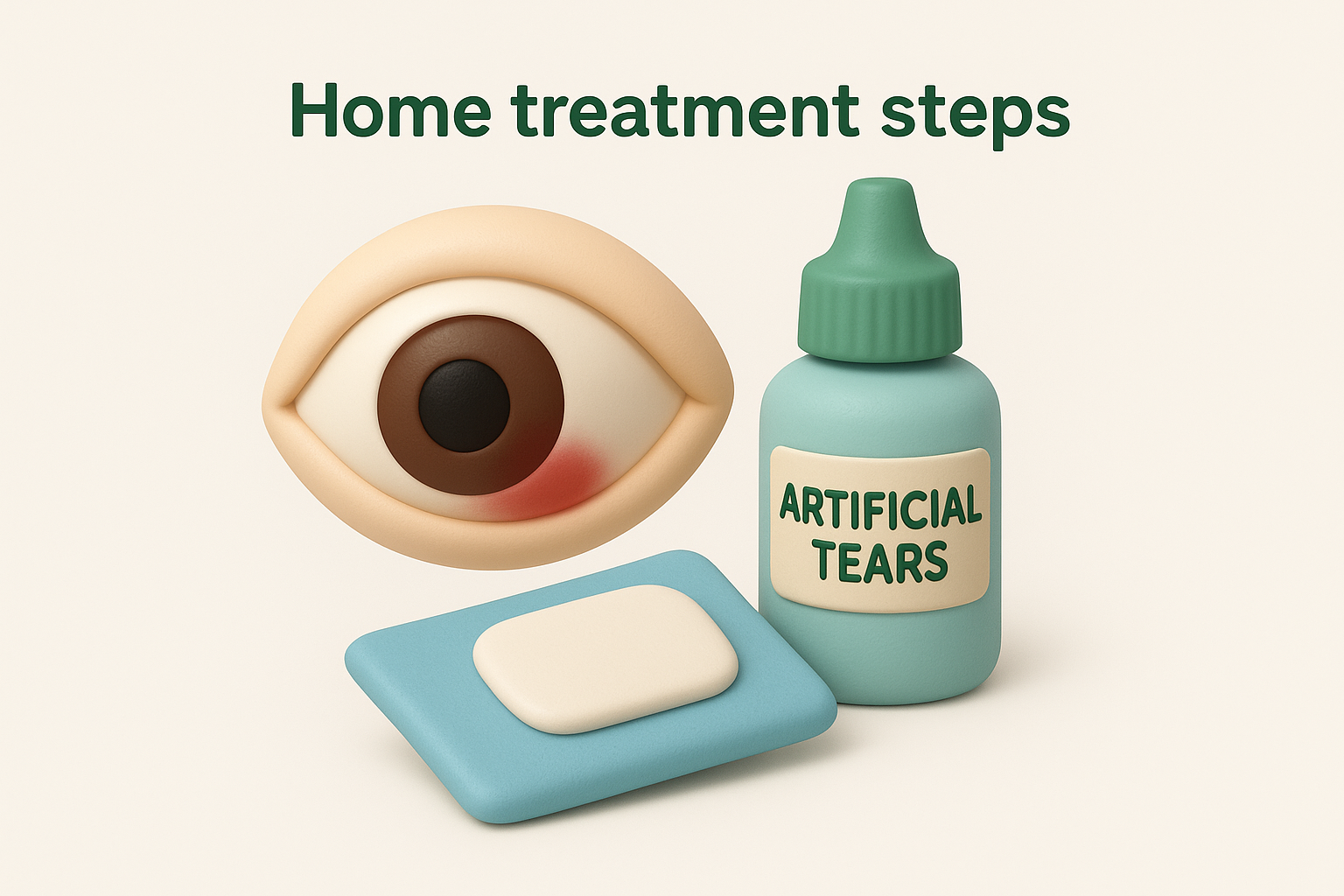
Avoid rubbing the affected eye, as this can slow healing or cause additional bleeding. The blood stain might look worse initially as it spreads, but this is normal during the first 24 to 48 hours. After that, you’ll notice the red patch gradually shrinking and changing colour, often turning yellow or orange before disappearing completely.
Cold compresses applied gently can reduce any minor swelling in the first 24 hours.
What to avoid during healing
Don’t wear contact lenses until the blood stain clears completely. The lenses create friction against the conjunctiva and can irritate the healing area. Switch to glasses temporarily to give your eye the best chance to recover without complications.
Skip blood-thinning medications like aspirin if possible (check with your doctor first). These medicines slow clotting and can prolong the bleeding. Also avoid activities that strain your eyes or raise blood pressure suddenly, such as heavy lifting or intense exercise, until the red blood stain in eye starts fading.
When a red blood stain in eye is serious
Most red blood stains in the eye heal without problems, but certain symptoms demand immediate medical attention. You should see an eye specialist if you experience eye pain alongside the blood patch, as this combination can signal a more serious injury or condition. Similarly, changes in your vision (blurriness, double vision, or vision loss) require urgent evaluation even if the blood stain seems minor.
Warning signs to watch for
Contact your doctor straight away if the red blood stain in eye appeared after a direct injury to your face or head. Trauma can damage internal eye structures beyond just breaking surface blood vessels. You also need medical care if you notice blood inside your iris (the coloured part of your eye) rather than just on the white surface, as this indicates a condition called hyphema that requires treatment.
Multiple blood patches appearing repeatedly without an obvious cause deserve investigation. This pattern might point to blood clotting disorders, uncontrolled diabetes, or dangerously high blood pressure. Your doctor can run tests to identify any underlying health conditions that need management.
Repeated subconjunctival haemorrhages shouldn’t be ignored, even if they don’t hurt.
When underlying conditions matter
People taking blood-thinning medications should always report new eye bleeding to their doctor. The bleeding might indicate your medication dose needs adjustment. Similarly, if you have diabetes or high blood pressure, a red blood stain can signal that your condition isn’t properly controlled and needs attention beyond just treating the eye itself.
How long a red blood stain in eye lasts
Most red blood stains clear up within one to three weeks without any intervention. Your body gradually reabsorbs the trapped blood through natural processes, similar to how a bruise on your skin fades over time. The exact healing time depends on the size of the blood patch, your overall health, and any medications you take.
The healing timeline
Small blood stains often disappear within seven to ten days, while larger patches can take up to three weeks to clear completely. You’ll notice the bright red colour shifting to yellow or orange as your body breaks down the blood cells. This colour change signals that healing is progressing normally and shouldn’t cause concern.
The blood stain might look worse before it looks better, especially in the first day or two.
Your age and general health influence healing speed. Younger people typically heal faster than older adults, while conditions like diabetes or high blood pressure can slow the reabsorption process slightly. Blood-thinning medications may also extend the healing period.
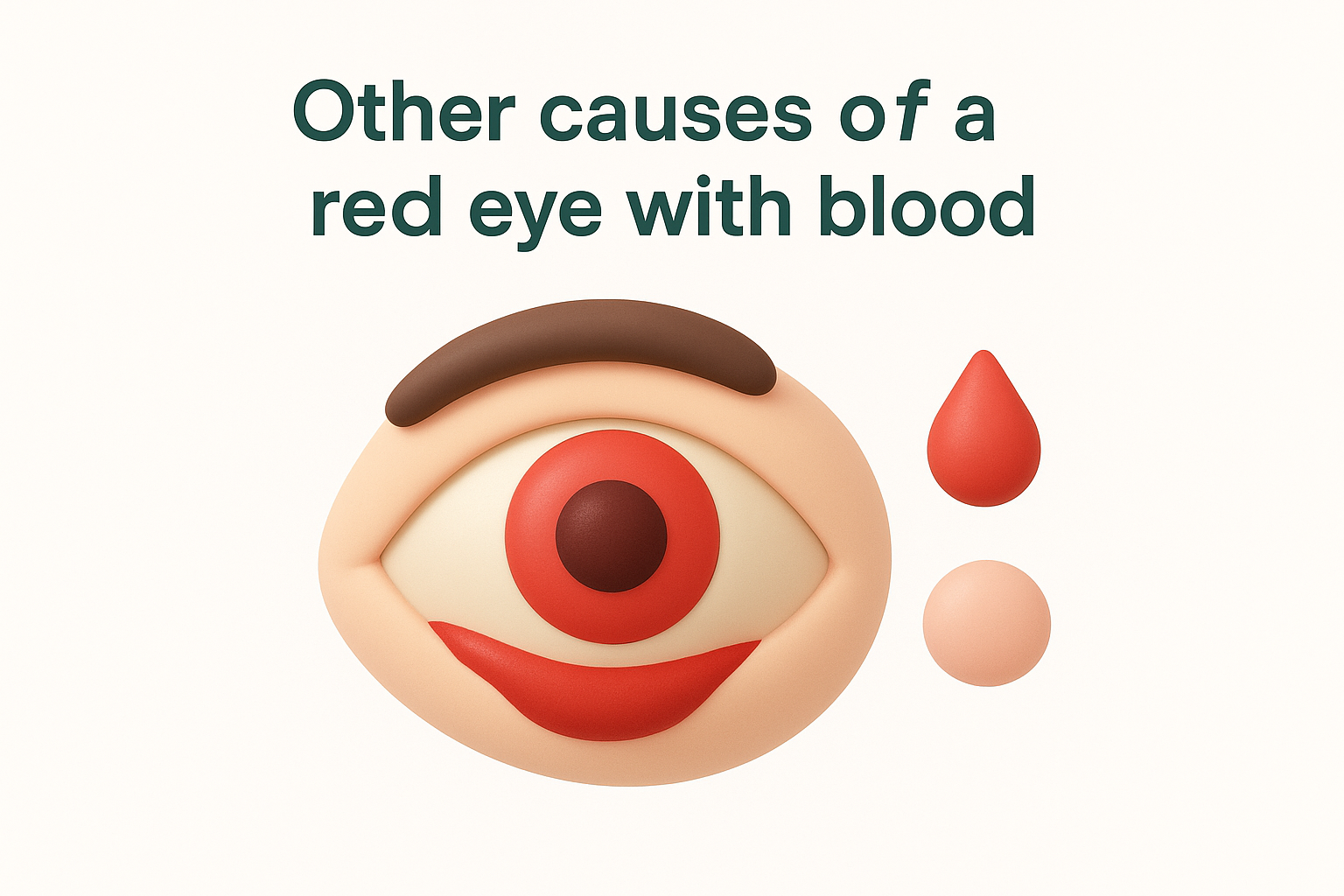
Other causes of a red eye with blood
Not every red eye with blood stems from a simple subconjunctival haemorrhage. Several other conditions can create blood in or around your eye, though they typically come with additional symptoms that help distinguish them. Understanding these differences helps you recognise when you’re dealing with something more serious than a burst surface vessel.
When blood collects inside the eye
Hyphema occurs when blood pools in the space between your cornea and iris, rather than on the white surface. This condition usually follows direct trauma to your eye, such as getting hit by a ball or fist. Unlike a red blood stain in eye that sits on the surface, hyphema affects your vision and causes significant pain. You’ll see a visible blood layer covering the lower portion of your coloured iris.
Vitreous haemorrhage happens when blood leaks into the gel that fills your eye’s interior. This bleeding creates dark floaters, shadows, or complete vision loss depending on severity. Diabetes, retinal tears, and abnormal blood vessel growth commonly cause this condition. Both hyphema and vitreous haemorrhage require urgent evaluation by an eye specialist to prevent permanent damage.
Blood inside your eye structures always demands immediate medical attention, unlike surface bleeding.
Looking after your eyes
A red blood stain in eye typically looks far worse than it actually is and heals on its own within one to three weeks without complications. You can protect your eyes from future episodes by avoiding harsh rubbing, wearing protective eyewear during sports or high-risk activities, and managing any underlying health conditions like high blood pressure or diabetes. Regular eye examinations catch potential problems early, even when you feel perfectly fine and haven’t noticed any symptoms.
Contact an eye specialist if you experience pain, vision changes, or repeated blood patches that appear without obvious triggers. Professional evaluation ensures any serious underlying conditions receive prompt and appropriate treatment before they progress. Book an appointment at Bright Sight Eye Specialists in Sydney’s Eastern Suburbs if you have concerns about persistent eye bleeding, unexplained red patches, or want a comprehensive eye health assessment. Taking proactive care of your eyes today prevents more serious complications tomorrow.