


You glance in the mirror and see a bright red patch on the white of your eye. It looks alarming but most popped blood vessels are harmless. The medical term is subconjunctival haemorrhage, which simply means a tiny vessel has burst beneath the clear surface layer covering your eye. Blood spreads under this membrane but stays outside the structures that control vision. Understanding the reasons for popped eye blood vessels helps you know when to worry and when to let it heal on its own.
This article walks you through the common triggers that cause these bleeds, from everyday actions like coughing and rubbing to underlying health conditions like high blood pressure and diabetes. You’ll learn how to respond when you spot that red patch, which medical factors increase your risk, and the warning signs that mean you need urgent care. By the end you’ll know exactly how to protect your eyes and when a professional review makes sense.
Why popped eye blood vessels matter
Most people panic when they see blood in their eye, but subconjunctival haemorrhages rarely threaten your vision. The blood sits on the surface and clears within a week or two without any treatment needed. However, these bleeds can act as early warning signs for conditions that deserve your attention. High blood pressure, diabetes, and clotting disorders sometimes announce themselves through repeated eye bleeds before they cause serious damage elsewhere in your body. Understanding what triggers these events helps you decide whether to wait or take action.

When surface bleeds reveal deeper problems
Knowing the reasons for popped eye blood vessels helps you separate a one-off event from a pattern that matters. A single episode after a severe coughing fit needs no action beyond patience. Recurring bleeds or patches that appear alongside vision changes, pain, or widespread bruising signal that you need a prompt medical review. Your eyes can reveal what’s happening inside your blood vessels throughout your body, making them valuable windows into your overall health. Early detection through eye symptoms can prevent strokes, heart attacks, and kidney damage down the track.
Understanding the causes helps you protect both your eyes and your general health.
How to respond to a popped eye blood vessel
Your first reaction should be calm observation rather than panic. Most subconjunctival haemorrhages need no treatment and will clear on their own within seven to fourteen days. Check that you have no pain, no vision changes, and no discharge. If all three are absent, you can manage the situation at home. Take a clear photo on your phone so you can track whether the red patch is spreading or fading over the next few days. Cold compresses in the first 48 hours may feel soothing, though they won’t speed healing.
What to do in the first 24 hours
Artificial tears help if your eye feels scratchy or dry. Use preservative-free drops four times daily and avoid rubbing the affected area. Remove contact lenses for at least 24 hours to give your eye a rest. Skip aspirin or other blood thinners unless your doctor has prescribed them for a serious condition like heart disease. If you know one of the common reasons for popped eye blood vessels caused your bleed, such as violent coughing or heavy lifting, addressing that trigger prevents repeat episodes.
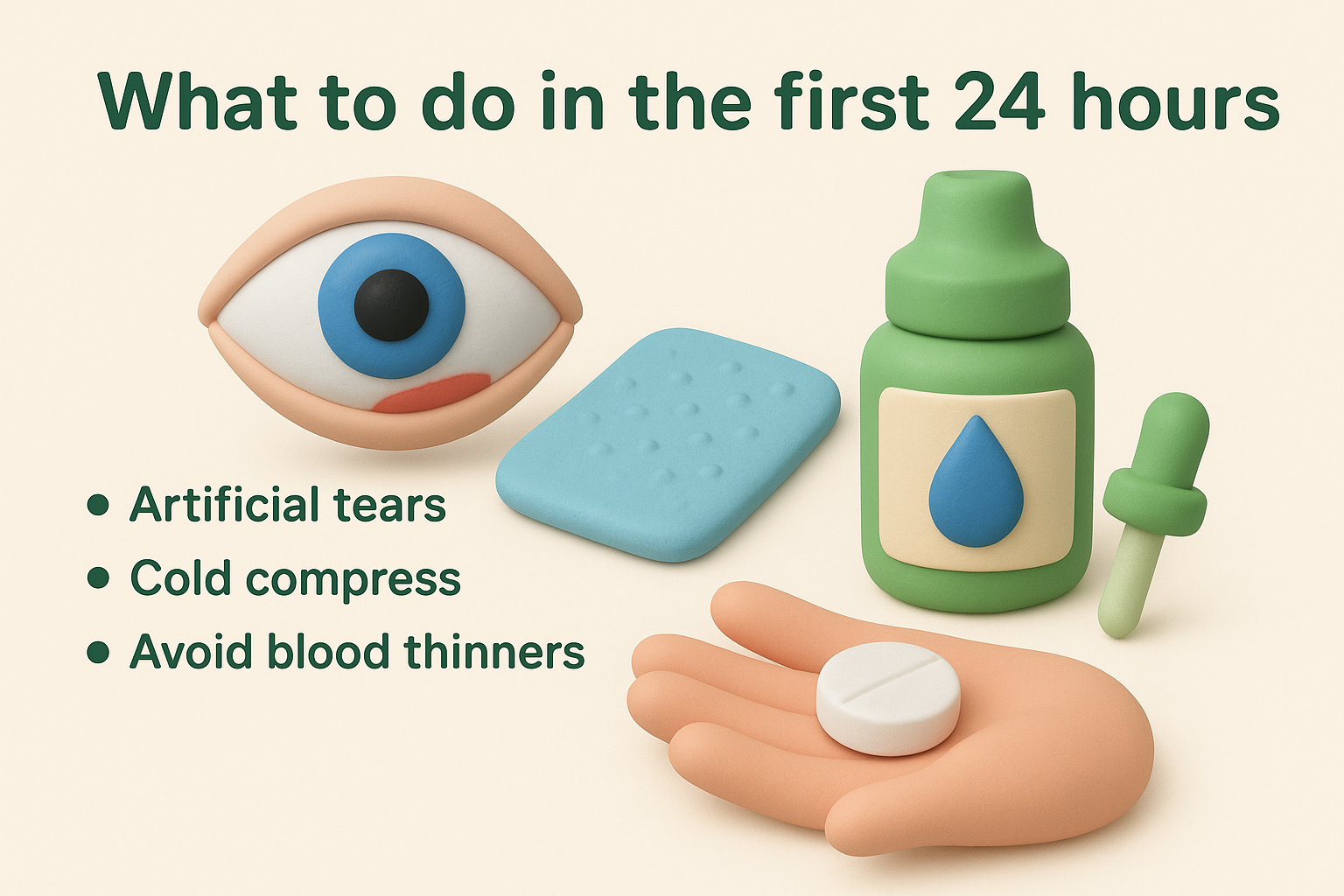
Simple home care is all most people need while the blood reabsorbs naturally.
When to book an appointment
Pain, blurred vision, or light sensitivity mean you need same-day professional review. Recurring bleeds or patches that appear without an obvious cause also warrant a check. Your optometrist or ophthalmologist can measure your eye pressure, examine the retina, and arrange blood pressure or clotting tests if needed.
Common everyday triggers and causes
Everyday actions cause most subconjunctival haemorrhages through sudden pressure spikes or direct contact. These reasons for popped eye blood vessels are usually innocent, though knowing them helps you avoid repeat episodes. Your eye’s surface vessels are delicate and can rupture when pressure inside your chest or head jumps quickly. Physical trauma from rubbing or foreign objects also breaks these tiny capillaries without needing much force.
Pressure spikes from straining
Forceful coughing or sneezing sends a wave of pressure through the veins in your head and neck. Your conjunctival vessels may not withstand that surge and can burst instantly. The same mechanism happens when you vomit, strain on the toilet, or hold your breath during heavy lifting. Constipation, morning sickness, and intense gym sessions all increase your risk. Athletes who perform Valsalva manoeuvres, such as powerlifters or those doing inverted yoga poses, see these bleeds more often than sedentary people.

Most everyday triggers involve brief but intense pressure changes that overwhelm delicate eye vessels.
Physical contact and trauma
Vigorous eye rubbing shears the conjunctival surface and can tear blood vessels, especially if allergies or dryness have already inflamed the area. People with contact lenses often cause bleeds when inserting or removing lenses with fingernails or rough technique. Minor knocks from toys, elbows during sport, or poking yourself with a mascara wand also qualify as common causes. Even something as simple as sleeping face-down on a crumpled pillowcase can create enough friction to pop a vessel in susceptible individuals.
Medical conditions that raise your risk
Certain health conditions weaken your blood vessels or make them more likely to rupture. These medical reasons for popped eye blood vessels often overlap with conditions that threaten your heart, brain, and kidneys. If you have any of these diagnoses, your risk of subconjunctival haemorrhage climbs. Regular monitoring through eye exams and blood tests helps you catch problems before they escalate. Your optometrist can spot early signs of vascular damage during a routine check, making those appointments valuable for your whole-body health.
High blood pressure and vascular disease
Hypertension damages the walls of small blood vessels throughout your body, including those in your eyes. Chronic pressure weakens the vessel lining and makes ruptures more likely even during normal activities. People with poorly controlled blood pressure often experience repeated bleeds without obvious triggers like coughing or straining. Hardening of the arteries and other vascular conditions create similar fragility. Your GP should check your blood pressure at every visit, and home monitoring helps you track patterns between readings.
Diabetes and clotting disorders
Diabetes damages blood vessel walls through high glucose levels and inflammation. Both type 1 and type 2 diabetes increase your risk of eye bleeds, especially when blood sugar control is poor. Blood-thinning medications like warfarin and aspirin make bleeds more frequent and longer-lasting, though you should never stop these medicines without your doctor’s approval. Clotting disorders such as haemophilia and von Willebrand disease also raise your risk because your blood doesn’t clot properly after even minor vessel damage.
Medical conditions that affect your blood vessels anywhere in your body will often show up in your eyes first.
When a red eye needs urgent care
Most subconjunctival haemorrhages clear without complications, but certain symptoms signal serious problems that need immediate professional attention. You should contact an eye specialist the same day if you experience pain, vision changes, or light sensitivity alongside the red patch. These warning signs suggest the bleed may involve deeper structures inside your eye rather than just the surface. Injuries from direct trauma, such as a punch, ball strike, or chemical splash, always warrant urgent review even when your vision seems normal.
Red flags that demand same-day review
Severe headaches, nausea, or confusion appearing with eye bleeding may indicate dangerously high blood pressure or bleeding inside your skull. Blood that layers in front of your pupil rather than spreading flat across the white suggests a hyphema, which is a medical emergency requiring specialist care to prevent glaucoma and vision loss. Recurring bleeds without obvious triggers deserve investigation because they may reveal one of the less common reasons for popped eye blood vessels, such as clotting disorders or uncontrolled diabetes.
Any pain or vision change with eye bleeding needs professional review within hours, not days.

Looking after your eye health
Understanding the reasons for popped eye blood vessels helps you protect your eyes through simple daily habits. Check your blood pressure regularly, manage your diabetes if you have it, and tell your doctor about any repeated bleeds or unexplained bruising. Gentle eye care matters more than you might think: swap vigorous rubbing for preservative-free artificial tears when your eyes feel itchy, follow proper contact lens hygiene, and wear protective eyewear during sport and DIY projects. Address underlying triggers such as chronic cough, constipation, or seasonal allergies before they cause repeated vessel ruptures.
Most surface bleeds heal without intervention, but professional monitoring catches problems early when treatment works best. Regular eye examinations detect not just local issues but also systemic conditions affecting your blood vessels throughout your body. If you need expert assessment or ongoing care for any eye concern, schedule a consultation at Bright Sight Eye Specialists to protect your vision and overall health.