


A pterygium is a fleshy, wedge-shaped growth on the surface of the eye that extends from the conjunctiva onto the cornea. It’s common in Australia, particularly in sunny coastal areas like Sydney’s Eastern Suburbs, due to our high levels of UV exposure. While a small pterygium might cause nothing more than mild irritation, a progressing one can distort your vision, cause persistent discomfort, and affect the appearance of your eye. Understanding your pterygium treatment options early gives you the best chance of managing the condition effectively, whether that means simple eye drops or a surgical procedure.
The good news is that treatment has come a long way. Not every pterygium needs surgery, and when surgery is required, modern techniques significantly reduce the risk of recurrence, a problem that plagued older methods. The right approach depends on the size of the growth, your symptoms, and how much it affects your daily life.
At Bright Sight Eye Specialists in Randwick, Dr Capucine Odouard assesses and treats pterygia using current, evidence-based methods tailored to each patient. This article walks you through every option available, from conservative management with lubricants and anti-inflammatory drops to advanced surgical removal with conjunctival autografting, so you know exactly what to expect at each stage of care.
Why pterygium treatment matters
A pterygium does not always stay small. Many people notice a pinkish patch on the white of their eye and assume it is nothing to worry about. Left unmonitored, a pterygium can slowly extend across the cornea and begin interfering with sight, making early assessment one of the most important steps you can take. Understanding why treatment matters helps you make informed decisions about the pterygium treatment options available before the condition advances further.
How pterygia affect your vision
Pterygia grow at different rates. Some remain stable for years, while others advance steadily, particularly in people who spend significant time outdoors without UV-protective eyewear. As the growth extends further onto the cornea, it pulls and distorts the surface, causing a type of irregular astigmatism. This means your cornea changes shape unevenly, which standard glasses or contact lenses often cannot fully correct.
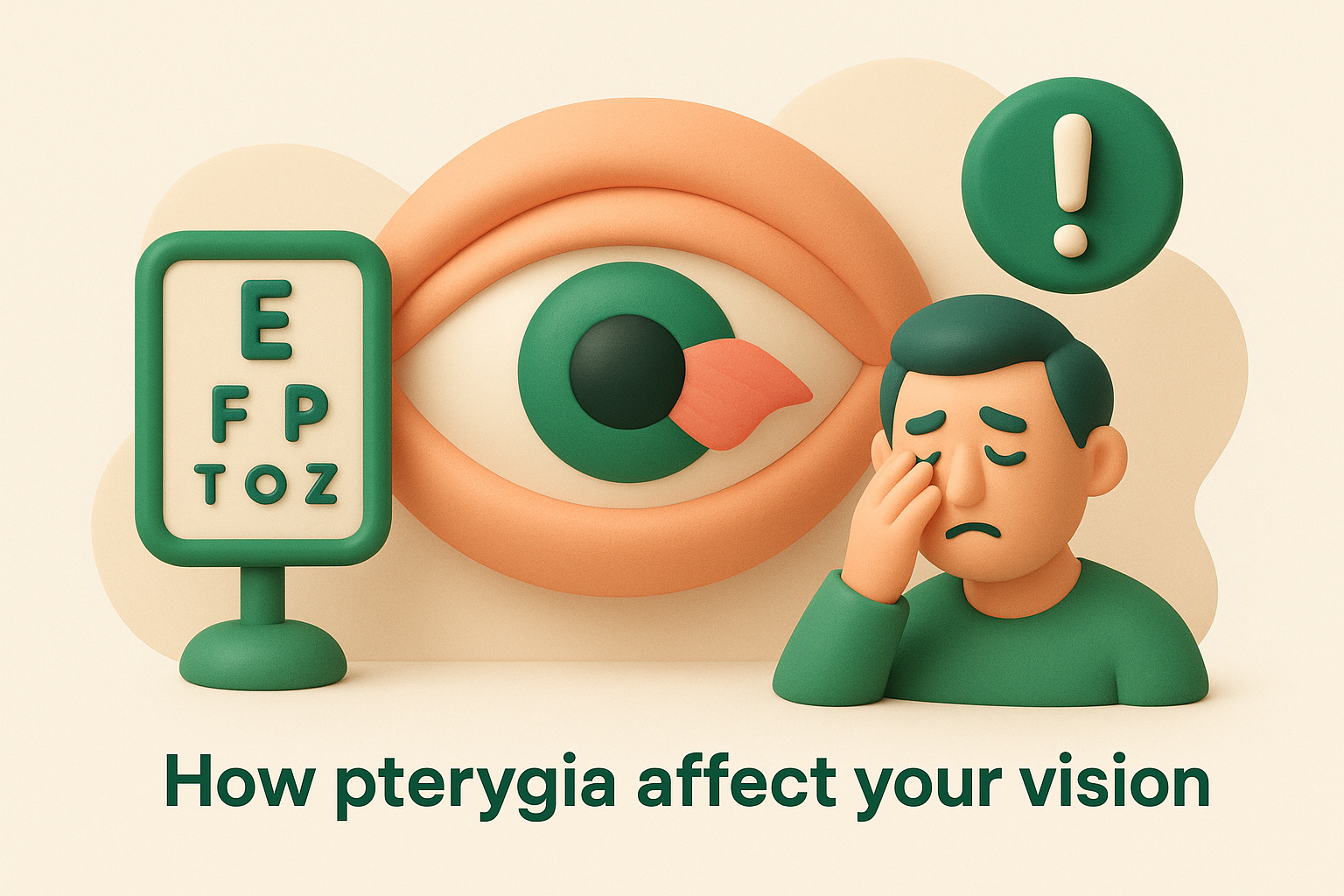
The closer a pterygium grows to the centre of your cornea, the greater the risk of lasting visual impairment if it is not treated.
When astigmatism develops from a pterygium, everyday tasks such as driving, reading, and using screens become increasingly difficult. Your vision may appear blurred or slightly distorted, and the effect tends to worsen the longer the growth is left in place. Catching and addressing this early gives you the best chance of restoring clear, stable vision without long-term complications to the corneal surface.
Why comfort and timing both matter
Beyond vision, a pterygium affects how your eye feels every day. Persistent redness, a gritty sensation, and excessive tearing are among the most common complaints. Some people also develop significant dry eye symptoms because the growth disrupts the normal tear film across the eye’s surface. These symptoms can interfere with work and outdoor activity, and cosmetic concerns about the visible redness and growth are equally valid.
Acting before the pterygium grows too large also makes treatment more straightforward. Surgical removal is simpler when the growth has not yet reached the visual axis, and the surrounding tissue responds better to reconstruction. Your eye specialist can monitor the growth over time using slit-lamp examination and corneal topography, a scan that maps the surface of your cornea and detects early distortion before it begins affecting your daily vision.
Non-surgical options for symptom relief
When a pterygium is small, stable, and not affecting your vision, the focus of care shifts toward managing your symptoms rather than removing the growth. Non-surgical pterygium treatment options are appropriate for many patients, particularly in the earlier stages, and your eye specialist will recommend a routine that suits the severity of your symptoms and your lifestyle.
Lubricating eye drops and ointments
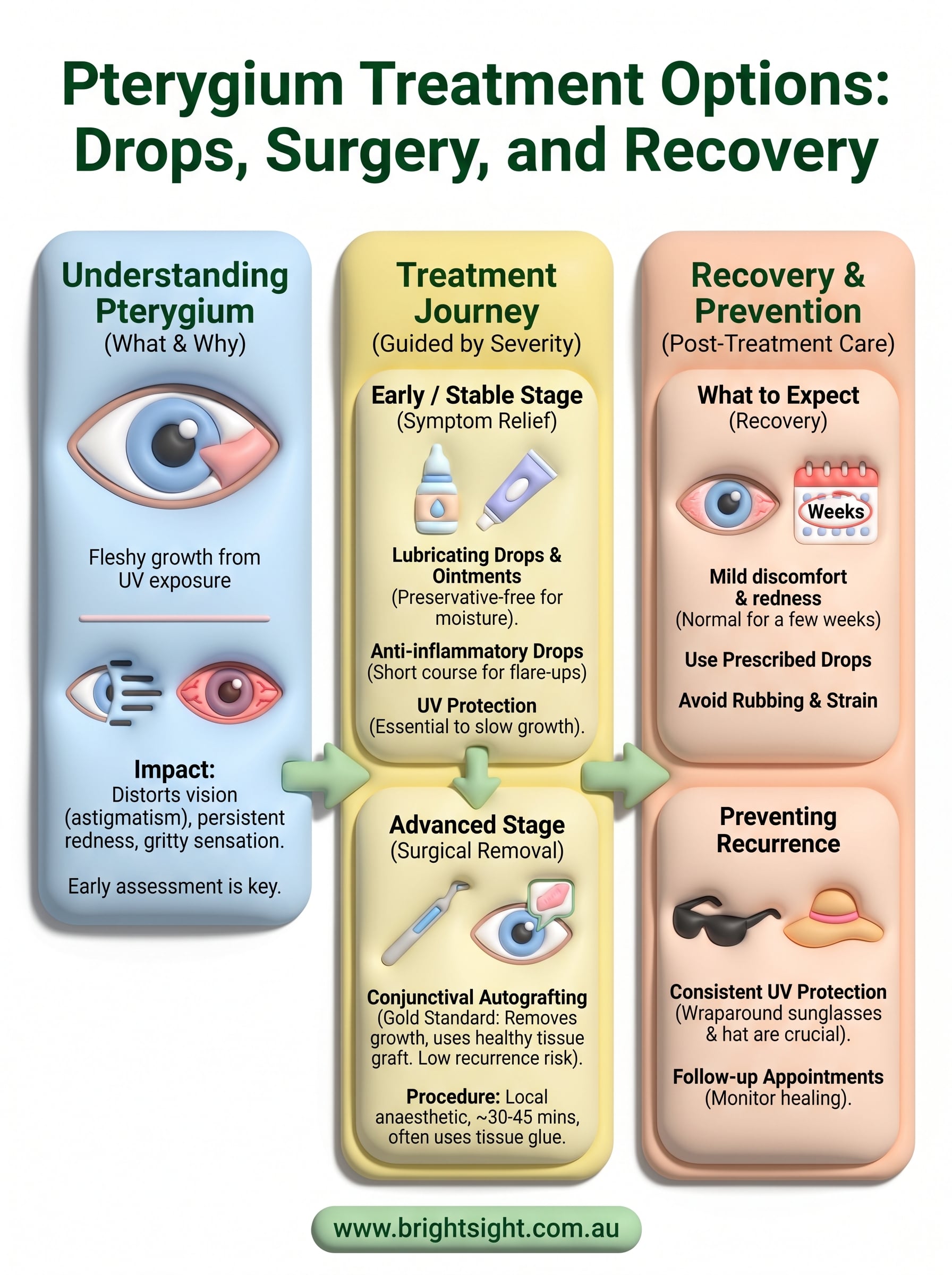
Preservative-free lubricating eye drops are typically the first line of management. They reduce the gritty, dry, and irritated feeling that pterygia commonly cause by supplementing your natural tear film. You apply them throughout the day as needed, and they are available over the counter at most pharmacies across Australia.
Choosing preservative-free formulations is important if you use drops frequently, since preservatives in standard drops can irritate the eye surface over time.
For nighttime relief, your specialist may also recommend a lubricating gel or ointment, which provides longer-lasting moisture while you sleep. These are thicker than standard drops and tend to blur your vision temporarily, so they work best used at night rather than during the day.
Anti-inflammatory drops
When your pterygium becomes notably red or inflamed, your eye specialist may prescribe a short course of anti-inflammatory eye drops, such as a mild topical corticosteroid or a non-steroidal anti-inflammatory. These reduce inflammation quickly, but are not intended for long-term use due to the risk of raised eye pressure with prolonged corticosteroid exposure.
Wearing wraparound UV-protective sunglasses outdoors complements every non-surgical approach. UV exposure drives pterygium growth, so reducing it slows progression and gives drops a better chance of keeping symptoms manageable between specialist reviews.
When surgery becomes the best option
Non-surgical management works well for mild cases, but there are clear situations where drops and lifestyle adjustments are no longer enough. If your pterygium continues to grow despite conservative care, or if it starts causing significant visual problems, your eye specialist will recommend removal as the most appropriate step forward. At this point, surgery becomes not just an option but the most effective pterygium treatment option for protecting your long-term vision.
Signs your pterygium has progressed too far
Several specific indicators tell your specialist that surgery is the right call. Encroachment on the visual axis is the clearest one. When the growth reaches within two to three millimetres of the centre of your cornea, it poses a direct threat to your sight and waiting becomes risky. Increasing astigmatism detected on corneal topography is another strong indicator, particularly when it cannot be corrected with glasses or contact lenses.
Once a pterygium distorts the corneal surface, some of that change can persist even after removal, which is why acting before significant distortion occurs leads to better visual outcomes.
Other signs that prompt a surgical conversation include persistent symptoms that do not respond to drops, such as chronic redness, ongoing irritation, or significant dry eye that interferes with your daily activities. Cosmetic concerns are also a completely legitimate reason to consider surgery, particularly when the visible redness and growth are causing distress or affecting your confidence at work or socially.
What affects the timing of surgery
Timing matters significantly in pterygium surgery. Operating on a smaller, less established growth generally leads to a cleaner procedure and a lower chance of recurrence. Your specialist will weigh the size, rate of growth, and corneal involvement together before recommending when to proceed. Discussing your lifestyle, including outdoor work or planned travel, helps ensure the timing suits your recovery as well as your clinical needs.
Pterygium surgery types and what to expect
When your specialist confirms that surgery is the right step, knowing what the procedure involves helps you prepare with confidence. Modern pterygium treatment options have moved well beyond simple excision, and the technique your surgeon chooses directly affects both your recovery experience and the likelihood of the pterygium returning.
Conjunctival autografting: the gold standard
Conjunctival autografting is now the preferred surgical technique for pterygium removal in Australia. Your surgeon removes the pterygium from the corneal surface and then takes a small graft of healthy conjunctival tissue from the upper part of your eye, underneath your upper eyelid, and uses it to cover the area where the growth was. This fills the site with your own tissue, which dramatically reduces the risk of recurrence compared to older methods that left the area bare.
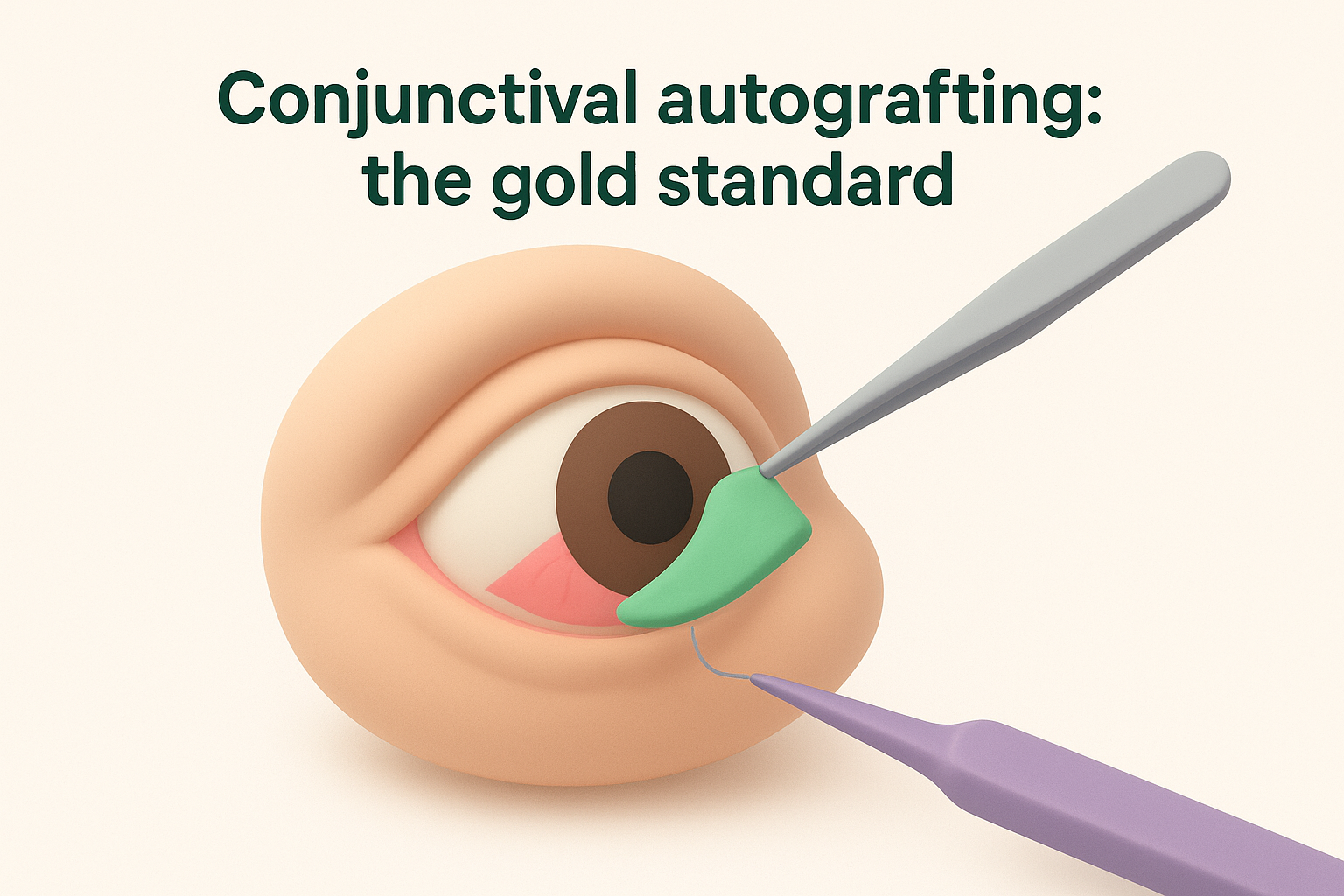
Studies consistently show that conjunctival autografting reduces pterygium recurrence rates to under ten percent, compared to rates as high as eighty percent with bare sclera excision alone.
The graft is secured using either fine dissolvable sutures or surgical tissue glue, with the glue option typically offering a faster, more comfortable recovery. Dr Odouard performs this procedure at Sydney Surgical Centre in Randwick under local anaesthesia with sedation, so you remain comfortable throughout without the need for a general anaesthetic in most cases.
What happens on the day of surgery
The procedure itself usually takes between thirty and forty-five minutes. Your eye is numbed with local anaesthetic drops and an injection, and you will not feel pain during the operation. You will need someone to drive you home afterward, as your vision will be temporarily blurred and your eye padded for the first few hours post-surgery.
Recovery, recurrence prevention, and follow-up
Most people are surprised by how manageable recovery is after pterygium surgery. Mild discomfort, watering, and light sensitivity are normal in the first few days, and your surgeon will prescribe antibiotic and anti-inflammatory drops to use for several weeks post-operatively. You will attend follow-up appointments at set intervals so your surgeon can check that the graft is integrating well and the eye surface is healing correctly.
What to expect in the first few weeks
Your eye may look red and feel scratchy for two to four weeks as the graft settles. Most patients return to desk-based work within a few days, though you should avoid swimming, dusty environments, and heavy lifting for at least two to four weeks as directed. Your vision may fluctuate slightly during healing, which is normal and settles as the corneal surface stabilises.
Do not rub your eye during recovery, as this can disturb the graft before it has fully adhered to the surrounding tissue.
Preventing recurrence after surgery
Recurrence is the most important outcome to manage after any pterygium treatment option, and UV protection is your single most effective tool. Wearing wraparound sunglasses with category 3 or 4 UV protection every time you go outdoors in Australia significantly reduces the stimulus for regrowth. A wide-brimmed hat adds further protection, particularly between 10am and 3pm when UV levels are highest in Sydney.
Your specialist may also apply mitomycin C, an anti-scarring agent, during surgery to lower the biological drive for regrowth, particularly in younger patients or those with previously recurrent pterygia. Attending all scheduled follow-up appointments lets your surgeon identify any early signs of regrowth and intervene quickly if needed.
What to do next
If you have noticed a pinkish growth on your eye, or if an optometrist has mentioned the word pterygium at a recent check-up, the right move is to get a specialist opinion sooner rather than later. The full range of pterygium treatment options spans from simple lubricating drops through to surgery with conjunctival autografting, and the approach that suits you depends entirely on what your eye specialist finds when they examine the growth. Waiting rarely improves the situation, and a straightforward consultation gives you clear answers about whether you need active treatment now or just careful monitoring.
At Bright Sight Eye Specialists in Randwick, Dr Capucine Odouard provides thorough, evidence-based assessments for patients across Sydney’s Eastern Suburbs and beyond. She will explain exactly what is happening with your eye and outline every available option in plain terms, so you can make an informed decision. Book a consultation with Dr Odouard today and take the first step toward clearer, more comfortable vision.