


A pterygium, that fleshy, wedge-shaped growth on the surface of your eye, can cause persistent irritation, redness, and a gritty sensation that disrupts your daily life. While surgery is the definitive treatment for advanced cases, pterygium eye drops treatment plays a central role in managing symptoms, reducing inflammation, and supporting recovery after a procedure. Knowing which drops to use, and when, can make a real difference in how comfortable your eyes feel day to day.
The options range from simple over-the-counter lubricating drops to prescription steroid and anti-inflammatory medications. Each serves a different purpose depending on the stage and severity of your pterygium. Choosing the right one isn’t always straightforward, which is why understanding what each type does, and its potential side effects, matters before you start reaching for a bottle. Post-surgical eye drops also follow a specific protocol that’s important to get right.
At Bright Sight Eye Specialists in Randwick, our ophthalmologists, including Dr Capucine Odouard, who specialises in corneal conditions, regularly assess and treat pterygium at every stage. This article walks you through the types of eye drops used for pterygium management, how they work, when they’re appropriate, and what to expect if surgery becomes necessary.
Why eye drops help with pterygium symptoms
A pterygium grows across the conjunctiva, the clear membrane covering the white part of your eye, and disrupts the normal tear film that keeps your eye surface moist and stable. This disruption drives the classic symptoms most people notice: redness, dryness, a burning sensation, and that persistent feeling of having something caught in your eye. Eye drops don’t remove the pterygium itself, but they directly address the underlying surface changes that fuel those daily discomforts.
How pterygium disrupts the eye surface
When a pterygium encroaches on your cornea, it thickens and distorts the smooth tissue layer covering the eye. This uneven surface means your tears spread unevenly, which accelerates evaporation and leaves sections of the eye exposed to the environment. UV radiation, wind, dust, and dry air make these effects worse, and for many people in Australia’s outdoor climate, these triggers are difficult to avoid on a daily basis.
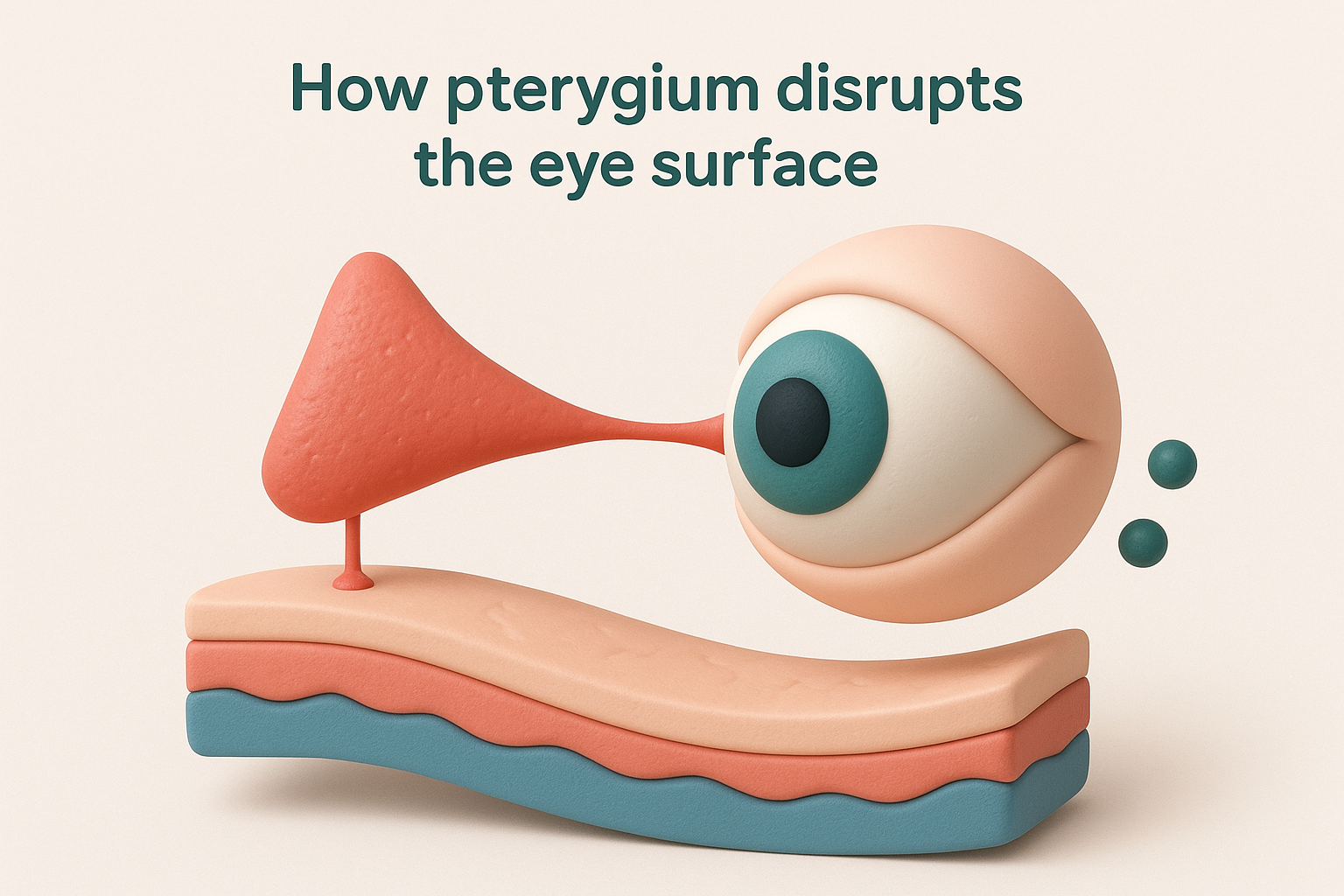
Your body responds to this surface disruption with inflammation. Blood vessels within the growth dilate, causing visible redness, and the surrounding tissue releases inflammatory chemicals that irritate the area further. This cycle of irritation and inflammation is self-reinforcing, which is why symptoms can flare up repeatedly without a clear trigger.
Addressing that inflammation cycle early, rather than waiting for symptoms to become severe, gives you the best chance of keeping the pterygium stable and delaying the need for surgery.
What eye drops actually target
Lubricating drops replenish the tear film and create a smoother surface across the eye, reducing friction between the pterygium and your eyelid every time you blink. Anti-inflammatory preparations, such as topical steroid or non-steroidal drops, work by interrupting the chemical signals that drive redness and swelling. Used together under ophthalmologist guidance, they cover the two main mechanisms behind pterygium-related discomfort.
A pterygium eye drops treatment plan works best when it matches your specific symptom pattern. Someone with mainly dryness and irritation benefits most from consistent lubrication, while someone experiencing frequent inflammatory flare-ups may need short courses of a topical steroid to bring symptoms under control. Matching the drop type to the symptom type is where professional guidance matters most.
Why drops are only part of the management approach
Eye drops manage symptoms effectively, but they do not slow the growth of the pterygium or change its physical structure. Regular monitoring by an eye specialist is essential because a pterygium advancing toward the centre of your cornea can distort vision and eventually requires surgical removal. Drops keep you comfortable in the meantime, but they function best as one component of a broader management plan that includes UV protection, trigger avoidance, and scheduled specialist reviews.
Types of eye drops used for pterygium
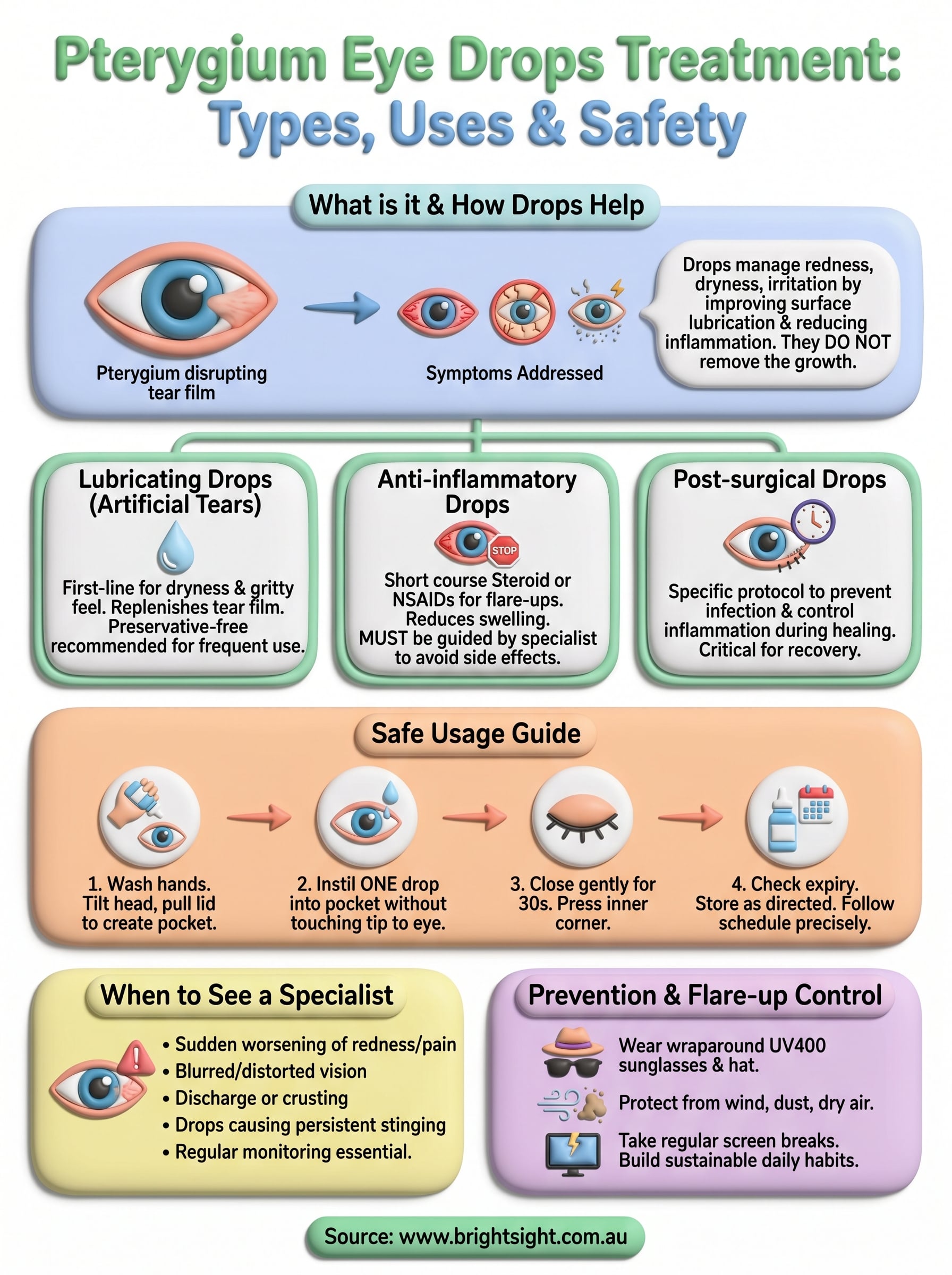
Several distinct categories of drops serve different roles in pterygium management. Understanding what each type does helps you use them correctly and have an informed conversation with your ophthalmologist about which pterygium eye drops treatment approach best suits your current symptoms and stage of growth.
Lubricating drops (artificial tears)
Preservative-free lubricating drops are the first-line option for managing the dryness and irritation that pterygium causes. They replenish your tear film, reduce friction between the growth and your eyelid, and provide immediate relief from the gritty, scratchy sensation. You can use these multiple times daily without significant risk, and gel-based formulations offer longer-lasting moisture if you need extended relief, particularly overnight.
Look for preservative-free options if you need to use lubricating drops more than four times a day, as preservatives can accumulate and further irritate the eye surface with repeated exposure.
Topical anti-inflammatory drops
When redness and swelling flare up, your ophthalmologist may prescribe a short course of topical steroid drops such as prednisolone or fluorometholone. These work by suppressing the inflammatory response within the tissue and bringing visible redness down quickly. Non-steroidal anti-inflammatory drops (NSAIDs) provide another option that reduces inflammation without the intraocular pressure risks associated with steroid preparations, making them suitable for patients who need longer-term anti-inflammatory support.
Steroid drops are not intended for ongoing unsupervised use. Your ophthalmologist will guide the duration and frequency to minimise side effects such as raised eye pressure, which can develop with prolonged steroid exposure.
Post-surgical drops
Following pterygium removal surgery, your ophthalmologist will prescribe a specific combination of drops to prevent infection and control inflammation during healing. This typically includes antibiotic drops in the initial weeks alongside a tapering course of steroid drops to manage post-operative swelling. Sticking to this protocol precisely matters because inconsistent use can affect how well your eye heals and whether the pterygium returns.
How to use pterygium eye drops safely
Using eye drops correctly matters as much as choosing the right type. Poor technique reduces how much medication reaches the eye surface, while careless habits can introduce bacteria that worsen the symptoms you’re trying to control. Getting the application basics right from the start protects both your comfort and your eye health.
Instilling drops correctly
Pull your lower eyelid down gently with one finger to create a small pocket. Tilt your head back, hold the bottle above your eye without letting the tip touch your eye or skin, and squeeze a single drop into that pocket. Then close your eye gently for around 30 seconds rather than blinking repeatedly, which washes the medication away before it can absorb properly.

Pressing lightly on the inner corner of your eye after instilling the drop helps keep the medication on the eye surface longer and reduces systemic absorption, which matters particularly with steroid preparations. If your pterygium eye drops treatment involves more than one type of drop, wait at least five minutes between each so the first drop isn’t diluted before it has time to work.
Never touch the bottle tip to your eye or eyelashes, as this contaminates the bottle and can transfer bacteria back into the solution.
Timing, frequency, and storage
Follow the schedule your ophthalmologist gives you exactly, particularly with prescription steroid or antibiotic drops, where stopping early or missing doses can affect how well inflammation is controlled or how your eye heals after surgery. For lubricating drops, apply them before activities that dry your eyes out, such as prolonged screen use or time outdoors in wind and sun, rather than waiting until discomfort peaks.
Check the expiry date on every bottle before use, discard single-use preservative-free vials immediately after opening, and store drops at the temperature the packaging specifies, as heat and light degrade active ingredients. Always wash your hands before handling any eye drop bottle, and never share drops with another person.
When to see an eye specialist
Eye drops manage symptoms well during mild to moderate stages, but they don’t replace professional monitoring. Knowing when to step beyond home management and book an appointment with an ophthalmologist protects your vision from complications that drops alone cannot address. Pterygium eye drops treatment works best when combined with regular specialist reviews that track whether the growth is stable or progressing.
Warning signs that need prompt attention
Some changes in your eye need assessment sooner rather than later. Sudden worsening of redness that doesn’t respond to lubricating drops within a day or two, increasing pain, or new sensitivity to light are all reasons to contact your eye specialist promptly. Discharge or crusting around the eye can signal an infection that requires antibiotic treatment rather than over-the-counter drops.
If your vision becomes blurred or distorted, book an urgent appointment rather than waiting for your next scheduled review.
You should also seek advice if the drops your ophthalmologist prescribed are causing unexpected side effects, such as persistent stinging, increased irritation, or a feeling of pressure within the eye. These symptoms can indicate a reaction to the drop formulation or, in the case of steroid preparations, a rise in intraocular pressure that needs monitoring.
Signs that surgery may be the right next step
When your pterygium begins advancing toward the centre of your cornea, drops can no longer prevent the visual consequences that come with that progression. Your ophthalmologist will identify this through regular measurements and slit-lamp examination. Induced astigmatism, reduced visual acuity, or a cosmetic impact that affects your confidence are all factors that shift the conversation toward surgical removal.
At Bright Sight Eye Specialists, Dr Capucine Odouard assesses each patient individually to determine whether ongoing drop-based management remains appropriate or whether surgical intervention offers a better long-term outcome.
How to protect your eyes and prevent flare-ups
Even with a solid pterygium eye drops treatment routine in place, your environment plays a major role in how often symptoms return and how quickly the growth progresses. Protecting your eyes from the triggers that drive pterygium activity reduces how frequently you need drops and helps keep the growth stable over time. Consistent daily habits make a bigger difference to your long-term eye health than any single intervention.
Protect against UV radiation
UV exposure is the most significant driver of pterygium growth and inflammatory flare-ups. Wearing wraparound sunglasses with UV400 protection every time you go outdoors blocks the lateral light exposure that standard frames miss, which matters particularly in Australia’s high UV environment. Combine sunglasses with a broad-brimmed hat to reduce overhead glare, especially during peak UV hours between 10am and 3pm.
Polarised lenses reduce reflected glare from water, sand, and roads, making them especially useful if you spend time at the beach or in other reflective outdoor environments.
Reduce environmental irritants
Wind, dust, and dry air all aggravate the eye surface and trigger the inflammatory response that makes pterygium symptoms worse. Wearing close-fitting glasses or protective eyewear in dusty or windy conditions creates a physical barrier that reduces direct irritant contact. If your work or lifestyle involves prolonged screen use, taking regular breaks and keeping your workspace humidified helps prevent the tear film from drying out between drop applications.
Build sustainable daily habits
Sustainable protection means building these steps into your regular routine rather than treating them as occasional precautions. Apply lubricating drops before outdoor activities, wear UV protection regardless of cloud cover, and schedule regular reviews with your ophthalmologist so any changes in the pterygium are caught early. Small, consistent actions add up to meaningful protection over months and years.
Next steps for clearer, calmer eyes
Managing pterygium effectively means combining the right pterygium eye drops treatment with UV protection, regular specialist reviews, and an honest assessment of whether your symptoms have moved beyond what drops can handle. Eye drops address the daily discomfort of redness, dryness, and irritation well, but they work best as one part of a broader plan that accounts for how your growth behaves over time.
If your symptoms are worsening, your drops aren’t providing enough relief, or your ophthalmologist has flagged that the pterygium is advancing toward your cornea, it’s time to explore your options more fully. Dr Capucine Odouard at Bright Sight Eye Specialists in Randwick specialises in corneal conditions and provides personalised assessments tailored to your eye health and lifestyle goals. Book a consultation with our team to get clear, straightforward advice on the right next step for your eyes.