


If you’ve noticed a fleshy, wedge-shaped growth creeping across the white of your eye towards your cornea, you’re likely dealing with a pterygium. Understanding pterygium eye causes is the first step toward protecting your vision, and if you live in Sydney’s Eastern Suburbs, where outdoor lifestyles mean prolonged UV exposure, this condition is more common than you might expect.
A pterygium (sometimes called surfer’s eye) develops when the conjunctiva, the thin, clear tissue covering the white of your eye, grows abnormally onto the cornea. It isn’t cancerous, but left unchecked it can distort your vision, cause persistent irritation, and eventually require surgical removal. The primary drivers are environmental: ultraviolet light, wind, dust, and dry conditions all play a role. Certain people face a higher risk based on where they live, how much time they spend outdoors, and other individual factors.
At Bright Sight Eye Specialists in Randwick, we regularly see patients from Maroubra, Bondi, Bronte, and surrounding areas with pterygia at various stages. Below, we break down exactly what causes a pterygium to form, the specific risk factors that accelerate its growth, how to recognise the early signs, and when it’s time to seek treatment.
Why pterygium develops in the first place
A pterygium doesn’t appear overnight. It forms because repeated damage to the conjunctival tissue triggers a process where cells begin to grow and migrate in an abnormal way. When this happens consistently over months or years, the tissue gradually encroaches onto the clear surface of your cornea, potentially interfering with your vision, comfort, and even how well glasses or contact lenses can correct your eyesight.
What happens inside the eye
Understanding pterygium eye causes starts at the cellular level. The conjunctiva contains specialised limbal stem cells that normally regulate how your eye’s surface tissue repairs itself after minor injury. When these cells are repeatedly stressed by environmental damage, they can lose that tight regulatory control, allowing fibroblasts (the cells responsible for connective tissue growth) to proliferate and invade the cornea in an uncontrolled way.
Research consistently points to ultraviolet radiation as the primary trigger for this cellular breakdown, though it rarely acts alone.
This process shares similarities with how chronically sun-damaged skin develops abnormal cells, though a pterygium remains benign in the vast majority of cases. The growth tends to start on the nasal side of your eye, closest to your nose, because light entering from the side is reflected and focused by the curved surface of the eye onto that specific area with particular intensity, making it the first region to accumulate damage.
Why some people are more susceptible
Not everyone who spends time outdoors develops a pterygium, which indicates that individual biology plays a real role alongside environmental exposure. Genetic factors appear to influence how vulnerable your limbal stem cells are to cumulative damage, and some research suggests that localised inflammatory and immune responses may also contribute to the abnormal tissue growth by creating conditions that encourage fibrovascular invasion.
Your tear film matters more than most people realise. A dry or unstable tear film leaves the conjunctival surface more exposed to irritants and less able to recover from minor daily damage. Tear film instability reduces the eye’s natural buffering against environmental stressors, which is one reason why people in dry, windy, or dusty climates develop pterygia at higher rates even when their UV exposure looks similar to someone in a more temperate setting.
Cumulative lifetime exposure is ultimately what determines whether a pterygium forms and how aggressively it grows. It isn’t a single bad day outdoors that causes the problem. It’s years of unprotected exposure, gradually tipping the balance between normal tissue repair and unchecked cellular growth.
How UV light triggers pterygium growth
UV radiation is the single most significant factor in pterygium eye causes, and Australia’s climate makes this particularly relevant. Sydney receives high UV index readings for much of the year, meaning outdoor activities at the beach, on the water, or even walking around Randwick or Bondi without eye protection can accumulate meaningful corneal damage over time.
How UV radiation damages your eye surface
UV light, specifically UV-B radiation (wavelengths between 280 and 315 nanometres), penetrates the conjunctiva and disrupts the DNA of the cells sitting at the limbal region of your eye. This disruption interferes with the normal repair mechanisms that keep your eye’s surface tissue healthy and stable. When that damage occurs repeatedly over years, those regulatory processes break down and abnormal tissue growth begins.
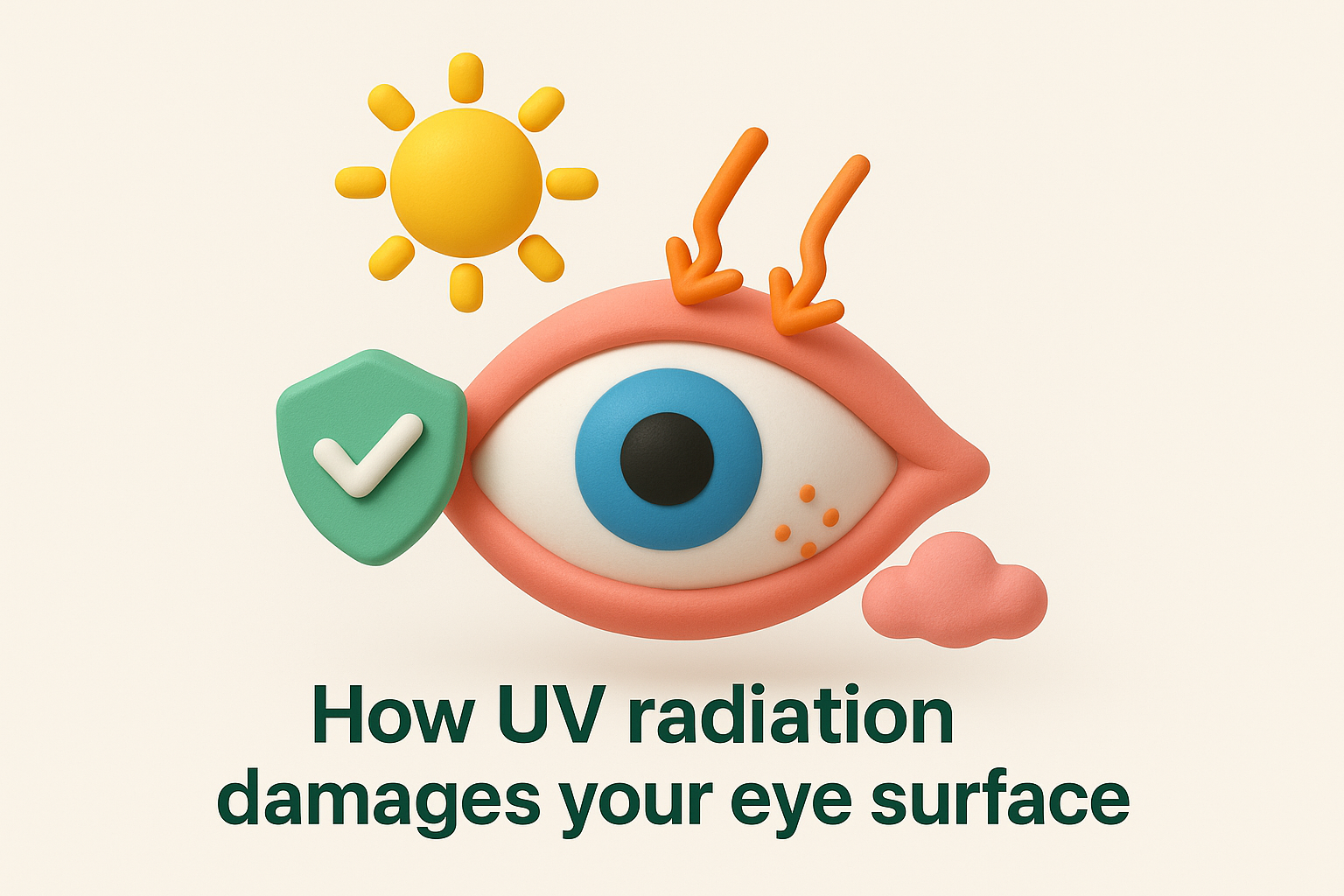
UV-B radiation is strongest between 10am and 2pm, which is precisely when many outdoor workers and beach-goers in Sydney’s Eastern Suburbs spend the most time outside without protection.
Reflected UV light compounds the problem significantly. Water, sand, and even concrete surfaces bounce ultraviolet radiation back up toward your face, increasing your total exposure well beyond what direct sunlight alone delivers. If you spend time swimming, surfing, or working outdoors near reflective surfaces, your eyes absorb substantially more UV than most people expect, which is why this condition earned the nickname surfer’s eye.
Wearing wraparound sunglasses rated to block 99 to 100 per cent of UV reduces this exposure considerably. However, if you already have an established pterygium, protection alone won’t reverse the existing growth. It simply slows further progression while you consider your treatment options with a specialist.
Wind, dust and dry air: the other big drivers
While UV radiation takes the top spot among pterygium eye causes, it rarely works alone. Wind, airborne particles, and persistently dry conditions each put independent stress on your conjunctival surface, and when they combine with high UV exposure, they accelerate tissue damage faster than any single factor could manage on its own.
How wind and dust irritate your eye surface
Wind drives tiny particles of dust, sand, pollen, and debris directly onto your eye’s surface, creating micro-abrasions in the conjunctiva that accumulate over time. Each minor injury prompts a repair response, and repeated cycles of damage and healing gradually push your limbal stem cells toward the kind of dysregulated growth that leads to a pterygium.
People who work outdoors in dusty or windy environments, such as construction, landscaping, or farming, show significantly higher rates of pterygium than those working indoors, even when UV exposure is roughly comparable.
This is particularly relevant if you spend time at Sydney beaches or coastal parks where onshore winds carry fine sand particles that impact your unprotected eyes throughout the day.
Why dry air accelerates the problem
Dry or low-humidity environments thin out your tear film, reducing the eye’s ability to wash away irritants and buffer against surface damage. When your tear film breaks down quickly, the conjunctiva becomes more vulnerable to every other environmental stressor it faces, including UV, dust, and wind.
Your blink rate and tear production also tend to decrease during extended screen time, air-conditioned work environments, and long hours driving, all of which dry the eye surface further. Combining these everyday habits with outdoor exposure creates conditions where pterygium formation becomes considerably more likely over the long term.
Who is most at risk and what to watch for
Knowing the specific risk profile for pterygium eye causes helps you understand whether you need to take extra precautions. While anyone who spends time outdoors can develop this condition, certain groups face a meaningfully higher likelihood of developing it earlier and more aggressively than the general population.
People with the highest risk
Outdoor workers and people who regularly pursue water-based activities sit at the top of the risk category. Surfers, swimmers, fishermen, construction workers, landscapers, and farmers all accumulate exactly the combination of UV, wind, and dust exposure that drives pterygium formation. Living in a high UV environment like Sydney’s Eastern Suburbs amplifies that risk considerably, given the region’s coastal lifestyle and strong solar index for most of the year.
People who grew up in sunny climates without consistent sun protection carry a higher cumulative UV load, which means their risk increases well before middle age.
Those over 40 years old are more commonly diagnosed, simply because the condition reflects decades of accumulated exposure rather than a short-term event. A family history of pterygium also raises your personal likelihood, given the genetic component discussed earlier in this article.
Early signs you should not ignore
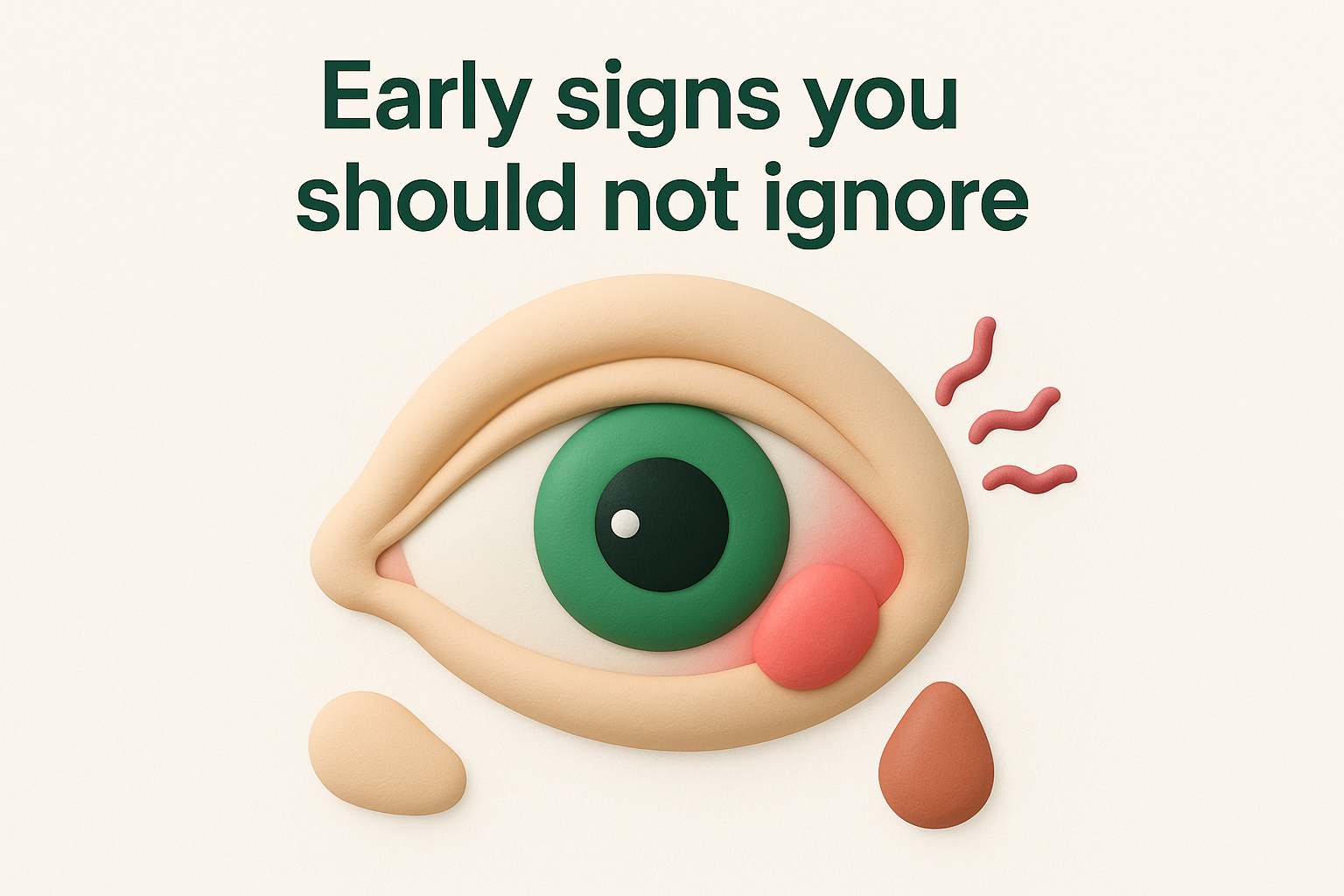
Recognising a pterygium early gives you the most treatment options. The most obvious early sign is a visible pinkish or fleshy growth on the white of your eye, usually starting closest to your nose. You may also notice persistent redness, a gritty sensation, or mild irritation that doesn’t clear up the way normal dryness would. As the growth progresses toward your cornea, you might experience blurred or distorted vision that glasses cannot fully correct, which is the point at which surgical treatment becomes the most practical solution.
How doctors diagnose and treat pterygium
If you notice any of the symptoms described above, seeing an eye specialist rather than a GP is the right first step. A diagnosis is straightforward in most cases, but a thorough examination helps your doctor assess how far the growth has progressed, whether it threatens your cornea, and which treatment approach suits your situation best.
What a clinical examination involves
Your ophthalmologist will examine your eye using a slit-lamp biomicroscope, which magnifies the surface of your eye and gives a clear view of the pterygium’s size, position, and how close it sits to your visual axis. They will also measure your visual acuity and corneal topography to check whether the growth is already distorting your cornea or affecting your refractive prescription. In most cases, no blood tests or imaging are needed. The diagnosis comes down to what your specialist sees during that examination.
Understanding pterygium eye causes helps your specialist assess your risk of regrowth after treatment and tailor their recommendations to your lifestyle and environment.
Treatment options from eye drops to surgery
If your pterygium is small and not affecting your vision, your doctor may recommend lubricating eye drops, anti-inflammatory drops, and UV protection to manage symptoms and slow progression. These measures reduce redness and irritation but do not remove the growth itself. Surgical removal becomes necessary when the pterygium grows toward the centre of your cornea, causes persistent discomfort, or starts to affect how well glasses or contact lenses can correct your vision. The preferred surgical technique involves removing the growth and covering the area with a conjunctival autograft, which significantly reduces the chance of regrowth compared to older approaches. Most patients recover well within a few weeks with standard post-operative care.

Next steps for protecting your eyes
Understanding pterygium eye causes puts you in a much stronger position to act before the condition becomes a significant problem. The most practical steps you can take right now are wearing wraparound sunglasses that block 99 to 100 per cent of UV, using lubricating eye drops in dry or windy conditions, and limiting unprotected outdoor exposure during peak UV hours.
If you have already noticed a growth on your eye, persistent redness, or vision changes that glasses are not fully correcting, waiting rarely improves the outcome. Early review by an ophthalmologist means more options and a simpler treatment path. At Bright Sight Eye Specialists, our surgeons assess pterygium at every stage and give you clear, honest advice about whether monitoring or surgical removal is the right course for your situation.
Book an appointment with our eye specialists to get a thorough examination and a treatment plan suited to your lifestyle.