


If you’re considering laser vision correction, you’ve likely come across two of the most established procedures available: PRK vs LASIK eye surgery. Both reshape the cornea to correct refractive errors like short-sightedness, long-sightedness, and astigmatism, but they do so in fundamentally different ways, and that difference matters when it comes to your recovery, candidacy, and long-term results.
Choosing between them isn’t straightforward. The right procedure depends on factors specific to you: your corneal thickness, lifestyle, occupation, and even how you feel about a longer recovery period versus a quicker one. Understanding what sets these two surgeries apart puts you in a much stronger position to have a productive conversation with your surgeon.
At Bright Sight Eye Specialists in Randwick, Dr Capucine Odouard performs both PRK and LASIK (as well as SMILE), tailoring her recommendation to each patient’s anatomy and goals. This article breaks down the technical differences, recovery timelines, costs, and pros and cons of each procedure, so you can walk into your consultation with clear expectations and the right questions to ask.
Why people compare PRK and LASIK
When you start researching laser eye surgery, PRK and LASIK consistently come up as the two dominant options. They both use an excimer laser to reshape your corneal tissue and correct your prescription, so on the surface they appear interchangeable. But surgeons don’t treat them as such, and neither should you. The comparison matters because the procedure you choose directly influences how quickly you return to work, whether you’re a suitable candidate at all, and how your eyes behave in the years after surgery.
Both procedures target the same vision errors
PRK and LASIK are both approved treatments for myopia (short-sightedness), hyperopia (long-sightedness), and astigmatism. If you wear glasses or contact lenses to correct any of these, laser refractive surgery could potentially reduce or eliminate that dependence. This shared goal is exactly why the prk vs lasik eye surgery comparison is so common: most people asking about one are genuinely eligible for both, which makes the choice feel harder, not easier.
The fact that both procedures treat the same conditions doesn’t mean they carry the same risks or suit the same patients.
Both procedures also have decades of clinical evidence behind them. LASIK became widely available in the late 1990s, while PRK predates it by roughly a decade. That history gives patients and surgeons a clear picture of long-term outcomes for both, making them a logical starting point before exploring newer options like SMILE.
The differences show up in recovery
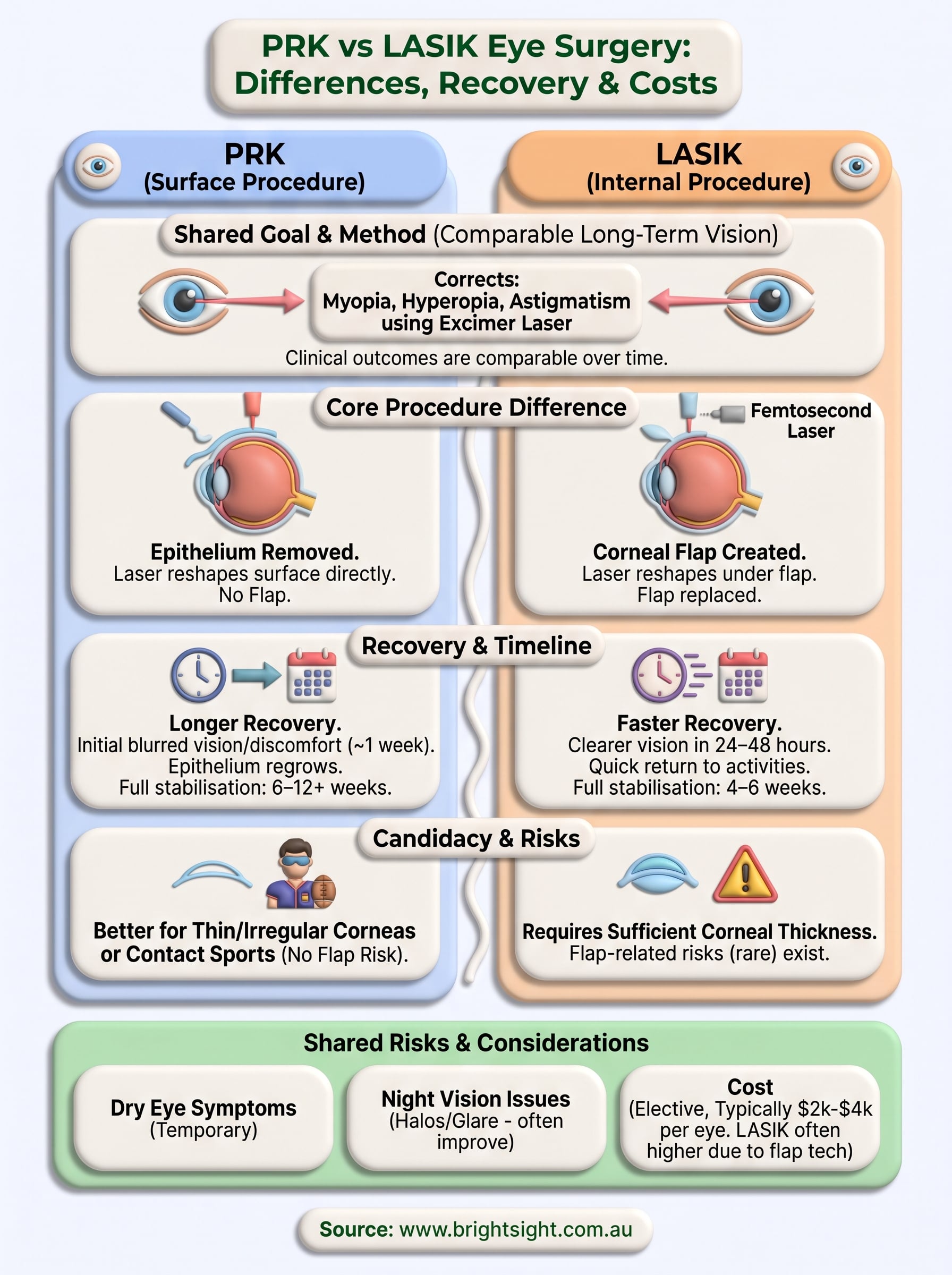
Your recovery with LASIK is notably faster than with PRK. Most LASIK patients notice clearer vision within 24 to 48 hours and return to normal activities within a few days. PRK patients often experience blurred vision and discomfort for the first week, with full visual stabilisation taking four to twelve weeks depending on the individual.
This gap matters significantly if you have a physically active lifestyle, work in a dusty environment, or cannot afford extended downtime. A tradesperson, competitive swimmer, or frequent traveller will weigh recovery time very differently from someone working from home with a flexible schedule.
Your corneal anatomy changes everything
The biggest reason surgeons guide patients toward one procedure over the other is corneal thickness. LASIK requires creating a thin flap in the corneal surface, so you need sufficient tissue depth to do this safely. If your corneas are naturally thin or irregular, PRK becomes the safer choice because it avoids flap creation entirely.
Contact sport athletes and people in certain occupations also favour PRK because there is no flap that could be dislodged by impact or trauma. Your surgeon will assess your corneal topography during a pre-operative consultation before making any recommendation.
How PRK and LASIK actually work
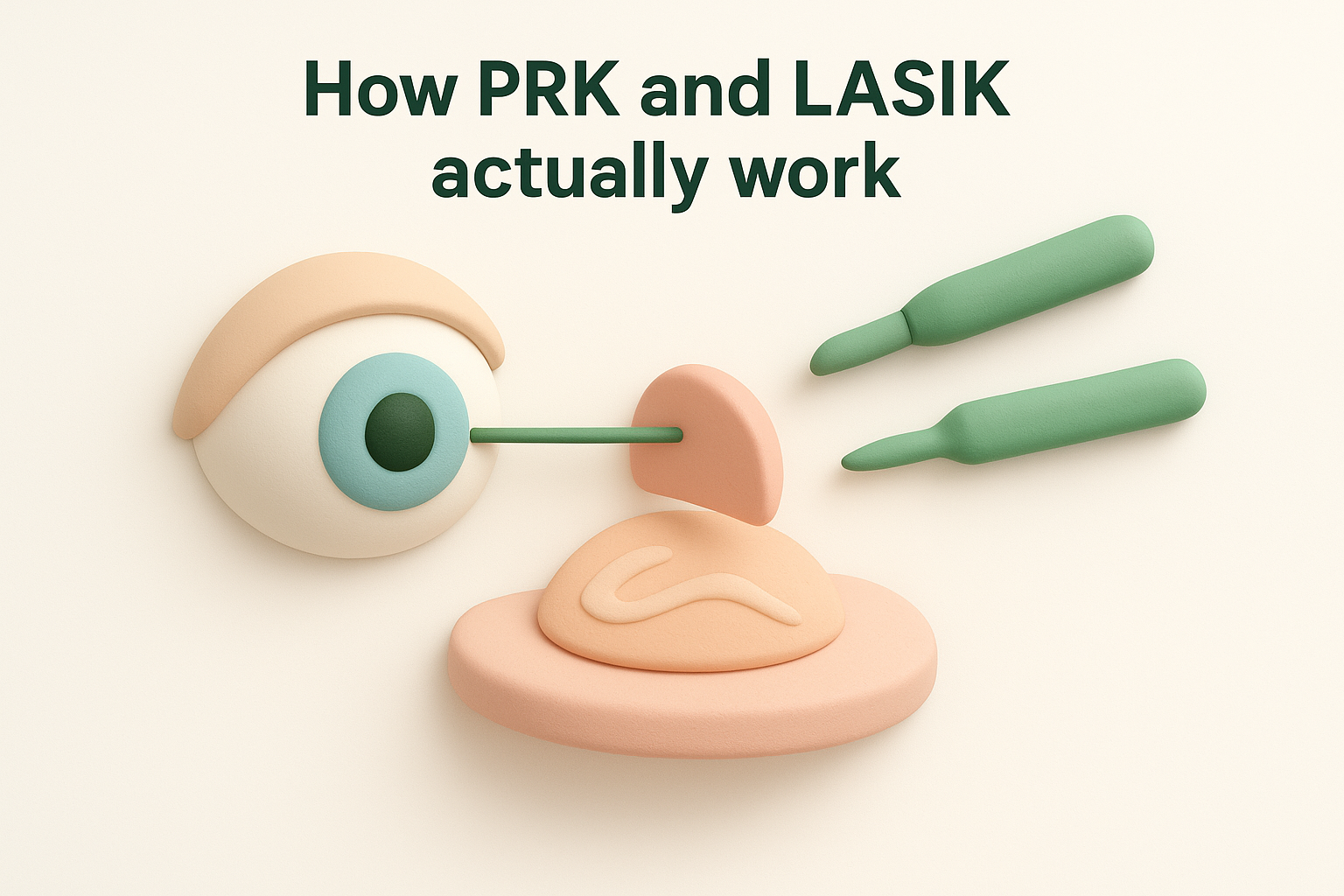
Understanding the surgical steps behind PRK and LASIK removes a lot of the uncertainty that comes with choosing between them. Both procedures use an excimer laser to reshape your cornea, but they differ in how they access the corneal tissue underneath the surface. That single difference drives most of the variation in recovery, candidacy, and risk profile between the two.
What happens during LASIK
Your surgeon begins by creating a thin, hinged flap in the outer layer of your cornea using either a microkeratome blade or, more commonly today, a femtosecond laser. This flap is lifted back to expose the stromal tissue underneath. The excimer laser then removes precise amounts of corneal tissue according to your prescription, and the flap is laid back into position, where it bonds naturally without stitches. The whole procedure typically takes under 15 minutes per eye.
Because the flap seals quickly, most patients notice dramatically improved vision within a day or two of the procedure.
What happens during PRK
With PRK, there is no flap involved. Instead, your surgeon removes the thin outer layer of the cornea, called the epithelium, entirely before applying the excimer laser to reshape the corneal surface. The epithelium grows back over the following days, which is why your recovery takes longer compared to LASIK. A soft bandage contact lens is placed on your eye after surgery to protect the surface while it heals.
When comparing prk vs lasik eye surgery, PRK is often described as a surface procedure while LASIK is described as an internal one. Neither is more precise than the other in terms of the laser treatment itself. The clinical outcomes for both are comparable over the long term, which is why the decision often comes down to your individual anatomy and lifestyle rather than which procedure delivers better final vision.
Recovery and results timeline
Recovery is one of the sharpest differences in the prk vs lasik eye surgery comparison, and it often carries the most weight when patients are deciding which procedure suits their life. Understanding what happens to your eyes in the days and weeks after surgery helps you plan your work schedule, arrange transport, and set realistic expectations for when you’ll see clearly.
LASIK recovery: what to expect in the first week
Most LASIK patients notice a significant improvement in vision within 24 hours. Your eyes may feel gritty or mildly irritated on the night of the procedure, but that typically settles quickly. By the following morning, many patients can drive and return to desk-based work. Your surgeon will ask you to avoid swimming, contact sports, and rubbing your eyes for several weeks, but day-to-day functioning returns quickly for most people.
The speed of LASIK recovery is a genuine advantage, but it does not mean your eyes have finished healing internally. Full corneal stabilisation takes several months.
PRK recovery: why it takes longer
With PRK, your epithelium needs to fully regenerate across the corneal surface before your vision becomes consistently clear. The bandage contact lens placed after surgery is removed at around day four or five, and this is when many patients notice their vision starting to improve. Discomfort, light sensitivity, and fluctuating vision are normal during the first week, and you should plan for several days away from screens and bright environments.
When your vision fully stabilises
For LASIK, most patients reach their final prescription outcome within four to six weeks. For PRK, full stabilisation can take anywhere from six to twelve weeks, sometimes longer for higher prescriptions. Both procedures deliver comparable long-term visual outcomes once healing is complete, and your surgeon will schedule follow-up appointments to track your progress and confirm your cornea has healed as expected.
Risks, side effects and long-term considerations
No surgical procedure carries zero risk, and understanding the potential downsides of PRK and LASIK helps you make a genuinely informed decision rather than one based only on the benefits. The good news is that both procedures have a strong long-term safety record, and serious complications are uncommon when your surgeon carefully screens you beforehand.
Side effects both procedures share
Both PRK and LASIK can cause dry eye symptoms in the weeks and months following surgery. Your tear production is disrupted during the healing process, which can lead to irritation, fluctuating vision, and discomfort, particularly in air-conditioned or low-humidity environments. Most patients find this resolves with lubricating eye drops, but for some it persists longer and requires additional management.
Halos, glare, and starbursts around lights at night are also reported by patients after both procedures, especially in the early recovery period. These tend to improve as your cornea heals, though in rare cases they can persist. Patients with larger pupils or higher prescriptions are generally more susceptible to these effects.
Discussing your history of dry eye before surgery is critical, as pre-existing dry eye can worsen significantly after either procedure if not managed properly.
Risks specific to LASIK
The corneal flap created during LASIK introduces a unique set of risks that do not apply to PRK. Flap-related complications, though rare, include incomplete flap creation, irregular healing, or flap displacement following eye trauma. This is one reason contact sport athletes or military personnel are often directed toward PRK instead.
Long-term considerations for both procedures
When comparing prk vs lasik eye surgery over the long term, both procedures carry a small chance of regression, where your prescription partially returns over years. This is more likely with higher prescriptions and can sometimes be addressed with an enhancement procedure. Your surgeon will assess your corneal tissue during the initial consultation to estimate this risk for your specific case.
Costs in Australia and how to choose
Cost is a practical factor that shapes a lot of decisions around laser eye surgery, and it is worth understanding what drives the price difference between the two procedures before you commit. In Australia, both PRK and LASIK are elective procedures, which means private health insurance rarely covers them, and you pay out of pocket in most cases.
What laser eye surgery costs in Australia
Laser eye surgery in Australia typically ranges from $2,000 to $4,000 per eye, depending on the clinic, the technology used, and the complexity of your prescription. LASIK tends to sit at the higher end of that range because the femtosecond laser used to create the flap adds to the procedural cost. PRK is often slightly less expensive for that reason, though the difference is not always significant. You should factor in the cost of follow-up consultations, lubricating drops, and any prescribed medications when you are budgeting for either procedure.
Always ask your surgeon for a full breakdown of what is included in the quoted price before you proceed.
Choosing the right procedure for you
When weighing prk vs lasik eye surgery, the decision is rarely about cost alone. Your surgeon will assess your corneal thickness, prescription strength, pupil size, and tear film quality during a pre-operative consultation, and those findings will guide the recommendation more than your personal preference. If your corneas are thin, your lifestyle involves contact sports, or you have a history of dry eye, PRK is likely the stronger clinical choice.
Your occupation and recovery tolerance also matter. If taking several weeks away from visually demanding work is not realistic for you, LASIK’s faster recovery is a genuine advantage worth considering. Talking through these factors openly with your surgeon gives you the best chance of choosing a procedure that fits both your anatomy and your life.
Where to go from here
Deciding between PRK vs LASIK eye surgery comes down to your individual anatomy, recovery tolerance, and lifestyle, not a single universal answer. Both procedures deliver strong, lasting visual outcomes when performed on the right candidate, and the most important step you can take is getting a thorough pre-operative assessment from a surgeon who performs both.
At Bright Sight Eye Specialists in Randwick, Dr Capucine Odouard offers consultations for PRK, LASIK, and SMILE, taking the time to assess your corneal anatomy and explain which option suits your prescription and goals. She trained at Sydney Eye Hospital and brings a patient-centred, evidence-based approach to every recommendation she makes.
If you are ready to find out whether laser vision correction is right for you, book a consultation with Dr Odouard to get a clear, personalised assessment and take the next step toward life without glasses.