


Your vision affects everything, from driving to reading to recognising the faces of people you love. When eye conditions progress beyond what glasses or medication can fix, ophthalmologist eye surgery becomes a practical path forward. Understanding what’s involved helps you make informed decisions about your care.
Ophthalmologists are medical doctors who specialise in diagnosing, treating, and surgically correcting eye conditions. At Bright Sight Eye Specialists in Randwick, Dr. Rahul Dubey and Dr. Capucine Odouard perform a range of procedures, from cataract removal to complex retinal surgery, using advanced techniques developed through training at leading institutions worldwide.
This article explains the main types of eye surgery ophthalmologists perform, the risks you should understand before any procedure, and how to know when it’s time to book a consultation. Whether you’re managing a specific condition or exploring your options, you’ll find clear answers to guide your next steps.
What ophthalmologist eye surgery involves
Ophthalmologist eye surgery encompasses a range of procedures designed to correct or treat conditions affecting your vision and eye health. These operations differ significantly from routine eye examinations or prescription adjustments. Your ophthalmologist performs surgical interventions only when non-surgical treatments prove insufficient or when a condition threatens your sight without direct intervention.
The consultation and assessment process
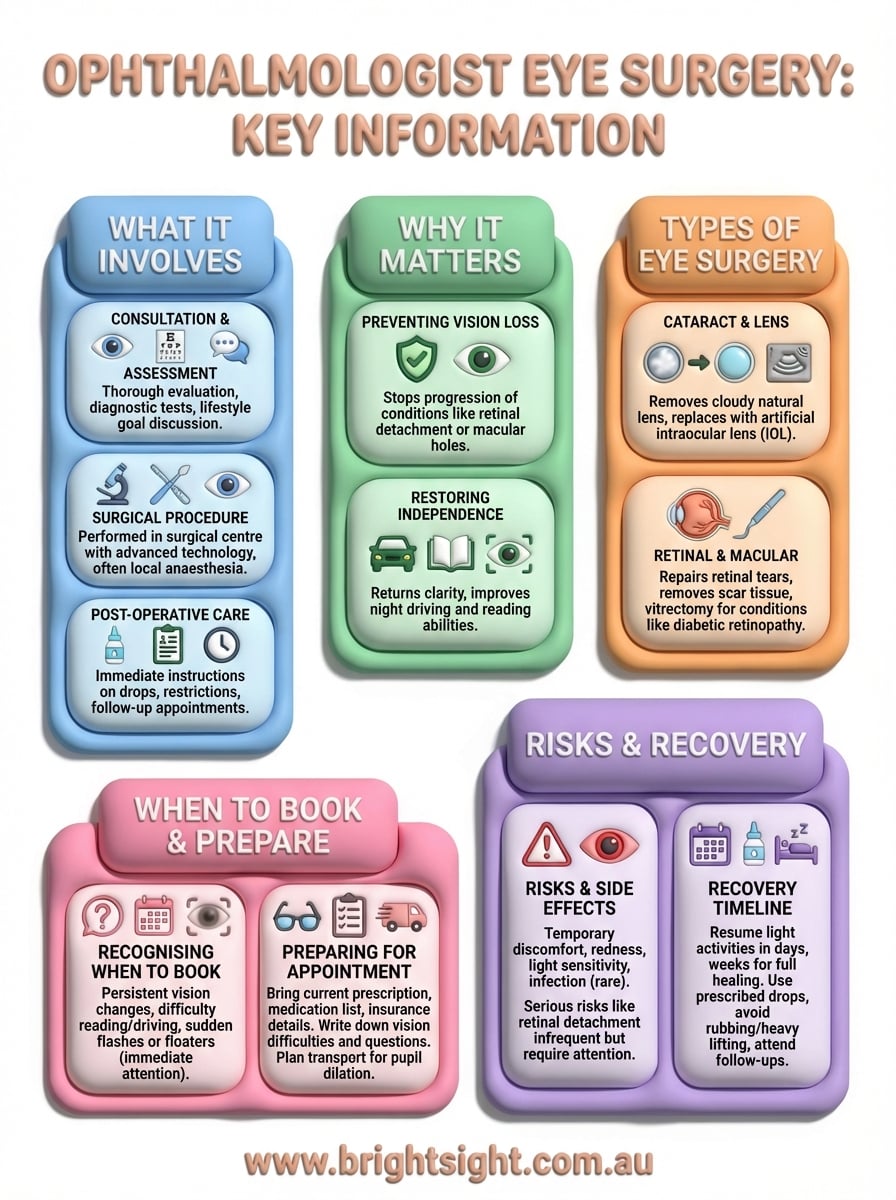
Before any procedure, your ophthalmologist conducts a thorough evaluation of your eyes, medical history, and specific needs. Diagnostic tests measure your visual acuity, eye pressure, corneal thickness, and retinal health using specialised equipment. These assessments help determine whether surgery is the right option and which technique will deliver the best outcomes for your situation.
Your consultation also covers your lifestyle goals and daily visual requirements. Someone who reads extensively will have different priorities from someone who drives frequently at night. This discussion shapes the surgical plan and ensures realistic expectations about recovery timelines and results.
Understanding your unique visual needs before surgery leads to better outcomes and satisfaction with your results.
During the surgical procedure
Most eye surgeries take place in a surgical centre equipped with advanced technology, where your ophthalmologist uses precision instruments under microscopic visualisation. Local anaesthesia numbs your eye while keeping you awake and comfortable, though some procedures may require sedation or general anaesthesia depending on complexity.

The duration varies by procedure type. Cataract surgery typically takes 15 to 30 minutes, while retinal procedures may require longer operating times. Your surgeon makes precise incisions, removes or repairs affected tissue, and often uses laser technology for enhanced accuracy. Throughout the procedure, monitoring equipment tracks your vital signs and ensures your safety.
Post-operative care begins immediately after surgery. You receive specific instructions about eye drops, activity restrictions, and follow-up appointments before leaving the surgical centre.
Why eye surgery matters
Your vision directly impacts your independence, safety, and quality of life. Untreated eye conditions often worsen over time, reducing your ability to drive, read, or recognise faces. Ophthalmologist eye surgery addresses these issues when glasses, contact lenses, or medication no longer provide adequate solutions.
Preventing permanent vision loss
Many eye conditions progress silently until they reach critical stages. Retinal detachment, for example, can cause complete blindness within days if left untreated, while macular holes gradually destroy your central vision needed for detailed tasks. Timely surgical intervention stops this progression and preserves the sight you still have.
Early detection through regular eye examinations identifies conditions before they cause irreversible damage. Your ophthalmologist monitors changes in your retina, macula, and cornea, recommending surgery only when the benefits outweigh the risks. Waiting too long often means facing more complex procedures with less favourable outcomes.
Addressing eye conditions before they advance gives you the best chance of maintaining clear, functional vision throughout your life.
Restoring functional independence
Beyond preventing loss, surgery actively restores abilities you may have gradually surrendered. Cataract removal returns clarity to clouded vision, eliminating the fog that makes driving at night dangerous. Retinal surgery repairs damage that distorts straight lines or creates dark spots in your field of view, allowing you to read comfortably again.
Types of eye surgery an ophthalmologist performs
Ophthalmologists perform diverse surgical procedures tailored to specific eye conditions and your visual needs. Each procedure targets distinct anatomical structures within your eye, from the front surface to the back of the retina. Understanding these options helps you recognise which treatment addresses your particular condition.
Cataract and lens surgery
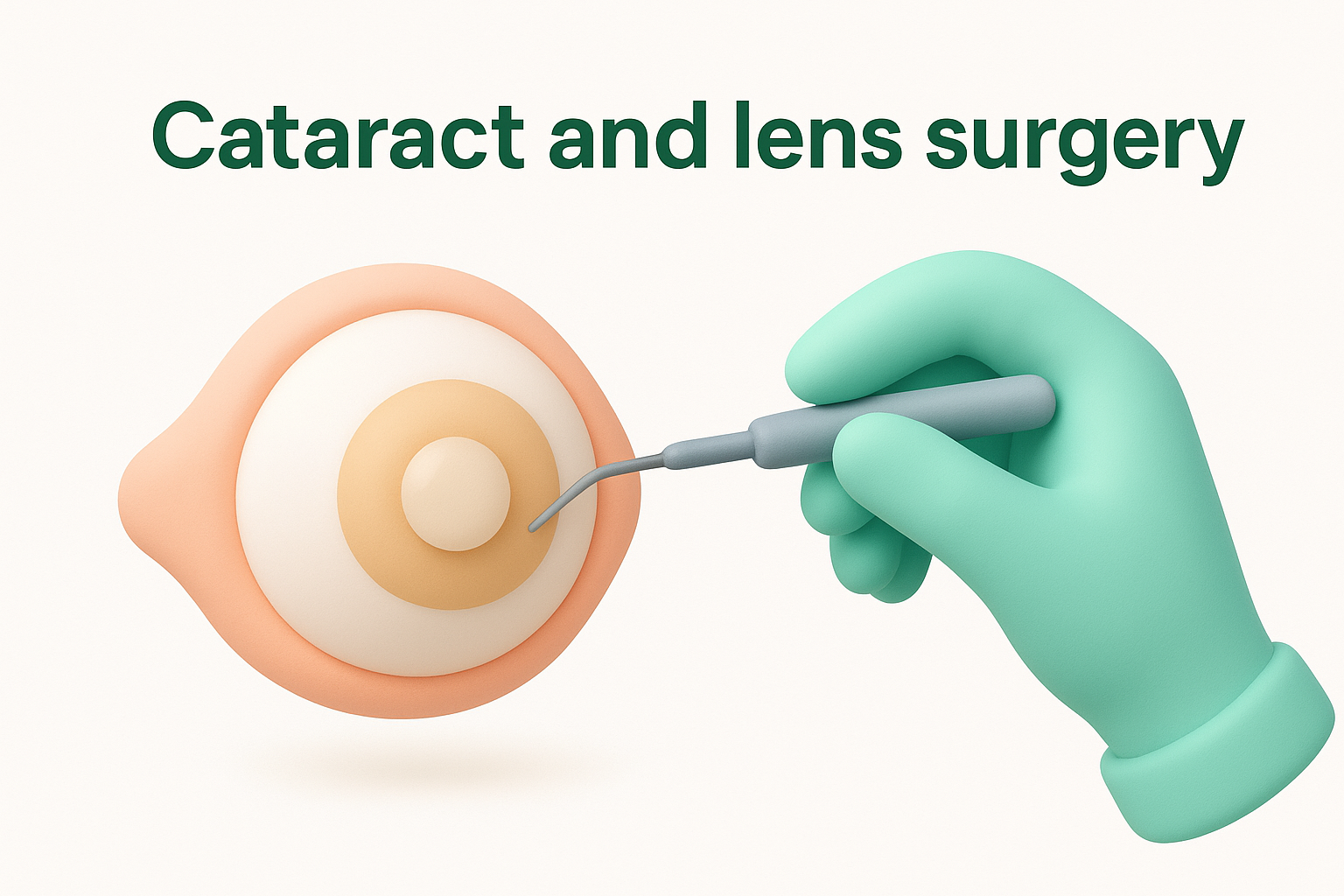
Cataract surgery removes your clouded natural lens and replaces it with an artificial intraocular lens, restoring clarity to your vision. Your ophthalmologist uses ultrasound energy to break up the cloudy lens before inserting a new lens designed to match your vision requirements. This procedure also includes refractive lens exchange for those seeking freedom from glasses, even without significant cataracts.
Premium lens implants offer additional benefits, such as multifocal or extended depth of focus lenses that reduce dependence on reading glasses. Your surgeon discusses these options during your consultation, considering your daily activities and visual priorities.
Choosing the right lens implant transforms not just your vision clarity but your entire daily experience.
Retinal and macular procedures
Retinal surgery treats conditions affecting the back of your eye, including retinal detachment, macular holes, and epiretinal membranes. Your ophthalmologist uses specialised instruments to repair tears, remove scar tissue, or reattach separated retina. Vitrectomy procedures involve removing the gel-like substance inside your eye to access and repair underlying retinal damage.
These procedures also address diabetic retinopathy, retinal vein occlusions, and persistent floaters that obstruct your vision.
Risks, side effects, and recovery basics
Every surgical procedure carries potential risks, and ophthalmologist eye surgery is no exception. Understanding what might happen and how to manage recovery helps you prepare mentally and practically for the days and weeks following your procedure. Your ophthalmologist discusses specific risks relevant to your surgery type during your consultation, ensuring you make fully informed decisions.
Common risks and side effects
Your eyes may experience temporary discomfort, redness, or light sensitivity immediately after surgery. Infection remains a risk with any surgical procedure, though modern techniques and post-operative antibiotics keep this rare. Some patients notice halos around lights or dry eyes, particularly after cataract or laser procedures, which typically improve within weeks.
Serious complications like retinal detachment or severe inflammation occur infrequently but require immediate attention if symptoms develop. Your surgeon provides clear instructions about warning signs to watch for and emergency contact information.
Recognising early warning signs and seeking prompt attention prevents minor issues from becoming major complications.
Recovery timeline and what to expect
Most ophthalmologist eye surgery patients resume light activities within days, though complete healing takes weeks. You’ll use prescribed eye drops to prevent infection and reduce inflammation, following a specific schedule your surgeon outlines. Avoid rubbing your eye, swimming, or heavy lifting during initial recovery to protect surgical sites.
Follow-up appointments monitor your healing progress and address any concerns.
When to book and how to prepare
Knowing when to seek ophthalmologist eye surgery and how to prepare for your consultation ensures you receive timely care and make the most of your appointment. Your proactive approach directly influences your surgical outcomes and recovery experience. Understanding these practical steps removes uncertainty from the process.
Recognising when to book your consultation
Book your consultation when you notice persistent vision changes that affect your daily activities, such as difficulty reading, driving at night, or recognising faces from a distance. Sudden symptoms like flashes of light, a curtain across your vision, or a rapid increase in floaters require immediate attention, often within 24 hours, as they may indicate retinal detachment.
Your optometrist may refer you after detecting conditions requiring surgical expertise, including cataracts limiting your independence or retinal abnormalities needing specialist assessment. Even without obvious symptoms, regular eye examinations after age 50 help identify conditions before they impact your sight.
Early consultation prevents minor conditions from progressing to stages requiring more complex interventions.
Preparing for your appointment
Bring your current glasses or contact lens prescription, a list of medications you take, and your private health insurance details to your consultation. Write down specific vision difficulties you experience and questions about procedures, recovery times, and costs before arriving.
Plan transport home after appointments involving pupil dilation, as your vision will be temporarily blurred. Expect your initial consultation to last 60 to 90 minutes, including comprehensive testing and discussion with your ophthalmologist.
Your next step
Clear vision transforms your daily life, from reading text messages to driving safely at night. Now that you understand ophthalmologist eye surgery options, risks, and preparation steps, you can make confident decisions about your eye health. Your eyes deserve specialist attention from surgeons who combine advanced training with patient-centred care.
Bright Sight Eye Specialists offers transparent pricing and comprehensive surgical solutions for cataract, retinal, and corneal conditions throughout Sydney’s Eastern Suburbs. Dr. Rahul Dubey and Dr. Capucine Odouard bring international training and local expertise to every consultation, ensuring you receive personalised treatment matched to your specific vision needs. Most procedures include no-gap or known-gap options for insured patients, removing financial uncertainty from your decision.
Book your consultation to discuss your vision concerns and explore surgical options suited to your lifestyle. Your proactive approach today protects your sight for years ahead.