


You see a sudden flash of light from the corner of your eye, but there’s no light source. Or you notice small dark spots drifting across your vision when you look at the sky. These are called light flashes and floaters. They happen inside your eye when the vitreous gel that fills your eyeball changes with age or injury. The vitreous can pull on your retina, creating the sensation of flashing lights. Floaters appear when tiny clumps of gel or cells cast shadows on your retina.
This guide explains everything you need to know about light flashes and floaters. You’ll learn what causes them, how to tell if they’re serious, and when you need urgent medical attention. We’ll cover the connection between floaters and conditions like posterior vitreous detachment and retinal tears. You’ll also discover what tests your eye specialist might perform and which treatment options exist in Sydney.
Why light flashes and floaters matter
Your vision tells you about potential problems inside your eye before any permanent damage occurs. Light flashes and floaters act as early warning signals that something has changed in your vitreous or retina. Most people experience these symptoms as they age, and they’re usually harmless. However, they can also indicate serious conditions like retinal tears or detachment, which require immediate treatment to prevent vision loss.
The connection to sight-threatening conditions
When you notice sudden new floaters or frequent light flashes, your eye may be experiencing posterior vitreous detachment (PVD). This natural ageing process affects most people over 60. The vitreous gel inside your eye shrinks and pulls away from the retina. In about 15% of PVD cases, this pulling creates a retinal tear.
Without treatment, tears can progress to retinal detachment within days or weeks. Retinal detachment causes permanent vision loss if surgeons don’t reattach it quickly. Your retina has no pain receptors, so you won’t feel a tear or detachment happening.
Your retina has no pain receptors, so you won’t feel a tear or detachment happening.
Early recognition of these visual symptoms helps you seek prompt evaluation from an eye specialist in Sydney.
How to respond when you notice symptoms
Your first action when you notice light flashes in eyes and floaters should be to assess the situation calmly. Stop what you’re doing and note the specific characteristics of what you see. Pay attention to whether you’re experiencing one or two floaters that drift slowly, or dozens of new spots that appear suddenly. Check if flashes occur in one eye or both, and whether they happen with eye movement or appear constantly.
Record what you experience
Write down the exact time you first noticed the symptoms and any activities you were doing beforehand. Note the shape and number of floaters, the pattern of any light flashes, and whether your vision has any dark areas or shadows. Document if you bumped your head recently, experienced eye trauma, or underwent eye surgery in the past few months. This information helps your eye specialist determine the urgency of your condition and identify potential causes during your examination.
Contact an eye specialist promptly
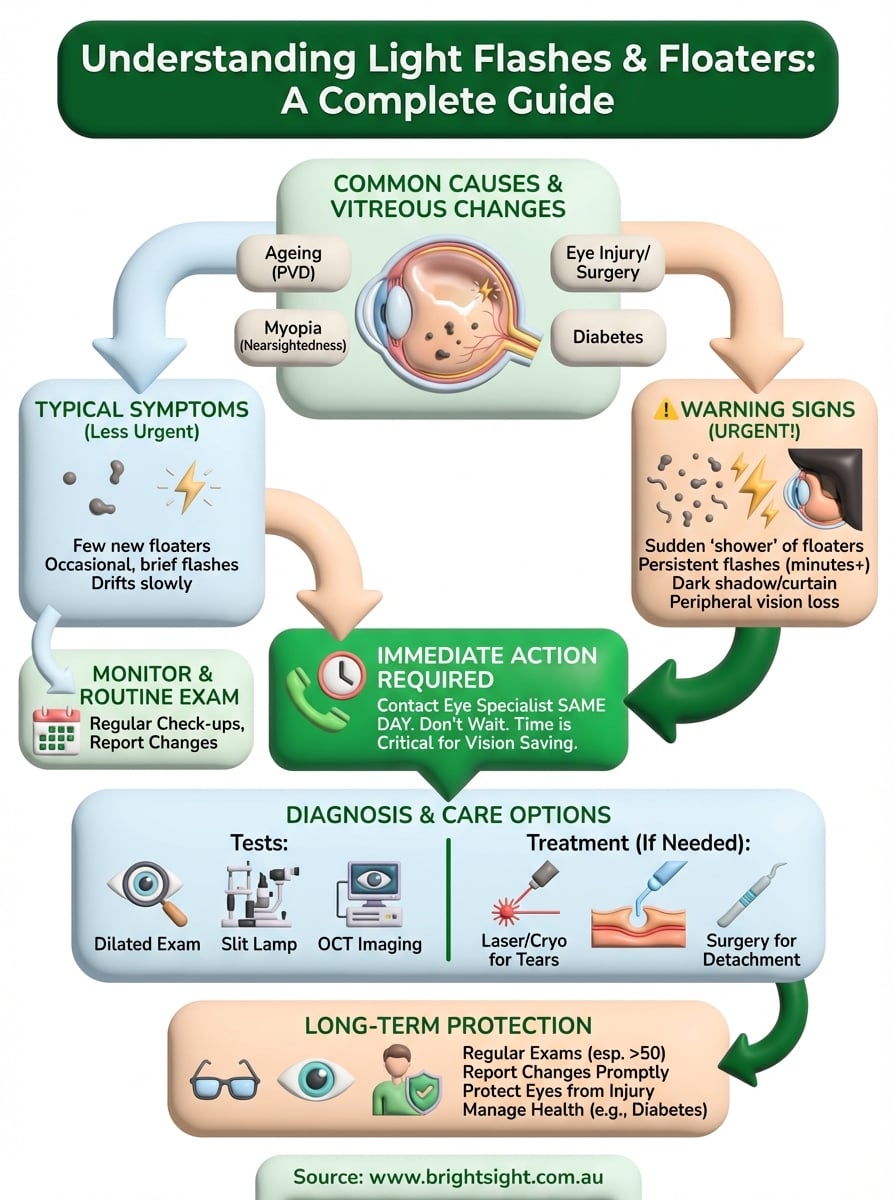
You should call an ophthalmologist within 24 hours if you notice new floaters or flashes, even if they seem mild. Request an urgent appointment on the same day if you experience a sudden shower of floaters, repeated flashes, a shadow in your peripheral vision, or a curtain blocking part of your sight. These symptoms suggest possible retinal tear or detachment, which requires immediate evaluation.
Emergency treatment within hours can save your vision when retinal detachment occurs.
Never adopt a wait-and-see approach with sudden visual changes, as delays reduce treatment success rates significantly.
Common causes and risk factors
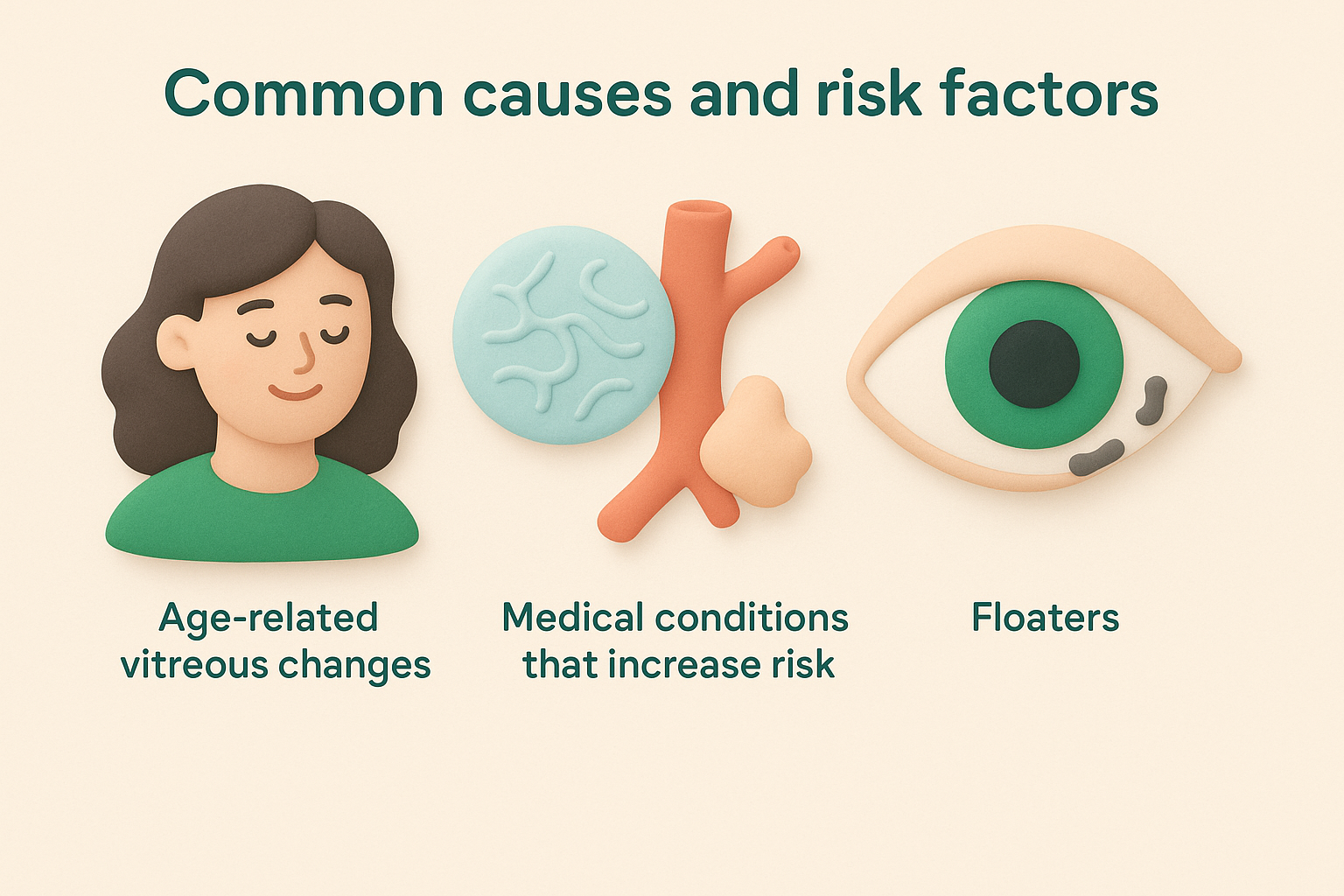
Most light flashes in eyes and floaters result from natural ageing processes that affect everyone differently. The vitreous gel inside your eye becomes more liquid over time, and strands of collagen within it clump together. These clumps cast shadows on your retina, creating the floaters you see. Your risk increases significantly after age 50, when the vitreous begins pulling away from the retina more frequently. This process, called posterior vitreous detachment, occurs in roughly 75% of people by age 65.
Age-related vitreous changes
Your vitreous undergoes structural breakdown as you get older, losing its gel-like consistency. This liquefaction allows bits of debris to move freely through the centre of your eye. People who are nearsighted experience these changes earlier because their elongated eyeballs stretch the vitreous more. Previous eye surgery, particularly cataract operations, accelerates vitreous breakdown by 5 to 10 years compared to eyes without surgery.
Medical conditions that increase risk
Several health conditions make you more susceptible to developing floaters and flashes. Diabetes damages blood vessels in your retina, which can lead to bleeding into the vitreous. Eye inflammation from conditions like uveitis causes cells to float in the vitreous fluid. Eye injuries, even minor ones from years ago, increase your likelihood of experiencing these symptoms. Retinal tears occur more often if you have a family history of retinal detachment or lattice degeneration.
People with severe myopia face triple the risk of developing serious vitreous complications compared to those with normal vision.
Your eye anatomy plays a crucial role, as larger or irregularly shaped eyes stretch the retina differently.
Warning signs of serious eye disease
Certain patterns of light flashes in eyes and floaters indicate urgent medical emergencies rather than harmless age-related changes. You need to recognise these danger signals because early intervention within hours or days can prevent permanent blindness. The difference between a harmless floater and a sight-threatening condition often lies in how suddenly symptoms appear and whether they occur alongside other visual changes.
Symptoms requiring same-day evaluation
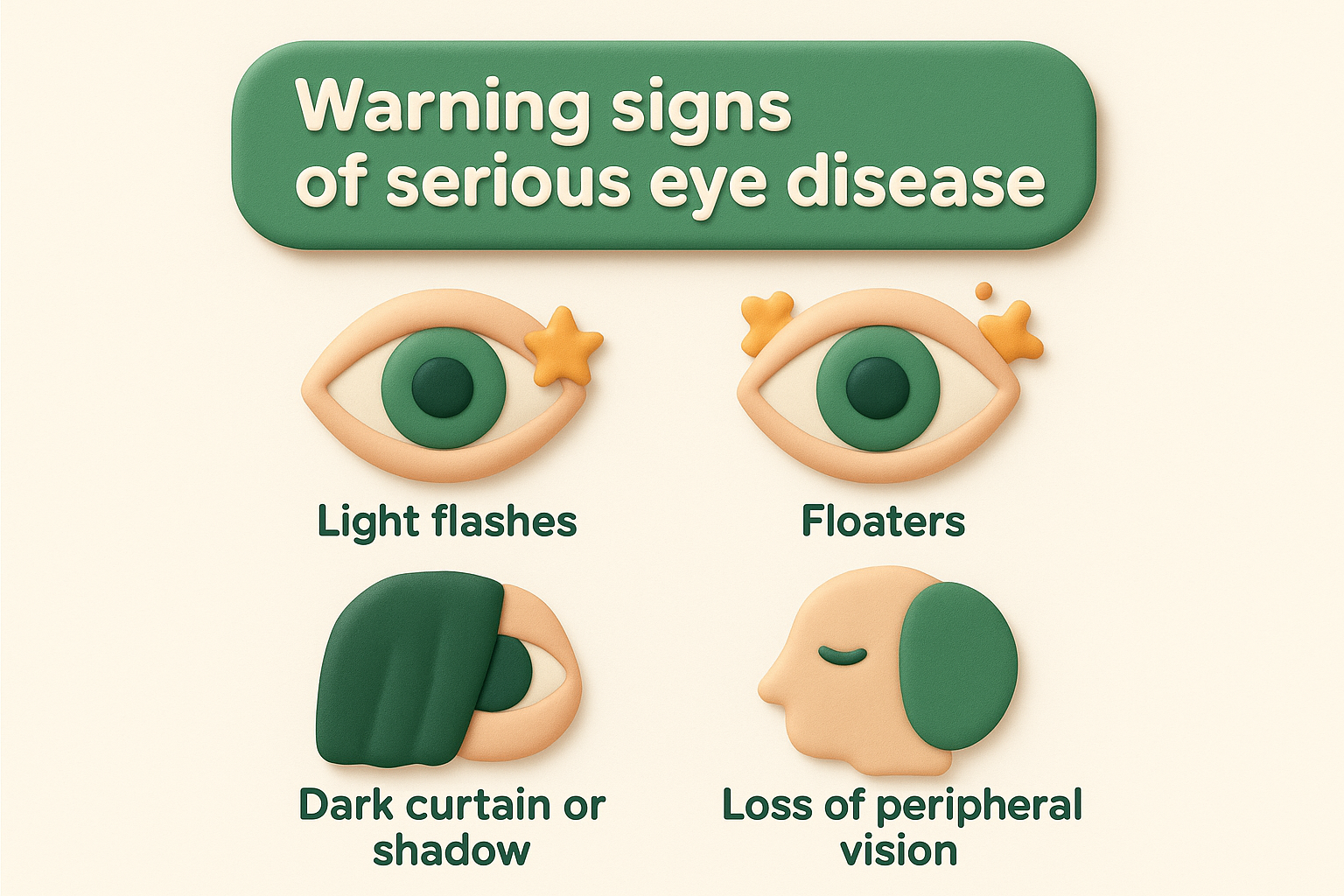
You should seek immediate care from an eye specialist if you notice a sudden shower of dozens of new floaters appearing within minutes or hours. Watch for a dark curtain or shadow moving across your field of vision from any direction. Persistent flashing lights that continue for more than a few minutes, especially when they occur without head movement, signal potential retinal problems. Any sudden loss of peripheral vision or the sensation that someone has pulled a blind down over part of your sight requires emergency assessment.
Retinal detachment progresses rapidly, and every hour of delay reduces the chances of full vision recovery.
Additional red flags to monitor
Look out for dense spots or cobwebs that obscure part of your central vision, which may indicate bleeding inside your eye. Symptoms that worsen over hours rather than days suggest active retinal complications. If you experience these warning signs after recent eye surgery, head trauma, or sudden physical exertion, contact an ophthalmologist in Sydney immediately rather than waiting for a scheduled appointment.
Tests and treatment options in Sydney
Your eye specialist in Sydney will perform several diagnostic tests to determine whether your light flashes in eyes and floaters indicate a serious problem. The examination process typically takes 30 to 60 minutes and involves looking at different parts of your eye with specialised equipment. Most tests cause no discomfort, though your pupils will remain dilated for several hours afterwards, affecting your ability to drive safely.
Diagnostic examinations your specialist performs
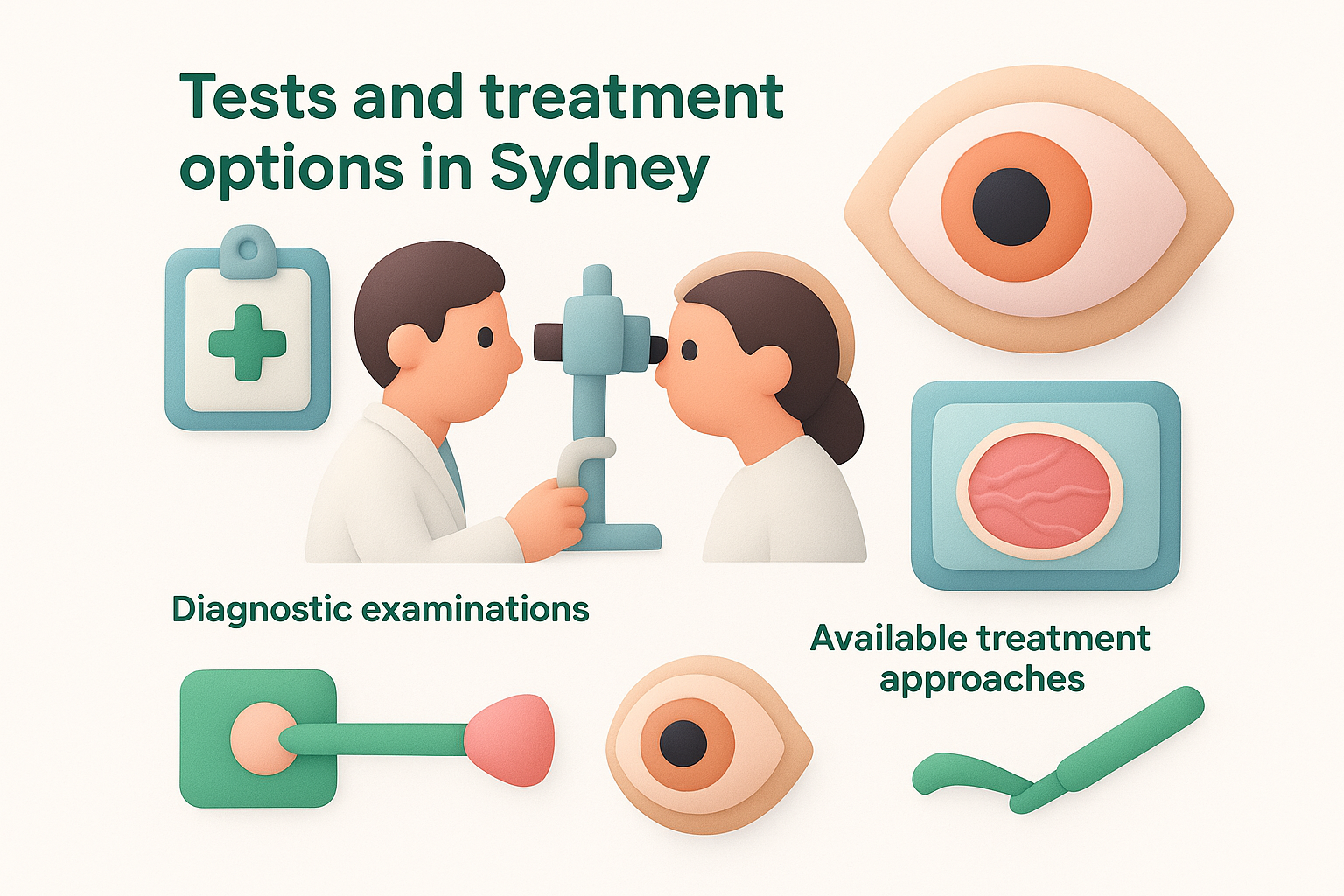
Your ophthalmologist begins with a dilated eye examination using drops that widen your pupils completely. This allows them to view your entire retina, including the peripheral areas where tears often occur. They use a slit lamp combined with special lenses to examine your vitreous gel and check for any abnormalities. Advanced imaging with optical coherence tomography (OCT) creates detailed cross-sectional pictures of your retina, revealing even tiny tears or changes that might not be visible during a standard examination.
Available treatment approaches
Treatment depends entirely on what your specialist finds during examination. Benign floaters require no intervention, as they typically fade over time. If doctors detect a retinal tear, they perform laser photocoagulation or cryotherapy to seal it immediately, preventing detachment.
Treating retinal tears before detachment occurs has a success rate exceeding 95%, compared to 85% after detachment develops.
Established retinal detachments require surgical repair using vitrectomy or scleral buckling techniques at specialised eye centres across Sydney.
Protect your vision over time
You can reduce your risk of serious complications by attending regular eye examinations every one to two years after age 50. Report any changes in your vision immediately, even if they seem minor, as early detection of light flashes in eyes and floaters often prevents permanent damage. Maintain healthy blood sugar levels if you have diabetes, and protect your eyes from injury during sports or physical work. Schedule a comprehensive eye assessment with our Sydney specialists to ensure your retinal health remains optimal and address any concerns about your vision.