


You’ve had the procedure done, so what does life after LASIK eye surgery actually look like? It’s the question almost every patient asks before committing, and it deserves a straight answer. The reality is that most people notice sharper vision within hours, but the full recovery journey unfolds over weeks and months.
At Bright Sight Eye Specialists in Randwick, Dr Capucine Odouard performs refractive laser surgery, including LASIK, PRK, and SMILE, and guides patients through every stage of their recovery. From managing dry eyes in the first few days to knowing when you can safely return to exercise and screen time, having a clear picture of what’s ahead makes a real difference.
This article walks you through the recovery timeline, common side effects, what to expect from your vision at each stage, and how to protect your results long-term.
Why life after LASIK feels different
After LASIK, your cornea has been permanently reshaped, which means your eyes are processing light in a fundamentally new way. Most patients describe the first few days as strange rather than painful, noticing a brightness or crispness to the world that their brain hasn’t yet adjusted to. Life after LASIK eye surgery involves not just physical healing, but also a neurological adaptation period where your brain recalibrates how it interprets visual signals coming from your newly reshaped cornea. Understanding that distinction helps set realistic expectations from day one.
Your brain needs time to adapt
The visual system is not purely mechanical. When your cornea changes shape, your brain’s visual processing centres must update how they interpret incoming information. This is why some patients notice halos around lights or a mild blur in the first week, even though the procedure itself went smoothly. Your depth perception and contrast sensitivity can also feel slightly off during this period, which tends to resolve as the weeks progress and your brain catches up with what your eyes are now delivering.
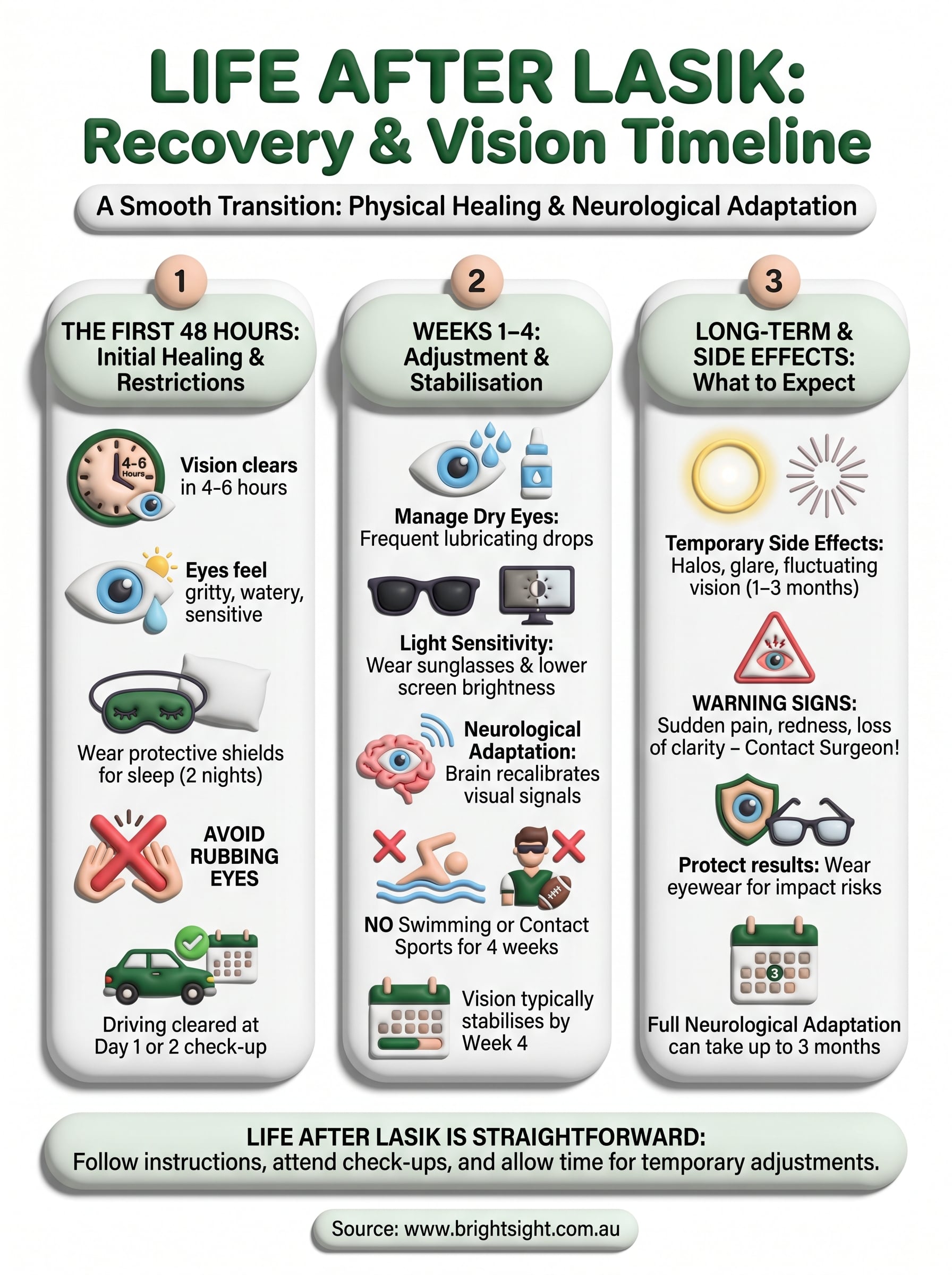
Most patients find their vision stabilises significantly within the first two to four weeks, though full neurological adaptation can continue for up to three months.
What changes in your daily routine
Your habits shift in practical ways after surgery. Dry eyes are the most common adjustment, because LASIK temporarily reduces corneal nerve sensitivity, which slows your natural tear production. You will likely use lubricating eye drops several times a day for weeks or even months. Beyond that, light sensitivity often makes screens and outdoor environments feel more intense than usual, so wearing sunglasses outdoors and lowering screen brightness become part of your normal routine in the early weeks of recovery.
How recovery works after LASIK
LASIK recovery follows a predictable pattern for most patients. The procedure creates a thin flap in your corneal tissue, which folds back during surgery to allow laser reshaping and then repositions itself without stitches. Your body heals this flap naturally, which is why the first 24 hours carry the most restrictions and why protecting your eyes from rubbing or impact matters so much in those early days.
The healing stages your eyes go through
Recovery happens in two overlapping phases. The first covers initial tissue healing, where the corneal flap bonds back into place over the first few days. The second is the stabilisation of your prescription, which takes longer because the underlying corneal cells continue to settle and remodel over weeks.

Life after LASIK eye surgery is largely smooth because the flap heals without sutures, but that also means your eyes remain more vulnerable to physical pressure during the first month. Your surgeon will prescribe antibiotic and anti-inflammatory eye drops to reduce infection risk and support healing throughout this window.
Avoid rubbing your eyes for at least one month after LASIK, as even gentle pressure can displace the healing corneal flap.
Day-by-day recovery timeline
Knowing what to expect each day removes the anxiety from life after LASIK eye surgery. Recovery follows a predictable sequence, so tracking where you are helps you stay on course and catch anything that falls outside the normal range.
The first 48 hours
Your vision typically clears within four to six hours of surgery, though your eyes will feel gritty, watery, and sensitive to light for the rest of day one. Resting at home with your eyes closed as much as possible speeds this phase along.
By day two, most patients notice a marked improvement in clarity. Halos around lights and mild blur remain normal at this stage, so do not interpret them as a sign something went wrong.
Wear the protective eye shields your surgeon provides when sleeping for the first two nights to prevent accidental rubbing.
Days 3 to 28
From day three onward, dryness and occasional fluctuations in sharpness are the main things you will notice. Continue using your prescribed lubricating and anti-inflammatory drops throughout this period and attend your follow-up reviews as scheduled.
By week four, your corneal flap is well bonded and light sensitivity fades for most patients. Vision typically settles into a consistent result around this point.
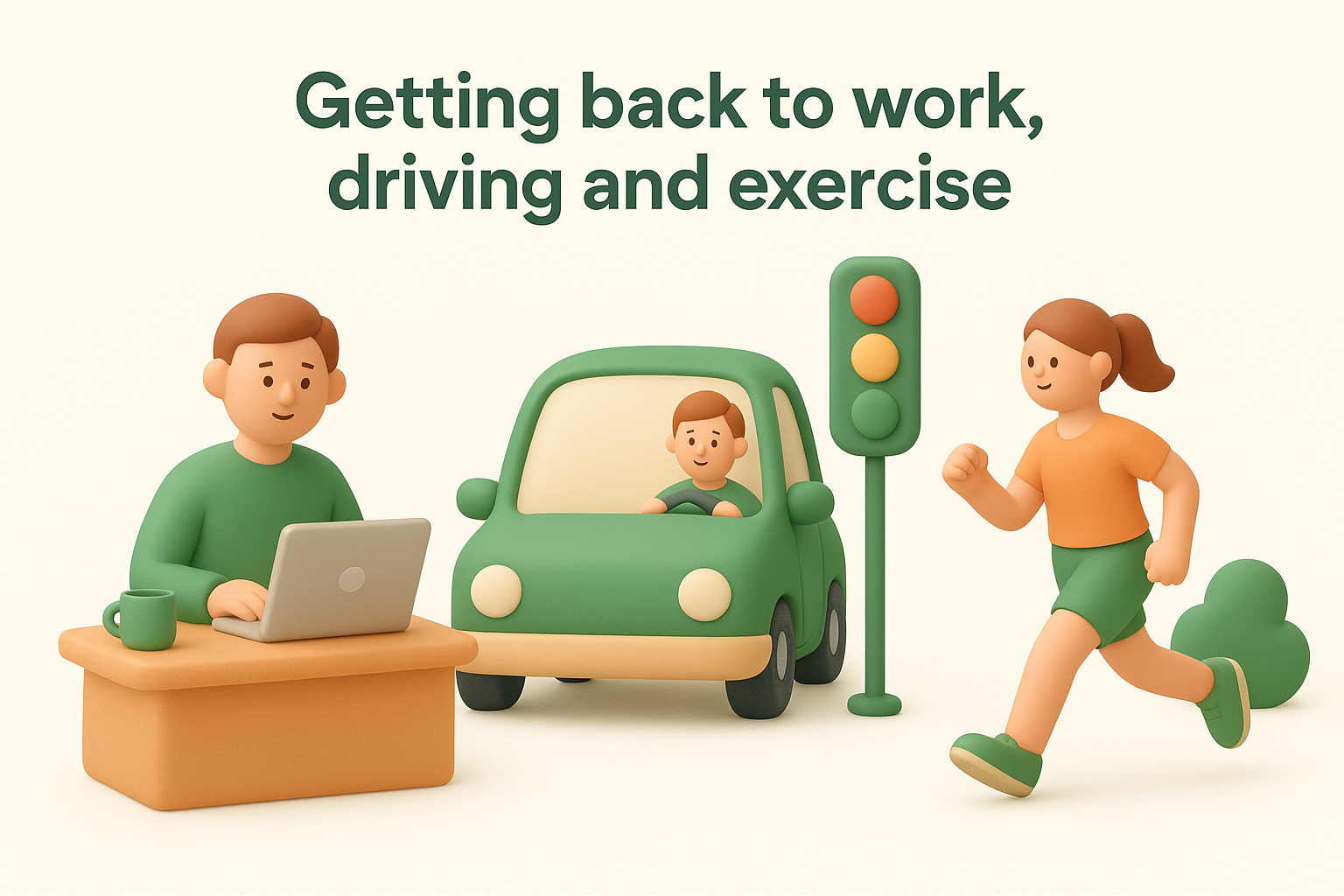
Getting back to work, driving and exercise
Returning to your normal routine is one of the first practical questions patients ask about life after LASIK eye surgery. Most people return to desk-based work within one to two days, but the timeline for driving and physical activity depends on how quickly your vision stabilises at your follow-up review. Your surgeon will confirm whether your vision meets the legal driving standard at your day-one check, and most patients receive clearance by day two or three.
Avoid driving at night in the first week if halos around headlights remain noticeable, as this affects your judgement on the road.
Exercise and physical activity
Light walking is safe from day two, but swimming, contact sports, and any activity that puts sweat or water near your eyes should wait at least four weeks. Your eyes remain more vulnerable to infection and physical impact during this window, so keeping them protected takes priority.
High-impact gym sessions can typically resume after two weeks, provided you keep your eyes clear of dust and direct pressure. Wearing protective eyewear during any sport that carries even a low risk of impact for the first month reduces the chance of disrupting the healing corneal flap.
Side effects, risks and warning signs
Most side effects in life after LASIK eye surgery are temporary and resolve within the first one to three months. Dry eyes, halos around lights, glare, and fluctuating vision are the most frequently reported complaints, and they typically fade as your cornea heals. Knowing which sensations fall within the normal range helps you stay calm and confident during recovery.
Common side effects to expect
Dryness and light sensitivity affect the majority of patients in the first few weeks and are a direct result of reduced corneal nerve sensitivity after surgery. Your tear film production returns gradually, so using lubricating drops consistently during this period keeps your eyes comfortable and supports the healing process. Starbursts or halos around lights at night are also common and usually improve as your eyes adjust over the first one to two months.
If dryness or halos persist beyond three months without improvement, book a review with your surgeon.
Warning signs that need attention
Some symptoms fall outside the normal range and require prompt attention. Sudden worsening of vision, significant eye pain, or discharge are not expected during a standard LASIK recovery. Contact your surgeon immediately if you notice increasing redness or any loss of clarity after your vision had already improved, as these can signal infection or flap complications that respond well to early treatment.
Final thoughts on life after LASIK
Life after LASIK eye surgery is, for most people, straightforward. Your vision improves quickly, the side effects are manageable with the right preparation, and the recovery timeline is shorter than most expect. Following your surgeon’s instructions on eye drops, activity restrictions, and follow-up appointments makes the biggest difference to how smoothly everything progresses.
The adjustment period is real, but it is also temporary. Dry eyes, halos, and fluctuating vision in the first few weeks do not mean something went wrong. They are a normal part of your cornea healing and your brain adapting to a new way of seeing. Staying consistent with your lubricating drops and attending your review appointments keeps your recovery on track.
If you are based in Sydney’s Eastern Suburbs and want to find out whether laser vision correction suits your eyes, book a consultation with Dr Capucine Odouard at Bright Sight Eye Specialists in Randwick.