


You’ve had the procedure, or you’re seriously considering it, and now you want to know what life after laser eye surgery actually looks like. How quickly will your vision clear? When can you drive, exercise, or get back to work? These are the questions that matter most, and the answers are more straightforward than you might expect. For most people, recovery is faster and smoother than they imagined, though it does require following a clear set of post-operative steps.
At Bright Sight Eye Specialists in Randwick, Dr Capucine Odouard performs LASIK, PRK, and SMILE procedures at Sydney Surgical Centre and Sydney Eye Hospital. She works closely with each patient before and after surgery to set realistic expectations and guide them through every stage of healing. Her approach is grounded in evidence-based care, tailored to your eyes, your lifestyle, and your goals.
This article covers the full picture, from the first 24 hours after surgery through to your long-term vision outlook. We’ll walk through the recovery timeline, what activities to avoid and when, how to care for your eyes in the weeks ahead, and what kind of visual results you can expect over the months and years that follow.
Why recovery and aftercare matter
Laser eye surgery reshapes your corneal tissue to correct how light enters your eye, and that tissue needs time to settle after the procedure. In the hours and days that follow, your eyes are healing at a cellular level, which means what you do (and don’t do) during recovery directly influences your final result. Cutting corners on aftercare or rushing back to normal activities can disrupt the healing process and affect the quality of your vision over the long term. Recovery is not passive; it requires your active participation at every stage.
How your eyes heal after laser surgery
Each procedure triggers a different healing response. With LASIK, the surgeon creates a thin flap in the cornea, folds it back, and repositions it after the laser reshapes the underlying tissue. The flap bonds back naturally, but it stays vulnerable to disturbance for several weeks. PRK removes the surface layer of the cornea entirely, so your eye needs to rebuild that layer from scratch, which takes longer. SMILE involves a small keyhole incision with no flap, which generally means a more stable and lower-risk early recovery.
The healing pathway differs for each procedure, which is why your aftercare instructions are specific to the surgery you had, not a generic list.
The role of aftercare in your final result
Following your aftercare plan consistently is what bridges the gap between a successful procedure and excellent long-term vision. Your eyes are doing significant repair work in the background, and the steps you take each day either support or interfere with that process. Key aftercare commitments include:
- Using prescribed eye drops on schedule to manage inflammation and reduce infection risk
- Avoiding rubbing, water exposure, and high-impact physical activity in the early weeks
- Attending all follow-up appointments so your surgeon can monitor your healing progress
Life after laser eye surgery involves a short but important window of careful attention, and that investment pays off in clearer, more stable vision for years ahead.
What happens in the first 24 to 48 hours
The first 48 hours are the most critical part of your recovery. Your eyes are still in an active healing phase during this window, so rest and caution are essential.
What you’ll notice straight away
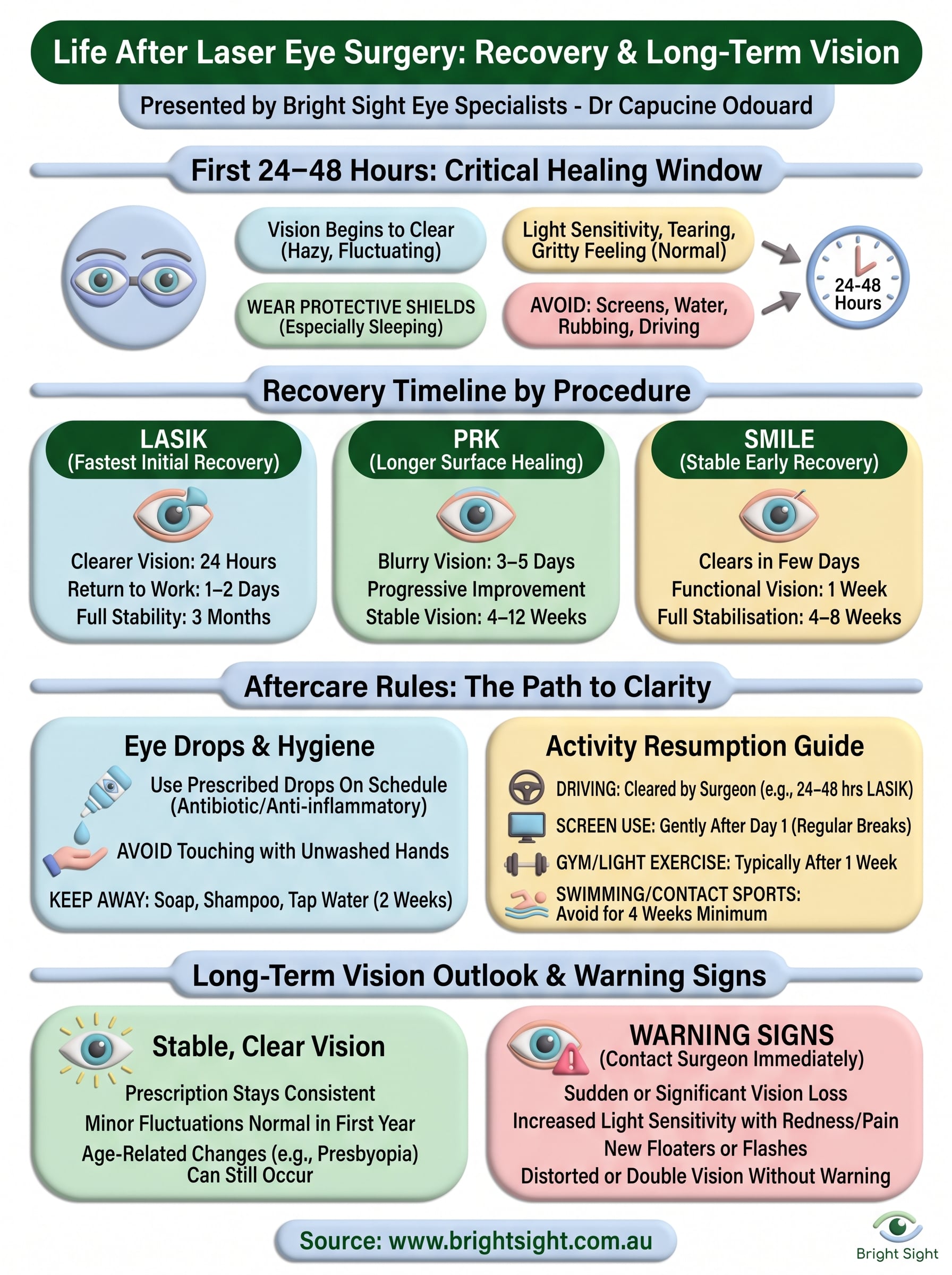
Within hours of surgery, your vision will begin to clear, though it may still feel hazy or fluctuate throughout the day. You’ll likely experience light sensitivity, mild tearing, and a gritty sensation in your eyes. These responses are normal and typically settle within the first day or two.
Avoid screens and bright lights for the first few hours after surgery, as your eyes are particularly sensitive during this period.
How to protect your eyes in this window
Wearing the protective eye shields provided by your surgeon is non-negotiable, especially while sleeping, to prevent accidental rubbing. You should also arrange for someone to drive you home on the day and to assist you for the remainder of that first day.
During these 48 hours, avoid:
- Screen time for the first few hours
- Water contact with your eyes (no swimming or showering with water near your face)
- Touching or rubbing your eyes
- Driving until your surgeon clears you
Recovery timeline by procedure
Recovery speed varies depending on which procedure you had and how your eyes respond individually. Understanding the typical timeline for each surgery helps you plan your return to work, driving, and daily activities with realistic expectations.
LASIK
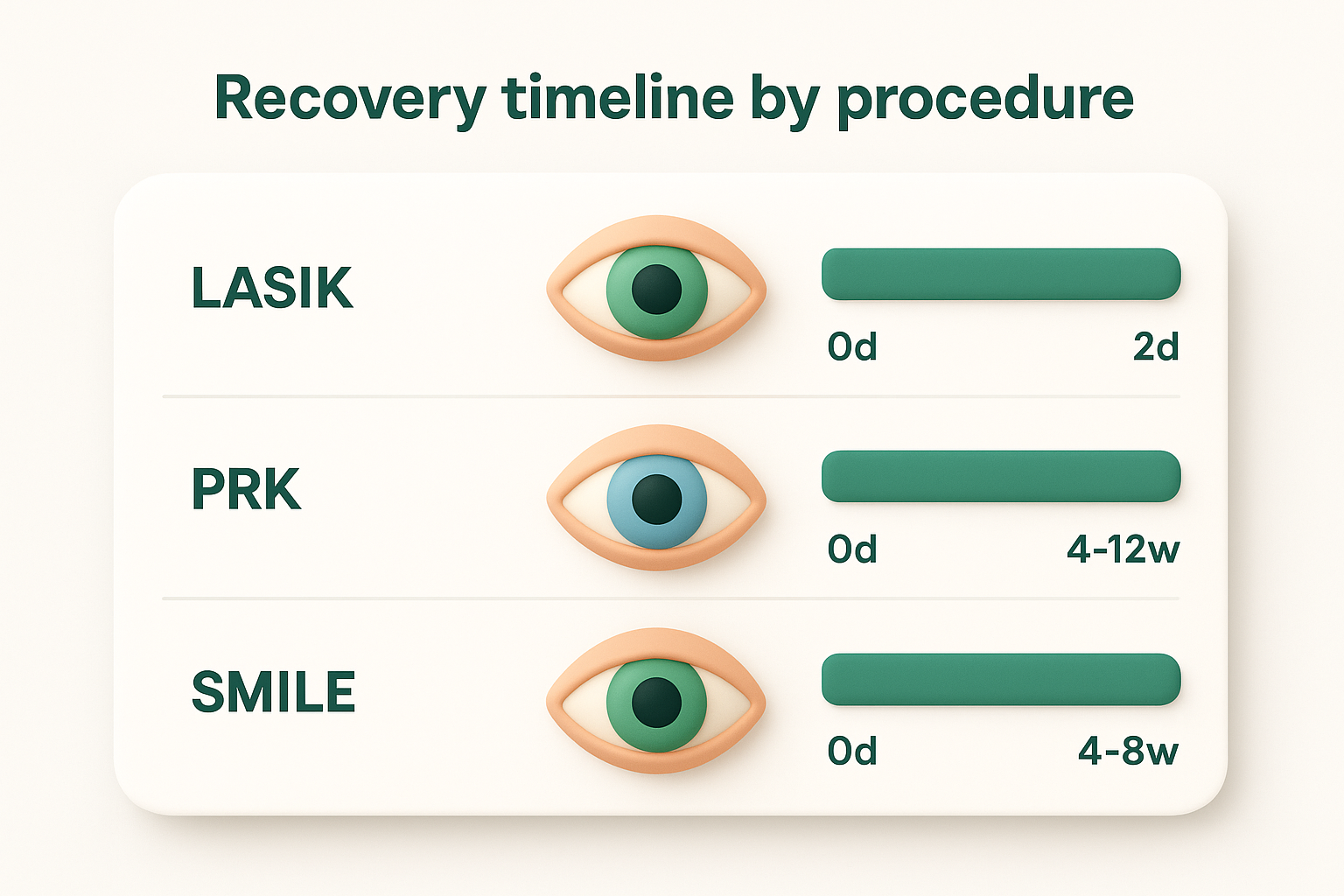
LASIK offers the fastest initial recovery of the three procedures. Most patients notice significantly clearer vision within 24 hours, and many return to work within one to two days. Your vision may still fluctuate for two to four weeks as your cornea continues to stabilise, with full visual stability typically reached by three months.
PRK
PRK takes longer because your eye rebuilds its outer corneal surface from scratch. Expect blurry vision for three to five days while the surface cells regenerate. Vision improves progressively over several weeks, and stable, clear vision usually arrives between four and twelve weeks after surgery.
Life after laser eye surgery with PRK requires more patience in the short term, but the long-term visual outcomes are comparable to LASIK.
SMILE
SMILE sits between the two in terms of recovery speed. Your vision clears within the first few days, and most patients reach comfortable functional vision within a week. Full stabilisation typically occurs within four to eight weeks as the corneal tissue settles after the keyhole incision.
Aftercare rules and activity restrictions
Your surgeon will give you a specific aftercare plan, but the core rules apply across all laser procedures. Following them consistently is what separates a smooth recovery from one complicated by setbacks or extended healing time.
Eye drops and hygiene
You’ll be prescribed antibiotic and anti-inflammatory eye drops to use for several weeks after surgery. Take these exactly as directed, even when your eyes feel comfortable and settled. Avoid touching your eyes with unwashed hands, and keep soap, shampoo, and tap water away from your eye area for at least the first two weeks.
Missing doses of your prescribed drops increases your risk of infection and inflammation, both of which can affect your final visual outcome.
When you can resume activities
Life after laser eye surgery involves a structured return to normal activities rather than an immediate one. Here is a general guide:
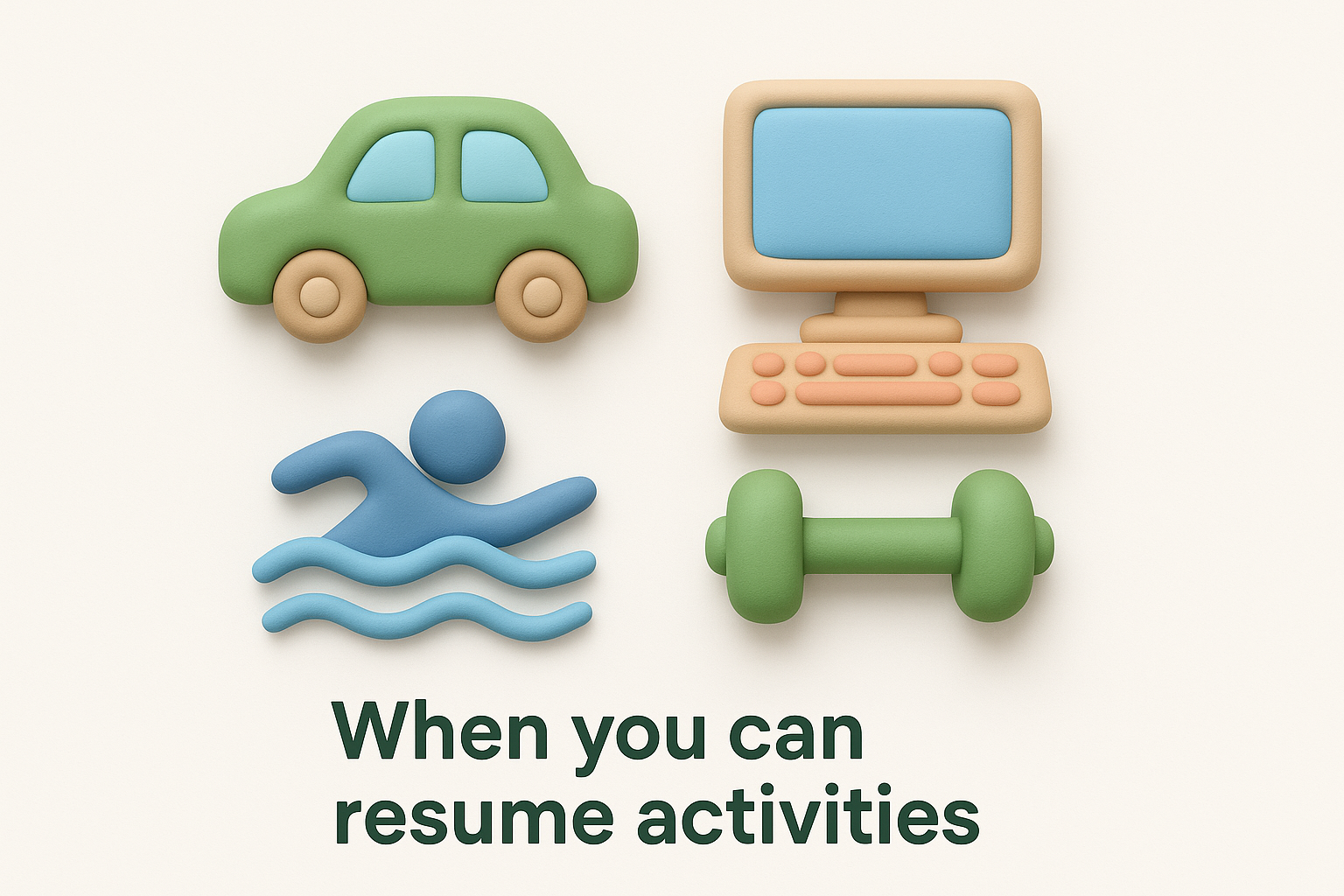
- Driving: cleared by your surgeon, usually within 24 to 48 hours for LASIK
- Screen use: resume gently after the first day, with regular breaks
- Swimming and contact sports: avoid for four weeks minimum
- Gym and light exercise: typically safe after one week
Long-term vision changes and warning signs
For most people, life after laser eye surgery delivers stable, clear vision for many years. Your prescription should remain consistent once your cornea has fully settled, typically within three to six months of surgery. Some patients notice minor fluctuations in vision quality during the first year, particularly in low-light conditions, but these generally resolve as your eyes continue to adapt.
What long-term results look like
Vision stability is the norm after laser eye surgery, with the majority of patients maintaining their corrected sight for decades. Over time, your eyes may still undergo age-related changes such as presbyopia, which makes reading up close more difficult and affects most adults after their mid-forties regardless of whether they had laser surgery. This is a natural part of ageing and is unrelated to your procedure.
Warning signs to take seriously
Some symptoms need prompt attention from your surgeon. Do not ignore new or worsening symptoms after surgery, as early detection leads to better outcomes. Contact your surgeon if you notice any of the following:
- Sudden or significant vision loss at any point after surgery
- Increased light sensitivity combined with redness or pain
- New floaters or flashes of light in your visual field
- Distorted or double vision that appears without warning
If you notice sudden changes to your vision after surgery, contact your eye surgeon the same day rather than waiting for a routine appointment.
What to do next
Life after laser eye surgery is straightforward when you go in with the right information and the right surgeon behind you. Recovery is manageable, the rules are clear, and the long-term payoff in visual freedom is significant for the vast majority of patients. The key is choosing a surgeon with genuine expertise in your specific procedure and a commitment to supporting you through every stage, from your first consultation through to your follow-up appointments months later.
At Bright Sight Eye Specialists in Randwick, Dr Capucine Odouard brings specialist training in LASIK, PRK, and SMILE, combined with a patient-centred approach built around your individual goals and lifestyle. She takes the time to explain your options clearly and ensures you know exactly what to expect before and after surgery. If you are ready to take the next step, book a consultation with Dr Odouard to discuss whether laser vision correction is right for you.