


LASIK is one of the most commonly performed elective surgeries worldwide, with a strong track record of helping people ditch their glasses and contact lenses for good. But no surgical procedure is without risk, and if you’re considering it, you deserve a straight answer about LASIK eye surgery risks before you commit. Understanding what can go wrong, how likely it is, and what modern techniques do to minimise complications is a critical part of making an informed decision.
Most people who have LASIK achieve excellent vision outcomes. Still, side effects like dry eyes, glare, and halos do occur, and in rare cases, more serious complications can affect your results. At Bright Sight Eye Specialists in Randwick, Dr Capucine Odouard performs refractive laser surgery, including LASIK, PRK, and SMILE, and takes the time to walk every patient through the benefits and the risks so there are no surprises on the day.
This article covers the known side effects, potential complications, and long-term safety profile of LASIK surgery. We’ll explain what the research actually shows, who may not be a suitable candidate, and how to reduce your risk of a poor outcome, so you can weigh up whether LASIK is the right choice for your eyes.
Why understanding LASIK risks matters
LASIK is an elective procedure, which means you choose to have it. That distinction matters because it changes the risk-benefit calculation entirely. You are not treating a disease or preventing blindness; you are trading the inconvenience of glasses or contact lenses for a surgical outcome that carries its own set of potential complications. Going in with clear expectations about LASIK eye surgery risks is what separates a patient who feels satisfied with their result from one who feels let down, even when the surgical outcome is technically successful.
The strongest predictor of patient satisfaction after LASIK is not the prescription result, but whether the patient felt fully informed beforehand.
What the data actually tells you
Published research consistently shows that serious, vision-threatening complications from LASIK are uncommon, with large reviews reporting significant complications in fewer than 1% of procedures. However, milder side effects such as dry eyes, glare, and halos affect a much larger proportion of patients in the weeks and months following surgery. Understanding the difference between temporary side effects and permanent complications helps you set realistic expectations rather than assume every outcome after LASIK is avoidable.
Why your individual circumstances change the picture
Population-level statistics only tell part of the story. Your corneal thickness, pupil size, prescription strength, and eye health history each influence how likely you are to experience a poor outcome. Someone with thin corneas, a high prescription, or a history of dry eye disease carries a meaningfully different risk profile than the average patient in a published study. Knowing your personal risk factors is not about talking yourself out of surgery; it is about making sure the procedure is genuinely appropriate for your eyes, and that your surgeon has assessed those factors carefully before recommending it.
Common side effects and what they feel like
When you research lasik eye surgery risks, dry eyes consistently top the list. After the laser reshapes your cornea, the surface nerves are temporarily disrupted, which reduces tear film production and surface sensitivity. This typically feels like grittiness, burning, or a persistent foreign body sensation, and it peaks in the first few weeks before gradually improving over three to six months with regular preservative-free lubricating drops.

For most patients, dry eyes after LASIK are a short-term inconvenience rather than a lasting problem.
What to expect with visual symptoms
Glare, halos, and starbursts around lights are common in the weeks following surgery, particularly at night. You may notice rings around car headlights or difficulty in high-contrast situations in low light. These occur because your cornea is still healing and diffracting light slightly differently than usual. Most visual disturbances settle considerably by the three-month mark:
- Halos and glare: most noticeable in the first four to eight weeks
- Starbursts around lights: common at night, typically fade within three months
- Fluctuating vision: normal while the cornea stabilises, usually resolves by six weeks
Each of these effects reflects normal tissue healing rather than a sign that something has gone wrong.
Rare complications and long-term concerns
Beyond the common side effects, a small number of patients encounter complications that are more serious and harder to resolve. When evaluating lasik eye surgery risks, it is worth understanding these rarer outcomes so you can ask your surgeon the right questions before going ahead.
Corneal ectasia
Corneal ectasia is the most serious structural complication associated with LASIK. It occurs when the cornea weakens and progressively bulges forward after laser treatment removes tissue, distorting vision in ways that glasses cannot correct. Your risk increases significantly if your corneas are naturally thin, or if you have undetected early keratoconus before surgery.
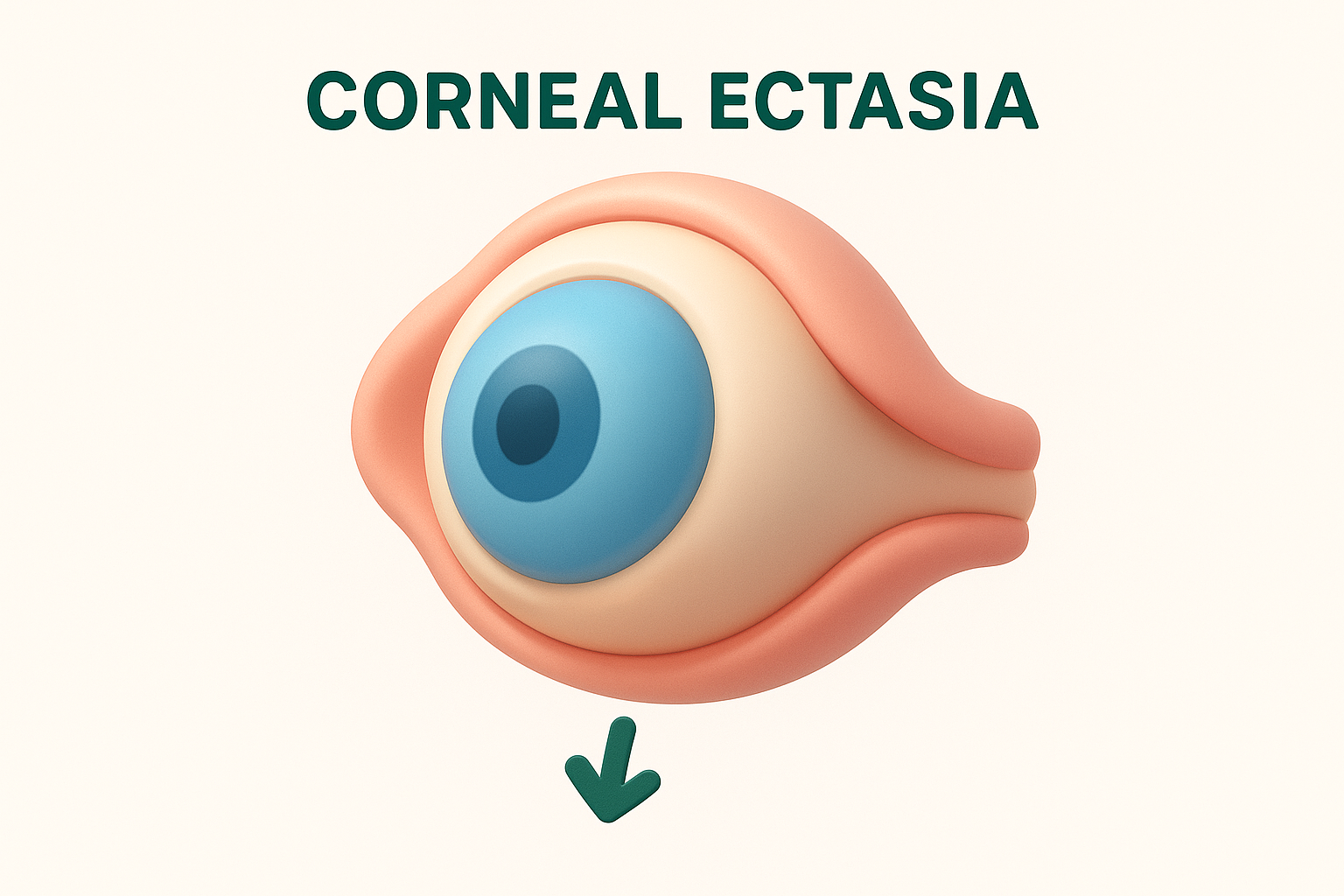
A thorough corneal mapping scan before your procedure is the most important step your surgeon can take to identify ectasia risk.
Treatment options include rigid contact lenses or corneal cross-linking, which stiffens the corneal tissue to halt progression. Ectasia affects fewer than 0.05% of patients who are screened properly, which underscores why rigorous pre-operative assessment matters so much.
Regression and long-term vision change
Some patients notice their corrected vision gradually shifts back toward their original prescription over several years, particularly those who started with a high prescription. Your eyes also continue to change naturally with age, meaning reading glasses may still become necessary after forty regardless of your LASIK result.
Who faces higher risk and who should avoid LASIK
Not everyone is a suitable candidate, and recognising your specific risk factors is central to evaluating lasik eye surgery risks honestly. Certain anatomical features, systemic conditions, and lifestyle factors meaningfully increase the likelihood of a complication or an unsatisfactory result.
Conditions that raise your risk profile
If you have thin or irregularly shaped corneas, your surgeon will likely recommend against LASIK entirely, since removing tissue from an already compromised corneal surface increases the chance of ectasia. Patients with uncontrolled dry eye disease also face a higher likelihood of severe post-operative discomfort and a prolonged recovery period.
Patients with active autoimmune conditions or those taking immunosuppressive medications heal less predictably after laser surgery.
When LASIK is not appropriate
Some situations make LASIK unsuitable regardless of how much you want the procedure. A prescription that is still changing year to year means the result may shift again within months of surgery. Pregnancy and breastfeeding alter your corneal shape and tear film, making pre-operative measurements unreliable. Conditions like keratoconus, glaucoma, or a history of herpetic eye disease also place LASIK outside safe limits. In these cases, your surgeon may discuss alternative procedures such as PRK or refractive lens exchange as more appropriate options for your eyes.
How to reduce risk before and after surgery
Managing lasik eye surgery risks starts well before you walk into the operating theatre. The single most effective step you can take is choosing a surgeon who performs thorough pre-operative screening, including corneal topography, pachymetry, and a detailed dry eye assessment. These tests exist to identify the anatomical features that raise your risk profile, and skipping or rushing them is where preventable complications most often begin.
Before your procedure
Your role in the pre-operative process matters directly. Stop wearing soft contact lenses at least two weeks before your assessment, since lenses alter your corneal shape and can lead to inaccurate measurements. Tell your surgeon about any history of dry eye, autoimmune conditions, or medications you take regularly, because complete honesty in your consultation directly affects the accuracy of your risk assessment.
The quality of your pre-operative workup is the single biggest factor within your control.
After surgery
Following your surgeon’s post-operative instructions reduces your risk of complications significantly. Use preservative-free lubricating drops as directed to protect your healing corneal surface. Key habits to maintain in the weeks after surgery include:
- Avoid rubbing your eyes for at least one month
- Wear sunglasses outdoors to protect healing tissue
- Attend all scheduled follow-up appointments so your surgeon can catch early signs of regression or surface issues promptly

Making the decision with confidence
Weighing up lasik eye surgery risks comes down to one thing: knowing your own eyes well enough to make an honest comparison. The data supports LASIK as a safe and effective procedure for appropriately selected patients, and the vast majority of people who go through proper screening achieve stable, satisfying results. The risks covered in this article are real, but most are either temporary or preventable with good candidate selection and attentive post-operative care.
Your next step is a thorough consultation with a surgeon who will assess your corneas, your tear film, and your prescription history before recommending anything. That conversation should feel informative rather than pressured. At Bright Sight Eye Specialists in Randwick, Dr Capucine Odouard brings both the clinical expertise and the patient-centred approach to make sure you fully understand your options before you decide. Book a consultation with Dr Odouard to get a clear picture of what LASIK could mean for your vision.