


If you’re over 40 and find yourself holding your phone at arm’s length or reaching for reading glasses every few minutes, you’re dealing with presbyopia, and you’re far from alone. It’s one of the most common age-related vision changes, affecting virtually everyone at some point. The good news is that laser eye surgery for presbyopia has advanced significantly, and there are now several proven procedures that can reduce or eliminate your dependence on reading glasses.
But not every procedure suits every person. Factors like your age, prescription, eye health, and daily visual demands all play a role in determining the right approach. Understanding what’s actually available, and what each option involves, puts you in a much stronger position to make an informed decision with your surgeon. At Bright Sight Eye Specialists in Randwick, Dr Capucine Odouard offers laser vision correction tailored to each patient’s lifestyle and goals, drawing on her advanced training at Sydney Eye Hospital and internationally.
This article breaks down the main laser surgery options for presbyopia, explains how each one works, and helps you understand who they’re best suited for. Whether you’ve just started noticing near vision changes or you’ve been managing them for years, you’ll find practical, straightforward guidance on what to consider next.
Why presbyopia happens and what surgery can change
Presbyopia is not a disease or a sign that something has gone wrong. It’s a natural part of ageing that happens to virtually everyone, usually becoming noticeable in the early to mid-forties. Understanding why it occurs helps clarify what surgery can realistically change, and what it cannot.
The mechanics behind the change
Your eye contains a crystalline lens sitting just behind the iris. In younger eyes, this lens is soft and flexible, changing shape rapidly to focus on objects at different distances. As you age, the lens gradually stiffens, losing its ability to shift focus. This stiffening process, driven by changes in the lens proteins and the surrounding ciliary muscle, is what causes the blurry near vision most people associate with presbyopia.
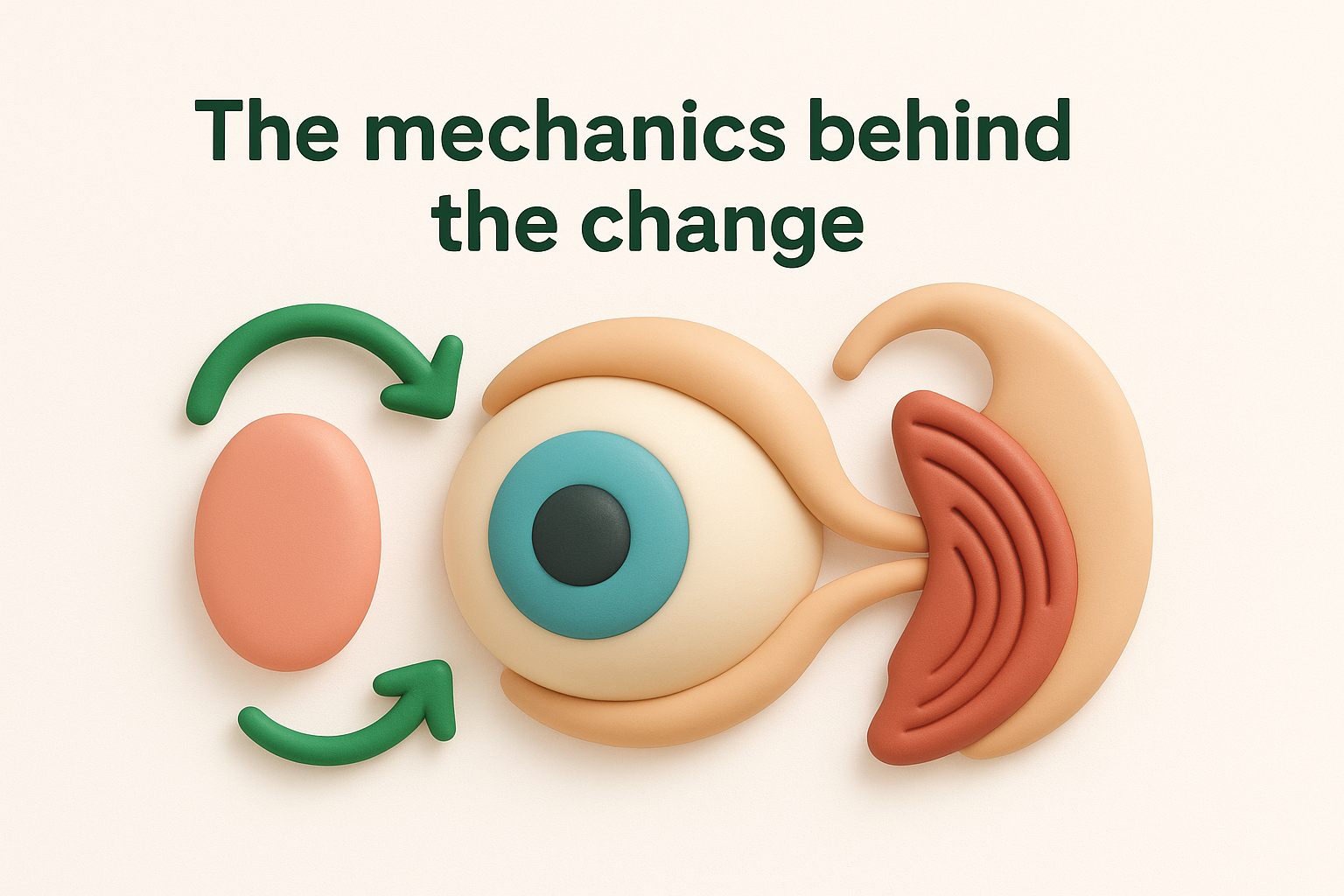
Unlike short-sightedness or astigmatism, presbyopia is not a focusing error on the surface of the eye but a structural change within the eye’s internal lens.
By your mid-forties, the lens has typically lost enough flexibility that reading small print, looking at your phone, or threading a needle becomes noticeably harder. It progresses slowly through your fifties and tends to stabilise around 60 to 65.
What laser surgery can and cannot change
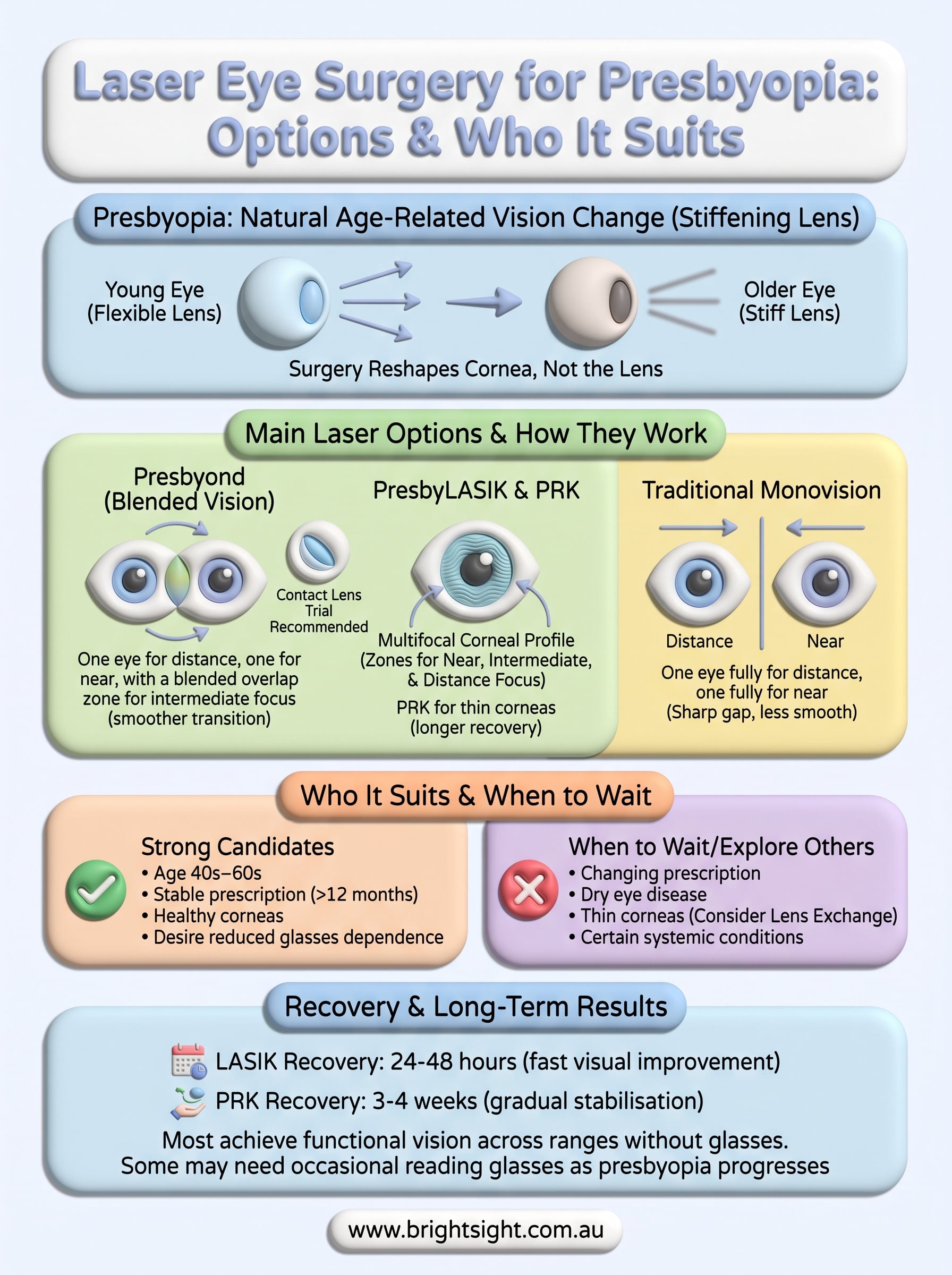
Laser eye surgery for presbyopia works on the cornea, the clear outer surface of the eye, rather than the lens itself. By reshaping the cornea, a surgeon can alter how light enters the eye and reaches the retina, creating a customised focus strategy that compensates for the ageing lens. This is a meaningful distinction because no laser procedure reverses the stiffening of the lens; instead, surgery shifts the way your visual system processes different distances.
What surgery can genuinely change is your dependence on glasses or contact lenses for near, intermediate, or distance tasks, sometimes all three at once, depending on the approach your surgeon recommends.
How Presbyond and other laser options work
Laser eye surgery for presbyopia reshapes your cornea using precise, computer-guided laser energy. The goal is to create a customised focus profile across your eye that compensates for the lens’s lost flexibility, allowing you to see clearly at multiple distances without relying on glasses.
Presbyond laser blended vision
Presbyond, developed by Zeiss, is currently one of the most widely used approaches. It uses LASIK technology to treat each eye differently: one eye is optimised for distance, while the other is extended slightly toward near vision. Crucially, the treatment also expands the depth of focus in each eye, creating an overlap zone where both eyes contribute. This overlap reduces the visual conflict many people experience with older monovision techniques.
Presbyond is designed so the brain learns to combine the input from both eyes smoothly, which is why most patients adapt to it faster than traditional monovision.
PresbyLASIK and PRK-based options
PresbyLASIK uses a multifocal corneal profile, reshaping the cornea itself into distinct zones for near and distance focus, similar in concept to multifocal contact lenses. PRK-based versions of this approach suit patients whose corneal thickness rules out standard LASIK. Both options are established treatments with solid long-term outcome data, though Presbyond currently has broader adoption in Australia.
How monovision compares to blended vision approaches
Traditional monovision and blended vision both involve correcting each eye differently, but the way they handle near-distance balance is quite different. Understanding this distinction helps you have a more informed conversation with your surgeon about which approach fits your lifestyle.
Traditional monovision
With traditional monovision, surgeons correct one eye fully for distance vision and the other fully for near vision, leaving a sharp gap between the two. Your brain does adapt over time, but many patients find the transition uncomfortable, particularly with tasks like driving at night or judging depth accurately.
The main drawback of traditional monovision is that neither eye has a true mid-range focus, which can make intermediate distances, like a computer screen, frustratingly unclear.
Why blended vision suits more patients
Blended vision approaches, including Presbyond, deliberately expand each eye’s depth of focus rather than creating two hard focal points. This produces an overlapping zone in the middle distance that your visual system can draw on naturally. The result is a smoother transition between near and far, with fewer complaints about image quality or eye strain.
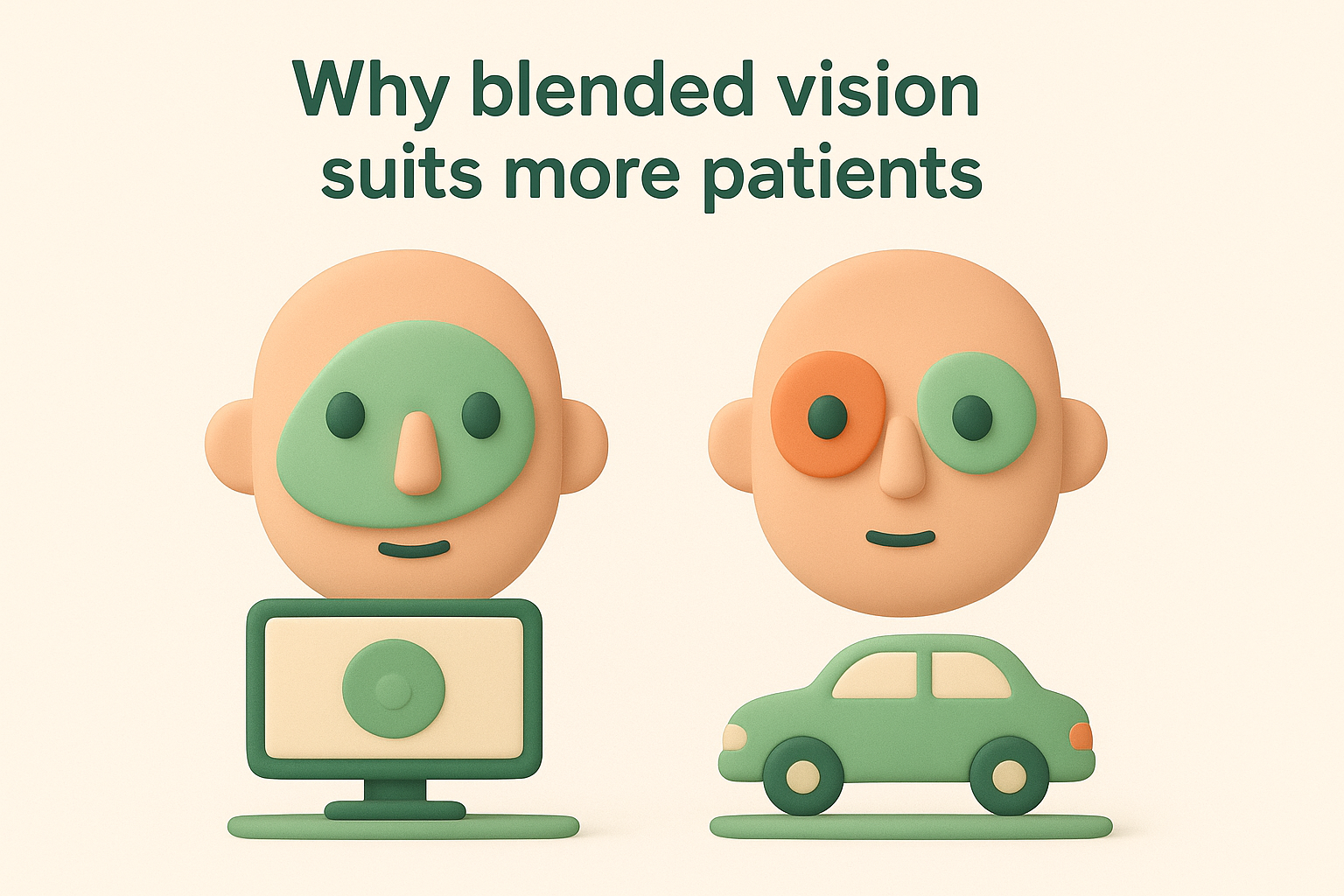
Your surgeon will often test your tolerance with contact lenses before any surgery, giving you a real sense of how your brain handles the difference. This trial step is standard practice and genuinely useful before committing to laser eye surgery for presbyopia.
Who laser eye surgery for presbyopia suits and who should wait
Laser eye surgery for presbyopia works well for a broad range of patients, but it’s not the right fit for everyone. Your surgeon will assess several key factors before recommending a procedure, and being honest about your visual needs and general health makes that conversation far more productive.
Strong candidates for treatment
You’re likely a good candidate if you’re in your forties to early sixties, have a stable prescription for at least 12 months, and have healthy corneas with sufficient thickness for laser reshaping. People with mild to moderate presbyopia, with or without an existing distance prescription, tend to see the most consistent results. Lifestyle matters too: those who want to reduce dependence on reading glasses for work, driving, or general activity are well-suited.
The earlier in the presbyopia progression you have surgery, the more flexibility your surgeon has in designing the treatment to match your visual demands.
When to wait or explore other options
Some patients are better served by waiting or choosing a different approach. If your prescription is still changing, operating too soon can produce results that don’t last. Patients with dry eye disease, thin corneas, or certain systemic conditions may find that lens-based surgery, such as refractive lens exchange, is a safer and more effective solution than laser eye surgery for presbyopia.
What to expect for safety, recovery and results
Laser eye surgery for presbyopia has a strong safety record when performed on suitable candidates by an experienced surgeon. Serious complications are uncommon, and most patients tolerate the procedure well with minimal downtime. Understanding the typical recovery process and what outcomes are realistic sets you up for a more confident experience from the start.
Safety and side effects
The most common side effects in the early weeks include dry eyes, halos, and mild glare around lights, particularly at night. These typically resolve within one to three months as your eyes stabilise. Your surgeon will assess your individual risk factors, including corneal thickness and tear function, before recommending which approach is appropriate for you.
Most patients find that temporary visual disturbances improve significantly by the three-month mark after surgery.
Recovery and long-term results
Recovery is generally fast with LASIK-based approaches, with most patients noticing clearer vision within 24 to 48 hours. PRK takes longer, with vision stabilising fully over three to four weeks. Plan for a few days of reduced screen time and avoid swimming or contact sport during the initial healing period.
Long-term, the majority of treated patients achieve functional vision across near, intermediate, and distance ranges without glasses. Some may benefit from a minor enhancement or find they need occasional reading glasses for very fine print as presbyopia continues to progress naturally with age.
Key takeaways
Presbyopia affects almost everyone from their forties onward, but laser eye surgery for presbyopia gives you real options to reduce or remove your dependence on reading glasses. Procedures like Presbyond and PresbyLASIK work by reshaping the cornea to create a customised focus strategy, compensating for the stiffening lens without reversing the underlying ageing process.
Blended vision approaches produce smoother results for most patients than traditional monovision, and a contact lens trial before surgery helps confirm your brain adapts well. Strong candidates tend to have a stable prescription, healthy corneas, and clear goals around their daily vision needs.
Recovery is straightforward for most people, with LASIK-based procedures offering fast visual improvement and side effects that typically settle within a few months. If your corneas or eye health make laser surgery unsuitable, lens-based alternatives are worth discussing with your surgeon.
To find out which option suits you, book a consultation with Dr Capucine Odouard at Bright Sight Eye Specialists in Randwick.