


Your vision has clouded again months or years after cataract surgery. The lens implant itself is fine, but the thin capsule holding it in place has become opaque. This condition is called posterior capsule opacification or PCO. Laser capsulotomy is the quick outpatient procedure that fixes it. A specialist uses a YAG laser to create a small opening in the cloudy capsule, letting light pass through clearly again.
This guide covers what you need to know about laser capsulotomy treatment. You’ll learn why the procedure becomes necessary, how to prepare for your appointment, what happens during the laser treatment, and what recovery looks like. We’ll also explain the potential risks and warning signs to watch for, plus what you can expect to pay in Australia. Most patients notice clearer vision within hours, and the treatment takes less than 10 minutes.
Why laser capsulotomy is needed
The natural lens capsule that holds your intraocular lens implant in place can become cloudy over time. This condition is called posterior capsule opacification or PCO, and it’s the most common complication following cataract surgery. The cloudiness develops on the back surface of the capsule, blocking light from reaching your retina properly. PCO can occur anywhere from a few weeks to several years after your original surgery, affecting between 20% to 40% of patients.
What causes the capsule to cloud
Your body’s natural healing response triggers cells to grow on the capsule surface after cataract surgery. These lens epithelial cells multiply and migrate across the capsule, creating a film that gradually thickens and becomes opaque. The process is painless and happens slowly, which is why you might not notice changes immediately. Your lens implant remains clear throughout this process, so laser capsulotomy targets only the cloudy capsule tissue around it.

Common symptoms you might experience
You’ll notice your vision becoming progressively blurred or hazy, similar to how it felt before your original cataract surgery. Spectacles won’t improve this cloudiness because the problem sits behind your lens implant. Other symptoms include increased glare around lights, difficulty reading fine print, and colours appearing less vivid than they did immediately after your cataract procedure.
The capsule will not become cloudy again after laser capsulotomy treatment, making this a permanent solution.
How to prepare for YAG laser capsulotomy
Preparing for laser capsulotomy requires minimal effort on your part. The procedure is done in your eye specialist’s office and doesn’t need the extensive preparation that your original cataract surgery required. Your ophthalmologist will schedule you for an outpatient appointment, and you’ll be ready to go home shortly after treatment.
Before your appointment
You should arrange transport home because the eye drops used during treatment will temporarily blur your vision. Most specialists recommend having someone drive you after the procedure, though some patients feel comfortable using public transport. Bring your Medicare card and private health insurance details if applicable, as you’ll need these for billing purposes.
On the day of treatment
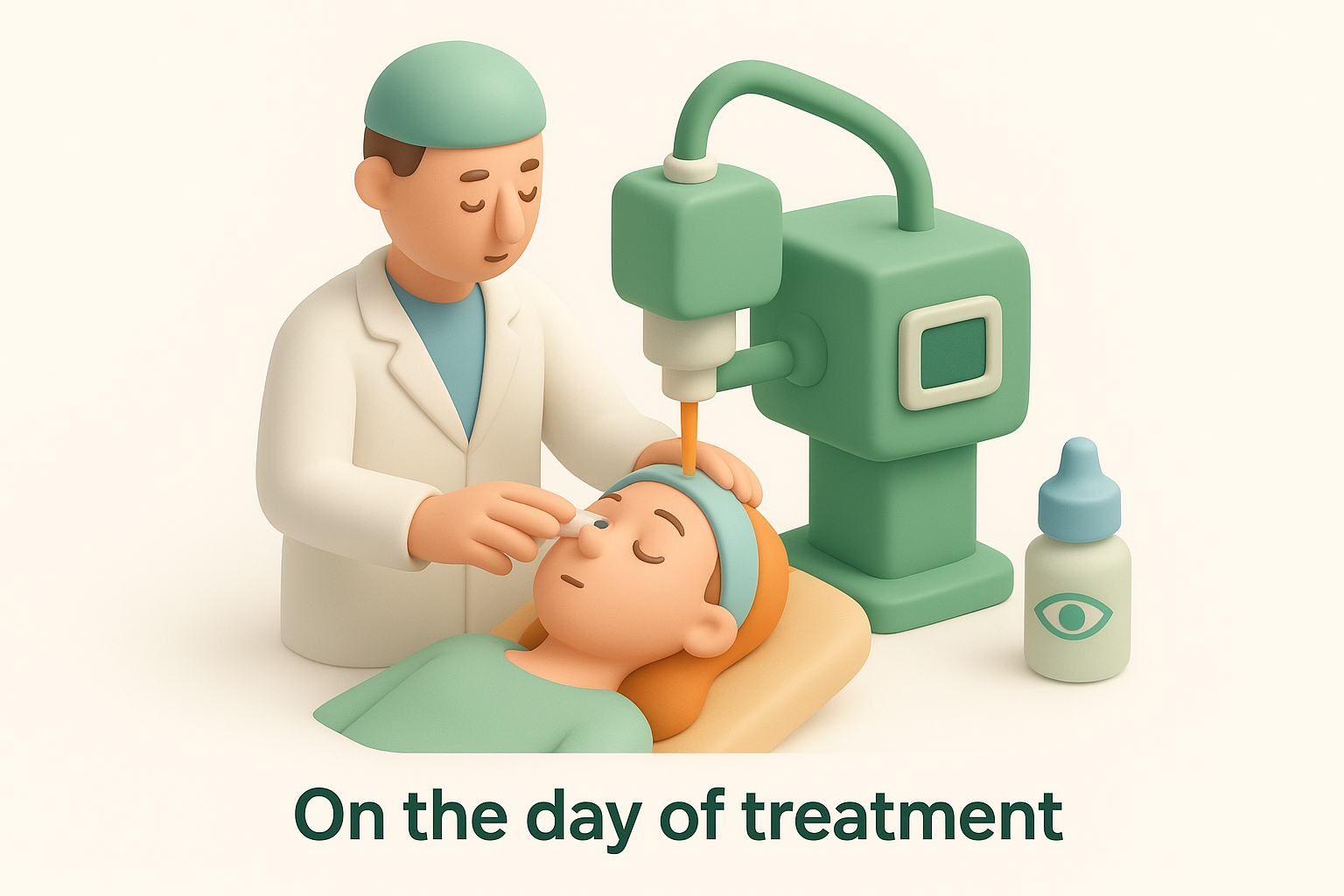
Your eye specialist will give you numbing eye drops to prevent any discomfort during the procedure. They’ll also use dilating drops to widen your pupil, making it easier to target the laser precisely. These drops take a few minutes to work, after which you’ll be ready for the actual laser treatment. The entire visit typically lasts less than 30 minutes, including preparation and post-treatment checks.
What happens during YAG laser treatment
The procedure takes place in a standard examination chair similar to what you’ve experienced during routine eye appointments. Your ophthalmologist positions a specialised laser machine directly in front of you, and you’ll rest your chin on a support while looking straight ahead at a fixed point. The entire process takes less than 10 minutes from start to finish, and you remain awake throughout.

Setting up the laser
Your specialist programs the laser to fire in a precise pattern that targets only the cloudy capsule behind your lens implant. Some ophthalmologists use a special contact lens placed gently against your eye’s surface to help focus the beam accurately. If they use this lens, they’ll apply lubricating gel first so you won’t feel any friction. The numbing drops ensure you experience no pain, though you might notice slight pressure from the contact lens touching your eye.
What you’ll notice during treatment
The YAG laser produces invisible pulses of energy that cut through the cloudy tissue. You won’t see the beam itself because it operates at a frequency beyond human vision. What you will notice is a clicking or popping sound as the laser fires, along with brief flashes of colour or light in your visual field. These visual effects are completely normal and disappear within minutes after treatment ends. The laser capsulotomy itself typically involves 20 to 40 individual laser pulses, each lasting only a fraction of a second.
The laser’s frequency is precisely tuned to affect only the capsule tissue without damaging your lens implant or other eye structures.
Recovery, risks and warning signs
Your vision clears up within hours of having laser capsulotomy, and most patients notice significant improvement by the next day. The procedure causes minimal disruption to your daily routine, though you should avoid driving immediately after treatment because the dilating drops blur your vision temporarily. Your specialist will check your vision and eye pressure about 10 minutes after the laser treatment finishes, then schedule a follow-up appointment for three to four weeks later.
What to expect after treatment
You might notice small floaters appearing in your vision shortly after the procedure. These look like tiny black or translucent dots drifting across your field of view, and they typically disappear within a few days. Your eye specialist may prescribe anti-inflammatory eye drops to use for several days following treatment, though many patients don’t require any medication at all. Most people return to normal activities the same day, including reading, watching television, and using computers.
Potential complications
Laser capsulotomy carries minimal risk when performed by an experienced ophthalmologist. The most serious potential complication is retinal detachment, though this occurs in less than 2% of cases. Other rare complications include increased eye pressure, swelling at the back of the eye (macular oedema), or damage to the lens implant. Your specialist uses carefully calibrated laser settings to minimise these risks while effectively treating the cloudy capsule.
Research shows that between 83% and 96% of patients experience improved vision after laser capsulotomy treatment.
When to seek emergency care
Contact your eye specialist immediately if you experience sudden flashes of light or see a large number of new floaters appearing quickly. A dark curtain or shadow moving across your vision signals potential retinal detachment, which requires urgent medical attention. Similarly, sudden vision loss, persistent eye pain, or significant blurring that worsens rather than improves should prompt an immediate call to your ophthalmologist. These symptoms are rare but need prompt assessment to prevent permanent vision loss.
Costs of laser capsulotomy in Australia
Laser capsulotomy is covered under Medicare in Australia, with the procedure listed as MBS Item 42788. Medicare provides a rebate for this treatment, though the amount you pay out of pocket depends on whether you have private health insurance and which ophthalmologist performs the procedure. Most patients find the cost significantly lower than their original cataract surgery.
Medicare and private health coverage
Medicare covers laser capsulotomy as a medically necessary procedure when your vision has deteriorated due to posterior capsule opacification. The rebate applies to a maximum of two treatments per eye over a two-year period, which covers virtually all cases since the procedure rarely needs repeating. Private health insurance with hospital or extras cover often reduces your out-of-pocket costs further, potentially down to zero if you attend a practice with no-gap arrangements for insured patients.
Out-of-pocket expenses
Your final cost varies based on your specialist’s fees and your insurance status. Fully insured patients at practices with no-gap billing typically pay nothing, while those without insurance might pay between $300 and $600 per eye after Medicare rebates. Some ophthalmologists charge higher fees than the Medicare schedule rate, creating a gap payment even for insured patients.
The MBS restriction allows up to two treatments per eye in two years, though most patients only need one treatment as the capsule doesn’t become cloudy again.
Contact your ophthalmologist’s office before your appointment to get an accurate quote for your specific situation.

Moving forward with treatment
Laser capsulotomy offers a permanent solution to cloudy vision caused by posterior capsule opacification. The procedure takes less than 10 minutes, requires minimal preparation, and most patients notice clearer vision within 24 hours. Your ophthalmologist will assess whether you need treatment based on how the cloudiness affects your daily activities and vision quality.
If you’re experiencing cloudy vision after cataract surgery, Dr Rahul Dubey at Bright Sight Eye Specialists can evaluate your condition and discuss whether laser capsulotomy is right for you. Schedule your consultation at Bright Sight Eye Specialists in Randwick to restore your clear vision and take the next step in your eye health journey.