


If you’re considering refractive laser surgery, LASIK, PRK, or SMILE, one of the first questions on your mind is likely "is laser eye surgery permanent?" It’s a fair question, and the short answer is yes: the structural changes made to your cornea during the procedure are permanent. But that doesn’t mean your vision will stay exactly the same for the rest of your life. Natural changes to the eye, particularly as you age, can shift how well you see over time.
At Bright Sight Eye Specialists in Randwick, Dr Capucine Odouard performs refractive laser surgery for patients across Sydney’s Eastern Suburbs who want freedom from glasses and contact lenses. Part of her approach is making sure you understand not just the procedure itself, but what to realistically expect in the years that follow.
This article breaks down how laser eye surgery works, why results are considered permanent, and the factors, like presbyopia and regression, that may affect your vision down the track. Knowing what’s ahead helps you make a confident, well-informed decision about whether laser eye surgery is right for you.
Why people ask if laser eye surgery is permanent
When someone considers refractive laser surgery, the stakes feel high. You’re talking about your vision, a procedure you can’t undo, and a significant financial investment. So it makes complete sense that one of the most searched questions before booking a consultation is whether laser eye surgery is permanent. People want to know if they’re making a decision that will serve them for life, or if they’ll be back in glasses within a decade.
The cost makes people want certainty
Laser eye surgery is not a small expense. In Australia, the out-of-pocket cost for procedures like LASIK, PRK, or SMILE can range from a few thousand dollars upwards, depending on your prescription and the technology used. When you’re spending that kind of money, you want to know your investment will hold up over time. The question of permanence is really a question about value: will this change how you live for the long term, or is it a temporary fix?
Most patients find that the freedom from glasses and contact lenses far outweighs the upfront cost, especially when the correction remains stable for decades.
For many people, the motivation goes beyond cost. Daily dependence on glasses or contact lenses affects everything from sport and travel to confidence and convenience. That kind of ongoing frustration builds a strong desire for a lasting solution, which makes the promise of permanent vision correction so compelling.
Previous experiences with temporary fixes raise doubt
If you’ve worn glasses since childhood or rotated through various contact lens prescriptions, you already know that vision can change. Your prescription shifted in your teens, maybe again in your twenties, and possibly again after forty. That history makes it reasonable to wonder whether laser surgery is just another adjustment in a long series of corrections.
Understanding what laser surgery actually does to your eye, specifically to the cornea, helps address this doubt directly. The procedure reshapes corneal tissue at a structural level, and that reshaping does not reverse itself. What can change after surgery is not the cornea’s shape but rather how the rest of your eye ages, which is a different matter altogether and one worth understanding before you decide.
How laser eye surgery changes your vision for good
To understand why the answer to is laser eye surgery permanent is yes, you need to look at what the procedure actually does to your eye. Laser surgery works by reshaping the cornea, the clear dome-shaped tissue at the front of your eye that plays a major role in focusing light onto the retina. When that shape is altered with precision, light bends differently, and your vision sharpens.
What happens to your cornea during the procedure
During LASIK, the surgeon creates a thin flap in the outer corneal layer, then uses an excimer laser to remove microscopic amounts of tissue underneath. PRK and SMILE follow different methods of accessing the cornea, but all three procedures achieve the same goal: permanently changing the corneal contour to correct how your eye focuses. The tissue removed during the procedure does not grow back, which is what makes the structural change lasting.
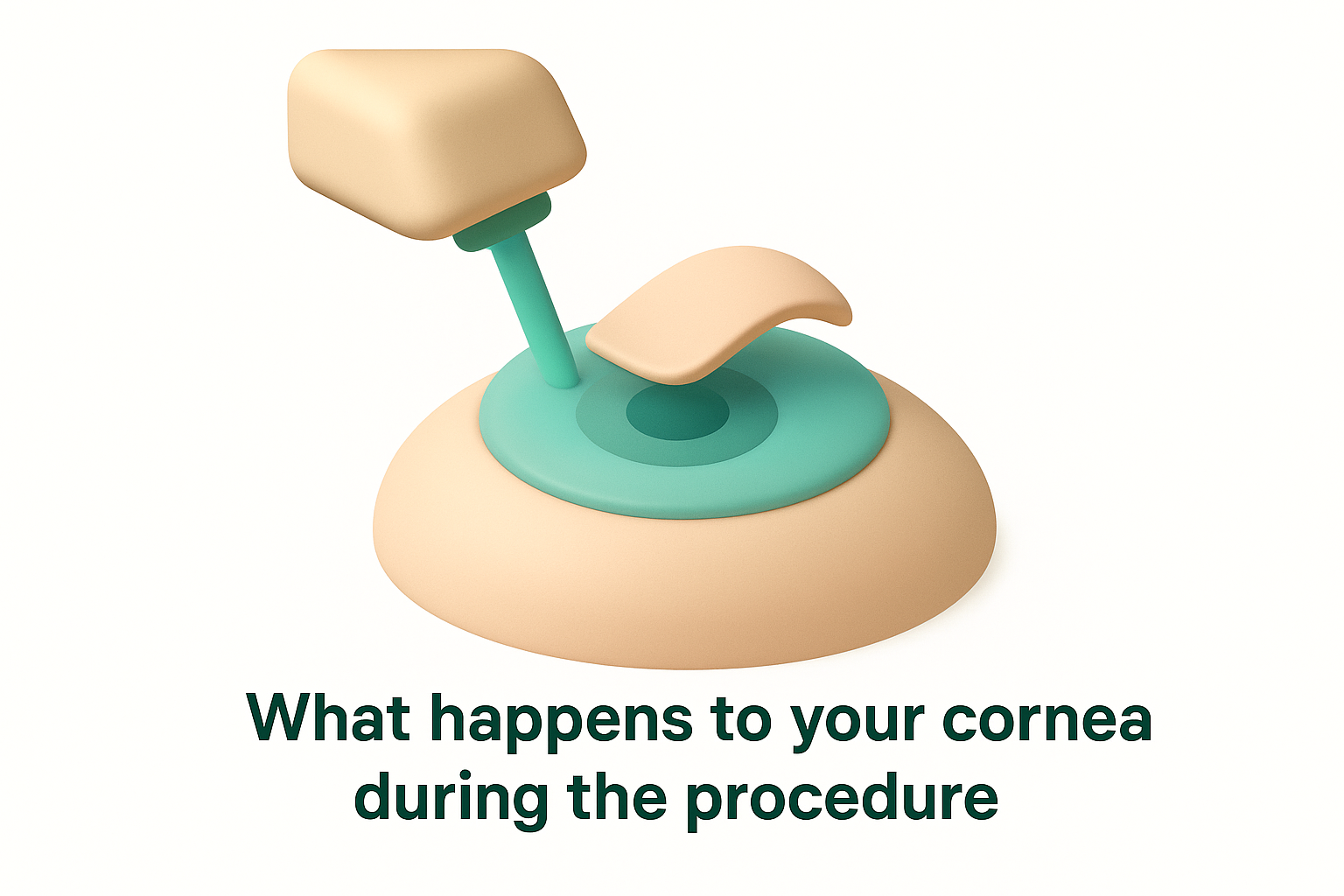
Your cornea heals over the treatment site, but it heals in its new shape, not the original one. That distinction matters, because it means the correction itself is not temporary in the way a prescription lens is.
Why the reshaping is considered permanent
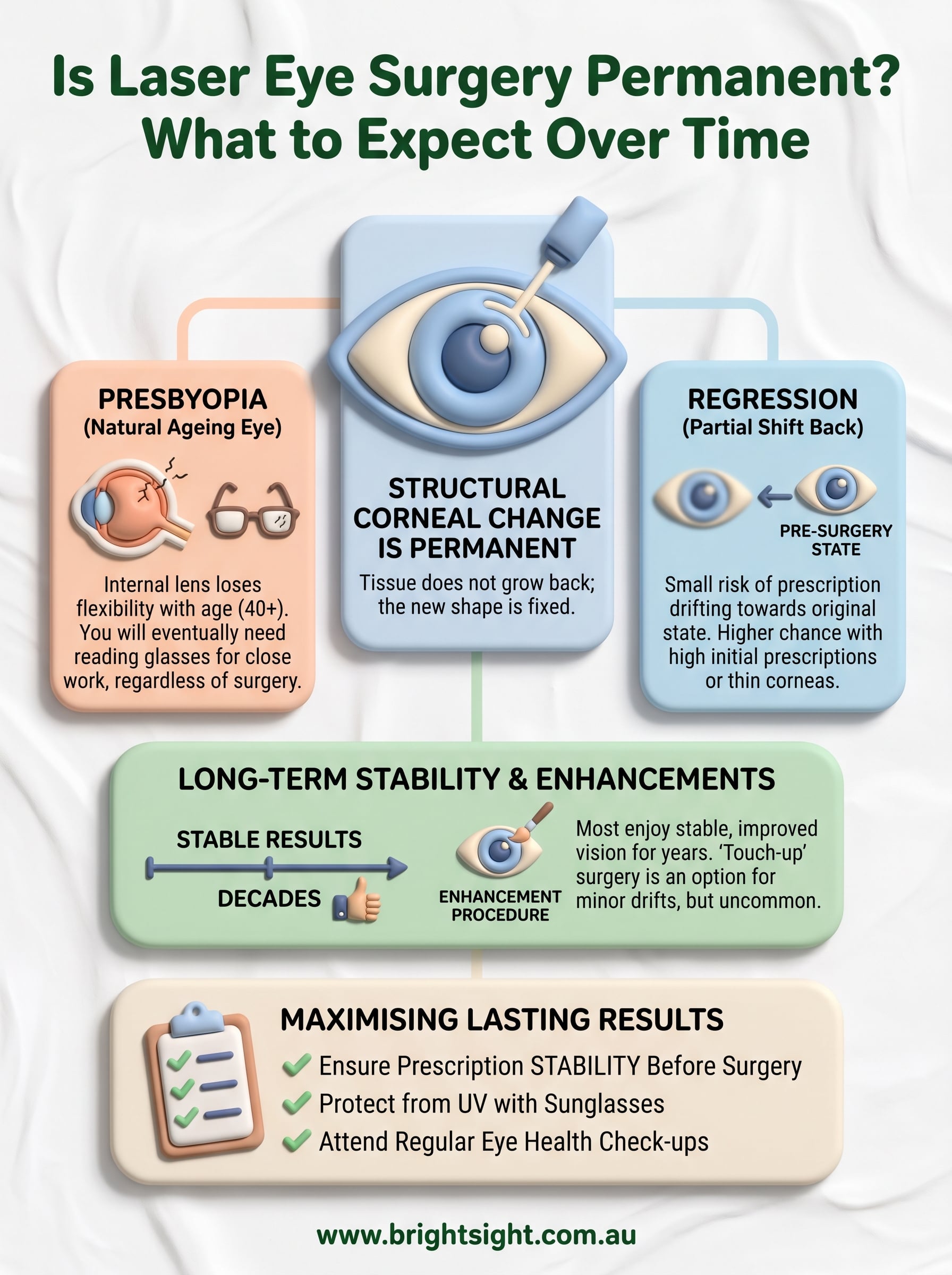
Once your cornea has been reshaped and healed, the change is fixed at a tissue level. No biological process reverses the remodelling that the laser creates. This is why surgeons describe the procedure as a permanent correction rather than a long-term one.
The corneal reshaping from laser surgery is irreversible, which is why choosing an experienced surgeon and undergoing thorough pre-operative assessment matters so much.
Your eligibility for surgery and the precision of the treatment plan both directly influence how well that permanent change serves your vision in the years ahead.
What can change your vision after surgery
Even though the corneal reshaping is permanent, your eye itself continues to age. Understanding what "is laser eye surgery permanent" actually means requires separating two things: the surgical correction and the natural changes that happen to your eye over time. The procedure does not freeze your vision in place; it corrects your eye’s current refractive state at the time of surgery.
Presbyopia and the ageing eye
Presbyopia is the most common change people notice after their forties. It happens because the lens inside your eye gradually loses flexibility, making it harder to focus on close objects. Laser surgery reshapes the cornea, not the lens, so presbyopia develops regardless of whether you have had the procedure.
Presbyopia affects virtually everyone with age, and it will eventually require reading glasses even if your distance vision stays sharp after laser surgery.
You may find your distance vision stays excellent for years while noticing that small print or screens at close range become harder to manage. This is not a failure of the surgery; it is a separate biological process entirely unrelated to your corneal correction.
Regression
A small number of patients experience partial regression, where the eye gradually shifts back toward its original prescription. Your risk of regression is higher if any of the following apply:
- You had a high prescription before surgery
- Your eyes were still changing at the time of the procedure
- You have thinner corneal tissue, which limits how much can be safely corrected
Regression is not universal, but discussing it with your surgeon before the procedure ensures you go in with realistic expectations.
How long results last and who may need enhancement
For the majority of patients, laser eye surgery delivers stable results that last for decades. Studies tracking patients over ten to fifteen years consistently show that most people maintain significantly improved vision without needing any further treatment. Whether is laser eye surgery permanent applies to your individual outcome depends largely on your prescription at the time of surgery, the stability of your eyes beforehand, and how your eyes age over the following years.
How stable are results over the long term
Most patients treated for mild to moderate prescriptions experience very little change in their distance correction over time. The corneal reshaping holds, and the main shift people notice after their forties is presbyopia rather than any reversal of their refractive correction. Your surgeon will assess corneal thickness and prescription stability before your procedure, partly to predict how durable your outcome is likely to be.
Patients who had a stable prescription for at least two years before surgery tend to experience the most consistent long-term results.
Who is most likely to need an enhancement procedure
Enhancement surgery, sometimes called a touch-up, is an option for patients whose vision drifts slightly over time due to regression or minor under-correction. Candidates most likely to need this include people who had high prescriptions originally, those whose corneas showed some residual instability, or patients whose eyes changed during the healing period. Enhancement rates are generally low, often under ten percent over a ten-year period, but your surgeon will discuss your individual risk honestly during your consultation.
How to protect your results and plan ahead
The most effective way to get lasting value from laser eye surgery is to approach the decision carefully before you ever step into an operating theatre. Whether is laser eye surgery permanent for your individual eyes depends significantly on factors your surgeon can identify before the procedure, including prescription stability, corneal thickness, and your age at the time of surgery.
Set yourself up before the procedure
Your surgeon will ask whether your prescription has been stable for at least two years before surgery. If your eyes are still changing, waiting until they settle gives you a much stronger foundation for a durable outcome.
You should also be honest about your lifestyle and visual goals during your consultation. Someone who primarily needs sharp distance vision has different needs from someone who works long hours at a screen, and your surgeon can tailor the treatment plan accordingly.
Rushing into surgery before your prescription has stabilised is one of the most avoidable reasons for needing an enhancement procedure later.
Keep up with your eye health after surgery
After surgery, attending regular eye examinations remains important even when your vision feels sharp. Your ophthalmologist can monitor your cornea and track any gradual shifts in your prescription before they become significant, while also checking for unrelated conditions like early macular changes.
Protecting your eyes from UV exposure by wearing quality sunglasses outdoors also supports long-term corneal and lens health. Planning ahead means treating your eye health as an ongoing priority, not just something to think about in the lead-up to the procedure itself.
What to do next
So, is laser eye surgery permanent? Yes, the corneal reshaping is structural and lasting, but your vision can still shift with age due to presbyopia or, in some cases, minor regression. Understanding the difference between the permanent correction and normal ageing gives you a much clearer picture of what to expect over the years following your procedure.
The best starting point is a thorough consultation with an experienced surgeon who can assess your corneal thickness, prescription stability, and visual goals before making any recommendations. Not everyone is an ideal candidate, and knowing where you stand puts you in a much stronger position to decide.
Dr Capucine Odouard at Bright Sight Eye Specialists consults with patients across Sydney’s Eastern Suburbs and takes the time to walk you through your options honestly. If you are ready to find out whether laser eye surgery suits your eyes, book a consultation with Dr Odouard to take the next step.