


Most people know that drinking enough water matters for general wellbeing, but few consider the direct connection between hydration and eye health. Your eyes depend on a steady supply of fluid to maintain tear production, keep the cornea moist, and flush out debris. When your body runs low on water, your eyes are often among the first to feel it, through dryness, irritation, or even temporary blurring.
At Bright Sight Eye Specialists in Randwick, Dr Rahul Dubey and Dr Capucine Odouard regularly see patients whose eye discomfort traces back to surprisingly simple causes, including inadequate fluid intake. While dehydration alone doesn’t explain every case of dry eye or visual disturbance, it plays a more significant role than most people realise, and it’s one of the easiest factors to address.
This article breaks down how water intake affects your vision and tear film, which dehydration-related symptoms to watch for, and when it’s time to see a specialist. Whether you’re dealing with persistent dry eyes, occasional eye strain, or simply want to look after your vision long-term, understanding what happens when your body lacks adequate hydration is a practical place to start.
What hydration means for your eyes
Your eyes are not self-sufficient organs. They depend on fluid drawn from your body to carry out several basic functions, from lubricating the surface to maintaining the internal pressure that holds their shape. Hydration and eye health are connected through multiple biological systems, which means a drop in your body’s overall fluid levels can affect your eyes in more ways than one.
How your tear film depends on fluid intake
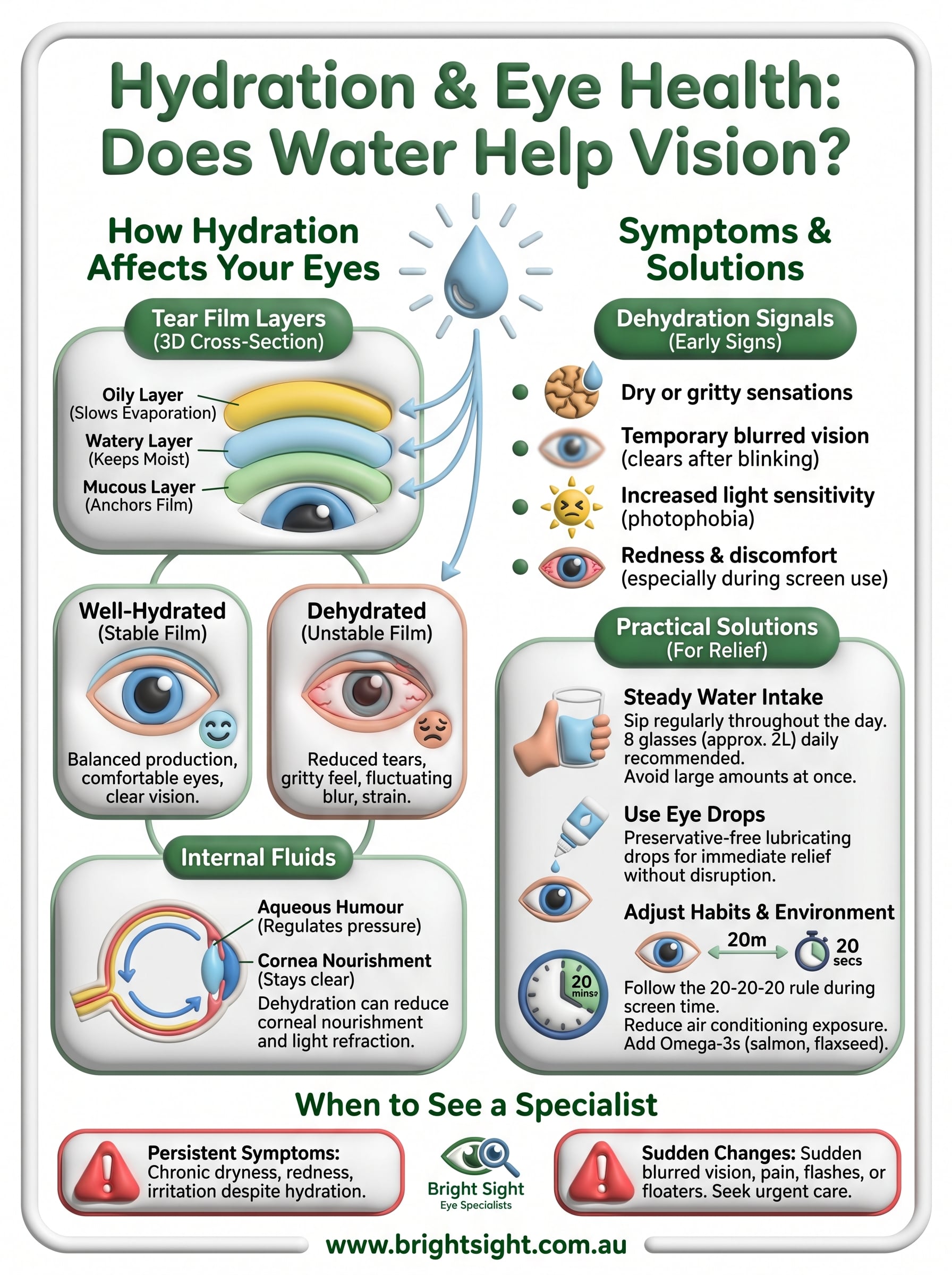
The tear film is a thin, layered coating that covers the surface of your eye with every blink. It has three distinct layers: an oily outer layer that slows evaporation, a watery middle layer that keeps the eye moist, and a mucous inner layer that anchors the film to the eye’s surface. When you are well-hydrated, your lacrimal glands produce enough fluid to maintain this balance and keep the tear film stable.
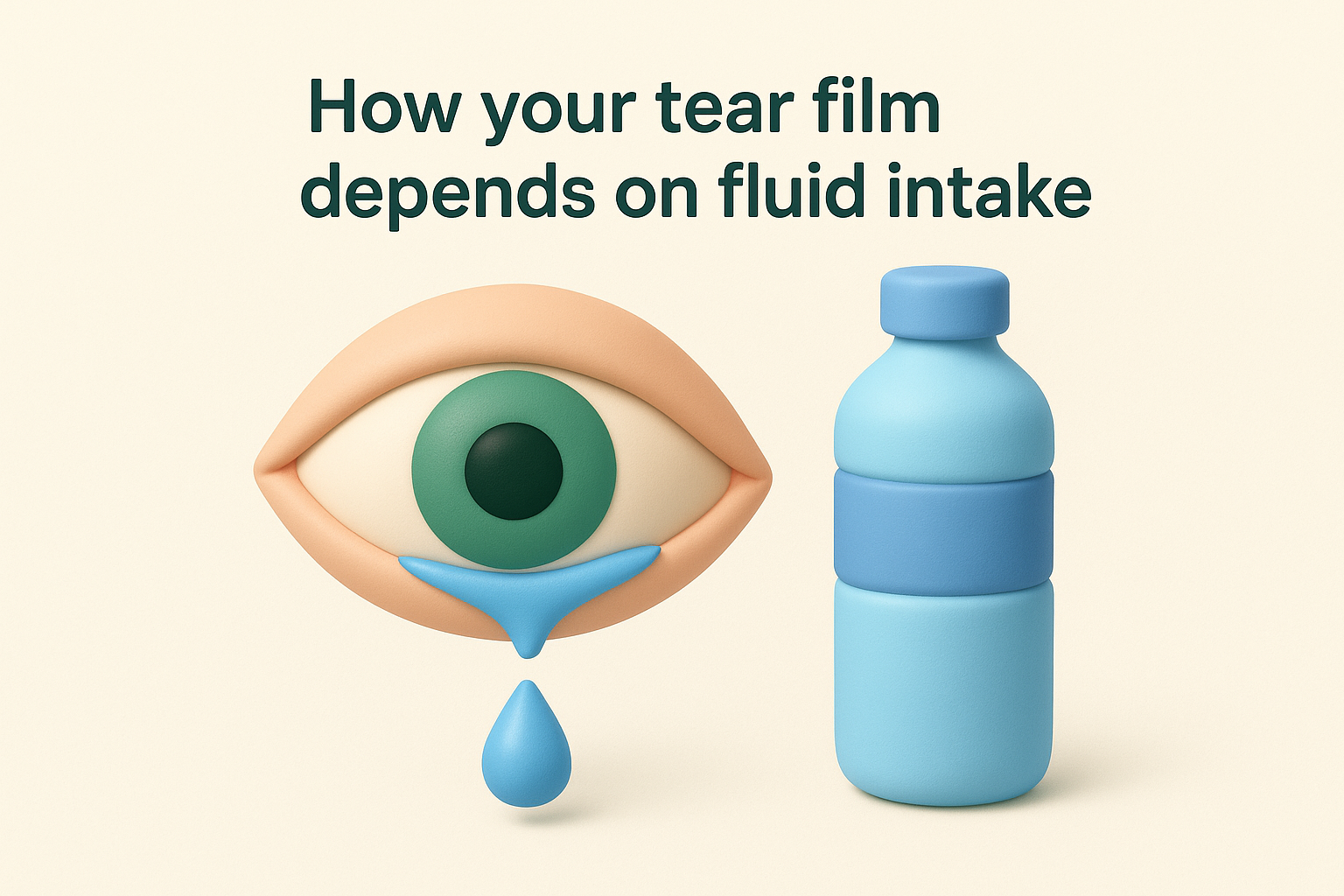
If your fluid intake drops, your lacrimal glands produce fewer tears, which disrupts the tear film and exposes your eye surface to irritation.
When the watery layer thins, your tear film becomes unstable between blinks. You may notice a gritty or scratchy feeling, increased light sensitivity, or eyes that fatigue more quickly during screen use. These are early signs that tear production is under strain.
Why your eye’s internal fluids also matter
Inside your eye sits a clear fluid called aqueous humour, which circulates through the front chamber and regulates internal eye pressure. Your body continuously produces and drains this fluid, and adequate hydration supports that cycle smoothly.
Staying hydrated also helps your cornea remain clear. The cornea has no blood vessels and relies on surrounding fluids for nourishment, so even mild dehydration can reduce its ability to refract light accurately, sometimes causing temporary blurring that clears once your fluid levels recover.
How dehydration shows up in vision and comfort
When your body doesn’t have enough water, your eyes send clear, early signals. Dry or gritty sensations are often the first sign, but dehydration can also affect how clearly and comfortably you see, particularly during long periods of screen use or in air-conditioned environments.
Symptoms linked to low fluid intake
Several common eye complaints connect directly to inadequate fluid intake. Your tear film becomes unstable, which forces you to blink more frequently to rewet the surface. This extra effort can trigger eye strain and headaches, particularly towards the end of the day.
Temporary blurred vision that clears after blinking or resting is often a sign that your tear film has broken down, and improving your hydration and eye health habits can help restore stability.
Your eyes may also feel more sensitive to light or appear red due to irritation of the conjunctiva, the clear membrane covering the white of your eye. In more pronounced cases, reduced tear volume can make contact lens wear uncomfortable or cause lenses to feel like they are sticking to your eye surface. These symptoms don’t always point to dehydration alone, but addressing your fluid intake is a sensible first step before assuming a more complex cause.
How much water helps and what else matters
There’s no single water intake target that works for everyone, but Australian health guidelines generally recommend around 8 glasses (roughly 2 litres) of water per day for adults, with higher amounts needed in heat or during exercise. When it comes to hydration and eye health, consistency matters more than hitting a precise number. Sipping water steadily throughout the day keeps tear production more stable than drinking large amounts in one go.
Other factors that affect your tear film
Drinking more water won’t always resolve dry eye on its own. Several everyday habits reduce tear stability regardless of how much fluid you consume. Humidity, screen time, and air conditioning all strip moisture from the eye surface faster than your tear film can replenish it.
Combining consistent water intake with reduced screen time and a diet rich in omega-3 fatty acids gives your eyes the best chance of maintaining a stable tear film.
Your diet and environment play a significant supporting role. Foods high in omega-3s, such as salmon and flaxseed, support the oily layer of your tear film, while reducing alcohol and caffeine intake helps prevent fluid loss that can undermine even solid hydration habits.
Practical ways to relieve dry, tired eyes
Improving your hydration and eye health doesn’t require major lifestyle changes. Small, consistent adjustments to your daily routine can reduce eye dryness and fatigue significantly, especially if you spend long hours in front of screens or in dry indoor environments.
Simple habits that make a real difference
Drinking water steadily throughout the day is the most direct step you can take. Keep a glass or bottle nearby and sip regularly rather than waiting until you feel thirsty, as thirst is already a sign of mild dehydration. Applying preservative-free lubricating eye drops can also provide fast relief when your eyes feel dry or strained during work, without disrupting the natural composition of your tear film.
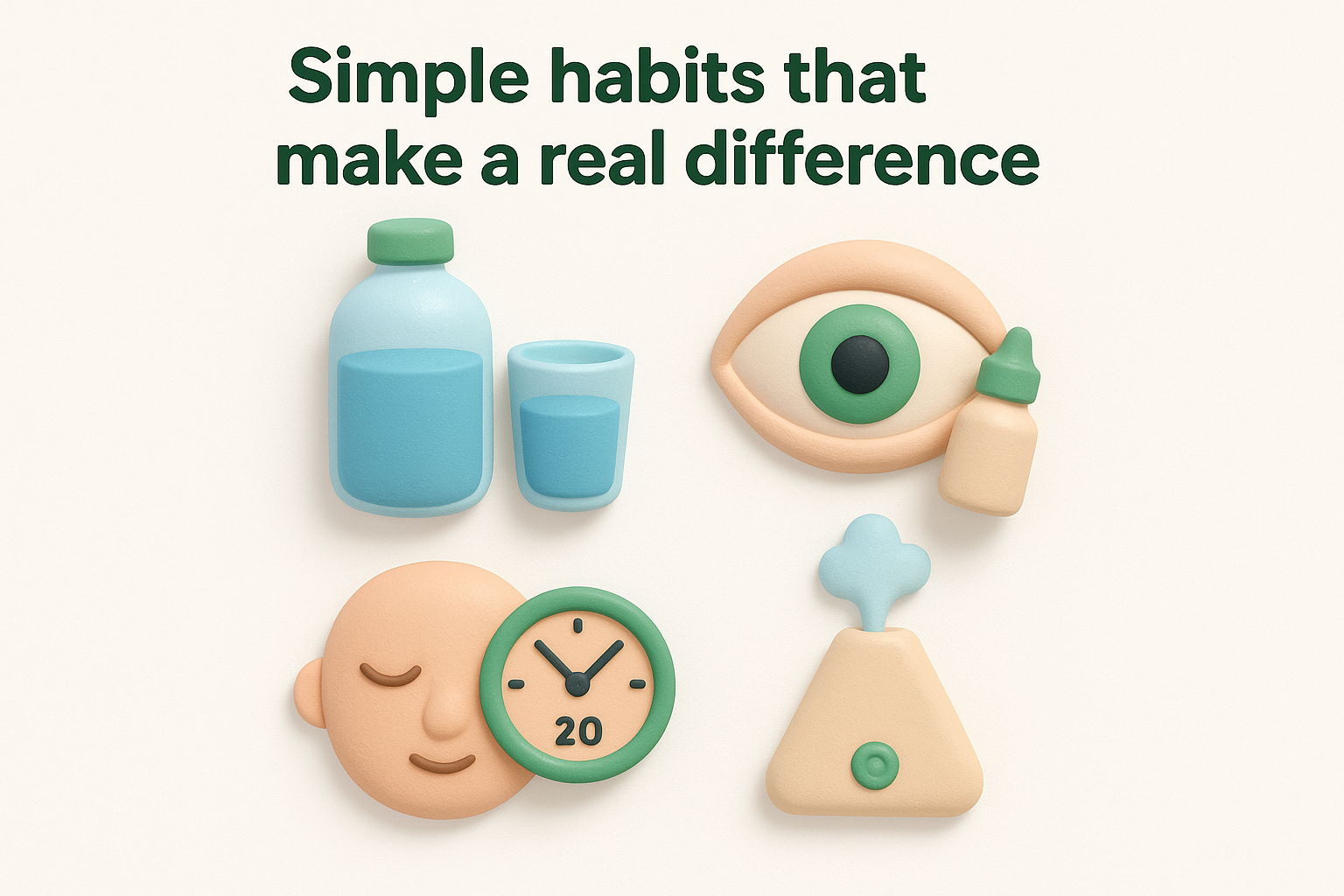
Following the 20-20-20 rule, where you look at something 20 metres away for 20 seconds every 20 minutes, gives your eyes regular recovery time during screen use.
Adjusting your environment helps too. Pointing air conditioning vents away from your face, using a humidifier in dry rooms, and wearing wraparound sunglasses outdoors all reduce tear evaporation. Including omega-3-rich foods like salmon, walnuts, and flaxseed in your diet supports the oily layer of your tear film, slowing the rate at which moisture escapes between blinks.
When to see an eye specialist in Sydney
Improving your hydration and eye health habits can relieve mild dryness and discomfort in many cases. However, some symptoms signal a deeper underlying issue that water intake alone won’t fix, and leaving these untreated can affect your vision over time.
Signs that need professional attention
If your eyes remain persistently red, dry, or irritated despite drinking more water and using lubricating drops, it’s worth booking an assessment with a specialist. Sudden blurred vision, pain, or significant light sensitivity are symptoms that need prompt evaluation, as they can indicate conditions unrelated to hydration, such as corneal disease, raised eye pressure, or retinal problems.
If you notice a sudden increase in floaters, flashing lights, or a shadow across your vision, seek urgent care from an eye specialist without delay.
What Bright Sight Eye Specialists can offer
At Bright Sight Eye Specialists in Randwick, Dr Rahul Dubey and Dr Capucine Odouard assess both common and complex eye conditions, including chronic dry eye, corneal conditions, and retinal disease. A thorough examination can identify whether your symptoms stem from dehydration, a treatable condition, or something requiring further investigation, so you leave with a clear understanding of your eye health and the right next steps for your situation.
A simple plan to protect your eyes
The connection between hydration and eye health is straightforward once you understand it. Drinking water consistently, reducing screen time, eating omega-3-rich foods, and using lubricating drops when needed covers most of what your eyes require day to day. None of these steps are complicated, and together they make a real difference to how your eyes feel and function.
Your eyes also deserve the same routine attention you give to the rest of your health. Regular checks with an eye specialist catch changes early, before symptoms become harder to manage. If your eyes remain dry, strained, or uncomfortable despite making these adjustments, don’t put off getting a professional opinion.
Booking a consultation with Dr Rahul Dubey or Dr Capucine Odouard at Bright Sight Eye Specialists gives you a clear picture of your eye health and the right care for your situation. Contact our team in Randwick to make an appointment.