


If you’re over 40 and finding yourself holding your phone at arm’s length just to read a text, you’re not imagining things. Presbyopia, the gradual loss of your eyes’ ability to focus on nearby objects, affects virtually everyone as they age. The good news? Understanding how to treat presbyopia starts with knowing that you have more options today than ever before, from simple reading glasses to advanced surgical procedures that can reduce or eliminate your dependence on them altogether.
At Bright Sight Eye Specialists in Randwick, Dr Rahul Dubey and Dr Capucine Odouard help patients across Sydney’s Eastern Suburbs navigate these choices every day. Whether you’re after a quick, non-invasive fix or a longer-term surgical solution, the right approach depends on your lifestyle, your eyes, and what matters most to you. Below, we break down five proven treatment options, so you can have an informed conversation with your eye specialist about which path suits you best.
1. Refractive lens exchange with premium lens implants
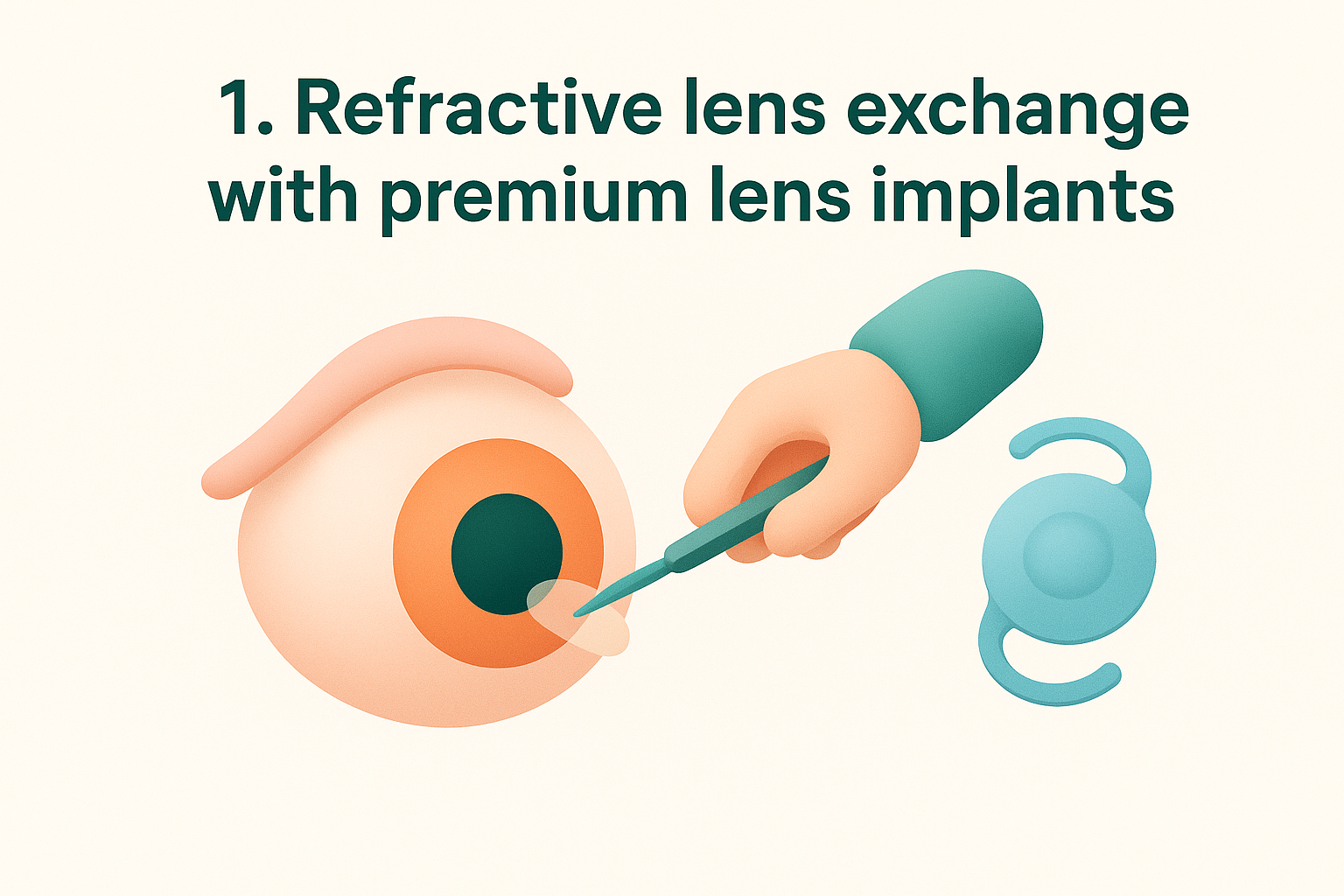
Refractive lens exchange (RLE) is the most comprehensive surgical answer to how to treat presbyopia. A surgeon removes your eye’s natural lens and replaces it with an artificial intraocular lens (IOL), designed to restore your full range of vision.
How it works
Your surgeon removes the natural crystalline lens (the same lens that has lost its flexibility) through a small incision, then inserts a premium IOL in its place. Multifocal or extended depth of focus (EDOF) lenses bend incoming light across multiple focal points, giving you clearer vision at near, intermediate, and distance ranges.
Who it suits best
RLE suits people over 45, particularly those who also have early cataracts or significant refractive errors. If you wear strong glasses and want long-term independence from them, this procedure offers a permanent solution that also prevents cataracts from developing later.
Benefits and trade-offs
The main benefit is lasting vision correction across all distances. The trade-off is that RLE is an invasive procedure, and some patients notice halos or glare around lights at night, particularly with multifocal lenses, though most adapt within a few months.
Premium EDOF lenses often reduce the severity of night vision disturbances compared to older multifocal designs.
What to expect and how long it lasts
Recovery takes around one to two weeks, and the results are permanent. Because the artificial lens cannot cloud or change, you will not develop a cataract in that eye, and no further lens surgery is needed.
Safety and side effects
RLE carries a small risk of retinal detachment, infection, or raised eye pressure. Your surgeon will assess your individual risk profile thoroughly before recommending the procedure.
Typical costs in Australia
Costs range from $3,000 to $5,500 per eye. With private health insurance, a known-gap or no-gap arrangement may apply, so check your level of cover before your consultation.
2. Laser vision correction for presbyopia
Laser surgery gives you another surgical path when considering how to treat presbyopia without replacing your natural lens. Procedures like LASIK, PRK, and SMILE reshape the corneal tissue to change how your eye focuses light.
How it works
Your surgeon programs the laser to create monovision or blended vision, correcting your dominant eye for distance and your non-dominant eye for near or intermediate tasks. Your brain learns to combine the two images into a functional, continuous range of focus.
Who it suits best
Laser correction suits people under 50 with stable prescriptions and sufficient corneal thickness. It works particularly well if you have mild-to-moderate presbyopia and want to reduce glasses reliance without undergoing lens surgery.
Benefits and trade-offs
The procedure is fast and avoids the need to remove your natural lens. The trade-off is that monovision can reduce depth perception, and not everyone adapts comfortably to each eye doing a different job.
A trial with monovision contact lenses before surgery is a reliable way to confirm you can tolerate the result.
What to expect and how long it lasts
Recovery takes a few days, with most patients resuming normal activities within a week. Results are long-lasting, though further reading glasses may become necessary as presbyopia progresses with age.
Safety and side effects
The most common side effects include dry eyes and halos around lights at night. Your surgeon will evaluate corneal thickness and tear film health before recommending this approach.
Typical costs in Australia
Expect to pay $2,500 to $4,000 per eye. No Medicare rebate currently applies to presbyopia laser correction, so check with your private health fund regarding any applicable extras cover.
3. Presbyopia eye drops
Eye drops represent the newest non-surgical approach to how to treat presbyopia. Rather than correcting your lens or cornea permanently, drops work by temporarily changing pupil size to improve near focus.
How it works
Prescription drops containing low-dose pilocarpine constrict your pupil, increasing your eye’s depth of field. This lets you focus on nearby text for several hours without reaching for glasses.
Who it suits best
Drops suit people with mild presbyopia who want occasional near-vision support without committing to surgery or contact lenses. They work best as a situational tool rather than a standalone solution.
Benefits and trade-offs
The main benefit is on-demand convenience. The trade-off is that effects last only four to six hours, and drops offer no help with intermediate or distance vision.
Drops work best when combined with another correction method rather than used as your sole treatment.
What to expect and how long it lasts
Results appear within 15 to 30 minutes and wear off after several hours. There is no permanent change to your vision from using them.
Safety and side effects
Headaches and reduced vision in dim light are the most common side effects. People with certain eye conditions such as narrow-angle glaucoma cannot use pilocarpine-based drops.
Typical costs in Australia
Presbyopia drops are not yet widely available in Australia. Where prescribed, expect to pay around $70 to $120 per month out of pocket.
4. Contact lenses for presbyopia
Contact lenses offer a non-surgical way to manage presbyopia that sits between the simplicity of glasses and the commitment of an operation. When thinking about how to treat presbyopia with lenses, you have two main designs to consider: multifocal contacts and monovision contacts.
How it works
Multifocal contact lenses contain multiple prescription zones across the lens surface, allowing your eyes to focus at both near and far distances simultaneously. With monovision lenses, your optometrist fits each eye with a different prescription, one for distance and one for near, mirroring the concept used in laser correction.
Who it suits best
Contacts suit people who want glasses-free vision day-to-day but are not ready for surgery. They work well for active adults who find frames inconvenient.
Benefits and trade-offs
The key benefit is flexibility: you can stop wearing them anytime. The trade-off is that adaptation can take several weeks, and not everyone tolerates monovision comfortably.
A short trial period with monovision lenses before committing to laser surgery can help you decide if that correction style works for you.
What to expect and how long it lasts
Results are immediate once fitted but require regular lens replacement. Daily disposables are the most hygienic and convenient option for most wearers.
Safety and side effects
Wearing contacts increases your risk of eye infections, particularly if you sleep in them. People with dry eye disease may find lenses uncomfortable or impractical.
Typical costs in Australia
Daily disposable multifocal lenses cost roughly $80 to $150 per month, depending on brand and prescription complexity.
5. Reading glasses and multifocal spectacles
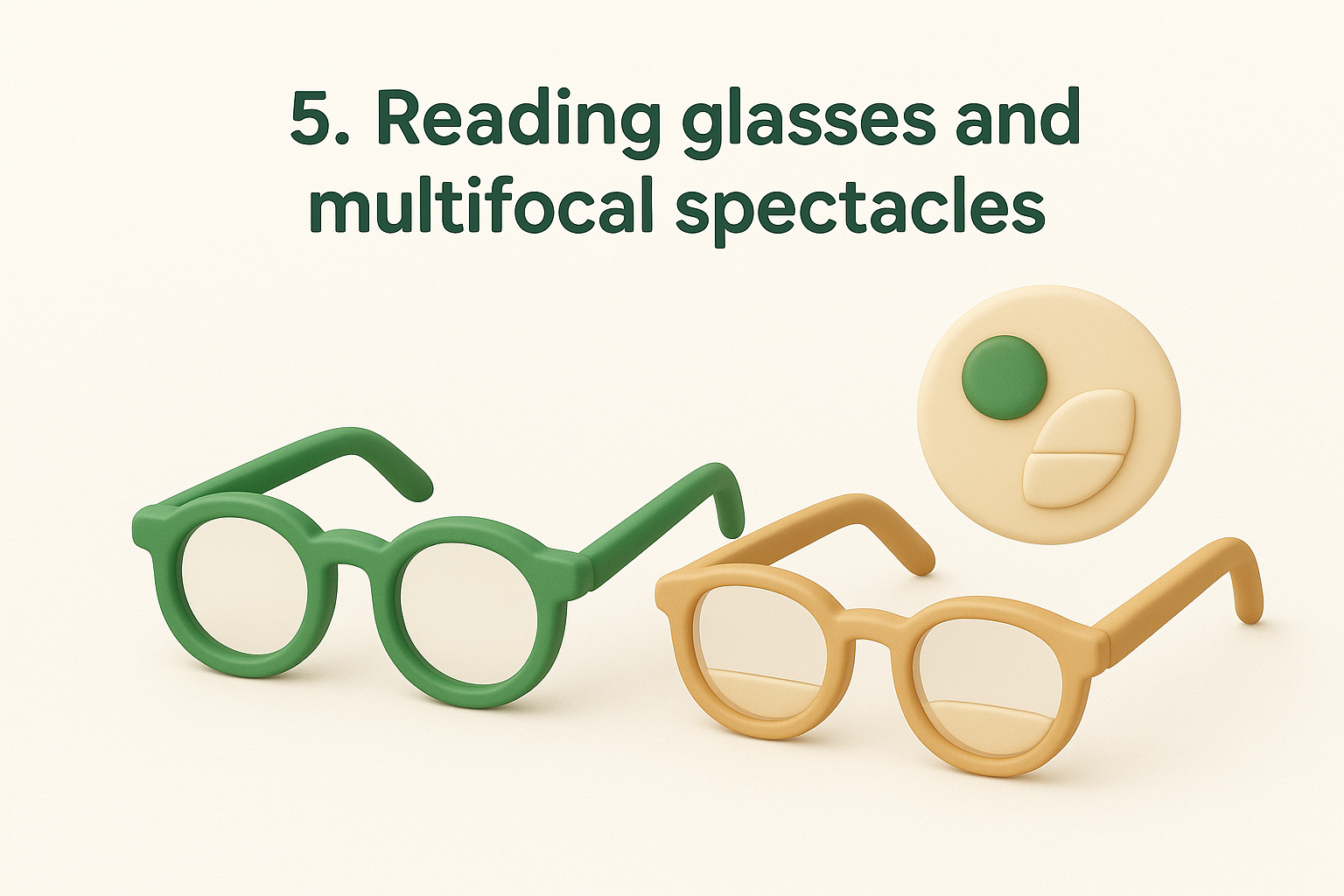
Reading glasses and multifocal spectacles remain the most accessible and widely used approach to how to treat presbyopia. They require no surgery, no daily lens handling, and no prescription drops, making them the first choice for many people after their optometrist confirms the diagnosis.
How it works
Spectacles correct presbyopia by placing a magnifying lens in front of your eye, compensating for the focusing power your natural lens has lost. Multifocal frames include separate zones for distance, intermediate, and near vision, so you can see clearly at all ranges through a single pair.
Who it suits best
Glasses suit anyone at any stage of presbyopia, particularly those who prefer a simple, reversible option. They are ideal if you spend long hours reading or using screens and want reliable, consistent correction.
Benefits and trade-offs
The main benefit is immediate, zero-adaptation correction with no risk. The trade-off is that you need to wear them to see clearly, and some people find multifocal lenses take a few weeks to get used to.
Progressive multifocal lenses eliminate the visible line between zones that older bifocal designs had.
What to expect and how long it lasts
Your prescription will likely need updating every one to two years as presbyopia gradually progresses.
Safety and side effects
Glasses carry no medical risk. Some wearers experience headaches or dizziness while adjusting to progressive lenses.
Typical costs in Australia
A quality pair of progressive spectacles costs $300 to $800, depending on frame and lens complexity.
Next steps
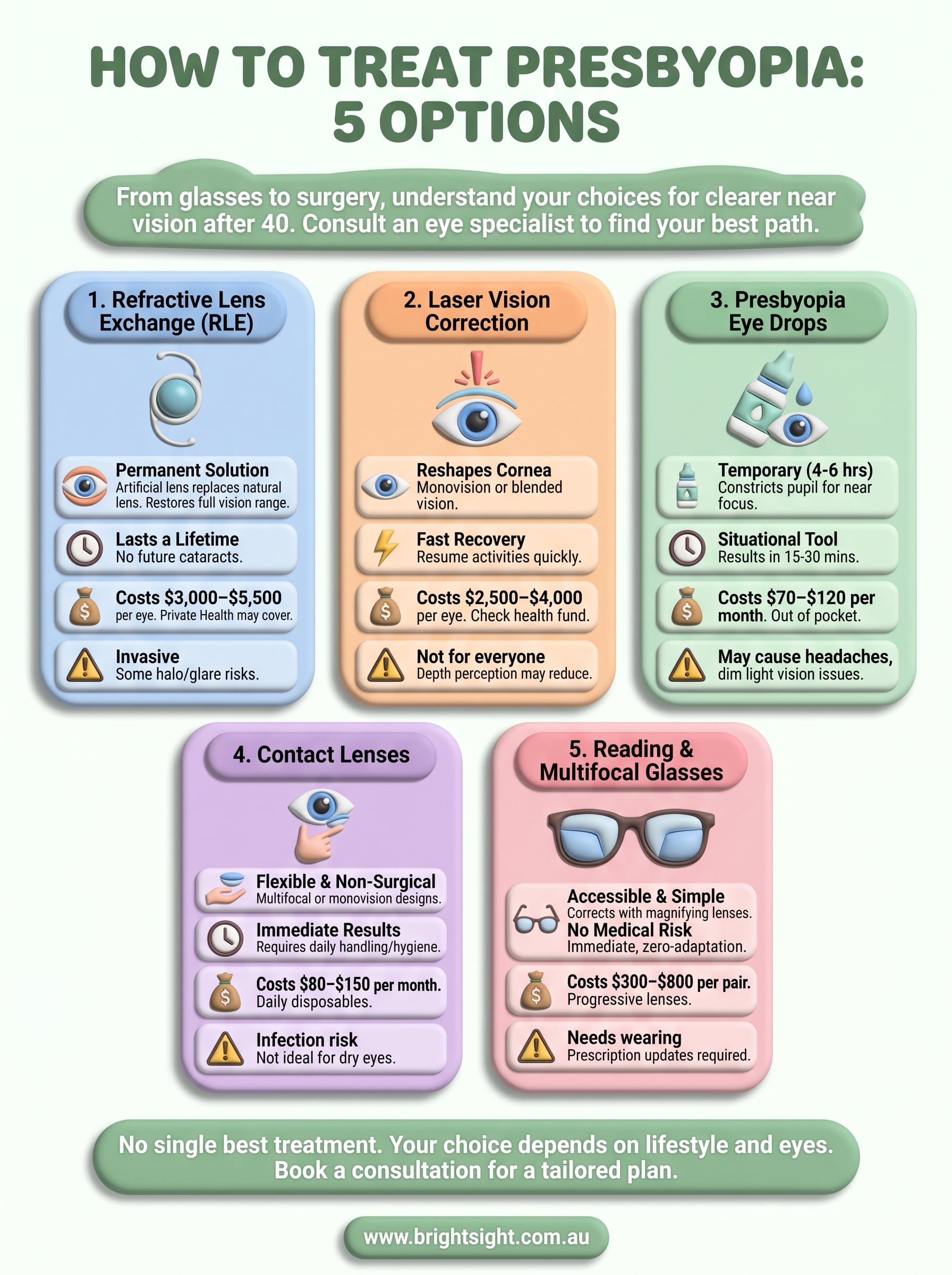
Knowing how to treat presbyopia gives you a real starting point, but the right option depends on factors only a thorough eye examination can confirm: your prescription strength, corneal health, lens clarity, and how your daily life actually looks. Reading glasses cost almost nothing and carry zero risk, while refractive lens exchange offers a permanent solution that also eliminates the future risk of cataracts. Most people land somewhere in between.
At Bright Sight Eye Specialists in Randwick, Dr Rahul Dubey and Dr Capucine Odouard assess each patient individually and walk you through the options that genuinely suit your eyes and lifestyle. There is no single best treatment, and a good specialist will tell you that honestly rather than push you toward a procedure. If you are ready to stop guessing and start seeing clearly, book a consultation with our team and get a clear picture of where your vision stands.