


You’ve had LASIK, your vision is already sharper, and now you want to know how to speed up LASIK recovery without making mistakes that could set you back. That’s a smart instinct, because what you do in the first days and weeks after surgery matters just as much as the procedure itself.
Most people recover quickly after LASIK, but dry eye, light sensitivity and blurred patches can linger if you skip the basics. The good news is that a few straightforward habits, applied consistently, can make a real difference to your comfort and how fast your eyes settle into their new normal. No guesswork, just evidence-based steps you can start today.
At Bright Sight Eye Specialists in Randwick, Dr Capucine Odouard performs LASIK, PRK and SMILE procedures and guides patients through every stage of recovery. Below, we’ve put together five practical tips drawn from what we see work best in clinic, so you can heal faster, reduce dry eye safely, and get back to your life with clear, comfortable vision.
1. Book the right follow-up schedule early
Your surgeon will book your first follow-up appointment for the day after surgery, and you should treat it as non-negotiable. After that, you’ll typically have check-ups at one week, one month, and three months post-surgery, depending on how your eyes are healing.
What to do
Confirm your follow-up dates before you leave the clinic on the day of your procedure. Write them down, set phone reminders, and arrange transport because you won’t be driving yourself to that first appointment. If you’re looking at how to speed up LASIK recovery, attending every scheduled check-up is the single most important step you can take.
Your standard follow-up schedule will generally look like this:
- Day 1: Initial post-operative check
- Week 1: Flap stability and early healing review
- Month 1: Vision accuracy and dry eye assessment
- Month 3: Final healing confirmation
Why it speeds healing and protects your result
Your corneal flap needs consistent monitoring in the early weeks. Healing that looks and feels normal to you can still carry small issues that your surgeon needs to catch early, such as surface irregularities or early dry eye signs. Each visit gives your surgeon the chance to adjust your drop regimen before minor concerns become bigger problems.
Missing a follow-up is one of the most common reasons patients end up with a prolonged or complicated recovery.
What Bright Sight Eye Specialists checks for
At each visit, Dr Odouard and the team assess corneal flap position, healing quality, and visual acuity. They also screen for dry eye progression, which is very common in the first few months after LASIK. Reviewing your intraocular pressure and tear film stability allows the team to personalise your care rather than apply a generic approach to every patient.
When to call urgently
Don’t wait for a scheduled appointment if you notice a sudden drop in vision, severe pain, or significant redness that isn’t settling. These symptoms can point to a flap complication or infection, both of which need prompt attention. Call the clinic straight away if your light sensitivity worsens after day three rather than improving, as this can indicate inflammation that requires early treatment.
2. Use your drops correctly to prevent dry eye
Your eye drops are not optional extras. They are the primary tool your surgeon has given you to control inflammation and manage dry eye during the healing process. Using them correctly is one of the most direct answers to how to speed up LASIK recovery.
What to do
Follow your surgeon’s prescribed drop schedule exactly, which typically includes antibiotic drops, anti-inflammatory drops, and preservative-free artificial tears. Your clinic will give you a written schedule, so keep it somewhere visible and set phone alarms for each dose. Never share your drops with anyone else or substitute a different brand without checking first.
Why it speeds healing and reduces dryness
LASIK temporarily reduces corneal nerve sensitivity, which reduces your natural tear production for weeks to months after surgery. Antibiotic drops prevent infection while the flap heals, and anti-inflammatory drops calm the surface so your vision stabilises faster. Artificial tears fill the gap left by reduced natural tears and keep the corneal surface lubricated and comfortable.
Skipping doses, even once or twice, can allow inflammation to build up quietly and slow your visual recovery.
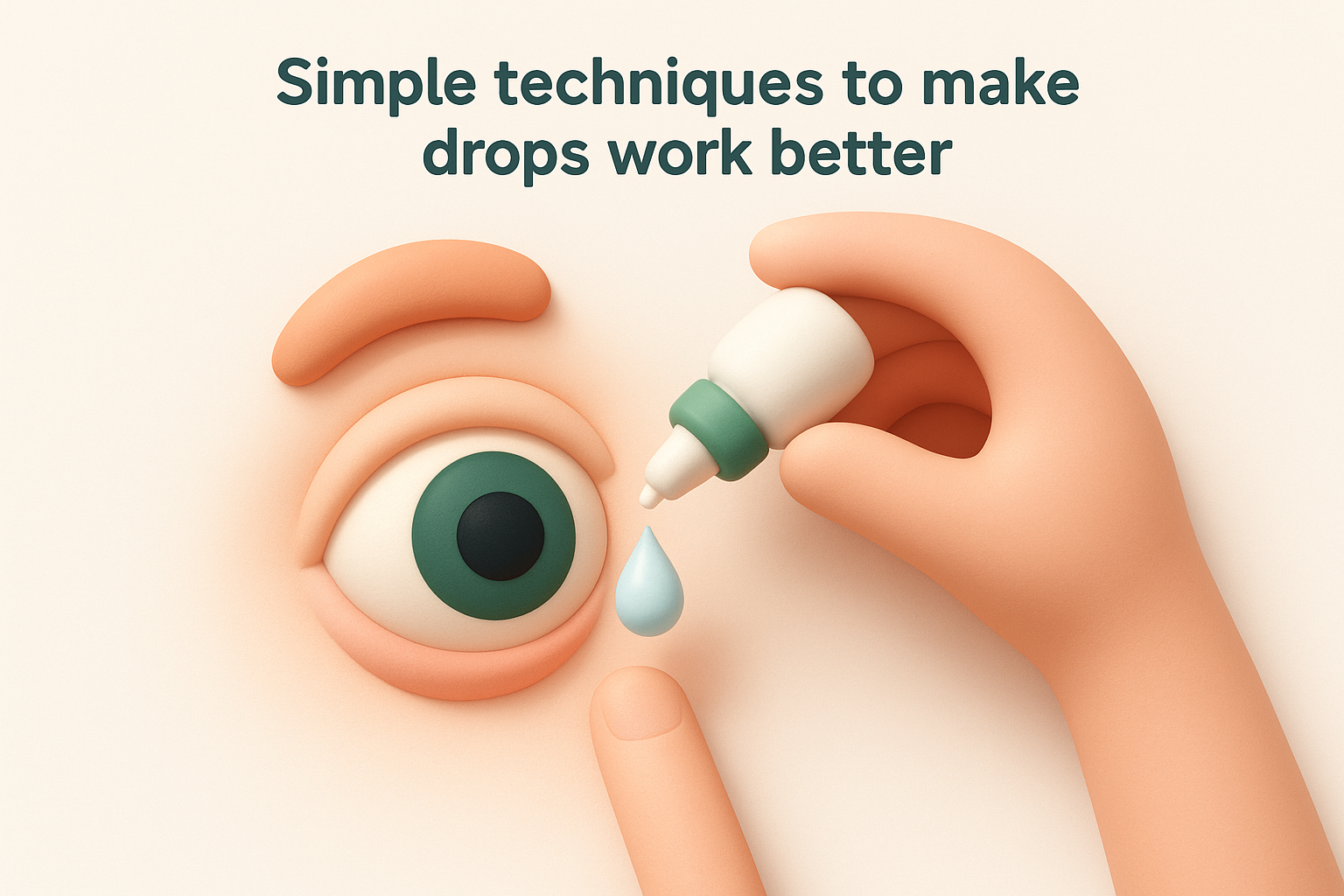
Simple techniques to make drops work better
Pull your lower eyelid gently downward, look up, and place the drop in the pocket rather than directly onto your cornea. Close your eye for 60 seconds afterwards and press lightly on the inner corner to reduce drainage. Wait at least five minutes between different drops so each one absorbs fully.
When to call urgently
Call your clinic if your eyes feel significantly more dry or gritty after day five rather than improving, or if you develop a burning sensation that doesn’t settle within 30 minutes of using your artificial tears. These signs can indicate an inadequate drop regimen or an underlying surface issue that your surgeon needs to address quickly.
3. Rest your eyes and manage screens from day one
Screen time is one of the biggest obstacles to a smooth LASIK recovery, yet it’s easy to underestimate. Your eyes blink far less often when you’re focused on a screen, which dries out the corneal surface exactly when it needs consistent lubrication to heal well.
What to do
Avoid all screens for the first four hours after your procedure. After that, limit screen use to short sessions with deliberate breaks. Follow the 20-20-20 rule: every 20 minutes, look at something 20 feet away for 20 seconds. This keeps your blink rate higher and gives your corneal nerves time to recover.
Why it speeds healing and reduces dryness
When you focus on a screen, your blink rate drops by up to 60 per cent, which accelerates tear evaporation on an already vulnerable surface. Reducing screen exposure in the first week is one of the most straightforward answers to how to speed up LASIK recovery, because it keeps inflammation low and your tear film more stable.
Dry eye and digital screen overuse feed each other in a cycle that can extend your recovery by weeks if you don’t break it early.
How to handle work, reading, and driving safely
Most patients can return to desk-based work within two to three days, provided they take regular screen breaks. Reading on paper is easier on your eyes than a screen in the first week. You should not drive until your surgeon has confirmed your vision meets the legal standard at your day-one check-up.
When to call urgently
Contact your clinic if you notice persistent blurred vision or worsening light sensitivity after reducing screen time, as this may signal surface inflammation rather than simple digital eyestrain.
4. Protect your eyes from rubbing, wind, and UV
Your corneal flap is held in place by natural tissue adhesion, not stitches, which makes it vulnerable to displacement in the early weeks after surgery. Physical contact, wind, and UV exposure are the three most common external threats to that healing process.
What to do
Wear the protective eye shields your clinic provides whenever you sleep for at least the first week. Outside, put on wraparound sunglasses with UV400 protection as soon as you step out the door. Avoid environments with strong wind, dust, or fans blowing directly at your face.
Why it speeds healing and reduces irritation
Rubbing your eye even lightly can shift the corneal flap and cause visual complications that require a return procedure. UV exposure triggers surface inflammation that slows how to speed up LASIK recovery during the critical first month. Consistent physical protection keeps the flap stable and the corneal surface calm while nerves regenerate.
Wearing sunglasses outdoors isn’t just about comfort; it actively reduces post-operative inflammation and protects your long-term result.
Common mistakes that slow recovery
Many patients forget to wear shields during afternoon naps or remove their sunglasses the moment they step indoors near a window. Rubbing instinctively during sleep is also very common and entirely avoidable with protective shields worn consistently every night.
When to call urgently
Contact your clinic immediately if you accidentally rub your eye and notice sudden blurred vision or pain, or a sensation that something has shifted.
5. Avoid water, smoke, dust, and hard exercise for now
Water, smoke, dust, and intense physical activity are four things your healing cornea cannot tolerate in the weeks following LASIK. Each one carries a specific risk that can slow your recovery or, in the case of contaminated water, cause a serious infection.
What to do
Keep water away from your eyes during showers for at least one week by tilting your head back and avoiding direct spray. Stay completely out of swimming pools, hot tubs, and open water for a minimum of four weeks, and avoid smoky rooms, dusty work sites, and any environment where airborne particles could settle on your eye surface.
Why it lowers infection and inflammation risk
While the corneal flap heals, your eye’s surface barrier is compromised, which makes it easier for bacteria and irritants to cause harm. Pool water carries chlorine and microorganisms that can trigger corneal infection or inflammation at exactly the wrong time. Smoke and dust inflame the tear film and slow the nerve regeneration your eyes depend on.
Infection after LASIK is rare, but it almost always traces back to avoidable exposure to contaminated water or dusty environments.
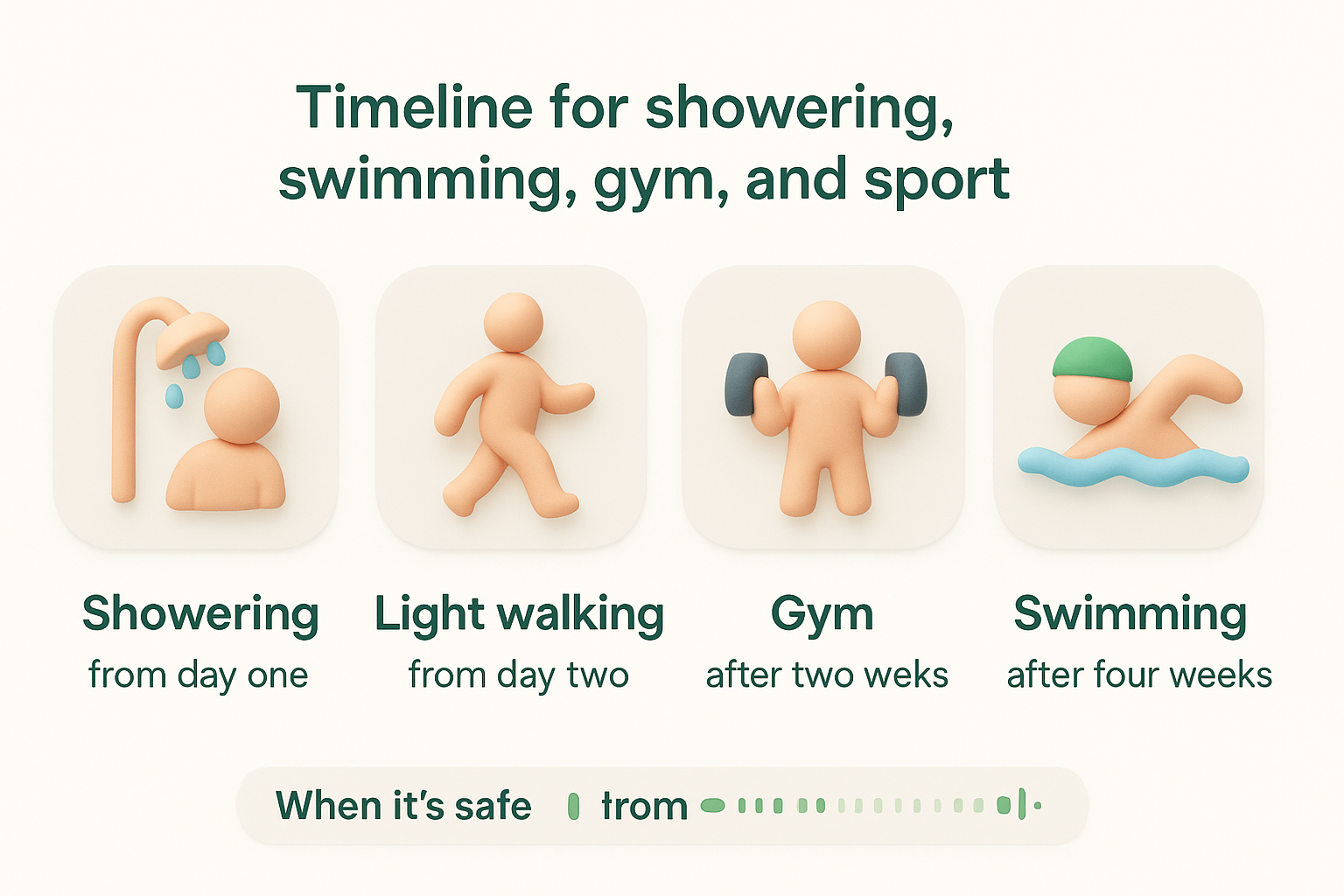
Timeline for showering, swimming, gym, and sport
Knowing when each activity is safe is one of the most practical aspects of how to speed up LASIK recovery. Here is a clear guide:
| Activity | When it’s safe |
|---|---|
| Showering (head tilted back) | From day one |
| Light walking | From day two |
| Gym and weights | After two weeks |
| Swimming and contact sport | After four weeks |
When to call urgently
Call your clinic straight away if you notice yellow or green discharge, increasing pain, or rapid vision loss after any water or dust exposure.
These signs point to active infection that requires same-day treatment, so do not delay contacting your surgeon.
A calm finish and next steps
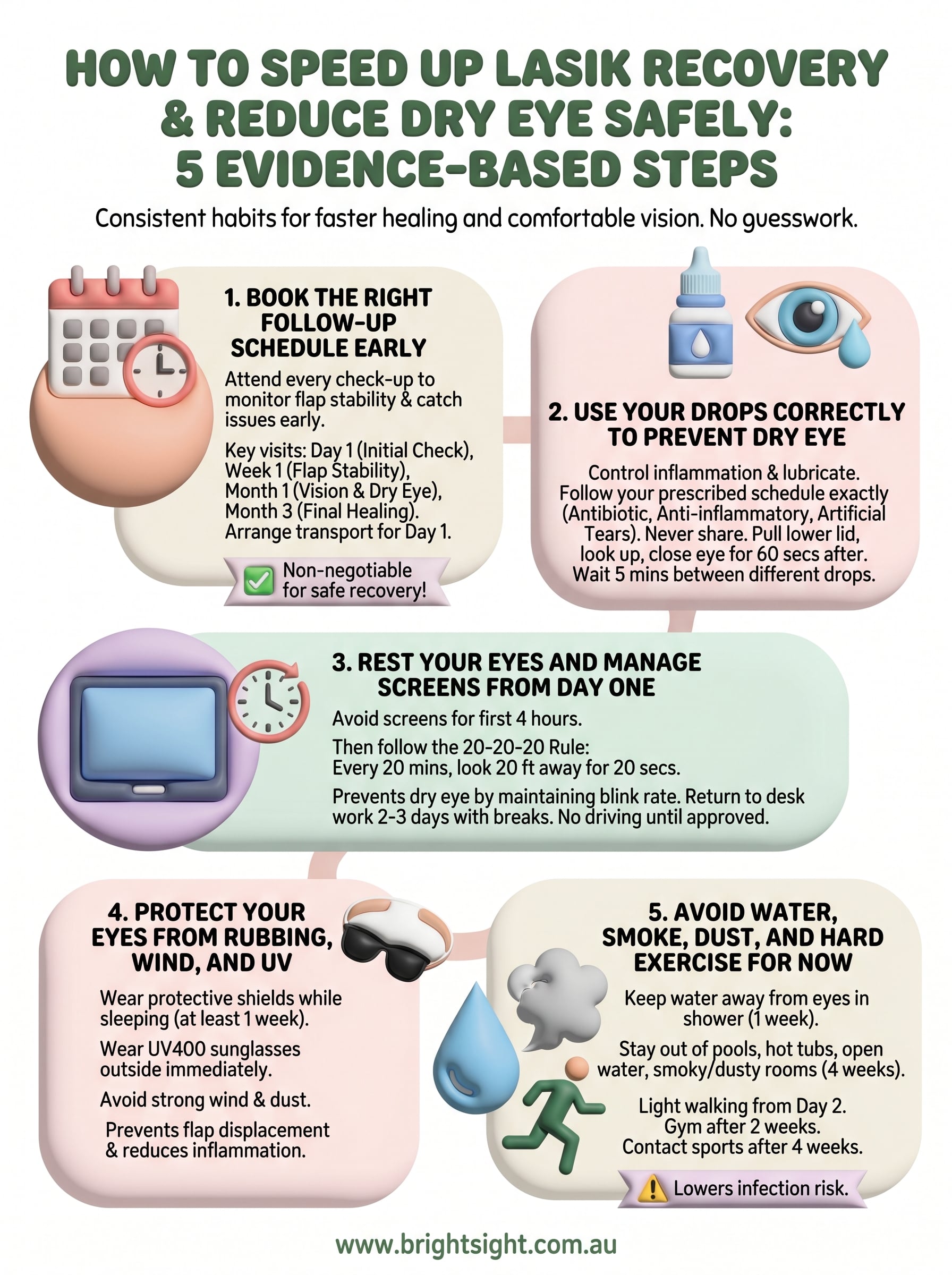
LASIK recovery is straightforward when you follow a consistent routine. Attending your follow-up appointments, using your drops on schedule, protecting your eyes from screens and UV, and staying out of water and smoke gives your corneal flap everything it needs to heal cleanly. Most patients notice stable, comfortable vision within four to six weeks when they stick to these habits from day one.
Knowing how to speed up LASIK recovery comes down to removing the obstacles that slow healing, not finding shortcuts. Your eyes do the work; your job is simply to avoid the common mistakes that set recovery back. Small daily decisions add up quickly, and the patients who take recovery seriously tend to see the best long-term results.
If you have questions about LASIK, PRK, or SMILE procedures, or you want to discuss your suitability, book a consultation with Dr Capucine Odouard at Bright Sight Eye Specialists in Randwick today.