


A thorough eye exam can reveal far more than whether you need glasses, it can detect early signs of conditions like macular degeneration, diabetic eye disease, and cataracts. But the accuracy of your results depends partly on you. Knowing how to prepare for an eye exam makes a real difference in what your specialist can assess, diagnose, and recommend during your appointment. Yet most patients walk in without giving preparation a second thought.
At Bright Sight Eye Specialists in Randwick, Dr. Rahul Dubey and Dr. Capucine Odouard see patients every week who could have gotten more from their visit with just a little groundwork. Simple steps, like bringing the right documents, noting your symptoms, and avoiding certain habits beforehand, help your specialist build a clearer picture of your eye health and tailor their recommendations to you.
Below are six practical tips to help you arrive prepared, informed, and ready to get the most out of your next eye examination.
1. Book the right type of appointment early
The first step in understanding how to prepare for an eye exam is making sure you book the correct type of appointment well in advance. A routine vision test with an optometrist differs significantly from a specialist ophthalmologist consultation, and the two serve very different purposes.
Choose the right visit type for your needs
Not all eye appointments are the same. Knowing which one suits your situation helps you arrive prepared and ensures your concerns receive the right level of attention from the right professional. Here are the main visit types to be aware of:
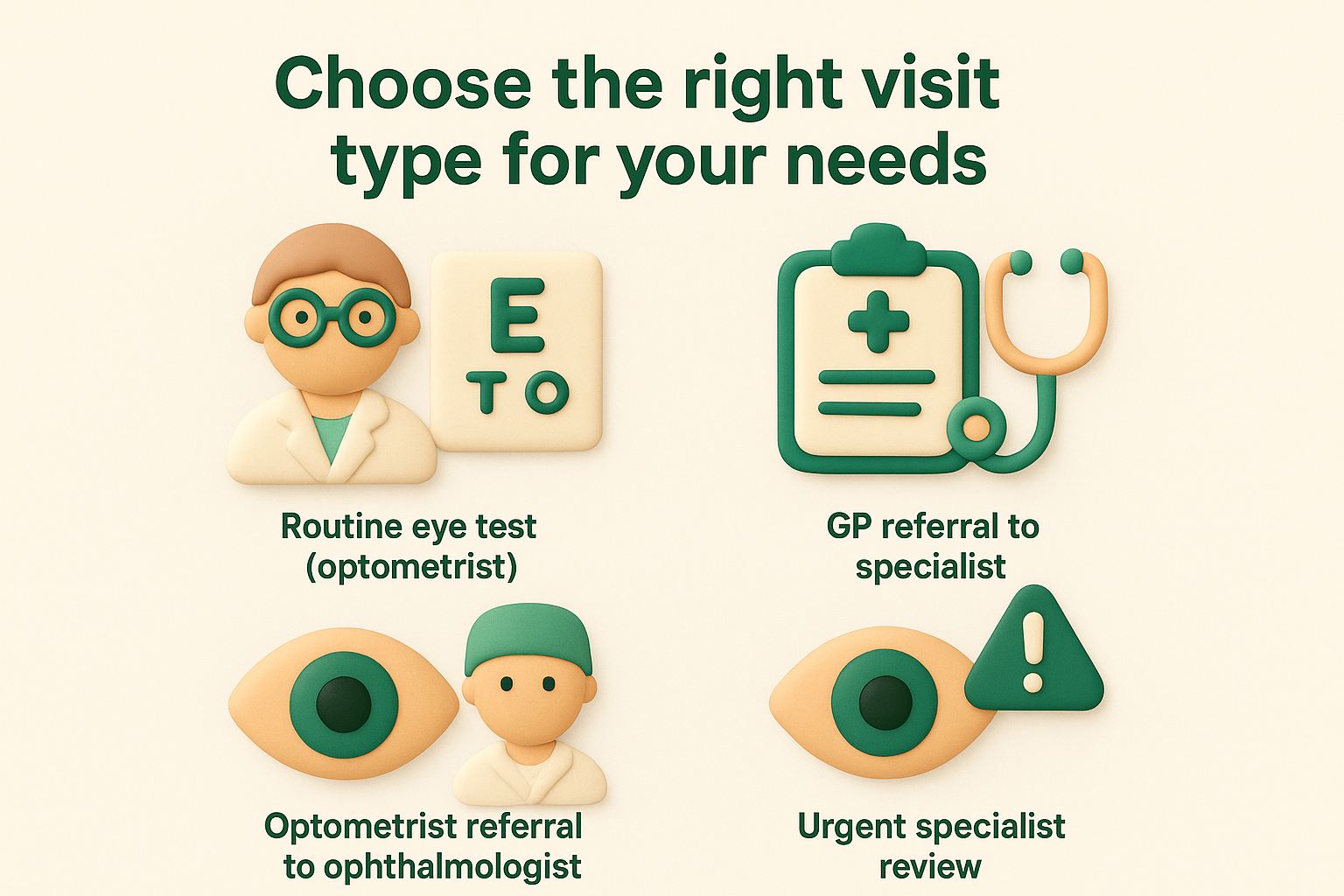
- Routine eye test (optometrist): For general vision checks, glasses, and contact lens prescriptions
- GP referral to specialist: When your GP identifies a condition that needs ophthalmologist review
- Optometrist referral to ophthalmologist: For conditions like cataracts, retinal disease, or macular concerns
- Urgent specialist review: For sudden vision changes, floaters, flashes, or eye injury
Share key details when you book
When you call to book, tell the reception team your main concern and whether you hold a referral from your GP or optometrist. This helps the practice allocate the correct time slot and prepare any necessary equipment before your arrival. A referral may also affect your Medicare eligibility, so confirm this at the time of booking.
Providing your referral details when you book can reduce delays and ensure your appointment is covered under Medicare where eligible.
Ask about dilation, imaging, and timing
Some eye exams include pupil dilation or retinal imaging, which extends your appointment and temporarily blurs your vision for several hours. Ask the clinic at booking whether dilation is expected, so you can arrange transport and protect your schedule.
Clarifying this early also helps you set aside the right amount of time and avoid booking anything that requires sharp vision straight afterward, like driving or returning to work.
Know when to seek urgent eye care instead
Certain symptoms require urgent attention, not a routine booking. Contact an eye specialist promptly if you notice any of the following:
- Sudden or significant loss of vision
- A sudden increase in floaters or flashes of light
- Eye pain, redness, or trauma
These can indicate retinal detachment or another serious condition that cannot wait for a standard appointment.
2. Write down symptoms and vision changes
One practical step in how to prepare for an eye exam is writing down your symptoms before the appointment. Your specialist relies on the information you provide to guide their examination, and verbal recollections during the consultation are often incomplete or rushed. Taking five minutes beforehand to note your concerns gives your specialist a clearer starting point.
Note what you notice and when it happens
Write down specific symptoms, such as blurred vision, difficulty reading, or halos around lights, and note when you first noticed them. Include whether symptoms occur in one eye or both, as this detail helps narrow down potential causes quickly.
Track triggers and patterns that affect your sight
Some vision changes follow clear patterns, like worsening in low light, after screen use, or at certain distances. Recording these triggers helps your specialist identify whether the issue is structural, functional, or related to a systemic condition like diabetes.
The more specific your notes, the more useful your appointment becomes.
List questions you want answered during the exam
Write down any questions you have about your vision, treatment options, or long-term eye health. It is easy to forget questions once the consultation begins, and a prepared list ensures nothing important gets skipped during your time with the specialist.
Flag red-flag symptoms you should mention first
If you have experienced sudden vision loss, new floaters, flashes of light, or eye pain, tell your specialist at the start of the appointment. These symptoms can signal urgent conditions that need to be assessed before anything else.
3. Gather your medical, medication, and family history
Knowing how to prepare for an eye exam properly means arriving with more than just your glasses. Your medical background, current medications, and family history give your specialist essential context they cannot assess from the examination alone.
List medical conditions that affect eye health
Conditions like diabetes, high blood pressure, autoimmune disease, and thyroid disorders can all affect your eyes directly. Write these down and include any relevant diagnoses, even those you consider unrelated to your vision. Your specialist needs the full picture to interpret your results accurately.
Bring a complete medication and supplement list
Certain medications, including steroids, antimalarials, and blood thinners, can affect eye health or influence test results. Bring a written list of everything you take, including supplements and over-the-counter products, so your specialist can factor this into their assessment.
Your medication list is one of the most overlooked but important items to bring to any specialist appointment.
Record your family history of eye disease
Glaucoma, macular degeneration, and inherited retinal conditions often run in families. Knowing your family history helps your specialist identify whether you carry a higher risk for specific conditions and whether earlier or more frequent screening is appropriate for you.
Include recent procedures, injuries, and allergies
Mention any recent eye surgery, laser treatment, or eye injuries, even minor ones. Also note known allergies to eye drops or local anaesthetics, as these affect which products your specialist can safely use during your examination.
4. Prepare your eyes in the 24 hours before
One often-overlooked step in how to prepare for an eye exam is managing what you do with your eyes the day before. Small habits in the 24 hours leading up can affect test results and your specialist’s ability to assess your vision accurately.
Rest your eyes and reduce screen strain
Heavy screen use the night before can cause temporary eye fatigue and dryness, which may affect readings like visual acuity and tear film tests. Limit prolonged screen time and get a full night’s sleep so your eyes are in their most natural, rested state when you arrive.
Well-rested eyes give your specialist a more accurate baseline to work from.
Avoid contact lens issues on the day
Contact lenses alter the shape of your cornea, which can distort results for refraction and corneal measurements. Remove your lenses on the morning of your appointment and wear your glasses instead.
Soft lens wearers should remove their lenses at least a few hours before the exam. If you wear rigid gas-permeable lenses, ask your specialist how many days beforehand to stop wearing them, as the timeframe differs.
Skip eye makeup and products that affect tests
Eye makeup, drops, and creams around the eye area can interfere with imaging, pressure tests, and pupil dilation. Leave these products off on the day of your exam to avoid any disruption to equipment or test accuracy.
Plan for dry eye if you have it
If you experience dry eye symptoms regularly, bring your usual lubricating drops to the appointment. Let your specialist know which products you use so they can interpret your tear film results in context.
5. Manage caffeine, alcohol, food, and hydration
What you consume in the lead-up to your appointment is a practical but easy-to-overlook part of knowing how to prepare for an eye exam. Your diet and hydration levels in the hours before can influence your comfort, eye surface quality, and test readings in ways that are worth accounting for.
Keep caffeine sensible and consistent with your routine
Caffeine does not directly interfere with standard eye tests, but a large amount taken on an empty stomach can raise anxiety and cause restlessness that makes it harder to sit still during testing. Stick to your usual intake rather than increasing or cutting it suddenly.
Avoid alcohol if it worsens dry eye or irritation
Alcohol dehydrates your body and can dry out the eye surface, which may affect tear film tests and cause discomfort during the examination. If you know alcohol affects your eyes, avoid it the night before your appointment.
Dry, irritated eyes are harder to examine accurately, so giving them the best environment beforehand pays off.
Eat normally unless the clinic tells you otherwise
Most eye exams do not require fasting, so eat a regular meal beforehand to maintain your energy and concentration. If your appointment involves sedation or a surgical procedure, your clinic will give you specific fasting instructions in advance.
Stay hydrated for comfort and clearer testing
Drinking enough water throughout the day keeps your eyes more comfortable and supports a stable tear film during examination. Aim for consistent fluid intake rather than drinking a large amount right before you arrive.
6. Pack the essentials and plan your aftercare
The final step in knowing how to prepare for an eye exam is pulling together everything you need to bring and thinking through your day. Arriving with the right items saves time at reception and helps your specialist get straight to the work that matters.
Bring your glasses, contact lenses, and current prescription
Pack your current glasses and any spare pairs, including reading glasses if you use them separately. Bring your most recent prescription paperwork too, as this gives your specialist a reference point to assess whether your vision has changed since your last visit.
Bring Medicare, private health, and referral details if needed
Your Medicare card, private health insurance details, and GP or optometrist referral are all worth bringing to every specialist appointment. Without them, you may need to pay upfront or miss out on rebates you are entitled to.
Confirming your referral and insurance details at reception before your appointment starts prevents avoidable delays.
Bring sunglasses and plan transport after dilation
Pupil dilation makes your eyes sensitive to light and blurs your near vision for several hours. Bring a pair of wraparound or dark sunglasses and arrange someone to drive you home, or plan to use public transport rather than driving yourself.

Plan work, driving, and screen use after the appointment
After dilation, driving and detailed screen work are difficult and potentially unsafe. Block out time in your schedule so you are not rushing back to tasks that require sharp vision immediately after your exam.
Next steps
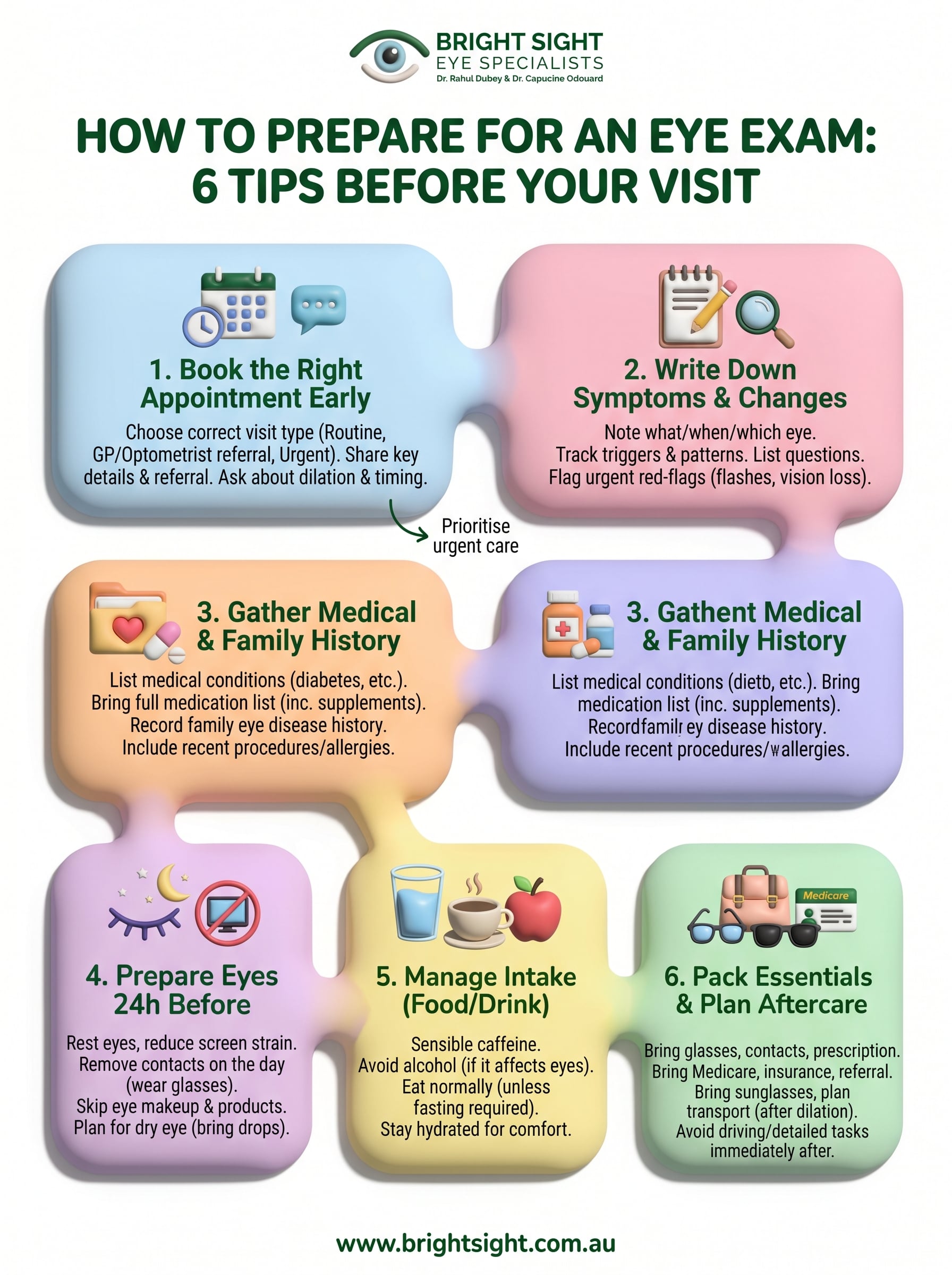
Knowing how to prepare for an eye exam gives your specialist the best possible starting point and helps you walk away with clear answers and a confident plan for your eye health. The six steps above cover everything from booking the right appointment to packing what you need on the day.
Take the time to write down your symptoms, gather your medical history, and sort out your transport before you arrive. Small acts of preparation can make the difference between a rushed consultation and one where your specialist has everything they need to give you thorough, accurate care.
Your eyes deserve focused, experienced attention. If you are based in Sydney’s Eastern Suburbs and want specialist care tailored to your needs, book an appointment with Bright Sight Eye Specialists. Dr. Rahul Dubey and Dr. Capucine Odouard are ready to help you understand your vision and plan your next step with confidence.