


Most people remember to book their dental check-up every six months, but when it comes to their eyes, they wait until something feels wrong. The question of how often should you get an eye test isn’t one-size-fits-all, it depends on your age, your health history, and whether you’re already managing a condition like diabetes or macular degeneration.
Getting the timing right matters. Regular eye tests pick up conditions like glaucoma, cataracts, and retinal disease before symptoms even appear, when treatment is most effective and outcomes are strongest. Missing that window can mean the difference between a straightforward fix and a more complex intervention.
At Bright Sight Eye Specialists in Randwick, Dr Rahul Dubey and Dr Capucine Odouard see firsthand what happens when eye tests are delayed, and how much easier things are for patients who stay on top of their checks. This guide breaks down exactly how often you should be tested based on your age group, outlines what Medicare covers, and helps you understand what to expect cost-wise so there are no surprises.
Why regular eye tests matter even if you see well
Sharp vision doesn’t mean healthy eyes. Glaucoma, for example, can destroy up to 40% of your peripheral vision before you notice any change, because your brain quietly compensates for the gradual loss. By the time blur or tunnel vision becomes obvious, significant and irreversible damage has already occurred. Regular eye tests catch these changes early, when treatment is still straightforward.
Conditions that develop without warning
Several of the most serious eye conditions give you almost no early warning signs. Age-related macular degeneration can progress slowly over years, with your unaffected eye covering for the one losing function. Diabetic retinopathy, retinal vein occlusion, and early cataracts work the same way. Your vision seems acceptable, but underneath, changes are already underway that will eventually affect your daily life.
An eye test is one of the few ways to detect damage before it becomes irreversible.
Catching these conditions early doesn’t just protect your sight. It often means simpler, less invasive treatment, lower costs, and a much better long-term outlook. Waiting until symptoms appear frequently leads to more complex surgery or, in some cases, permanent vision loss that cannot be fully recovered.
What your eyes reveal about your general health
Your eyes are the only place in the body where blood vessels can be viewed directly and non-invasively. This makes a comprehensive eye exam a useful window into your broader health. Optometrists and ophthalmologists regularly identify signs of high blood pressure, diabetes, and certain neurological conditions during routine checks, sometimes before your GP has spotted the issue.
This is one of the clearest reasons why knowing how often should you get an eye test matters beyond your glasses prescription. Your eyes reflect your overall health, and the earlier any problem is found, the better your options.
Recommended eye test frequency by age and life stage
Knowing how often should you get an eye test becomes clearer once you understand that your needs shift significantly across your lifetime. Age is the single biggest factor in determining how frequently you should book in, because different conditions tend to emerge at predictable life stages.
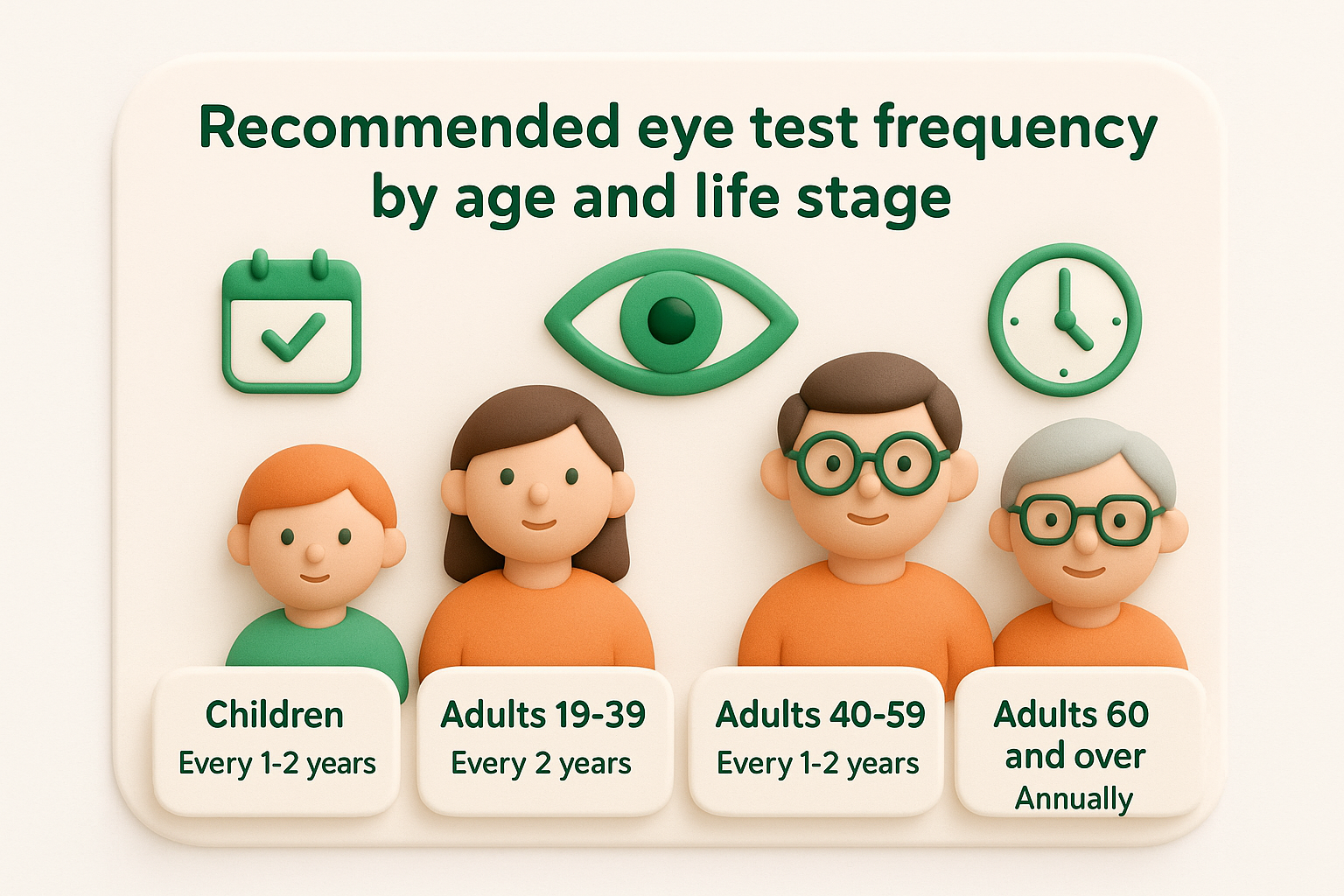
Children and young adults
Vision problems in children, including lazy eye, turned eyes, and refractive errors, often go unnoticed without a formal check. Early detection from infancy through to school age gives the best chance of correction before development is affected. For adults aged 19 to 39 with no symptoms or known risk factors, testing every two years is generally sufficient.
| Age group | Recommended frequency |
|---|---|
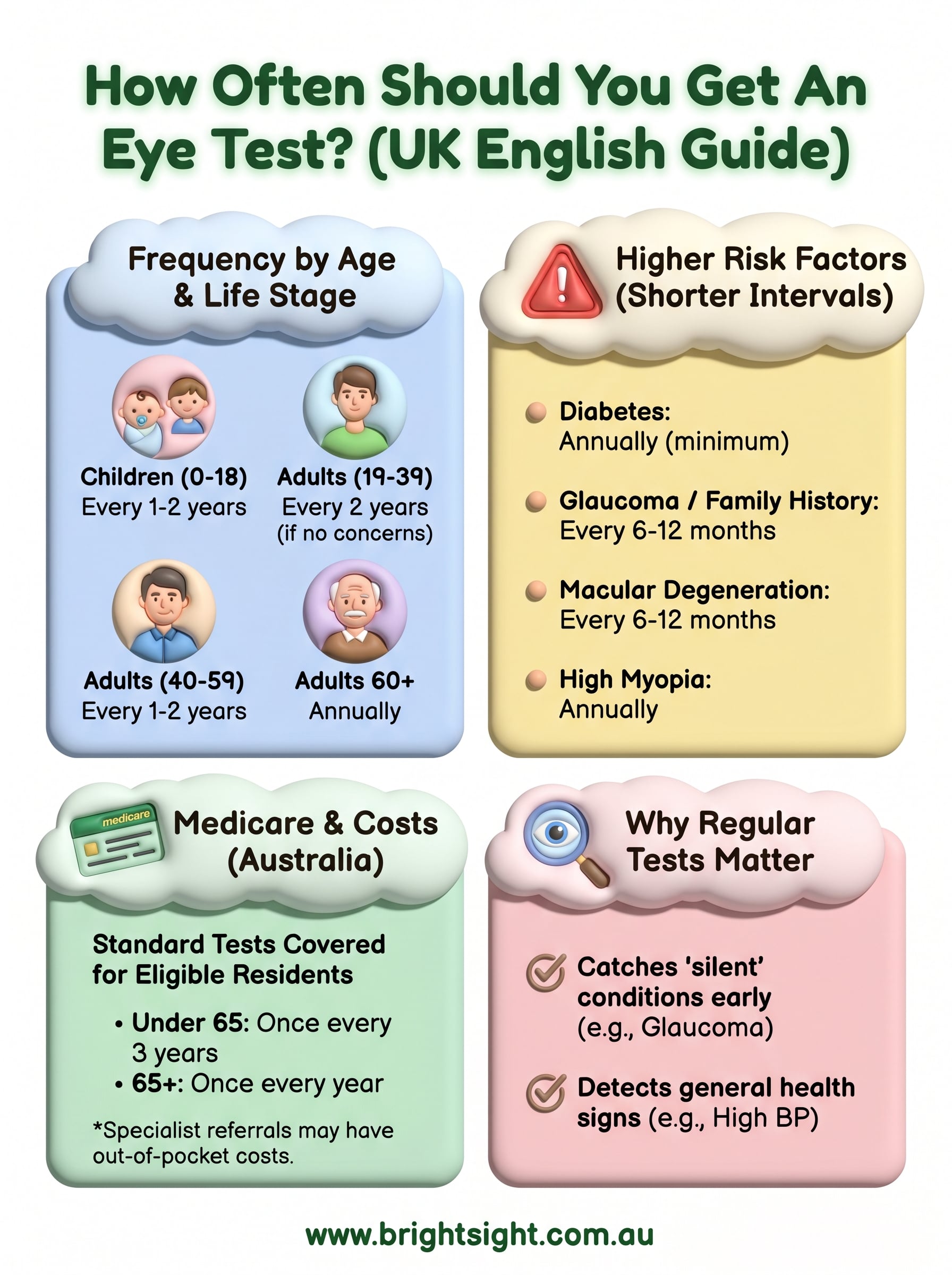
| Children (0-18) | Every 1-2 years, or earlier if flagged |
| Adults (19-39) | Every 2 years if no concerns |
| Adults (40-59) | Every 1-2 years |
| Adults 60 and over | Annually |
Adults aged 40 and over
From age 40, your risk of glaucoma, cataracts, and macular degeneration rises meaningfully, making tests every one to two years important even without symptoms.
Once you reach 60, annual eye checks become the standard recommendation across Australian clinical guidelines.
By this stage, changes in eye health can accelerate, and an annual appointment gives your specialist the best chance of catching anything early.
How often you need tests based on risk and conditions
Age gives a useful baseline, but existing health conditions and family history can significantly shift how often should you get an eye test. If you carry specific risk factors, waiting two years between appointments may leave too wide a gap for early detection, and your optometrist or ophthalmologist will usually advise a shorter testing schedule tailored to your situation.
If you have diabetes, macular degeneration, or a family history of glaucoma, annual or more frequent checks are strongly recommended.
Conditions that shorten the recommended interval
Diabetes is one of the most common reasons for more frequent testing. Diabetic retinopathy can develop and progress quickly, so most specialists recommend a yearly dilated eye examination at minimum, and more often if active changes are already present.
Other conditions that typically require shorter intervals include:
- Glaucoma or a family history of glaucoma: every 6 to 12 months
- Age-related macular degeneration: every 6 to 12 months depending on stage
- Previous retinal surgery or detachment: as directed by your specialist
- High myopia: annually, since it raises retinal detachment risk significantly
If you take long-term medications known to affect eye health, such as hydroxychloroquine, your ophthalmologist will build a personalised monitoring schedule based on your dosage and how long you have been using the medication.
Medicare rules and typical costs for eye tests in Australia
Medicare covers standard optometrist eye tests for eligible Australian residents, which means many people pay nothing out of pocket if their optometrist bulk bills. Under Medicare, you can claim a standard eye examination once every three years if you are under 65, and once every year if you are 65 or older.
Knowing your Medicare entitlements helps you plan your eye care without facing unexpected costs.
When you need to see an ophthalmologist
If your optometrist refers you to an ophthalmologist for a more detailed assessment, Medicare also covers part of that consultation cost. However, out-of-pocket fees vary depending on the specialist and the procedure involved. At Bright Sight Eye Specialists, pricing is transparent and discussed upfront so you know exactly what to expect before your appointment.
Costs beyond a standard check
Certain tests, such as visual field testing or retinal imaging, may attract additional fees not fully covered by Medicare. If you are managing a condition like glaucoma or macular degeneration, these tests become a regular part of understanding how often should you get an eye test and what each visit involves financially. Private health insurance generally does not cover outpatient consultations but may assist with surgical procedures when they become necessary.
What to expect at an eye test and when to see a specialist
A standard eye test covers more than just checking whether you need glasses. Your optometrist will assess visual acuity, eye pressure, and retinal health, using a combination of equipment and direct observation to build a complete picture of your eye health at that point in time.
What happens during a standard eye test
Most appointments run between 20 and 40 minutes. Your optometrist will test your sharpness of vision, check eye muscle function, examine the front and back of the eye, and measure intraocular pressure to screen for glaucoma. Many clinics also offer retinal photography as part of the standard check, which gives a useful baseline for comparison at future visits.
Understanding how often should you get an eye test helps you plan ahead, but knowing what each visit involves removes any hesitation about booking.
When to see an ophthalmologist instead
Your optometrist will refer you to an ophthalmologist when they detect something that requires more detailed assessment or surgical management. Conditions like cataracts, retinal detachment, macular degeneration, and glaucoma all benefit from specialist oversight. Seek a referral promptly if you experience sudden vision changes, flashes of light, a curtain across your vision, or a sharp increase in floaters, as these can indicate urgent retinal problems that need same-day attention.
Next steps for your eye health
Knowing how often should you get an eye test is useful, but acting on that knowledge is what actually protects your sight. If you are under 40 with no risk factors, book an appointment every two years as a baseline. If you are over 60, or managing diabetes, glaucoma, or macular degeneration, annual checks are the minimum you should aim for.
Start by seeing your optometrist if you do not already have one, and ask them directly about your personal testing schedule based on your age, health history, and family background. If they detect anything that needs closer attention, they will refer you to an ophthalmologist for a specialist review.
At Bright Sight Eye Specialists in Randwick, Dr Rahul Dubey and Dr Capucine Odouard offer expert assessment and personalised care for a wide range of eye conditions. Book a consultation with our team and take the next step in looking after your vision.