


One of the most common questions patients ask Dr. Rahul Dubey and the team at Bright Sight Eye Specialists is how fast does diabetic retinopathy progress, and the honest answer is that it varies significantly from person to person. Some people live with diabetes for years with minimal retinal changes, while others experience rapid progression within months if key risk factors aren’t controlled.
What makes diabetic retinopathy particularly concerning is that it often causes no symptoms in its early stages. By the time you notice vision changes, significant damage may already be present. That’s why understanding the typical timeline, and what influences it, matters so much for protecting your long-term sight.
This article breaks down each stage of diabetic retinopathy, the realistic timeframes involved, the factors that speed up or slow down progression, and the treatment options available at our Randwick practice to help preserve your vision. Whether you’ve just been diagnosed or you’re managing an existing condition, this guide gives you the clarity you need to take the right next steps.
Why diabetic retinopathy timing varies so much
Understanding how fast does diabetic retinopathy progress requires looking at the underlying biology first. Diabetic retinopathy develops when persistently high blood sugar levels damage the tiny blood vessels that supply your retina. Over time, those vessels leak fluid, swell, or grow abnormally, causing cumulative damage. The speed at which this happens depends on several overlapping factors, not just how long you’ve had diabetes.
Blood sugar control plays the biggest role
Your HbA1c level (a three-month average of your blood sugar) is the single strongest predictor of progression speed. Research consistently shows that poorly controlled blood sugar accelerates retinal damage, sometimes dramatically. The landmark Diabetes Control and Complications Trial found that intensive blood sugar management reduced the risk of diabetic retinopathy progression by up to 76% in people with type 1 diabetes.
Keeping your HbA1c as close to your target range as possible is the most effective way to slow retinal damage over time.
Even short periods of poor control can trigger changes in retinal blood vessels that don’t fully reverse when blood sugar improves. Damage accumulates over time, which is why consistent management matters far more than occasional good readings.
Type of diabetes and duration both matter
Type 1 diabetes typically carries a higher cumulative risk of retinopathy over a lifetime, largely because it often begins earlier and persists longer. Type 2 diabetes, however, is more common overall, and many people already have some degree of retinopathy at diagnosis because the condition may have been present for years without detection. The longer you’ve lived with diabetes, regardless of type, the greater the likelihood your retina has been exposed to sustained periods of elevated glucose.
Your blood pressure and cholesterol levels add another significant layer of risk. Elevated blood pressure in particular increases pressure inside retinal vessels, compounding the damage already caused by high blood sugar.
Stages and timeline, including the 4-2-1 rule
Diabetic retinopathy moves through four recognised stages, from mild non-proliferative diabetic retinopathy (NPDR) through to proliferative diabetic retinopathy (PDR), the most sight-threatening form. Understanding this progression helps you grasp how fast does diabetic retinopathy progress in a real clinical context.
The four stages explained
In mild and moderate NPDR, small blood vessel changes appear in the retina, typically causing no symptoms. Severe NPDR signals the disease is approaching its most dangerous phase, while PDR involves abnormal new vessel growth that can bleed into the eye and seriously threaten your sight.
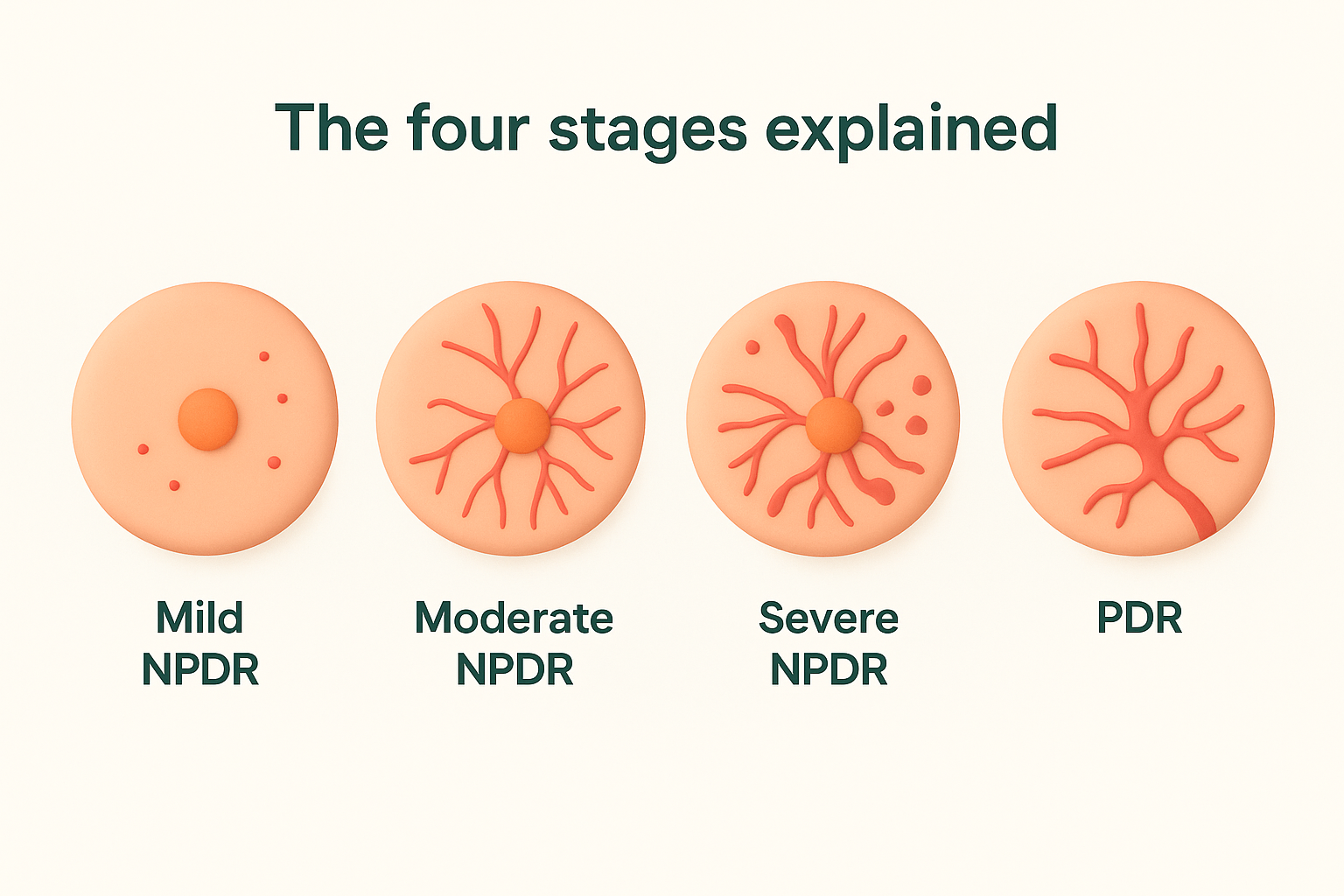
| Stage | Key feature |
|---|---|
| Mild NPDR | Microaneurysms only |
| Moderate NPDR | Broader vessel changes |
| Severe NPDR | 4-2-1 rule criteria met |
| PDR | Abnormal new vessels growing |
The 4-2-1 rule for severe NPDR
Ophthalmologists use the 4-2-1 rule to identify severe NPDR before it converts to PDR. You meet this threshold if haemorrhages appear in all 4 quadrants of the retina, venous beading in 2 or more quadrants, or intraretinal microvascular abnormalities in 1 or more quadrants.
Roughly 50% of people with severe NPDR develop proliferative retinopathy within one year without treatment.
After 20 years with diabetes, nearly all people with type 1 and more than 60% with type 2 have some degree of retinopathy.
What makes retinopathy progress faster or slower
Understanding how fast does diabetic retinopathy progress in your specific case comes down to a range of controllable and uncontrollable factors. While the duration of your diabetes sets the baseline risk, several overlapping variables either accelerate or slow the damage your retina experiences over time. Knowing which factors apply to you puts you in a better position to act.
Factors that speed progression
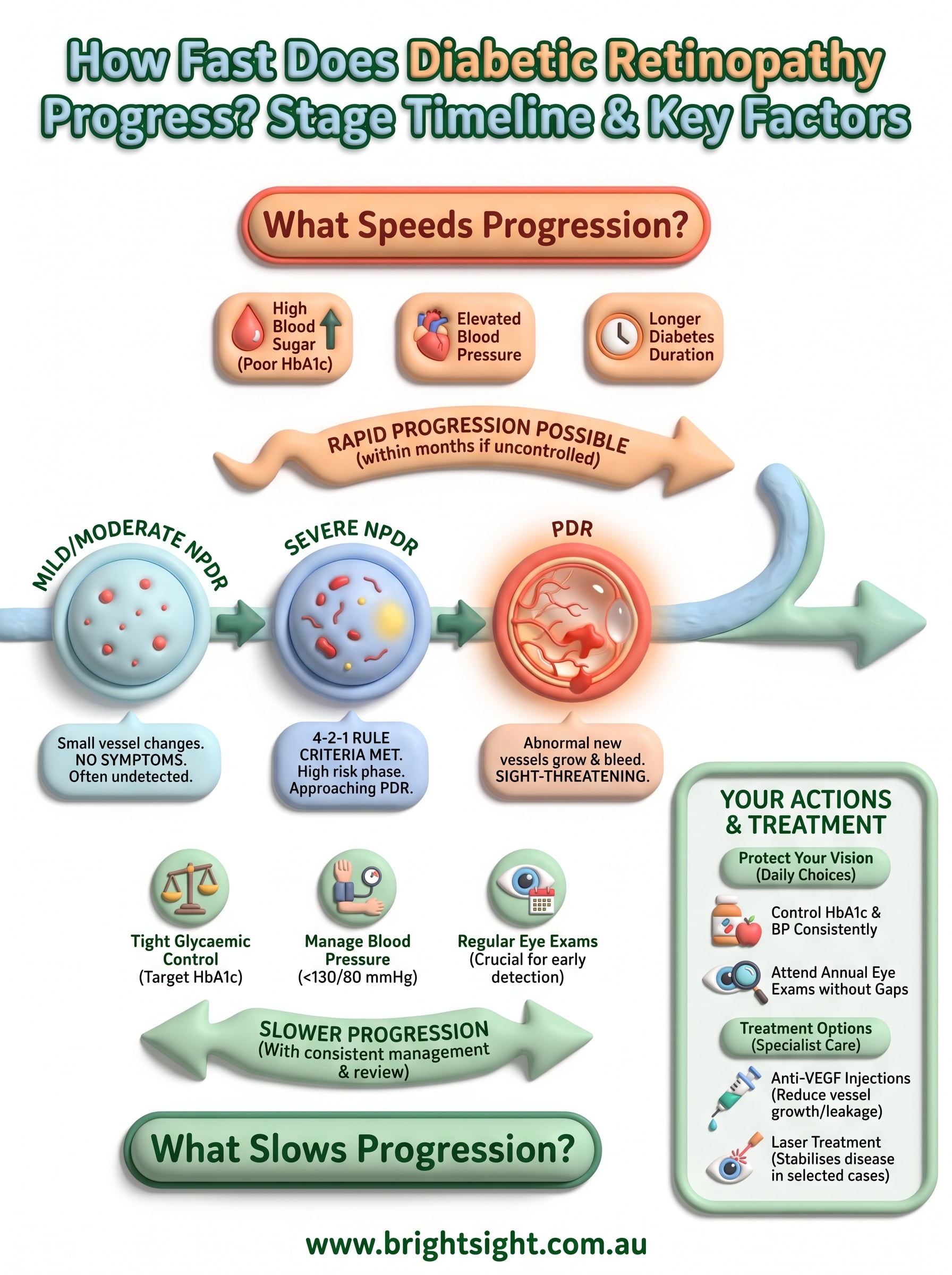
Poorly controlled blood sugar is the primary driver, but high blood pressure compounds retinal vessel damage significantly. Pregnancy, particularly in women with pre-existing type 1 diabetes, can trigger rapid retinal changes within months. Kidney disease is another accelerant, as diabetic nephropathy and retinopathy often advance together through shared vascular damage mechanisms.
If you have kidney disease alongside diabetes, your ophthalmologist needs to know, as your retinopathy risk increases substantially.
Factors that slow progression
Tight glycaemic control consistently slows retinal damage across multiple large-scale clinical studies. Managing blood pressure below 130/80 mmHg has shown meaningful protective effects in people with type 2 diabetes. Stopping smoking reduces vascular risk throughout your body, including your retina. Regular review with an eye specialist ensures any new changes get caught and treated before significant, irreversible vision loss occurs.
How eye specialists track progression and treat it
Knowing how fast does diabetic retinopathy progress in your case requires regular, structured monitoring. Eye specialists use several imaging and diagnostic tools to measure retinal changes over time, compare results against previous visits, and decide when treatment becomes necessary.
Monitoring tools used in practice
Optical coherence tomography (OCT) gives a detailed cross-section of your retina, detecting fluid and structural changes before you notice any symptoms. Fundus photography creates a photographic record at each visit so your specialist can identify even subtle changes across months or years.
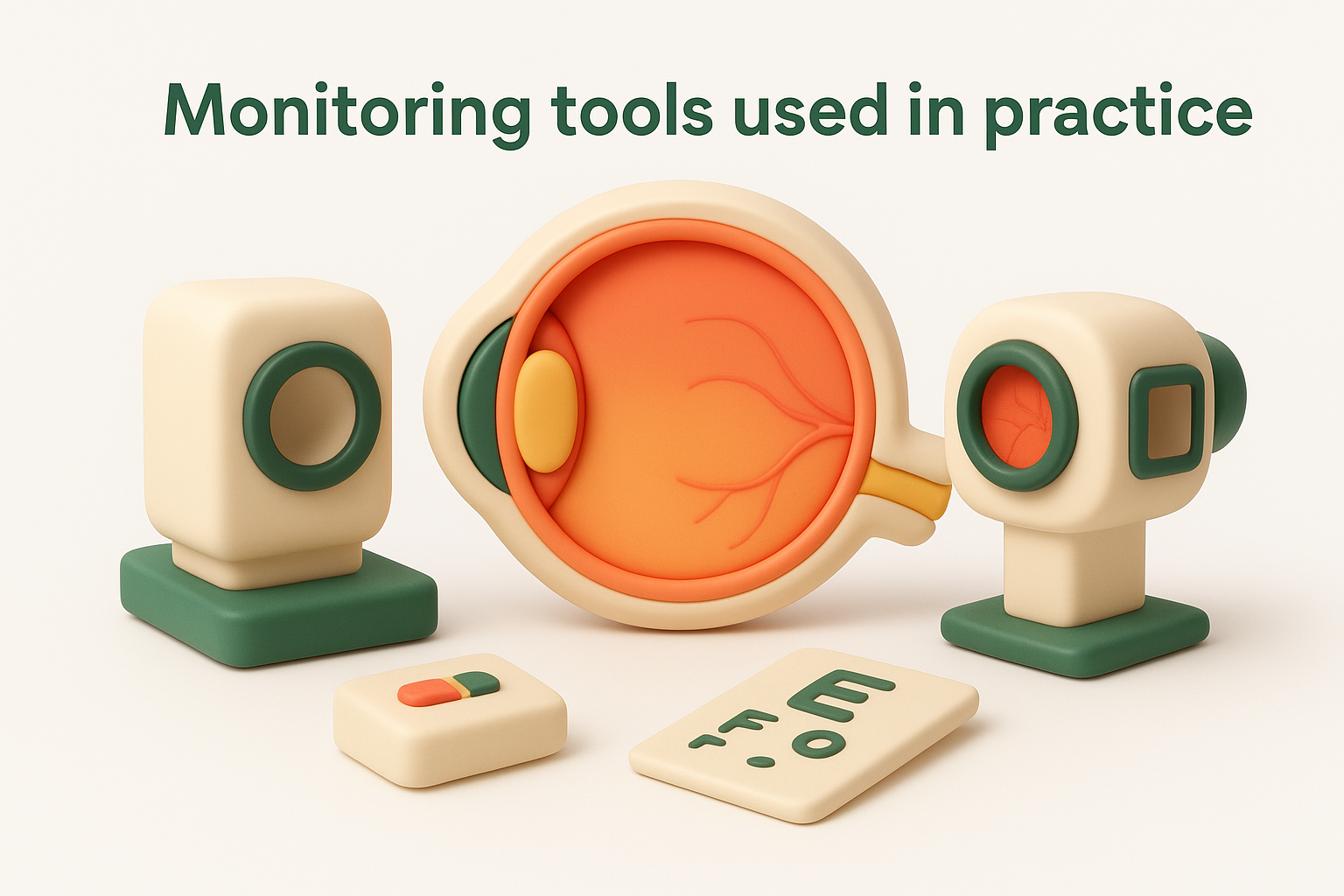
Beyond imaging, visual acuity testing gives your specialist a functional baseline, and fluorescein angiography maps blood vessel leakage when a more detailed assessment is needed.
Treatment options at each stage
Your treatment depends entirely on which stage you’ve reached when changes are detected. For early to moderate NPDR, the focus remains on controlling blood sugar and blood pressure rather than direct eye procedures. For severe NPDR or PDR, intravitreal anti-VEGF injections reduce abnormal vessel growth and leakage, while laser treatment stabilises the disease in selected cases.
Early treatment at the severe NPDR stage is significantly more effective than waiting for active bleeding or vision loss to occur.
At Bright Sight Eye Specialists in Randwick, Dr. Dubey delivers these treatments using precision-guided techniques tailored to your stage and goals.
How to slow progression and protect your vision
Whether you’ve just been diagnosed with early retinopathy or you’re already managing a known condition, your daily choices directly influence how fast does diabetic retinopathy progress over the coming years. The most effective protection combines consistent medical management with structured specialist review, and both matter equally.
Control your blood sugar and blood pressure consistently
Keeping your HbA1c within your target range is the single most powerful action you can take. Even modest reductions slow retinal damage meaningfully over time, and large clinical trials have confirmed this repeatedly. Managing blood pressure below 130/80 mmHg adds another layer of protection by reducing mechanical stress on fragile retinal vessels.
Stopping smoking lowers vascular risk throughout your entire body, including the small blood vessels inside your retina.
Attend your eye examinations without gaps
Annual dilated eye examinations give your specialist the opportunity to catch changes before they threaten your sight. Skipping appointments is where significant, preventable damage tends to occur, because early-stage retinopathy causes no pain or noticeable symptoms until it is quite advanced. If your retinopathy is progressing, your specialist may recommend reviews every three to six months to monitor closely and step in before further vision loss occurs.
Telehealth consultations are also available for patients in regional areas, meaning distance is no barrier to getting timely advice from a specialist.
Key takeaways and next steps
How fast does diabetic retinopathy progress depends on how well you manage blood sugar, blood pressure, and your commitment to regular specialist reviews. Early stages cause no symptoms, which makes structured monitoring the difference between catching changes in time and facing serious, preventable vision loss.
The most important actions you can take are straightforward: keep your HbA1c within your target range, manage blood pressure consistently, stop smoking if you haven’t already, and attend your annual dilated eye examinations without gaps. None of these steps require complex decisions, but skipping any of them significantly increases your risk of progressing to sight-threatening stages.
If you live in Sydney’s Eastern Suburbs or surrounding areas and want a thorough retinal assessment, the team at Bright Sight Eye Specialists is ready to help. Book an appointment with Dr. Rahul Dubey to get a clear picture of where your retina stands and what your next steps should be.