


Lutein is one of the most important nutrients for your eyes, yet most Australians don’t get enough of it. This carotenoid pigment accumulates in the macula (the central part of your retina responsible for sharp, detailed vision) and acts as a natural filter against blue light and oxidative damage. Research consistently shows that a diet rich in foods high in lutein for eyes can lower the risk of age-related macular degeneration and cataracts, two conditions we treat daily at Bright Sight Eye Specialists.
At our Randwick practice, Dr. Rahul Dubey and Dr. Capucine Odouard help patients manage and treat a wide range of eye conditions, from macular degeneration to diabetic eye disease. But we also believe prevention starts on your plate. That’s why we put together this guide: to give you a practical, evidence-based list of lutein-rich foods you can actually work into your meals.
Below, you’ll find five of the best dietary sources of lutein, how much you need each day, and simple ways to prepare them so your body absorbs as much of this nutrient as possible. Whether you’re looking to protect your vision long-term or support an existing treatment plan, these foods are a solid place to start.
1. Kale
At the top of nearly every list of foods high in lutein for eyes, kale stands out for good reason. It delivers more lutein per 100 grams than almost any other food you can put on your plate.
Why kale supports eye health
Your macula benefits enormously from lutein and zeaxanthin, two carotenoids that concentrate in your eye’s central region. These pigments work together to absorb harmful blue light and neutralise free radicals before they can damage your photoreceptors. A consistent intake is linked to a lower risk of both age-related macular degeneration and cataracts.
Regular consumption of lutein-rich vegetables like kale is one of the most evidence-backed dietary strategies for long-term macular protection.
Typical lutein content and serving size
A 100g serving of raw kale contains roughly 39mg of lutein, which is exceptionally high. Most nutritional guidance suggests targeting 6 to 10mg of lutein per day for meaningful eye health benefits, so even a modest portion of kale covers that comfortably.
The best ways to eat kale for lutein
Lightly sautéed or steamed kale preserves most of its lutein while softening the cell walls, which improves absorption. Practical options include:

- Stirred into soups or pasta at the end of cooking
- Sautéed with garlic and olive oil as a side
- Massaged raw into salads with a fat-based dressing
Tips to boost absorption and reduce waste
Lutein is fat-soluble, so your body absorbs it far better alongside a source of healthy fat. Pair kale with olive oil, eggs, or avocado to maximise how much your body actually uses from each meal.
Who should take extra care
If you take blood-thinning medication such as warfarin, speak to your doctor before eating significantly more kale. Kale is high in vitamin K, which can affect how these medications work.
2. Spinach
Spinach is a close second to kale in lutein content, and far easier for most people to incorporate into daily meals. Its mild flavour makes it one of the most practical foods high in lutein for eyes you can find at any supermarket.
Why spinach supports eye health
Spinach delivers lutein and zeaxanthin directly to your macula, reducing oxidative stress and filtering harmful blue light before it reaches your photoreceptors. Regular intake supports macular pigment density, which research links to lower rates of age-related macular degeneration.
Higher macular pigment density is consistently associated with better visual contrast sensitivity and a reduced risk of macular degeneration.
Typical lutein content and serving size
A 100g serving of raw spinach provides roughly 12mg of lutein, well above the 6 to 10mg daily target most eye health guidance recommends.
The best ways to eat spinach for lutein
Lightly cooking spinach releases more lutein than eating it raw, because heat breaks down the plant’s cell walls. Practical options include:
- Wilted into scrambled eggs
- Stirred through pasta or soup
- Blended into smoothies with other vegetables
Tips to boost absorption and reduce waste
Always pair spinach with a healthy fat source such as olive oil or avocado, since lutein is fat-soluble and your body absorbs very little of it without dietary fat present.
Who should take extra care
Spinach is high in oxalates, which can raise kidney stone risk in susceptible individuals. If you’re prone to kidney stones, speak to your doctor before significantly increasing your spinach intake.
3. Broccoli
Broccoli is one of the most accessible foods high in lutein for eyes. It’s affordable, easy to cook, and pairs well with other lutein-rich vegetables to help you hit your daily intake target.
Why broccoli supports eye health
Your retina benefits from lutein and zeaxanthin, which concentrate in the macula to filter blue light and reduce oxidative stress. Regular intake of broccoli supports long-term macular health and contributes to a lower risk of age-related eye disease.
Typical lutein content and serving size
A 100g serving of raw broccoli provides roughly 1.4mg of lutein, which is lower than kale or spinach but still a useful contributor toward your daily target of 6 to 10mg.
Combining broccoli with higher-lutein foods like kale or spinach across your meals is a practical way to reach your daily target without relying on a single food.
The best ways to eat broccoli for lutein
Light steaming retains more lutein than boiling, which leaches nutrients into the cooking water. Good options include:
- Steamed with a drizzle of olive oil
- Roasted as a side dish
- Chopped into stir-fries or pasta
Tips to boost absorption and reduce waste
Since lutein is fat-soluble, pair broccoli with olive oil, avocado, or cheese to improve how much your body absorbs from each serving.
Who should take extra care
Broccoli is safe for most people. If you have a thyroid condition or take thyroid medication, speak to your doctor before significantly increasing your intake of cruciferous vegetables.
4. Peas
Peas are an often-overlooked source among foods high in lutein for eyes. They’re affordable and widely available, making them easy to fold into your meals without overhauling your cooking routine.
Why peas support eye health
Your macula benefits from lutein and zeaxanthin, two carotenoids that peas deliver in useful amounts. These pigments shield your photoreceptors from blue light and oxidative damage, and regular intake contributes to a lower long-term risk of age-related macular degeneration.
Typical lutein content and serving size
A 100g serving of peas provides roughly 2.5mg of lutein. While lower than kale or spinach, peas are a reliable everyday contributor toward your daily target of 6 to 10mg when combined with other lutein-rich vegetables.
Eating a variety of lutein-rich vegetables across your meals is more practical than relying on a single high-dose source.
The best ways to eat peas for lutein
Lightly steaming or microwaving peas retains more lutein than boiling. Practical options include:
- Stirred into soups, pasta, or stir-fries
- Mixed through rice dishes
- Served as a side with a drizzle of olive oil
Tips to boost absorption and reduce waste
Since lutein is fat-soluble, pair peas with olive oil, butter, or cheese to improve how much your body absorbs from each serving.
Who should take extra care
Peas are safe for most people. If you have gout or elevated uric acid, moderate your intake and speak with your doctor, as legumes contribute to overall purine load.
5. Egg yolks
Egg yolks are one of the most bioavailable sources among foods high in lutein for eyes. Unlike plant-based sources, the lutein in egg yolks is bound to fat, which your body absorbs with exceptional efficiency.
Why egg yolks support eye health
Your macula concentrates lutein and zeaxanthin to protect photoreceptors from oxidative stress and blue light damage. Egg yolks deliver both carotenoids in a highly absorbable fat-bound form, making them uniquely effective even at lower doses.
Studies show the lutein in egg yolks is absorbed up to three times more efficiently than lutein from leafy vegetables.
Typical lutein content and serving size
A single large egg yolk provides roughly 0.2mg of lutein, which is modest compared to leafy greens. However, bioavailability is significantly higher, so two to three eggs daily contribute meaningfully to your overall intake when combined with other sources.
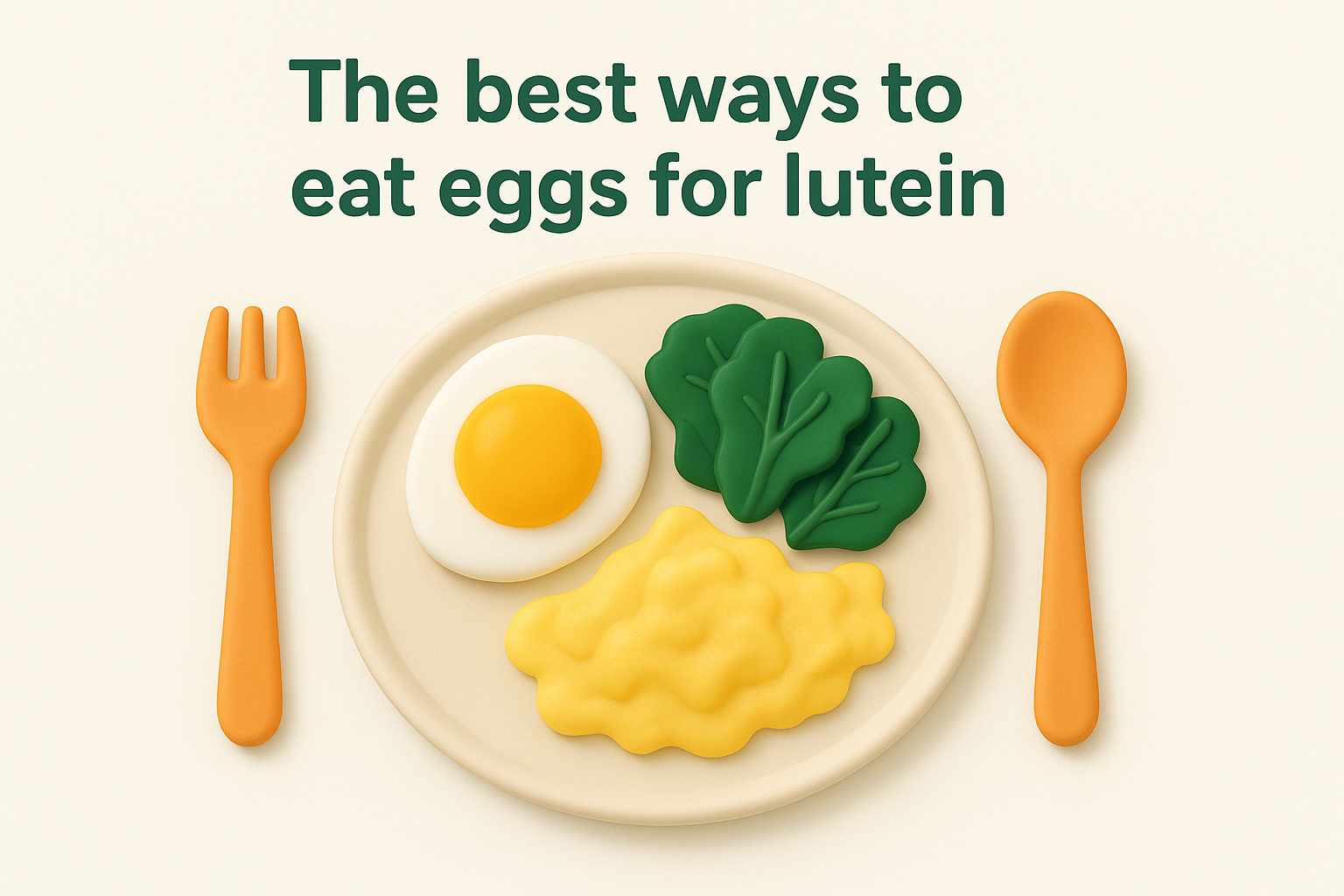
The best ways to eat eggs for lutein
Soft-cooked methods such as poached or lightly scrambled preserve more lutein than hard-boiling. Pair eggs with spinach or kale to stack your lutein intake from multiple sources in a single meal.
Tips to boost absorption and reduce waste
Eggs are already fat-rich, so your body absorbs lutein very efficiently from them without needing to add extra fat to the meal.
Who should take extra care
If your doctor has advised you to limit dietary cholesterol, discuss how many eggs fit safely into your weekly eating plan.
Next Steps
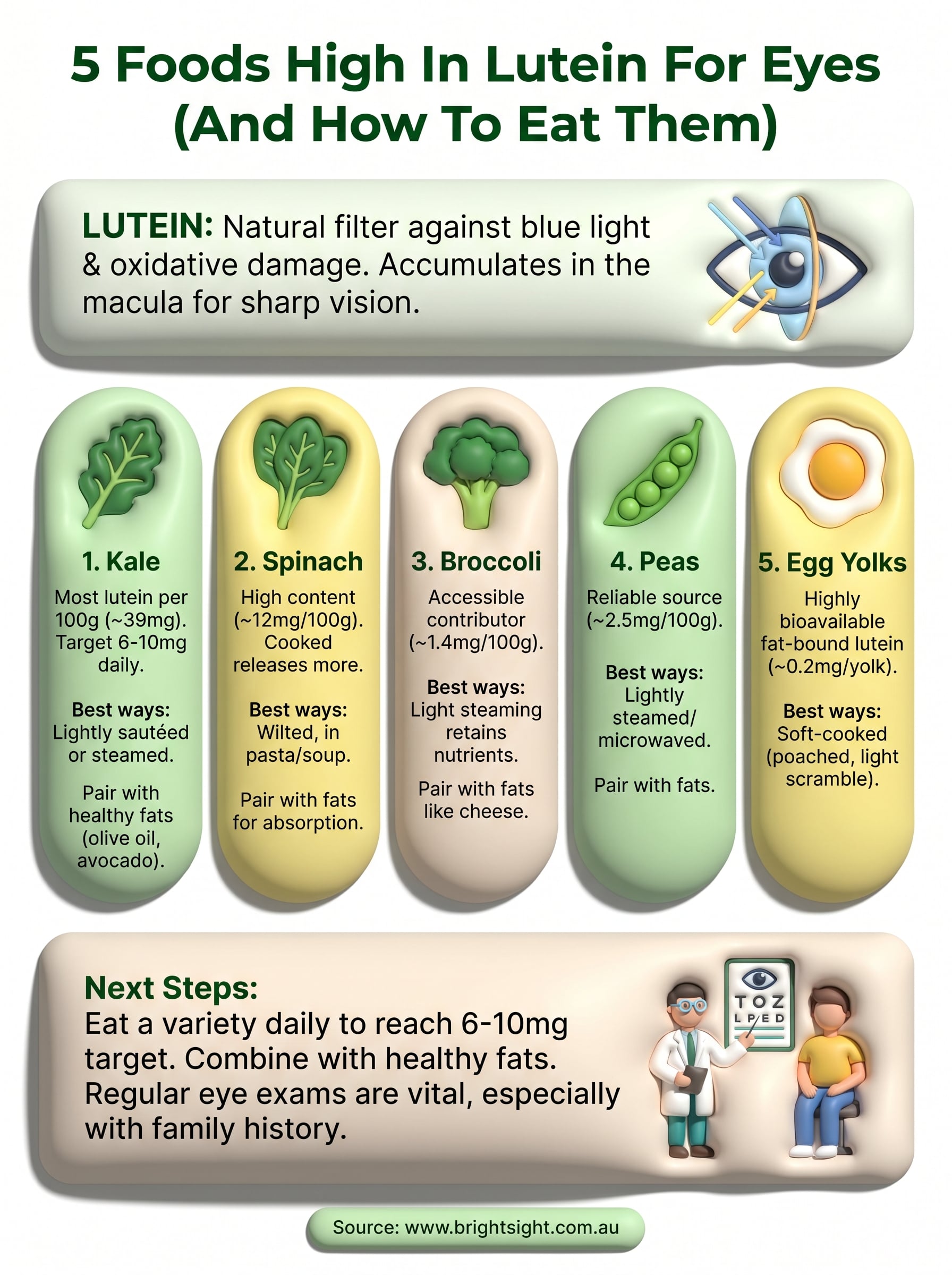
The five foods high in lutein for eyes covered in this guide give you a practical foundation for protecting your vision through diet. Eating a variety of these foods daily, rather than relying on a single source, is the most effective way to consistently reach the 6 to 10mg of lutein your macula needs. Pair each source with a healthy fat to make sure your body absorbs as much as possible from every meal.
Food is one layer of protection, but it works best alongside regular eye examinations. If you have a family history of macular degeneration, diabetes, or any change in your vision, a specialist review gives you a clearer picture of where your eye health stands and whether further action is needed.
At Bright Sight Eye Specialists in Randwick, Dr. Rahul Dubey and Dr. Capucine Odouard offer thorough assessments and personalised treatment plans. Book an appointment with our team to take that next step for your eye health.