


You might have noticed small specks, threads or cobwebs drifting across your vision when you look at a bright sky or white wall. These are eye floaters, tiny clumps of gel or cells inside your eye that cast shadows on your retina. Most people see them occasionally, and they become more common as you age. While floaters usually pose no threat to your sight, a sudden increase in their number can signal a serious problem that needs immediate attention.
This article explains what causes floaters and spots in your vision, when they require medical care, and what treatment options exist. You’ll learn how to tell the difference between harmless age related floaters and warning signs of retinal damage. We’ll cover the diagnostic process, available treatments, and practical steps you can take to protect your eye health. Whether you’ve just noticed your first floater or you’ve been seeing them for years, understanding what’s happening inside your eye helps you make informed decisions about your vision care.
Why floaters and spots in vision matter
Most floaters spots in vision are harmless age-related changes, but they can also indicate serious retinal problems that threaten your sight. Understanding the difference between normal floaters and warning signs helps you protect your vision from permanent damage. A sudden increase in floaters, especially when accompanied by flashes of light or vision loss, may signal a retinal tear or detachment that requires emergency treatment within hours to prevent blindness.

Recognising the warning signs
Your ability to spot concerning symptoms makes the difference between preserving your sight and facing irreversible vision loss. Retinal detachments progress rapidly, and delays in treatment can result in permanent blind spots or complete vision loss in the affected eye. Most people ignore mild floaters because they seem insignificant, yet dramatic changes in your vision demand immediate medical attention regardless of how minor they initially appear.
Even if floaters seem minor, sudden increases require same-day evaluation by an eye specialist to rule out retinal damage.
Daily activities become more challenging when floaters increase, affecting your ability to read clearly, drive safely, or work on screens comfortably.
How to respond when you notice floaters
Your response to floaters spots in vision depends on how suddenly they appear and whether you notice other symptoms alongside them. Not all floaters require emergency attention, but certain warning signs demand immediate action. You need to distinguish between gradual age-related changes and sudden developments that could indicate retinal damage.
When to seek immediate care
You must contact an eye specialist the same day if you experience a sudden increase in floaters, especially when accompanied by flashes of light, a grey curtain blocking part of your vision, or darkness spreading across your visual field. These symptoms suggest a potential retinal tear or detachment, which becomes irreversible without prompt surgical intervention. Don’t wait until the next morning or your regular optometrist appointment, as hours matter when your retina separates from the back of your eye.
Emergency symptoms require same-day specialist evaluation, not a wait-and-see approach that risks permanent vision loss.
Monitoring stable floaters
Your existing floaters that remain unchanged in number and don’t affect your vision need regular monitoring rather than emergency care. Schedule a routine eye examination within the next few weeks to document their appearance and ensure no underlying problems exist. Keep track of any changes in size, quantity, or interference with daily tasks, and report these observations during your appointment.
Common causes of eye floaters and spots
Your eye contains a gel-like substance called the vitreous humour that fills the space between your lens and retina. Over time, this gel changes consistency and develops clumps that cast shadows on your retina, creating the floaters you see. Understanding what causes these changes helps you assess whether your floaters spots in vision require medical attention or simply reflect normal ageing processes.
Age-related vitreous changes
The most common cause of floaters occurs when your vitreous gel liquefies as you age, typically after age 50. This natural process causes collagen fibres inside the vitreous to clump together, creating the specks, threads, or cobwebs you notice in your vision. The vitreous may also pull away from the back of your eye in a condition called posterior vitreous detachment, which produces a sudden increase in floaters but rarely causes serious problems.

While age-related floaters are usually harmless, any sudden increase warrants immediate evaluation to rule out retinal tears.
People with short-sightedness experience these changes earlier than those with normal vision, sometimes noticing floaters in their thirties or forties.
Other medical causes
Several medical conditions create floaters through different mechanisms than normal ageing. Retinal tears allow vitreous fluid to seep behind your retina, potentially leading to detachment if left untreated. Diabetic retinopathy damages blood vessels in your eye, causing bleeding into the vitreous that appears as dark floaters or cobwebs. Inflammation inside your eye from uveitis produces inflammatory cells that float in the vitreous, while eye injuries can shake loose debris that creates temporary floaters. Previous cataract surgery sometimes causes changes in the vitreous that lead to increased floaters, though this typically resolves within weeks.
Diagnosis and treatment options
Your eye specialist uses several diagnostic tests to determine whether your floaters spots in vision indicate a harmless age-related change or a condition requiring treatment. The examination process takes approximately 30 to 45 minutes and involves dilating your pupils to see the entire retina clearly. Most people experience blurred vision for several hours after dilation, so arrange transport home rather than driving yourself.
Diagnostic examinations
During your appointment, the ophthalmologist examines your retina and vitreous using specialised equipment that provides a magnified view of your eye’s internal structures. They check for retinal tears, detachments, or inflammation that might explain your symptoms. The examination includes measuring your eye pressure and assessing the vitreous gel’s consistency. Your specialist may use ultrasound imaging if blood or dense floaters prevent clear visualisation of your retina, particularly when ruling out serious complications like retinal detachment.
Available treatment approaches
Most floaters need no treatment because they don’t threaten your vision or significantly interfere with daily activities. Your brain learns to ignore stable floaters within weeks or months, making them less noticeable over time. However, you may require intervention if floaters severely impair your vision or indicate retinal damage.
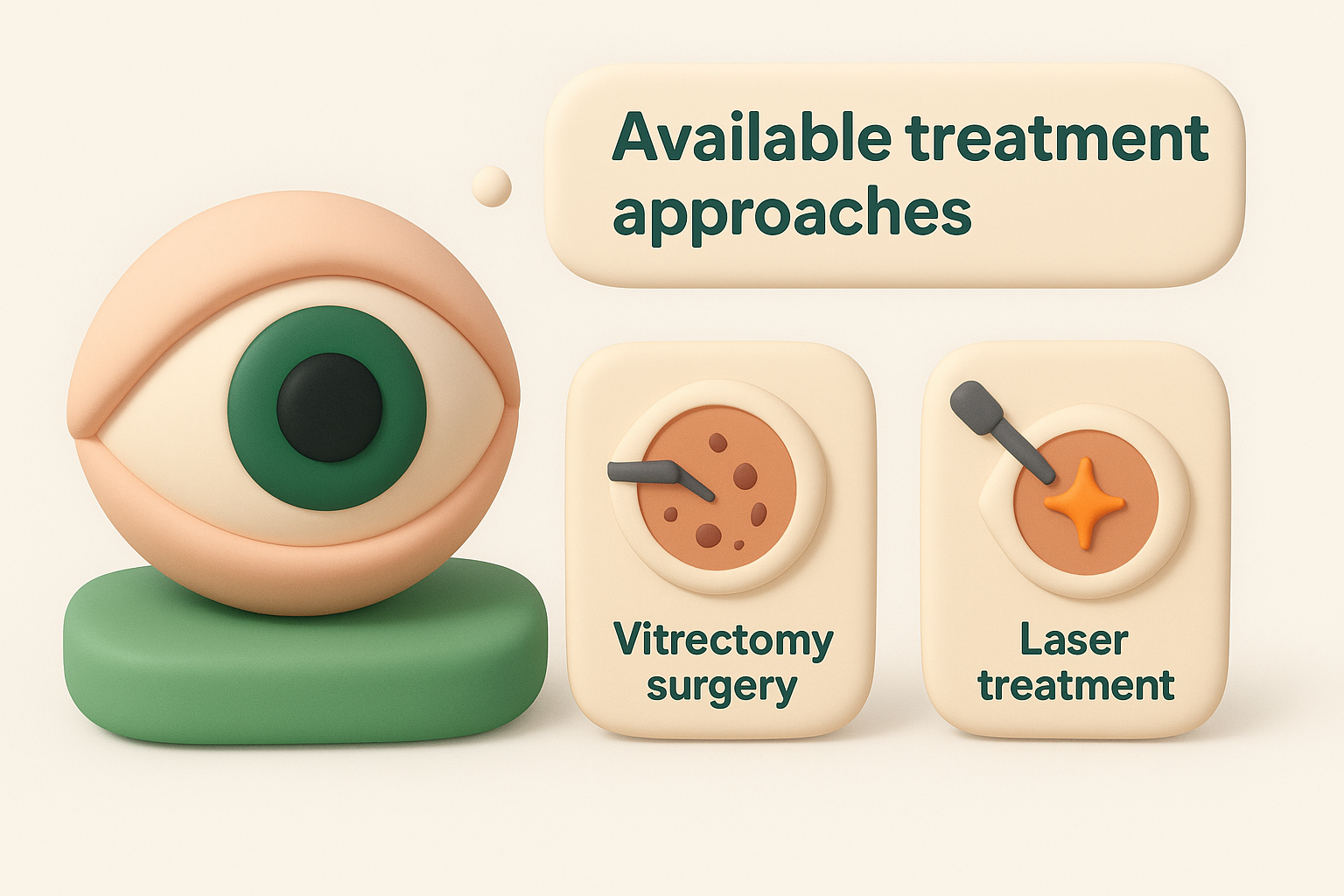
Treatment for floaters depends on their cause, with retinal tears requiring immediate laser or surgical repair to prevent vision loss.
Vitrectomy surgery removes the vitreous gel containing floaters and replaces it with a clear solution, though this carries risks including cataracts and retinal detachment. Laser vitreolysis uses targeted pulses to break up large floaters, making them less visible, but works only for specific types of floaters. Your specialist repairs retinal tears with laser treatment or cryotherapy, preventing progression to detachment and preserving your sight.
Living with floaters and protecting your eyes
Your brain naturally adapts to stable floaters over several weeks, making them less noticeable during daily activities. You can reduce their visibility by avoiding bright white backgrounds when reading or working on screens, and adjusting lighting to minimise contrast. Most people find floaters more apparent when tired or stressed, so maintaining regular sleep patterns helps reduce their impact on your quality of life.
Managing daily activities with floaters
Position yourself to avoid direct overhead lighting when reading, which creates harsh shadows that make floaters spots in vision more prominent. You might notice floaters less when using amber-tinted lenses outdoors or adjusting your screen brightness to warmer colour temperatures. These simple changes help minimise distraction without requiring medical intervention.
Preventive care strategies
Schedule annual eye examinations to monitor any changes in your floaters and detect early signs of retinal problems. Protecting your eyes from trauma by wearing safety glasses during sports or hazardous activities reduces your risk of injury-related floaters. Managing underlying conditions like diabetes through regular monitoring helps prevent complications that could worsen existing floaters or create new ones.
Regular eye examinations catch retinal problems early, when treatment options are most effective and vision outcomes are best.

Next steps for your eye health
Understanding floaters spots in vision helps you respond appropriately when changes occur in your eyesight. Schedule a comprehensive eye examination if you’ve noticed new floaters or any sudden changes in their appearance, as early detection of retinal problems prevents serious complications that could threaten your sight permanently. Your vision deserves expert attention from specialists who understand retinal conditions and provide both advanced diagnostic technology and treatment options tailored to your individual needs. Book a consultation at Bright Sight Eye Specialists to receive thorough evaluation and personalised care from experienced ophthalmologists serving Sydney’s Eastern Suburbs.