


Those tiny specks, threads, or cobweb-like shapes drifting across your field of view can be surprisingly distracting. If you’ve noticed these visual disturbances, you’re experiencing what eye specialists call floaters and vision changes, a phenomenon that affects millions of people, particularly as they age. While often harmless, floaters can sometimes signal something more serious happening inside your eye.
At Bright Sight Eye Specialists, Dr Rahul Dubey regularly sees patients concerned about these mysterious shapes in their vision. Understanding when floaters are simply a normal part of ageing versus when they require urgent attention can make a significant difference to your eye health outcomes. The key lies in recognising the warning signs that shouldn’t be ignored.
This article explains exactly what causes floaters, how they affect your vision, and the symptoms that warrant immediate professional assessment. You’ll learn about the different treatment options available, from watchful waiting to surgical intervention, and gain clarity on what steps to take if your floaters become bothersome or change suddenly. Whether you’ve just noticed your first floater or have lived with them for years, this guide provides the comprehensive information you need to make informed decisions about your eye care.
What eye floaters are and how they affect vision
Eye floaters are small, moving shapes that appear in your field of view when you look at bright, uniform backgrounds like blue skies or white walls. These visual disturbances come from tiny clumps of cells or protein that form inside the vitreous, the clear, gel-like substance filling the space between your lens and retina. As light passes through your eye, these clumps cast shadows on your retina, creating the shapes you perceive as floaters.

The vitreous gel makes up approximately 80% of your eye’s volume and has a consistency similar to raw egg white when you’re young. Over time, this gel naturally begins to liquefy and shrink, pulling away from the back wall of your eye. This normal ageing process causes collagen fibres within the vitreous to clump together, producing the shadows you see as floaters and vision changes.
The appearance and behaviour of floaters
Floaters manifest in various forms depending on what’s causing them. You might see small dots, circles, lines, clouds, or cobweb-like strands drifting across your vision. These shapes move when you move your eyes and seem to dart away when you try to look at them directly. The shadows shift position because they’re floating freely in the liquid vitreous, following the movement of your eye with a slight lag.
Different types of floaters have distinct characteristics. Microscopic floaters appear as tiny specks that you notice occasionally, while larger, denser floaters can be quite prominent and distracting. Some people describe seeing what looks like a ring or circle shape, which often results from a Weiss ring, a piece of tissue that breaks away during posterior vitreous detachment.
The floaters you see aren’t actually on your eye’s surface but are casting shadows from inside your eye, which is why rubbing your eyes doesn’t make them disappear.
How floaters impact daily activities
Most people adapt to floaters over time, but they can significantly affect your quality of life depending on their size, number, and location. Reading becomes challenging when floaters drift across text, particularly on bright white pages or digital screens. You might find yourself constantly shifting your gaze to move floaters out of your central vision.
Activities requiring clear vision against light backgrounds pose the greatest difficulty. Driving on sunny days, working on computers, and outdoor activities can become frustrating when floaters repeatedly cross your line of sight. The impact varies considerably between individuals, with some barely noticing their floaters whilst others find them genuinely disabling to daily function.
Why floaters happen
The primary cause of floaters and vision changes stems from natural alterations in your eye’s vitreous gel. As you reach your 40s and beyond, the vitreous begins to break down from its firm gel-like consistency into a more liquid state. This process, called vitreous syneresis, causes the collagen fibres within the gel to clump together, creating the shadows you perceive as floaters across your vision.
Natural ageing and vitreous changes
Your eyes undergo significant structural changes as you age. The vitreous shrinks and pulls away from the back wall of your eye, a process called posterior vitreous detachment (PVD). This separation typically occurs between ages 50 and 75, though it can happen earlier if you’re short-sighted. When the vitreous detaches, it releases small particles and fibres that float freely, casting shadows on your retina and creating the visual disturbances you notice.
Approximately 75% of people over 65 experience posterior vitreous detachment, making it one of the most common age-related eye changes.
Myopia accelerates this process considerably. If you have moderate to severe short-sightedness, your elongated eyeball structure makes vitreous breakdown occur earlier in life, sometimes even in your 20s or 30s. The longer shape of your eye creates more space for the vitreous to move and separate.
Other contributing factors
Several conditions beyond ageing trigger floater development. Eye inflammation (uveitis) releases inflammatory particles into the vitreous, whilst eye trauma from sports injuries or accidents can cause bleeding or tissue fragments to appear as floaters. Previous eye surgery, particularly cataract procedures, sometimes accelerates vitreous changes. Diabetic retinopathy and retinal tears also produce floaters when blood or cellular debris enters your vitreous cavity.
When floaters are a warning sign
While most floaters and vision changes represent benign age-related processes, certain symptoms signal serious conditions requiring immediate medical attention. Your eye health depends on recognising these warning signs quickly, as conditions like retinal detachment can cause permanent vision loss if left untreated for even a few days.
Sudden onset of new floaters
The appearance of multiple new floaters within hours or days indicates potential retinal problems. You should seek urgent assessment if you notice a sudden shower of floaters, particularly if they appear like small dots or specks scattered across your vision. This symptom often suggests bleeding in your vitreous or a retinal tear beginning to form.
A sudden increase in floaters, especially when accompanied by other symptoms, requires same-day evaluation by an eye specialist to rule out retinal detachment.
Flashes of light and vision changes
Bright flashes of light in your peripheral vision, especially when combined with new floaters, suggest your retina may be tearing or detaching. These flashes occur when your vitreous tugs on the retina, stimulating the light-sensitive cells. The flashes typically appear as brief streaks or arcs of light, most noticeable in dim environments or when moving your eyes quickly.
Additional warning symptoms
Partial vision loss resembling a curtain or shadow moving across your visual field requires emergency care within hours. You should also contact an eye specialist immediately if floaters suddenly multiply, if you notice a dark spot in your central vision, or if floaters appear after eye trauma or surgery. These symptoms might indicate serious complications needing prompt treatment to preserve your sight.
How eye specialists diagnose floaters
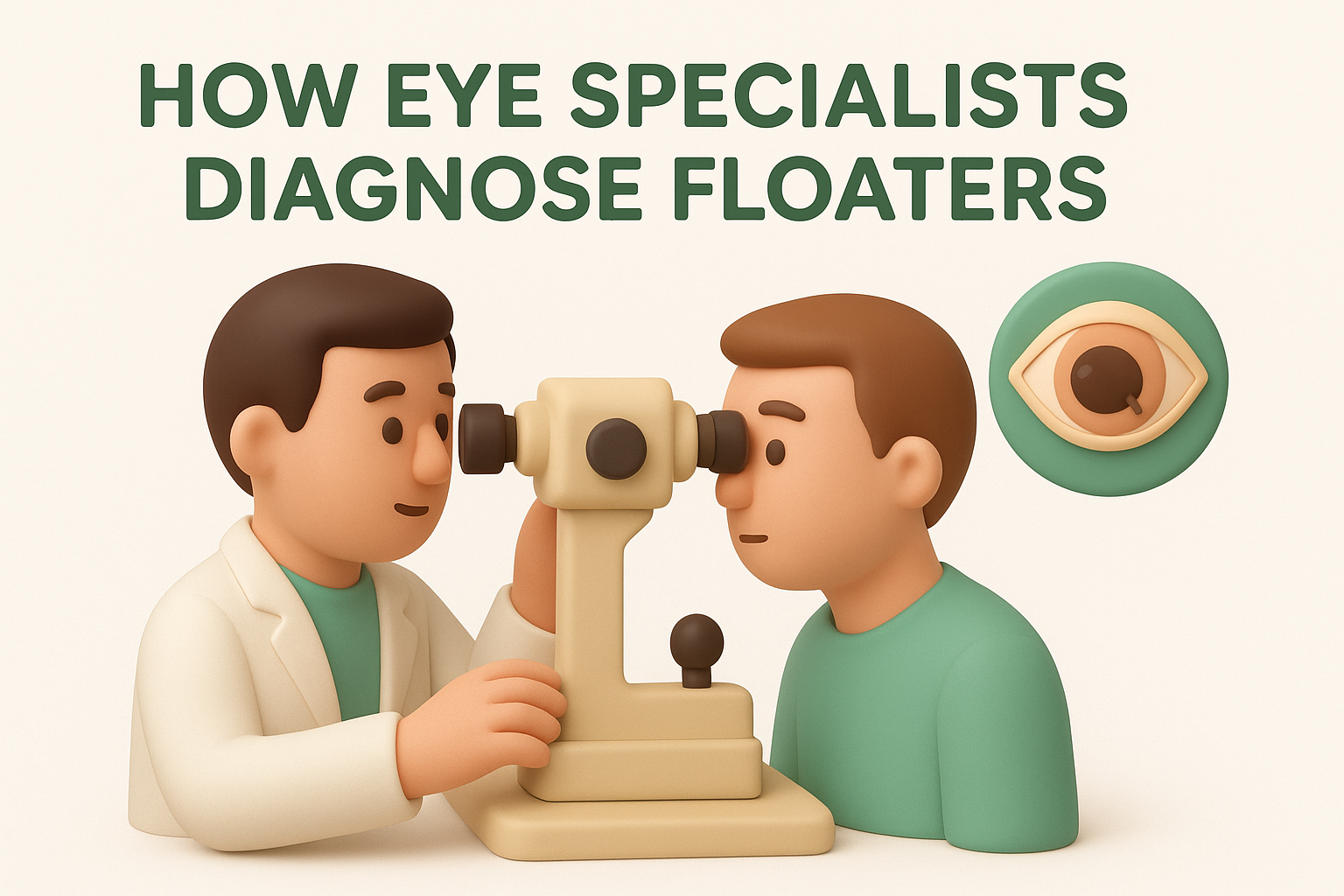
Your eye specialist uses a systematic approach to determine whether your floaters and vision changes represent normal ageing or signal a serious condition. The diagnostic process involves detailed questioning about your symptoms, their onset, and any accompanying issues, followed by a comprehensive examination of your eye’s internal structures. This thorough assessment helps identify whether your floaters require treatment or simply monitoring over time.
Initial consultation and history
During your consultation, your specialist asks specific questions about when you first noticed the floaters, how many appeared, and whether you experienced flashes of light or vision loss. They’ll enquire about your medical history, including diabetes, eye injuries, previous surgeries, and family history of retinal problems. This information helps identify risk factors that might indicate a more serious underlying condition requiring urgent intervention.
Dilated eye examination
The examination begins with eye drops that dilate your pupils, allowing your specialist to view the entire interior of your eye. After 20 to 30 minutes, once your pupils widen fully, they use a slit lamp with special lenses to examine your vitreous gel and retina in detail. This process reveals the size, location, and density of floaters whilst checking for retinal tears, detachment, or bleeding.
A dilated eye examination remains the only reliable method to assess whether floaters indicate retinal damage, making it essential for anyone experiencing sudden changes in their vision.
Your specialist may also perform additional imaging tests, such as optical coherence tomography (OCT), to create detailed cross-sectional images of your retina if they suspect complications beyond simple floaters.
How to manage floaters and protect your sight
Most people with floaters and vision changes don’t require medical treatment, though you can take practical steps to reduce their impact on your daily life. Your brain often adapts to floaters over time, making them less noticeable as weeks and months pass. Understanding your management options helps you maintain quality of life whilst protecting your long-term eye health.
Conservative management and adaptation
Learning to work around floaters makes them less disruptive to your activities. You can shift your gaze to move floaters out of your central vision when they drift into view during reading or computer work. Adjusting screen brightness and using anti-glare filters reduces the contrast that makes floaters more visible. Some people find relief by looking up and down rapidly to redistribute the vitreous gel temporarily, though this provides only short-term improvement.
Your brain’s remarkable ability to filter out constant visual stimuli means most people notice their floaters less over time, even though the floaters themselves remain present.
When treatment becomes necessary
Specialist treatment becomes appropriate if floaters severely impair your vision or significantly affect your daily activities. Vitrectomy surgery removes the vitreous gel containing floaters, replacing it with clear saline solution. This procedure carries risks including retinal detachment and cataract formation, which is why specialists reserve it for genuinely disabling floaters.
Protecting your future vision
Regular eye examinations help detect retinal problems early, particularly if you have risk factors like high myopia or diabetes. You should maintain consistent monitoring with your optometrist and attend scheduled check-ups with your eye specialist if you’ve experienced concerning symptoms previously.

Next steps for clearer vision
Understanding floaters and vision changes puts you in complete control of your eye health. If you experience a sudden increase in floaters, notice flashes of light, or detect any vision loss, contact an eye specialist immediately. These symptoms require assessment within hours, not days, to protect your sight from permanent damage that can occur with untreated retinal detachment.
For stable floaters that have been present for months or years, annual eye examinations remain sufficient for monitoring your condition. Your optometrist can track changes and refer you if necessary. However, if floaters significantly interfere with daily activities despite adequate time for adaptation, discussing treatment options with a specialist becomes worthwhile.
Dr Rahul Dubey at Bright Sight Eye Specialists provides comprehensive retinal assessments and treatment for problematic floaters in Randwick. The practice offers transparent pricing and thorough diagnostic services using advanced technology, helping you make informed decisions about managing your vision concerns with expert, personalized care.