


A flashing black dot in vision can appear without warning, while you’re reading, driving, or simply looking at a clear sky. It might drift when you move your eyes, flicker briefly, or persist in a way that feels unsettling. For most people, the immediate question is the same: is this something serious?
The answer depends on several factors, including whether the dot appeared suddenly, whether it’s accompanied by flashes of light, and whether your field of vision has changed. Some causes are harmless. Others, like retinal detachment, require urgent treatment to protect your sight.
At Bright Sight Eye Specialists in Randwick, Dr. Rahul Dubey and Dr. Capucine Odouard diagnose and treat the full range of conditions behind these symptoms, from common vitreous floaters to complex retinal disease. This article explains what causes flashing black dots, what the warning signs look like, and when you should act.
Why a flashing black dot matters
Your eyes rely on a precise, layered structure to work correctly, and symptoms like a flashing black dot in vision act as signals that something inside that structure may have changed. Unlike a headache or a sore muscle, visual symptoms can point directly to tissue damage that has no pain warning system. That is why eye specialists treat these symptoms seriously, even when they appear minor.
The anatomy that produces the symptom
The retina lines the back of your eye and converts light into electrical signals your brain reads as images. In front of it sits the vitreous, a gel-like substance that fills most of the eyeball. Over time, the vitreous naturally changes consistency, shrinks, and can tug away from the retinal surface. That tugging can produce floaters, flashes, or dark spots. If the tug is strong enough, it can cause a retinal tear, which then risks progressing to a full retinal detachment.
A retinal tear does not cause pain, which means a flashing or drifting black dot may be the only warning sign you get before something serious develops.
Why the timing and pattern change everything
A gradual onset of a small, stable floater over several months is usually benign. A sudden appearance of a new dot, especially when paired with flashes of light, a shower of specks, or a shadow spreading across your visual field, suggests that the retina may be under stress right now. Your eye lacks pain receptors in the retina itself, so discomfort is not a reliable guide. Many people lose the window for the simplest treatment because they wait to see if the symptom resolves on its own. It rarely does when the underlying cause is structural.
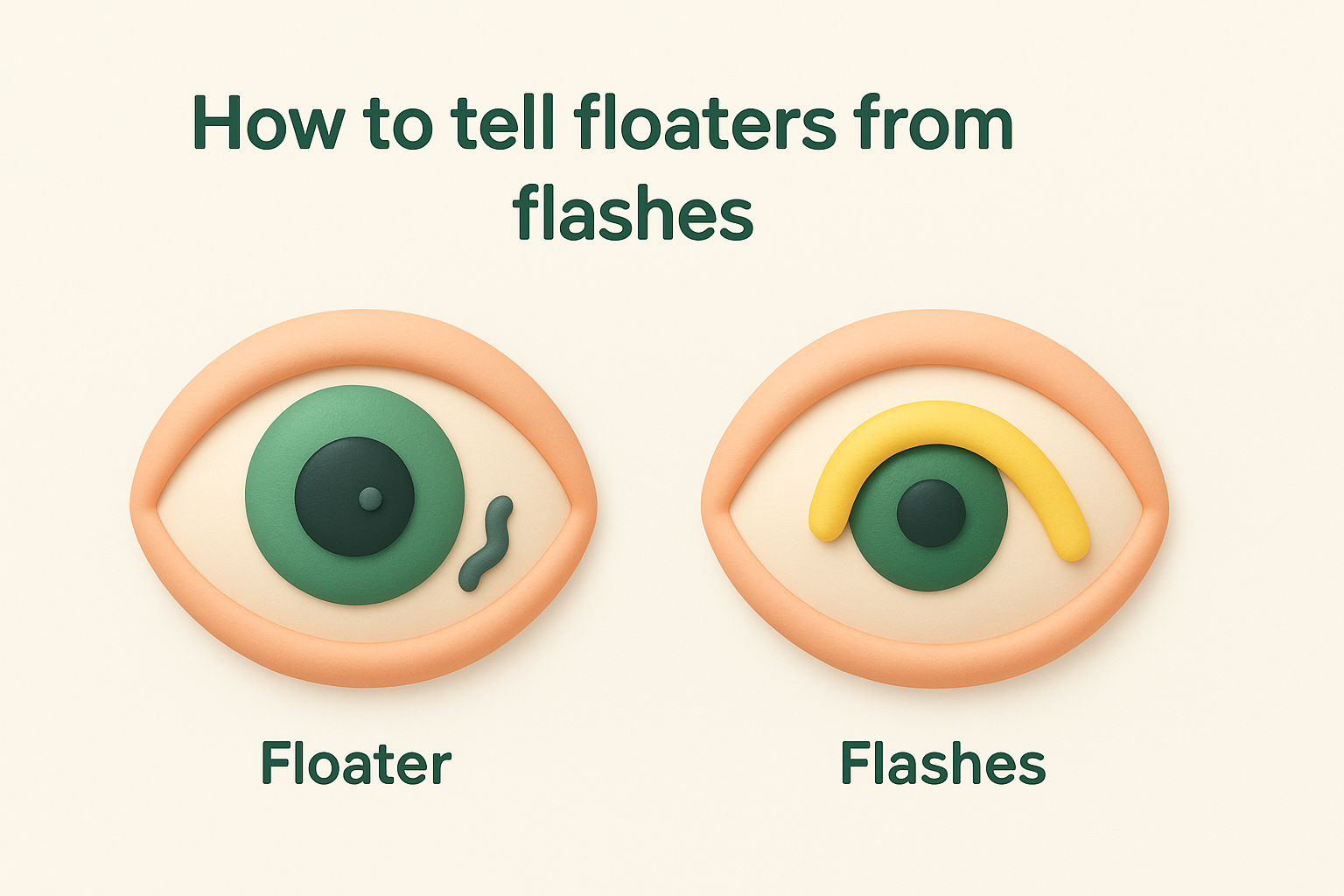
How to tell floaters from flashes
Floaters and flashes are often grouped together, but they feel different and signal different things. Knowing which one you are experiencing helps you describe your symptoms clearly to a specialist and gives you a better sense of urgency.
What a floater looks like
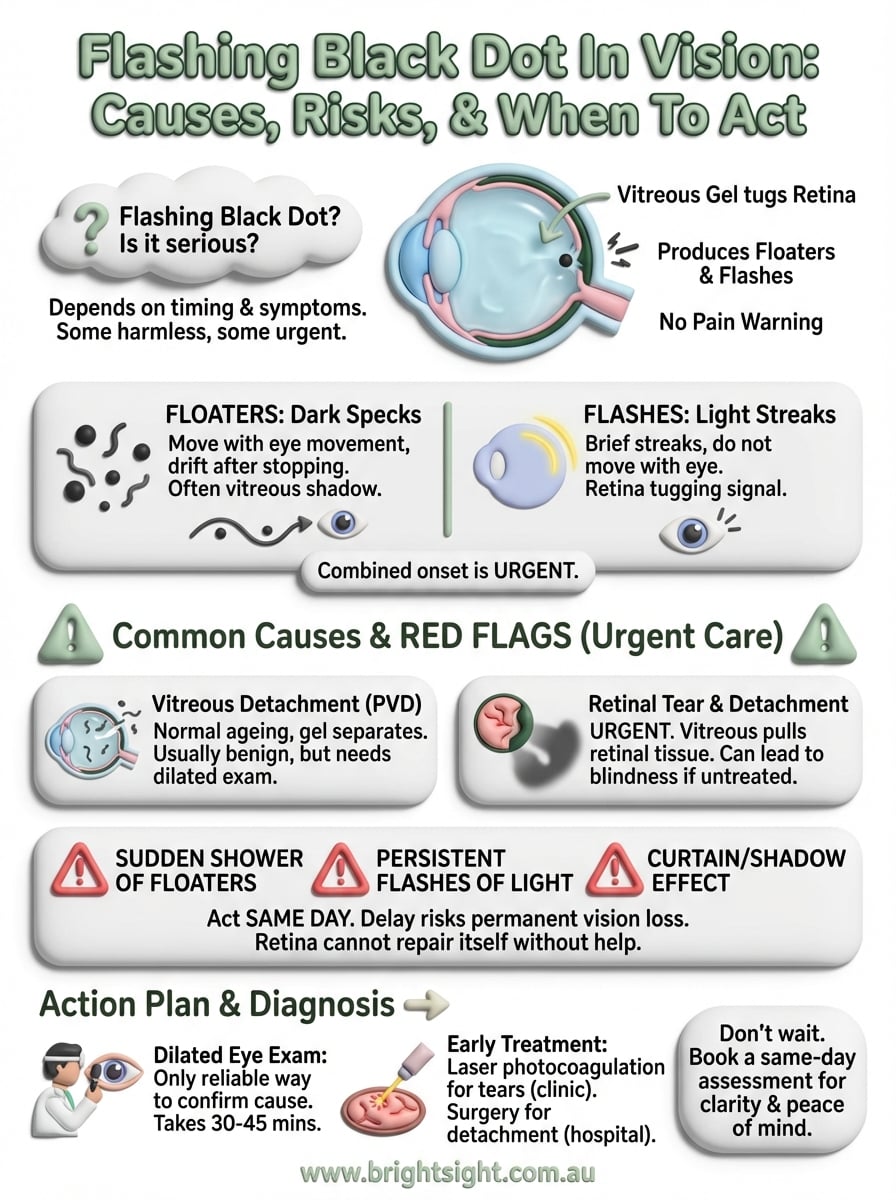
A floater is a dark speck, dot, thread, or cobweb shape that moves when your eye moves and drifts slightly after you stop. A flashing black dot in vision that shifts as you look around is typically a floater. It sits inside the vitreous and casts a shadow onto your retina, which is why it appears dark rather than transparent.
What a flash looks like
Unlike a floater, a flash appears as a brief streak or arc of light, usually at the edge of your vision, and it does not move with your eye. It occurs when the vitreous pulls or tugs on the retina, stimulating the light-sensitive cells there. Flashes often last only a second and can be easy to dismiss as a trick of the light.
If you notice both a new floater and repeated flashes at the same time, treat that combination as urgent until a specialist tells you otherwise.
Common causes and what they feel like
Several conditions can produce a flashing black dot in vision, and they range from a routine age-related change to a genuine emergency. Understanding the most common causes helps you communicate your symptoms clearly and respond at the right speed.
Vitreous changes and posterior vitreous detachment
The most frequent cause is a posterior vitreous detachment (PVD), where the vitreous gel separates from the retinal surface as part of normal ageing. You will typically notice one or more new floaters that drift and bob when your eye moves, sometimes alongside brief flashes at the periphery of your vision. PVD affects most people over 60 and is usually harmless, though it still warrants a dilated eye exam to confirm no tearing has occurred.
A new onset of floaters after age 50, even without flashes, should be examined within 24 to 48 hours to rule out a retinal tear.
Retinal tears and detachment
A retinal tear happens when the separating vitreous pulls hard enough to break through the retinal tissue. You may experience a sudden cluster of new specks, persistent flashes, or a grey curtain or shadow moving in from the side of your vision. These symptoms require same-day assessment, as a tear can progress to retinal detachment within hours or days.
Red flags that need urgent care
Some symptoms that come with a flashing black dot in vision move beyond routine concern and into genuine emergency territory. The retina cannot repair itself once detached without surgical intervention, so recognising these warning signs early gives you the best chance of a full recovery.
If you experience any of the symptoms below, contact an eye specialist or present to an emergency eye clinic on the same day, as delays can result in permanent vision loss.
Symptoms that signal an emergency
Certain changes in your vision point to active retinal stress that cannot wait for a routine appointment. A sudden increase in floaters, particularly a shower of new dark specks appearing at once, suggests bleeding or tearing inside the eye. Persistent flashes of light in your peripheral vision, lasting more than a day, indicate the vitreous is still pulling on the retinal surface.
The most serious sign is a shadow or curtain effect spreading across one section of your visual field, as this typically means the retina has already begun to detach. You may also notice that your central vision becomes blurred or distorted quite quickly. Any one of these signs requires same-day assessment, not a wait-and-see approach.
What an eye specialist will do
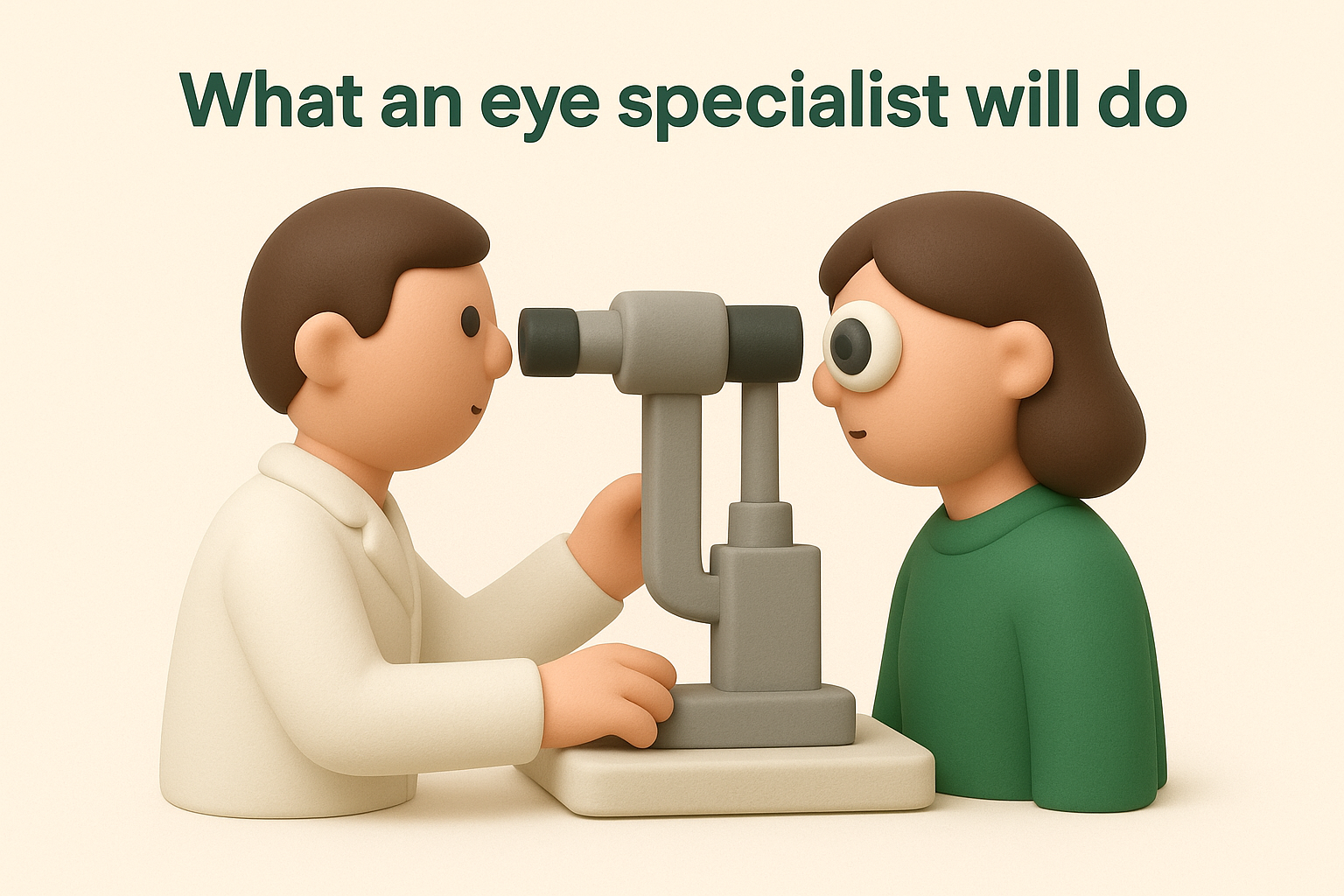
When you visit a specialist with a flashing black dot in vision or related symptoms, the appointment follows a structured process to identify exactly what is happening inside your eye and determine the right response.
Examination and diagnosis
Your specialist will dilate your pupils using eye drops, which opens them wide enough to examine the retina and vitreous in detail. The exam takes around 30 to 45 minutes and gives a clear view of the retinal surface, including any tears or early signs of detachment.
A dilated eye exam is the only reliable way to confirm whether a floater or flash has a serious structural cause.
Ultrasound imaging may also be used if the view is partially blocked by vitreous bleeding or other changes inside the eye.
Treatment options
If a retinal tear is detected early, your specialist can seal it using laser photocoagulation or cryotherapy, both performed in the clinic without general anaesthetic. Retinal detachment requires surgery, typically a vitrectomy or scleral buckle, carried out in hospital.
Finding the problem early almost always means a simpler treatment and a significantly better long-term outcome for your vision.
Next steps for peace of mind
A flashing black dot in vision is not something to monitor from home and hope resolves itself. Most people who act quickly, either by calling their optometrist the same day or going directly to an eye specialist, find that the cause is manageable or benign. Those who wait, particularly when red flag symptoms are present, risk the kind of retinal damage that surgery cannot fully reverse.
If your symptoms appeared suddenly, have changed in the last few days, or include flashes alongside new floaters, book an assessment without delay. Even if the cause turns out to be a routine posterior vitreous detachment, the only way to confirm that safely is through a dilated eye exam.
At Bright Sight Eye Specialists in Randwick, Dr. Rahul Dubey and Dr. Capucine Odouard provide thorough retinal assessments with clear answers and a direct path to treatment if needed. Book an appointment today and get the clarity your vision deserves.