


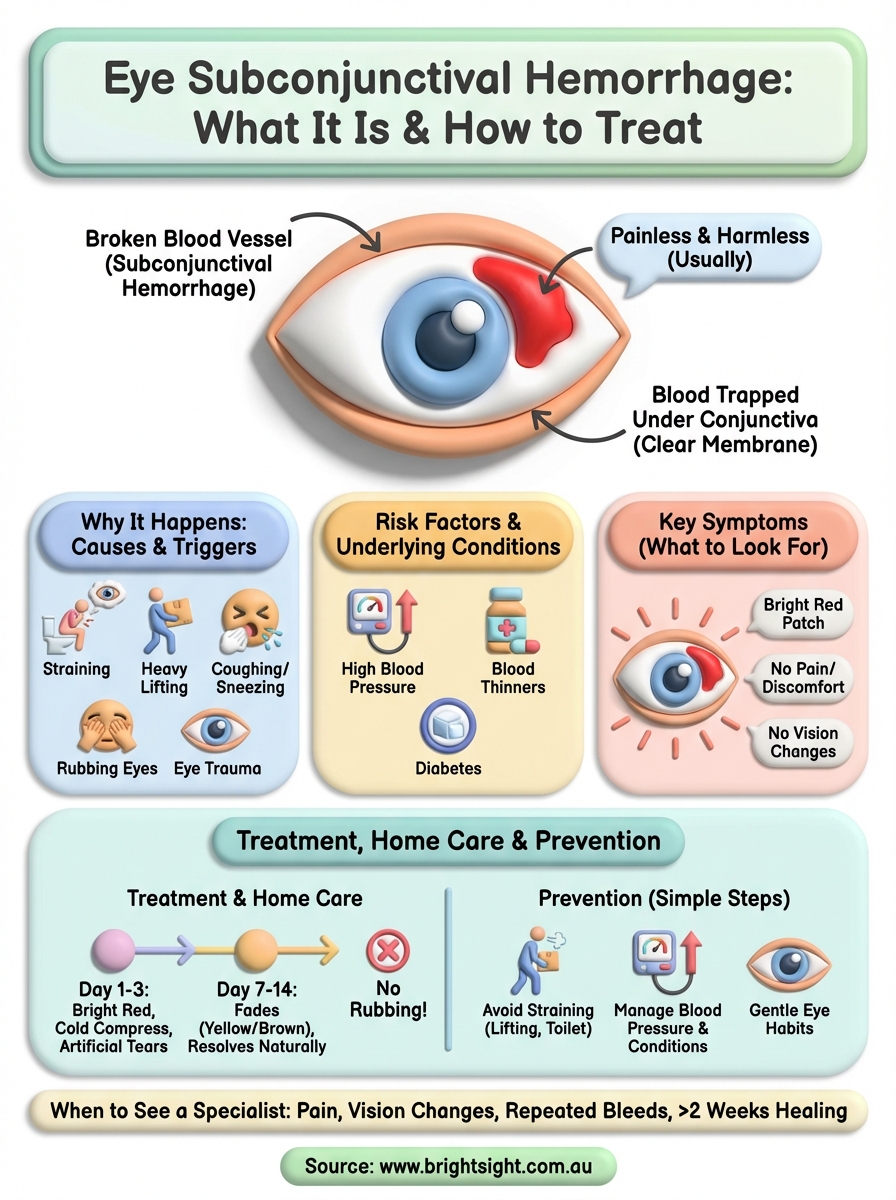
You wake up, look in the mirror, and notice a bright red patch covering part of the white of your eye. This alarming sight is called an eye subconjunctival hemorrhage. It happens when tiny blood vessels beneath the conjunctiva (the clear membrane covering your eye) break and leak blood. While the appearance can be shocking and may cause concern, this condition is usually harmless and painless. The blood gets trapped between the conjunctiva and the white part of your eye, creating a vivid red spot that can range from small to covering most of the visible white area.
This article explains why these blood vessel breaks occur, how to recognize the symptoms, and what you can do to manage the condition at home. You’ll learn about treatment options, prevention strategies, and when it’s time to see a specialist. We’ll also cover the typical healing timeframe, what to expect during recovery, and signs that might indicate a more serious problem requiring medical attention.
Why tiny blood vessels in the eye break
The blood vessels in your conjunctiva are extremely delicate and fragile. These capillaries sit just beneath the surface of the clear membrane covering your eyeball, making them vulnerable to rupture from even minor pressure changes or trauma. When one or more of these vessels breaks, blood leaks out and spreads beneath the conjunctiva, creating the characteristic bright red patch you see. The good news is that these breaks typically happen for benign reasons and don’t signal damage to your actual eye structure.
Common everyday triggers
You can develop an eye subconjunctival hemorrhage from surprisingly ordinary activities. Straining during bowel movements ranks as one of the most common causes, as the sudden pressure spike can burst these delicate vessels. Heavy lifting, intense coughing fits, violent sneezing, or even vigorous rubbing of your eyes can produce the same result. Direct trauma to the eye from objects, fingers, or contact lens insertion also triggers these bleeds frequently.
Even actions as simple as bending over quickly or holding your breath during exercise can create enough pressure to rupture conjunctival blood vessels.
Medical conditions that increase risk
Certain health conditions make you more susceptible to developing these eye bleeds. High blood pressure weakens blood vessel walls throughout your body, including those in your eyes, making them prone to spontaneous rupture. If you take blood-thinning medications such as aspirin, warfarin, or newer anticoagulants, your blood doesn’t clot as readily, which means minor vessel breaks can lead to more noticeable bleeding. Diabetes, blood clotting disorders, and inflammatory conditions affecting blood vessels also increase your risk of experiencing subconjunctival haemorrhages.
How to identify a subconjunctival haemorrhage
Recognizing an eye subconjunctival hemorrhage is straightforward because the bright red patch on the white of your eye stands out immediately. You’ll typically notice it when looking in a mirror or when someone else points it out to you. The blood stays confined to a specific area and doesn’t spread across your entire eye or affect your pupil or iris. Unlike other eye conditions that develop gradually, this red patch often appears suddenly, sometimes overnight, without any warning signs beforehand.
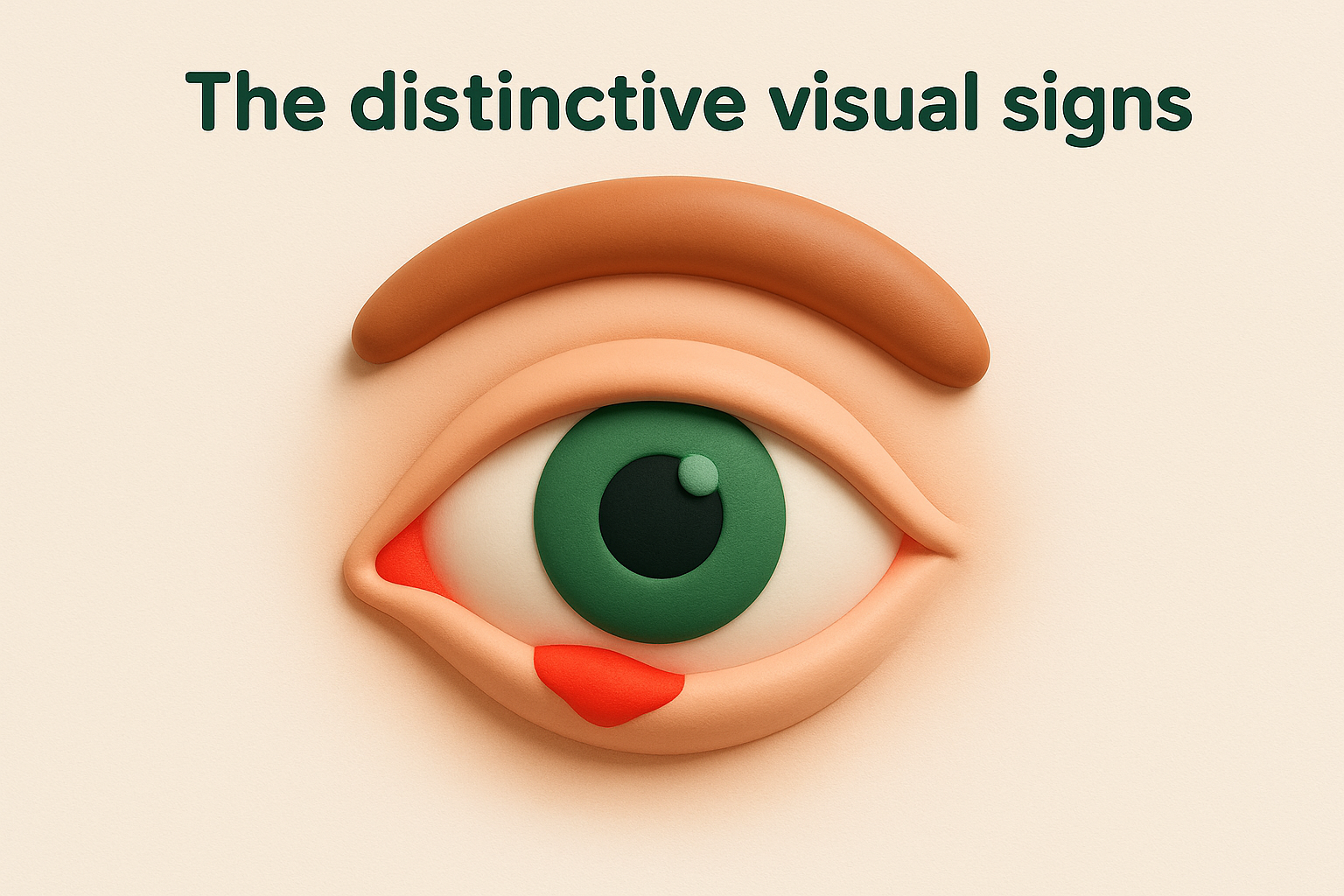
The distinctive visual signs
The blood patch appears as a flat, bright red area against the white background of your eye. It may start small and expand over the first day or two as blood continues to pool beneath the conjunctiva. The edges remain well-defined rather than blurred, and the redness doesn’t fade when you blink or rinse your eye with water. You might see the entire affected area or just a portion depending on which blood vessel ruptured and how much blood leaked out.
Symptoms you won’t experience
Unlike serious eye injuries, you won’t feel pain, itching, or discomfort from a subconjunctival haemorrhage. Your vision remains completely normal, with no blurriness, spots, or blind areas. You won’t notice any discharge, increased tearing, or light sensitivity either.
The absence of pain or vision changes helps distinguish a harmless subconjunctival haemorrhage from conditions requiring urgent medical attention.
How to treat and manage the condition
Most cases of eye subconjunctival hemorrhage resolve on their own without any specific medical intervention. Your body naturally absorbs the trapped blood over time, just as it would heal a bruise on your skin. The healing process typically takes between seven and fourteen days, during which the red patch gradually fades through various shades of yellow and brown before disappearing completely. You don’t need prescription medications or special eye drops to speed up this natural healing timeline.
Simple home care steps
You can manage the condition comfortably at home using basic supportive measures. Apply artificial tears or lubricating eye drops if your eye feels scratchy or dry, though most people experience no discomfort. Avoid rubbing your affected eye, as this can worsen the bleeding or delay healing. Use a cold compress for the first day if you notice any mild swelling around the area.
Your body handles the healing process automatically, breaking down and reabsorbing the blood just as it would with any other minor bruise.
When doctors prescribe treatment
Medical treatment becomes necessary only when an underlying condition contributed to your eye bleed. Your doctor might adjust your blood pressure medications or review your blood-thinning therapy if these factors played a role. Treatment focuses on preventing recurrence rather than treating the hemorrhage itself.
How to prevent future eye bleeds
You can significantly reduce your risk of developing another eye subconjunctival hemorrhage by making simple lifestyle modifications and managing any underlying health conditions properly. Prevention focuses on avoiding sudden pressure changes that strain delicate blood vessels and keeping your overall vascular health in good condition. Most people who experience one episode can prevent recurrence through these straightforward protective measures.
Lifestyle adjustments that protect blood vessels
Avoid activities that create sudden pressure spikes in your head and eyes. Use proper lifting techniques by bending your knees instead of straining your back, and exhale steadily during heavy lifting rather than holding your breath. Address chronic constipation through dietary changes by increasing fibre intake and drinking adequate water, which prevents the straining that commonly triggers these bleeds. Treat persistent coughs or allergies that cause violent sneezing episodes promptly to minimize repeated eye vessel stress.

Gentle habits during daily activities create the most effective protection against recurrent eye haemorrhages.
Managing health conditions properly
Work with your doctor to control high blood pressure through medication, diet, and regular monitoring. If you take blood-thinning medications, maintain consistent dosing schedules and attend regular blood tests to ensure your levels stay within the therapeutic range. People with diabetes should keep blood sugar levels stable to prevent blood vessel damage throughout the body, including the delicate vessels in your eyes.
When to consult an eye specialist
While most cases of eye subconjunctival hemorrhage clear up without medical intervention, certain situations require professional evaluation to rule out serious underlying problems. You should contact an eye specialist if the red patch doesn’t fade after two weeks, as this extended timeline might indicate a more complex issue. Schedule an appointment if you experience repeated bleeds in the same eye or both eyes over a short period, as this pattern suggests an underlying medical condition needs addressing.
Signs requiring immediate attention
Seek urgent medical care if you develop pain, vision changes, or light sensitivity alongside the red patch, as these symptoms don’t occur with simple subconjunctival haemorrhages. Contact a specialist immediately if the bleeding followed significant eye trauma or if you notice blood in other parts of your eye beyond the white surface. Discharge, swelling of the eyelid, or difficulty moving your eye warrant prompt evaluation to exclude infection or more serious injury.
Vision changes or eye pain accompanying a red patch always require immediate professional assessment to protect your eyesight.
Recurrent episodes need investigation
Visit an eye specialist if you experience three or more episodes within a year, even if each one heals normally. Frequent recurrence often points to poorly controlled blood pressure, blood clotting disorders, or other vascular problems requiring management. Your specialist can identify and address these underlying causes to prevent future episodes.
Keeping your eyes healthy
Understanding eye subconjunctival haemorrhage helps you recognize when a startling red patch requires medical attention and when it will resolve naturally through your body’s healing processes. Most cases heal completely without intervention, but regular eye examinations remain essential for catching potential problems early and maintaining optimal vision. You protect your eye health by maintaining healthy blood pressure, managing chronic conditions properly, and avoiding activities that create sudden pressure spikes in delicate blood vessels.
Schedule comprehensive eye check-ups every one to two years, or more frequently if you have diabetes, high blood pressure, or other conditions affecting your vascular health. Your eye specialist can detect early warning signs of serious conditions before they threaten your sight and quality of life. If you experience recurrent eye bleeds, persistent vision changes, or other concerning symptoms, contact Bright Sight Eye Specialists for expert evaluation and personalized treatment plans. Professional assessment provides peace of mind and ensures any underlying issues receive prompt, appropriate care.