


When something goes wrong with your vision, or you’re told you need eye surgery, knowing which professional to see matters. An eye doctor ophthalmologist is a medical specialist trained to diagnose, treat, and operate on conditions affecting the eyes, from cataracts and glaucoma to retinal detachment and macular degeneration. They’re different from optometrists, and understanding that distinction can save you time, stress, and potentially your sight.
But what exactly does an ophthalmologist do day to day? When should you see one instead of your regular optometrist? And what should you expect during that first appointment? These are the questions most people have, especially when they’ve just received a referral or noticed changes in their vision that feel more serious than needing new glasses. At Bright Sight Eye Specialists in Randwick, Sydney, Dr Rahul Dubey and Dr Capucine Odouard provide advanced surgical and medical eye care across a wide range of conditions.
This article breaks down the role of an ophthalmologist clearly: what they treat, how their training differs from other eye care providers, and the signs that it’s time to book a consultation with one.
What an ophthalmologist is and how they differ
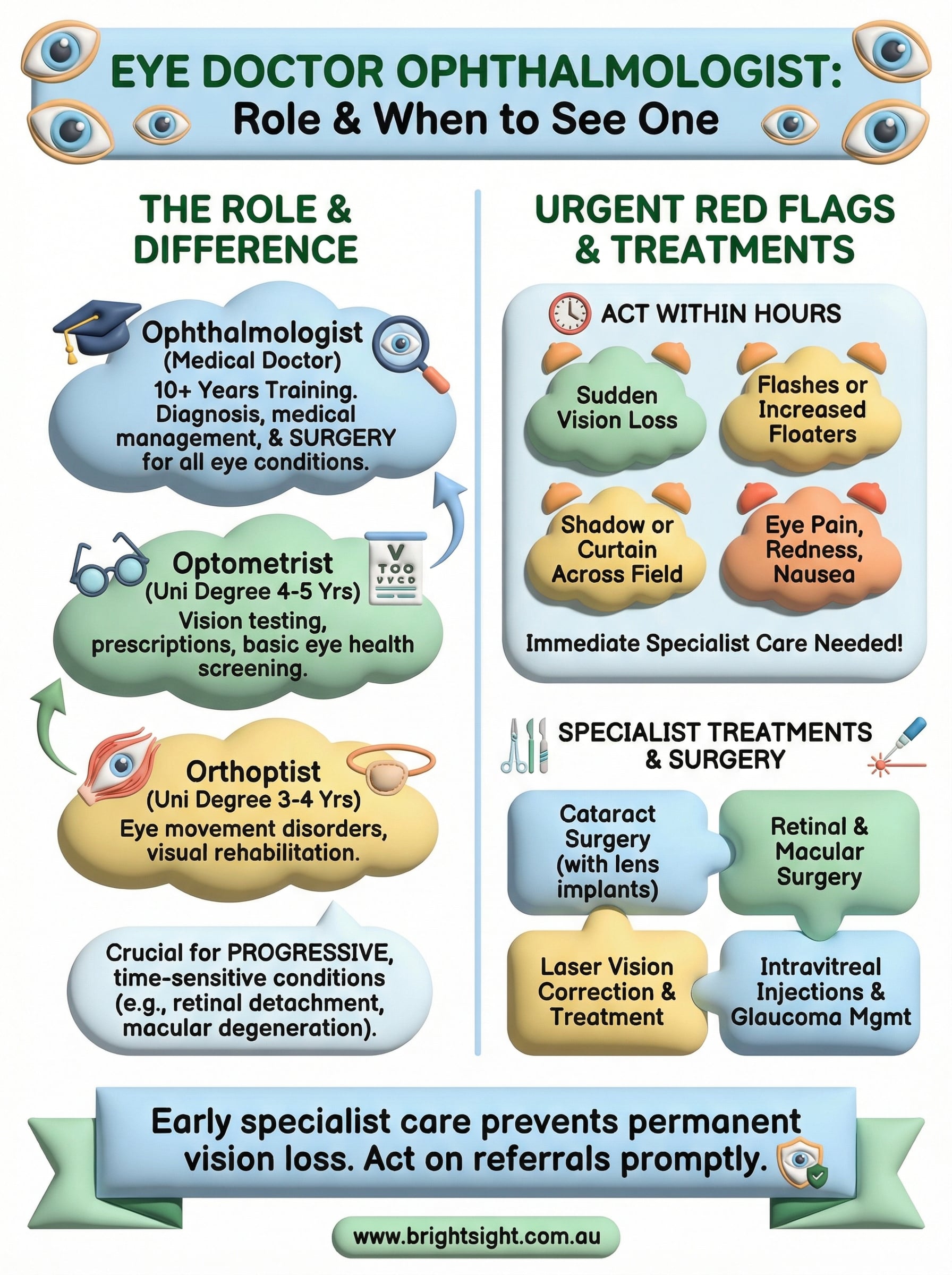
An ophthalmologist is a fully qualified medical doctor who has completed additional specialist training in eye disease and surgery, typically totalling more than ten years of education and clinical experience after finishing school. Unlike other eye care providers, they can diagnose eye disease, prescribe medication, perform laser treatments, and carry out complex surgical procedures. When you search for an eye doctor ophthalmologist, this is the highest level of medical eye care available to you.
An ophthalmologist is not just someone who checks your glasses prescription – they are a surgical specialist trained to manage conditions that can permanently affect your sight if left untreated.
The three tiers of eye care
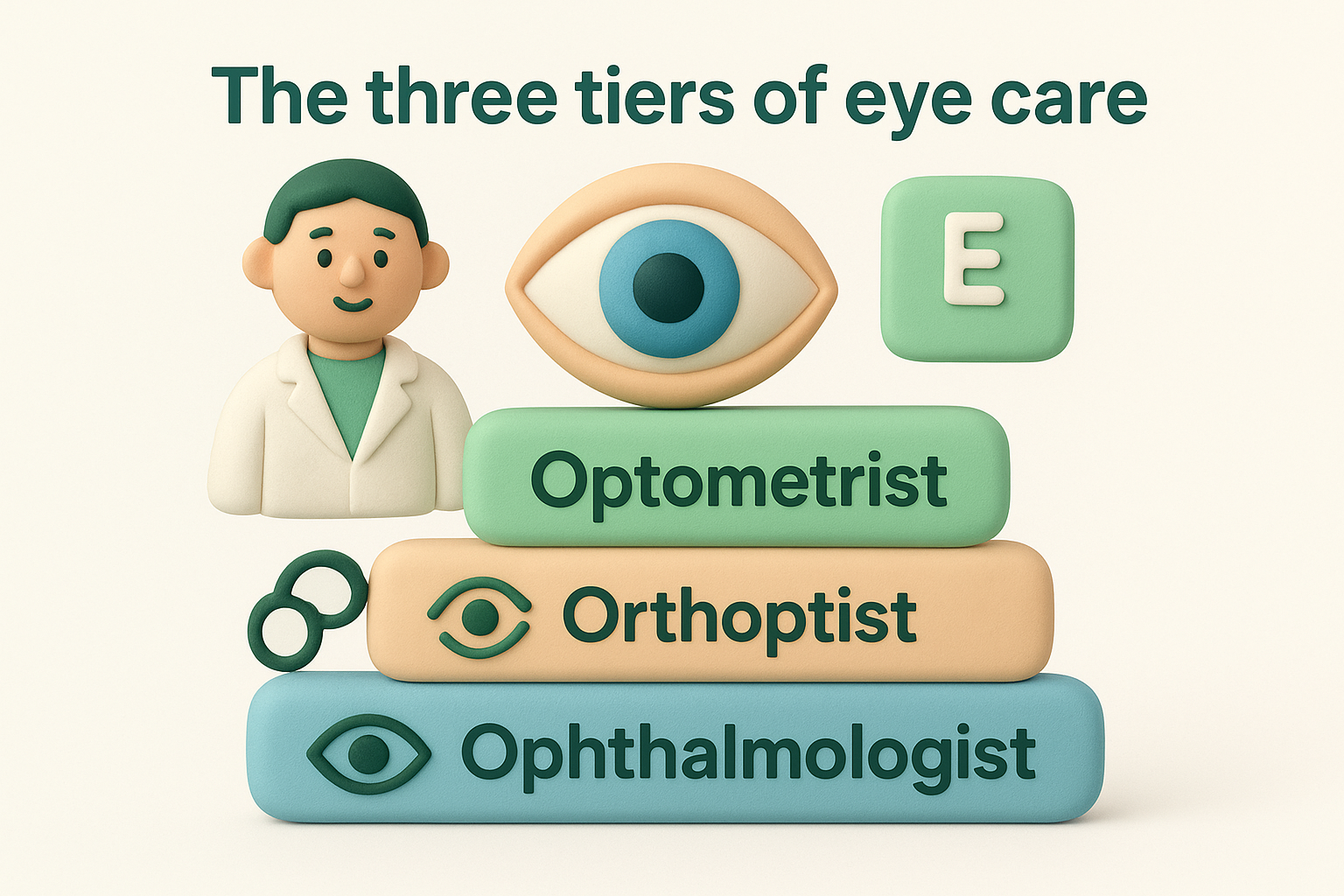
In Australia, eye care is delivered across three distinct levels: optometrists, orthoptists, and ophthalmologists. Understanding this helps clarify when you need to step beyond your regular optometrist. Each provider has a clearly defined scope, and referring you further up the chain when something more serious is suspected is standard practice across the profession.
| Provider | Training | Role |
|---|---|---|
| Optometrist | 4-5 year university degree | Vision testing, prescriptions, basic eye health screening |
| Orthoptist | 3-4 year university degree | Eye movement disorders, visual rehabilitation |
| Ophthalmologist | Medical degree + specialist training (10+ years) | Diagnosis, medical management, and surgery for all eye conditions |
What sets an ophthalmologist apart
The critical distinction is that an ophthalmologist holds a full medical degree, meaning they understand how systemic conditions like diabetes, hypertension, and autoimmune disease directly affect your eyes. They can prescribe medications, manage surgical complications, and treat sight-threatening conditions such as retinal detachment, macular degeneration, and advanced glaucoma.
Your optometrist is often the first point of contact for your eye health. When they detect something outside their scope, they refer you directly to an ophthalmologist for further assessment or treatment, making the referral pathway straightforward.
Why seeing the right eye doctor matters
Seeing the correct specialist early reduces your risk of permanent vision loss and means you receive treatment that actually matches your condition. An optometrist can identify a problem, but they cannot treat it surgically or manage advanced eye disease. Reaching the right eye doctor ophthalmologist at the right time is the difference between preserving your vision and losing it permanently.
Delaying a referral to an ophthalmologist is one of the most common reasons preventable vision loss occurs.
When the wrong level of care puts your vision at risk
Many serious eye conditions are progressive and time-sensitive. Retinal detachment requires surgery within days to prevent permanent damage. Conditions such as macular degeneration and diabetic retinopathy can deteriorate quickly without specialist intervention, even when symptoms feel minor at first.
- Retinal detachment: requires urgent surgical repair within days
- Macular degeneration: needs specialist injections to slow progression
- Diabetic eye disease: requires laser or injection treatment to prevent blindness
- Glaucoma: optic nerve damage is irreversible once it occurs
Your optometrist plays an important role in your eye health, but when they refer you to a specialist, acting on that referral promptly is critical. An ophthalmologist has the training, equipment, and surgical capability to intervene before damage becomes permanent.
When to see an ophthalmologist and urgent red flags
Some symptoms require a same-day assessment rather than waiting for your next routine check-up. Knowing the difference between what your optometrist can handle and when you need a specialist eye doctor ophthalmologist can protect your long-term vision.
Acting on warning signs within hours, not weeks, is often what separates a full recovery from permanent damage.
Symptoms that need urgent attention
Certain symptoms signal a medical emergency and require you to seek immediate specialist care, without waiting for a standard referral.
- Sudden loss of vision in one or both eyes
- Flashes of light or a sudden increase in floaters
- A shadow or curtain across your visual field
- Eye pain with redness, nausea, or blurred vision
- Double vision that appears without warning
When a routine referral is appropriate
Not every symptom is an emergency, but some changes in your vision still warrant specialist assessment within days or weeks. If your optometrist identifies early diabetic retinopathy, signs of macular degeneration, raised eye pressure, or a cataract affecting your daily life, they will refer you to an ophthalmologist. Acting on that referral promptly rather than delaying gives you the best possible outcome.
What happens at an ophthalmology appointment
Your first visit to an eye doctor ophthalmologist follows a structured process designed to give a complete picture of your eye health before any treatment decisions are made. The appointment typically takes between 30 and 90 minutes depending on your condition, and you may need someone to drive you home if your ophthalmologist dilates your pupils for examination.
Coming prepared with your referral, your current medications list, and any glasses or contact lenses makes the consultation run more smoothly.
What the specialist examines
Your ophthalmologist will assess your visual acuity, eye pressure, and the health of your retina and optic nerve. Depending on your condition, they may also use imaging technology such as OCT (optical coherence tomography) to produce detailed scans of the back of your eye and identify any early structural changes.
- Visual acuity and refraction
- Intraocular pressure measurement
- Anterior segment examination (front of the eye)
- Dilated fundus examination (retina and optic nerve)
- Imaging scans where required
After the examination, your ophthalmologist explains their findings clearly, outlines your treatment options, and discusses any surgery or procedures if needed. You leave with a clear, personalised care plan rather than questions that go unanswered, knowing exactly what your next step is.
Treatments and surgery an ophthalmologist can provide
An eye doctor ophthalmologist offers a wide range of treatments that go well beyond anything available at an optometry practice. From prescription eye drops and intravitreal injections through to complex surgical procedures, the treatments they provide directly address the conditions that cause serious or permanent vision loss.
The range of surgical options available today means that many conditions once considered untreatable can now be managed effectively with the right specialist care.
Surgical and non-surgical options
Your ophthalmologist can carry out cataract surgery with premium lens implants, retinal surgery for detachment or macular conditions, laser treatments for diabetic eye disease, and corneal procedures including grafts and refractive surgery such as LASIK and SMILE. On the non-surgical side, intravitreal injections treat macular degeneration and retinal vein occlusion, while laser targets diabetic retinopathy and glaucoma.
- Cataract surgery, including multifocal and EDOF lens options
- Retinal and macular surgery
- Laser vision correction (LASIK, PRK, SMILE)
- Intravitreal injections for macular degeneration and retinal conditions
- Corneal surgery and transplants
- Glaucoma management and laser treatment
What to do next
If your optometrist has referred you, or you’ve noticed changes in your vision that concern you, the next step is straightforward: book a consultation with an ophthalmologist. Waiting rarely improves the outcome for eye conditions that progress over time, and many of the most serious conditions respond far better to early treatment than to intervention after significant damage has already occurred.
At Bright Sight Eye Specialists in Randwick, Dr Rahul Dubey and Dr Capucine Odouard provide specialist care across the full range of conditions covered in this article. Whether you need an assessment for a suspected cataract, a retinal concern, or a more complex surgical procedure, both surgeons bring extensive training and a direct, patient-focused approach to every consultation. As your eye doctor ophthalmologist, they work with you to make treatment decisions that suit your vision goals and your lifestyle.
Book a consultation with Bright Sight Eye Specialists and take the next step toward protecting your sight.