


Most eye complaints start the same way, something feels off, your vision changes, or an irritation won’t go away. You tell yourself it’ll settle down on its own. Sometimes it does. But other times, what seems minor is actually your eye signalling that something needs attention.
Knowing the difference between a passing annoyance and a condition that requires professional care can protect your vision long-term. Some symptoms, like persistent redness or sudden flashes of light, deserve a prompt assessment by an ophthalmologist rather than a wait-and-see approach. The challenge is that many eye conditions share overlapping symptoms, which makes it difficult to self-diagnose accurately.
At Bright Sight Eye Specialists in Randwick, Dr Rahul Dubey and Dr Capucine Odouard treat a wide range of eye conditions, from straightforward cases like chalazion and conjunctivitis to complex retinal and corneal disease. This article covers seven of the most common eye complaints we see in our Eastern Suburbs practice, what causes them, and the signs that tell you it’s time to book in with a specialist rather than ride it out.
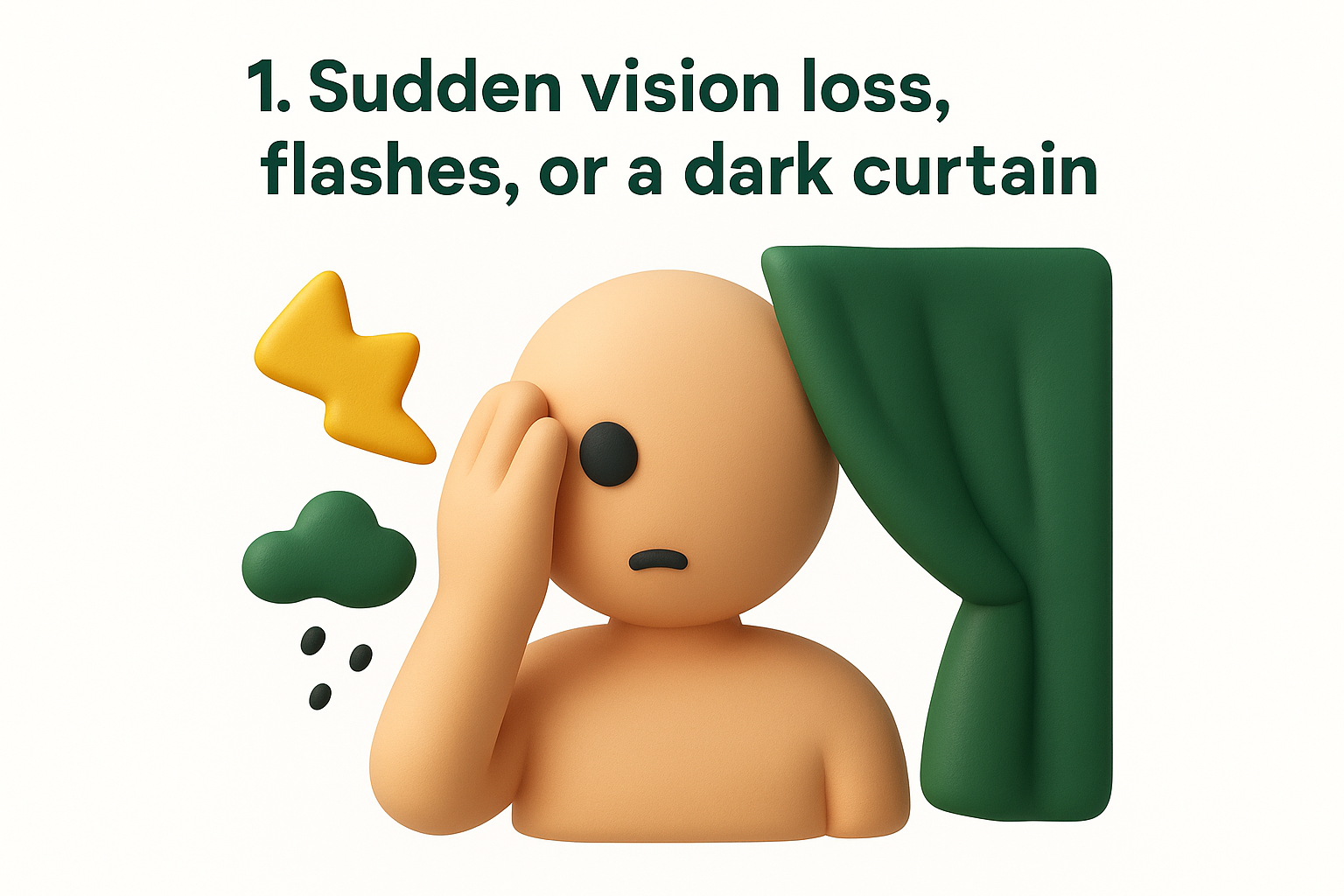
1. Sudden vision loss, flashes, or a dark curtain
Of all the eye complaints a person can experience, sudden changes to vision are the ones that demand the most immediate response. This category covers a range of symptoms that can appear quickly, sometimes within minutes, and they should never be attributed to tiredness or stress without a proper examination.
What you may notice
You might see brief flashes of light, particularly at the edges of your vision, or notice a sudden shower of new floaters, those dark specks or cobweb-like shapes drifting across your field of view. In more serious cases, you may notice a shadow, veil, or dark curtain creeping across part of your vision, or a sudden, significant drop in how clearly you can see out of one eye.
Common causes and risk factors
These symptoms are most commonly linked to problems at the back of the eye. Posterior vitreous detachment (PVD) is a frequent cause of flashes and floaters, particularly in adults over 50, and is often benign. However, the same symptoms can signal a retinal tear or retinal detachment, which is a medical emergency. Other causes include vitreous haemorrhage, where bleeding clouds vision, and central serous retinopathy. Risk factors include short-sightedness (myopia), previous eye surgery, trauma, diabetes, and a family history of retinal disease.
A new curtain or shadow across your vision, or a sudden increase in floaters with flashes, should be treated as an emergency until proven otherwise.
Red flags that need urgent care today
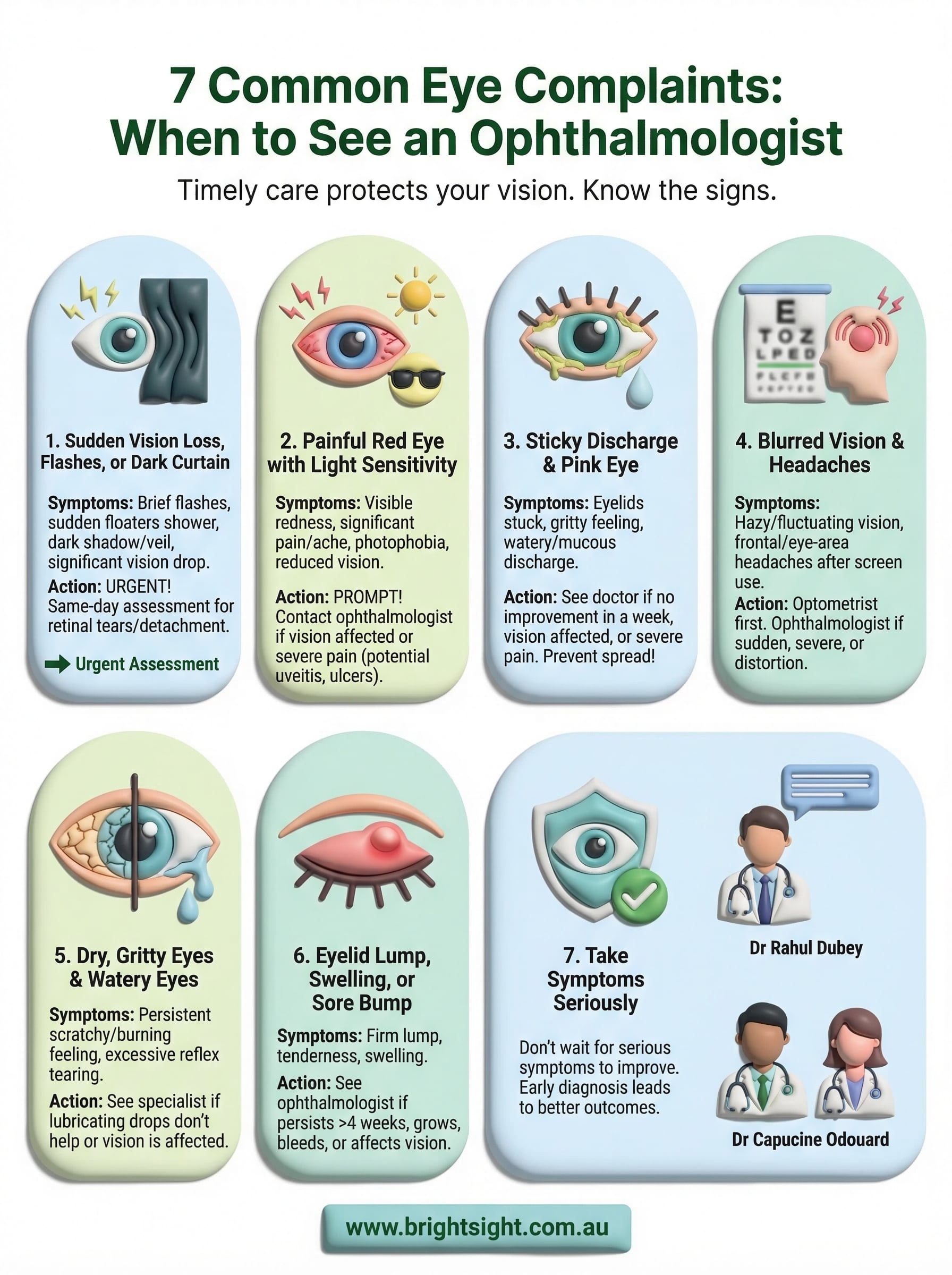
You need same-day assessment if you experience any of the following: a sudden dark shadow or curtain in your vision, a dramatic increase in floaters appearing all at once, flashes of light that persist rather than occur briefly, or any sudden loss of central or peripheral vision. Do not wait for a routine appointment. Contact an ophthalmologist or present to an emergency eye service the same day.
What an ophthalmologist will check and treat
Your ophthalmologist will perform a dilated fundus examination to assess the retina and vitreous directly. Imaging such as OCT (optical coherence tomography) or ultrasound may also be used. If a retinal tear is found early, laser treatment can seal it before it progresses to a detachment. A retinal detachment typically requires surgery, and outcomes are significantly better when treatment happens quickly.
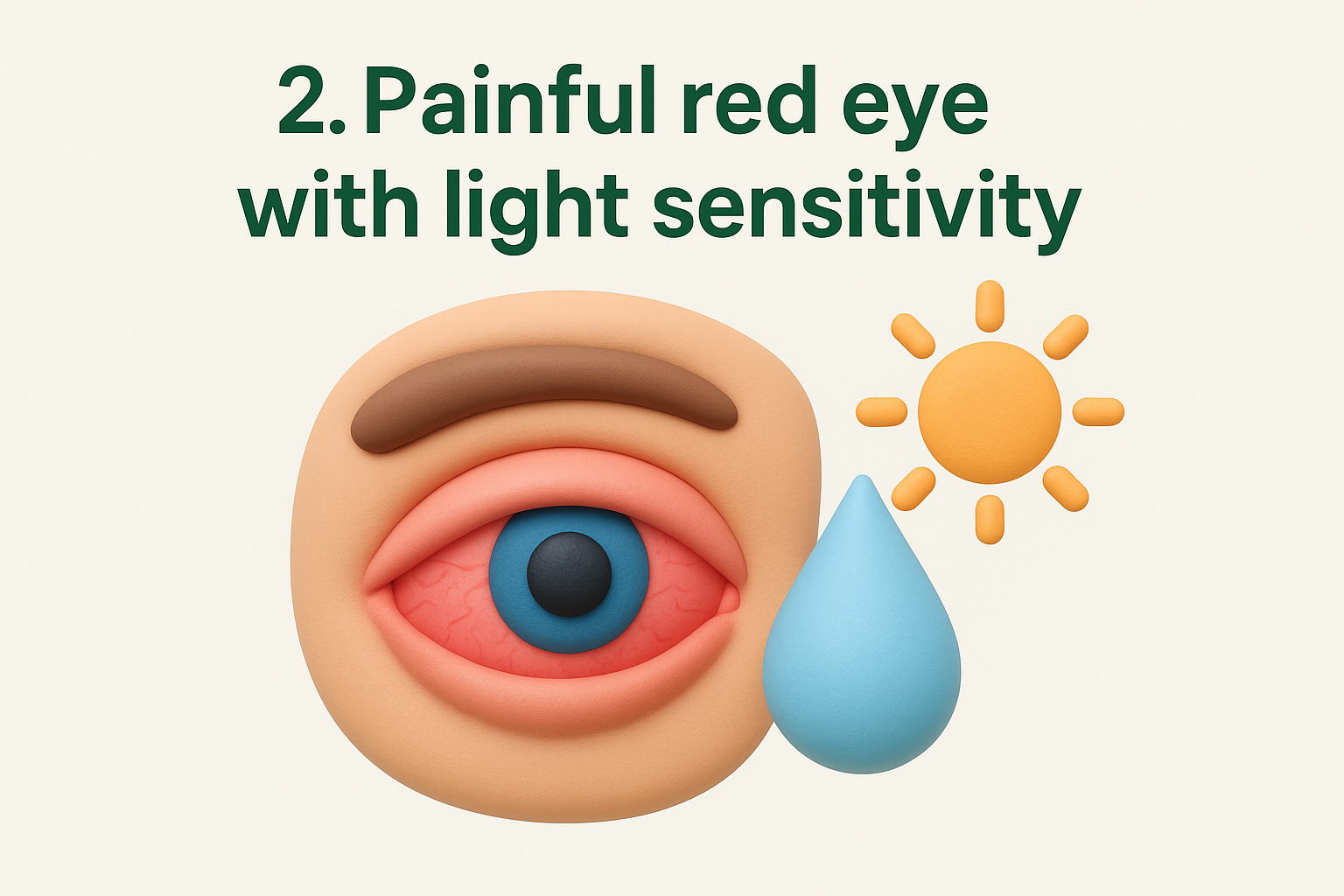
2. Painful red eye with light sensitivity
A red eye is one of the most common eye complaints people bring to an ophthalmologist, but not all red eyes are equal. When redness comes alongside pain and sensitivity to light, it moves well beyond the territory of simple irritation and warrants a much closer look.
What you may notice
Your eye may appear visibly red or pink, and the discomfort can range from a dull ache to a sharp, intense pain. Photophobia, or sensitivity to light, often accompanies this, making it uncomfortable to be in a bright room or outdoors. You might also notice reduced or blurred vision, tearing, or a feeling that something is pressing from inside the eye.
Common causes and risk factors
Several conditions can produce this combination of symptoms. Uveitis (inflammation inside the eye), corneal ulcers, acute angle-closure glaucoma, and keratitis are among the more serious possibilities. Contact lens wearers face a higher risk of corneal infection, particularly if lenses are worn overnight or for longer than recommended. People with autoimmune conditions such as rheumatoid arthritis or ankylosing spondylitis also carry a higher risk of uveitis.
What you can do safely right now
Remove contact lenses immediately if you wear them and do not reinsert them until you have been assessed. Avoid rubbing your eye, as this can worsen corneal damage. Wearing sunglasses indoors or outdoors can reduce discomfort from light sensitivity while you arrange to be seen.
When to see an ophthalmologist urgently
Pain, redness, and light sensitivity together should be assessed the same day, not in a few days’ time.
If your vision is affected, the pain is significant, or symptoms came on suddenly, contact an ophthalmologist promptly. This combination can indicate sight-threatening conditions that respond far better to early treatment than delayed care.
3. Sticky discharge and pink eye symptoms
Discharge from the eye is one of the more uncomfortable eye complaints people experience, and it tends to raise immediate concern, especially when it appears overnight or spreads from one eye to the other. The good news is that most cases resolve with the right treatment.
What you may notice
You might wake up with one or both eyelids stuck together from a yellow, green, or white discharge that has crusted overnight. Your eye may also appear red or pink, feel gritty or itchy, and produce a watery or mucous-like discharge throughout the day. Vision is usually not affected, though it can become temporarily blurry if discharge sits on the surface of the eye.
Common causes and risk factors
The most common cause is bacterial or viral conjunctivitis, both of which are highly contagious. Allergic conjunctivitis produces similar symptoms but is driven by irritants like pollen, dust, or pet dander rather than infection. Newborns, contact lens wearers, and people with weakened immune systems face a higher risk of developing infectious conjunctivitis.
How to reduce spread and irritation at home
Wash your hands frequently and avoid touching your eye or sharing towels, pillowcases, or eye drops with others. Use a clean, damp cloth to gently wipe away discharge, always wiping from the inner corner outward.
Viral conjunctivitis can spread very easily, so treating it as contagious from the outset reduces the risk to those around you.
When you need prescription treatment or referral
Bacterial conjunctivitis often responds to antibiotic eye drops, which require a prescription. If your symptoms have not improved after a week, are worsening, affect your vision, or involve significant pain, you should see an ophthalmologist to rule out a more serious underlying condition such as a corneal infection or uveitis.
4. Blurred vision and headaches
Blurred vision and headaches often appear together, and while they are among the most commonly reported eye complaints, the cause behind them can vary considerably. Some cases point directly to your eyes, while others involve broader health concerns that require a different kind of assessment.
What you may notice
Your vision may feel consistently hazy or fluctuating throughout the day, making it hard to focus, particularly at close range or when reading. Headaches often develop at the front of your head or around your eyes, especially after extended screen time or prolonged close work.
Common causes and risk factors
Uncorrected or changing refractive errors such as short-sightedness, long-sightedness, or astigmatism are the most frequent drivers of this pairing. Digital eye strain from prolonged screen use is also increasingly common, as is wearing an outdated glasses or contact lens prescription. Less commonly, raised eye pressure from glaucoma or early macular disease can contribute to visual blurring.
Quick self-checks to narrow it down
Consider when your symptoms tend to occur. If blurring worsens after screen use or reading and eases after rest, refractive error or eye strain is a likely explanation. If blurring is constant, affects one eye only, or comes alongside nausea or halos around lights, something more significant may be present.
Sudden or severe headaches combined with blurred vision and nausea need urgent medical attention, not a routine eye test.
When to book an eye test vs see an ophthalmologist
Start with an optometrist for a comprehensive eye test if your symptoms are gradual and connected to screen use or reading. Book directly with an ophthalmologist if your vision changes suddenly, you notice distortion or a loss in your central visual field, or symptoms persist despite wearing a current prescription.
5. Dry, gritty eyes and watery eyes
Dry and watery eyes sit at opposite ends of the comfort scale, yet they share more common ground than most people expect. Both are frequent eye complaints that affect daily life, and both often point to the same underlying problem with your tear film.
What you may notice
Your eyes may feel persistently scratchy, burning, or gritty, as though something is trapped under your eyelid. Interestingly, excessive tearing is also a hallmark of dry eye disease, as your eyes try to compensate by flooding the surface with reflex tears that do not adequately coat or protect it.
Common causes and risk factors
Dry eye disease is the most common driver, and it becomes more prevalent with age, particularly after menopause. Extended screen time reduces your blink rate, which worsens dryness considerably. Certain medications, including antihistamines, antidepressants, and blood pressure drugs, can reduce tear production, as can dry or air-conditioned environments.
Practical steps that often help
Using preservative-free lubricating eye drops regularly throughout the day often reduces discomfort noticeably. Taking regular screen breaks, for example every 20 minutes, look at something 20 metres away for 20 seconds, can also help your blink rate recover and ease surface irritation between uses.
If your eyes feel worse in air-conditioned spaces or after prolonged screen use, dry eye disease is a very likely contributor.
When ongoing symptoms need specialist care
If drops provide only temporary relief and symptoms persist for weeks, or if your vision is affected, an ophthalmologist can assess your tear film quality and recommend targeted treatments such as prescription drops, punctal plugs, or in-office therapies.
6. Eyelid lump, swelling, or a sore bump
Eyelid lumps are one of the eye complaints that people often put off addressing, assuming the bump will disappear on its own. While many do resolve without treatment, some require professional intervention to prevent complications or rule out something more serious.
What you may notice
You might feel a small, firm lump on your upper or lower eyelid, sometimes tender to touch and sometimes completely painless. The area around it may appear red or swollen, and in some cases your eyelid might feel heavy or partially drooped depending on the size and location of the lump.
Common causes and risk factors
A chalazion is the most common cause, resulting from a blocked oil gland in the eyelid. A stye (hordeolum) looks similar but involves a bacterial infection at the eyelid margin, often appearing redder and more painful. Less commonly, a persistent lump may represent a cyst or, rarely, a skin lesion that needs further investigation.
A lump that grows steadily, bleeds, or does not respond to warm compresses after several weeks should be reviewed by an ophthalmologist promptly.
What to do and what to avoid
Apply a warm compress to the affected eyelid for 10 minutes, three to four times daily, as this can help unblock the gland and encourage natural drainage. Avoid squeezing or attempting to drain the lump yourself, as this increases the risk of spreading infection or causing scarring.
When to see an ophthalmologist for treatment
Book an appointment if the lump persists beyond four weeks, affects your vision, or is growing in size. An ophthalmologist can perform a minor in-office procedure to drain a chalazion or prescribe antibiotics for an infected stye when home treatment has not been sufficient.
Next steps for peace of mind
Most eye complaints respond well to timely care, but the key word is timely. Whether you are dealing with a persistent lump, recurring dryness, or something more urgent like flashes and sudden vision changes, getting the right diagnosis early almost always leads to a better outcome than waiting to see whether things improve on their own.
If any of the symptoms covered in this article sound familiar, the most useful next step is booking an assessment with an ophthalmologist who can examine your eyes directly. Dr Rahul Dubey and Dr Capucine Odouard at Bright Sight Eye Specialists in Randwick see patients across a wide range of eye conditions, from straightforward eyelid problems to complex retinal disease. Your vision is worth taking seriously, and a thorough examination will give you clear answers and a plan rather than uncertainty. Book an appointment with Bright Sight Eye Specialists to get started.