


Laser eye surgery can be life-changing, waking up with clear vision and no need for glasses or contact lenses is exactly what most patients hope for. But one of the most common side effects in the weeks and months that follow is dry eyes after laser eye surgery. It affects the majority of patients to some degree, and while it’s almost always temporary, it can cause real discomfort and understandable concern if you’re not prepared for it.
The good news is that dry eye after laser surgery is well understood. We know why it happens, how long it typically lasts, and, most importantly, how to treat it effectively. In most cases, symptoms settle within three to six months as the corneal nerves heal, though some patients experience dryness for longer. Knowing what to expect before your procedure makes a significant difference in how smoothly your recovery goes.
At Bright Sight Eye Specialists, Dr Capucine Odouard performs refractive laser surgery including LASIK, PRK, and SMILE at our Randwick practice and Sydney Eye Hospital. A key part of her approach is making sure every patient understands the recovery process, including the likelihood of temporary dry eye, so there are no surprises after surgery. This article explains why dry eyes occur after laser eye surgery, how long symptoms typically last, what relief options are available, and when you should seek further care.
Why dry eyes happen after laser eye surgery
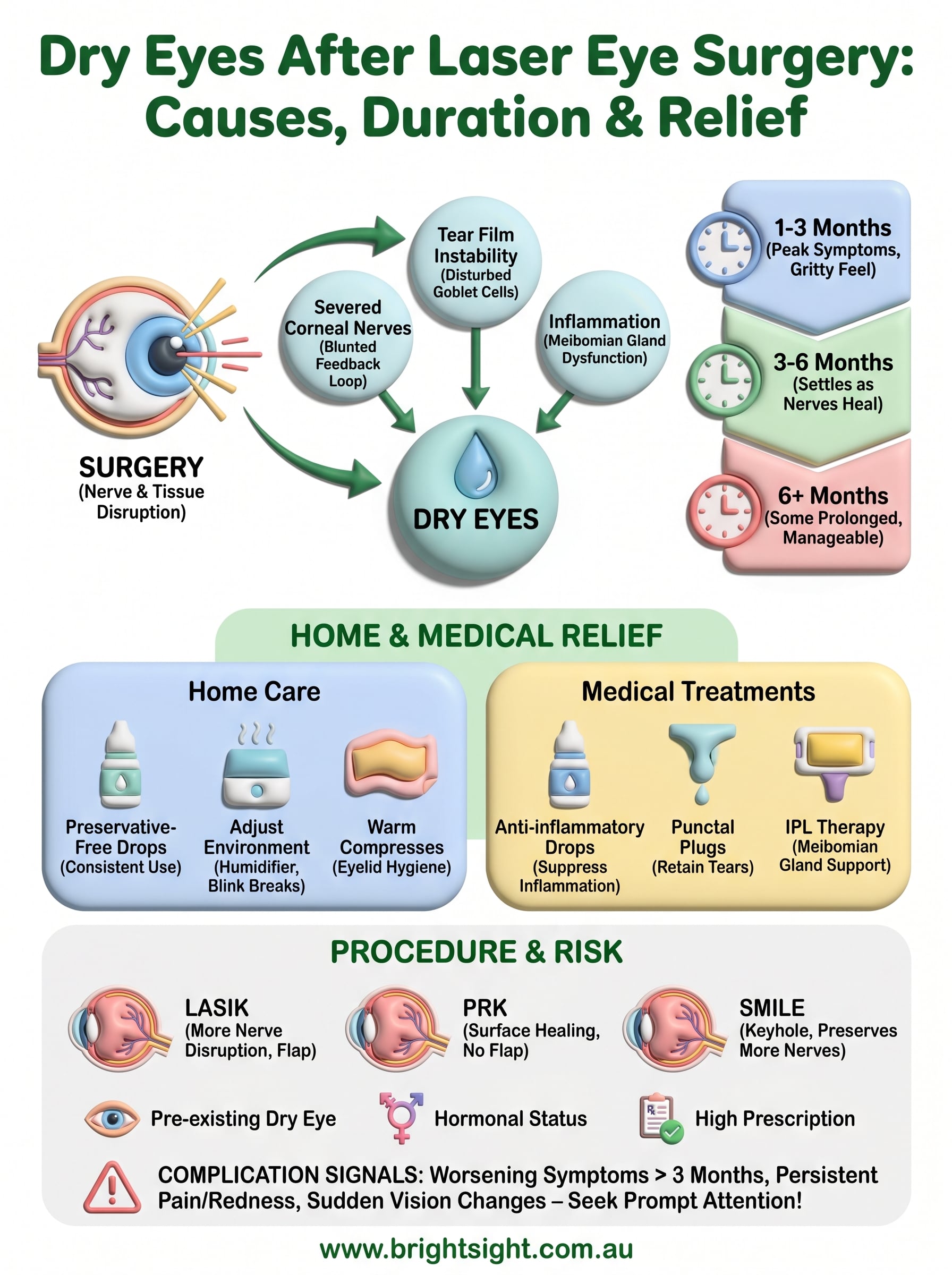
Understanding why dry eye occurs after laser surgery starts with the cornea itself. The cornea is one of the most densely innervated tissues in the human body, packed with sensory nerve fibres that do more than register sensation. These nerves also send signals to your lacrimal glands to produce tears. When surgery disrupts those nerve pathways, your eye temporarily loses its ability to sense dryness accurately and respond by making enough tears. The result is a blunted feedback loop between your ocular surface and your tear-producing glands, and that broken loop is the core reason dry eyes after laser eye surgery is so common.
How the surgery severs corneal nerves
Every type of refractive laser surgery reshapes the cornea to correct your vision, and that reshaping inevitably cuts through some of the subbasal nerve plexus, a dense network of fibres sitting just beneath the corneal surface. These nerve fibres do not reconnect overnight; they regenerate gradually over months. During that period, even when your cornea is genuinely dry, you may notice less discomfort than you would expect, because the very nerves responsible for alerting you to dryness are the ones that have been disrupted.
The nerves that tell your brain "my eye is dry" are the same ones affected during surgery, which is why dry eye after laser surgery can feel different to ordinary dryness and is sometimes missed entirely.
This reduction in corneal sensitivity also affects your blink reflex. Your blink rate naturally falls when feedback signals from the cornea are dulled, which means your tear film evaporates faster and is replenished less often. Spending long hours on a screen in the post-operative period compounds this further, since screen use already reduces blink rate independent of surgery.
What happens to your tear film
Your tear film is a three-layered structure of oil, water, and mucin that keeps the corneal surface smooth, clear, and comfortable. Laser surgery can disturb the goblet cells in the conjunctiva, which produce the mucin layer that helps tears spread evenly across your eye. When this layer is compromised, tears bead and break up rather than forming a stable film. You may notice vision that blurs slightly then clears when you blink, which is a sign of tear film instability rather than a problem with your prescription.
Inflammation also plays a role. The meibomian glands along your eyelid margins produce the oily outer layer of the tear film, and their function is sensitive to inflammatory signals. Surgical trauma triggers an inflammatory response in the ocular surface, which can reduce the quality of meibomian gland secretion. Less oil means faster tear evaporation, which adds to the dryness already caused by reduced nerve activity.
Why LASIK creates more nerve disruption than other procedures
In LASIK, a thin flap is created on the corneal surface and lifted to expose the underlying tissue for laser reshaping. Creating that flap cuts through a wide horizontal arc of corneal nerves, making the disruption to the subbasal plexus more extensive than in procedures that work from the surface down. The flap interface can also slightly alter how the eyelid interacts with the corneal surface during blinking, affecting how efficiently your tears are spread across the eye with each blink.
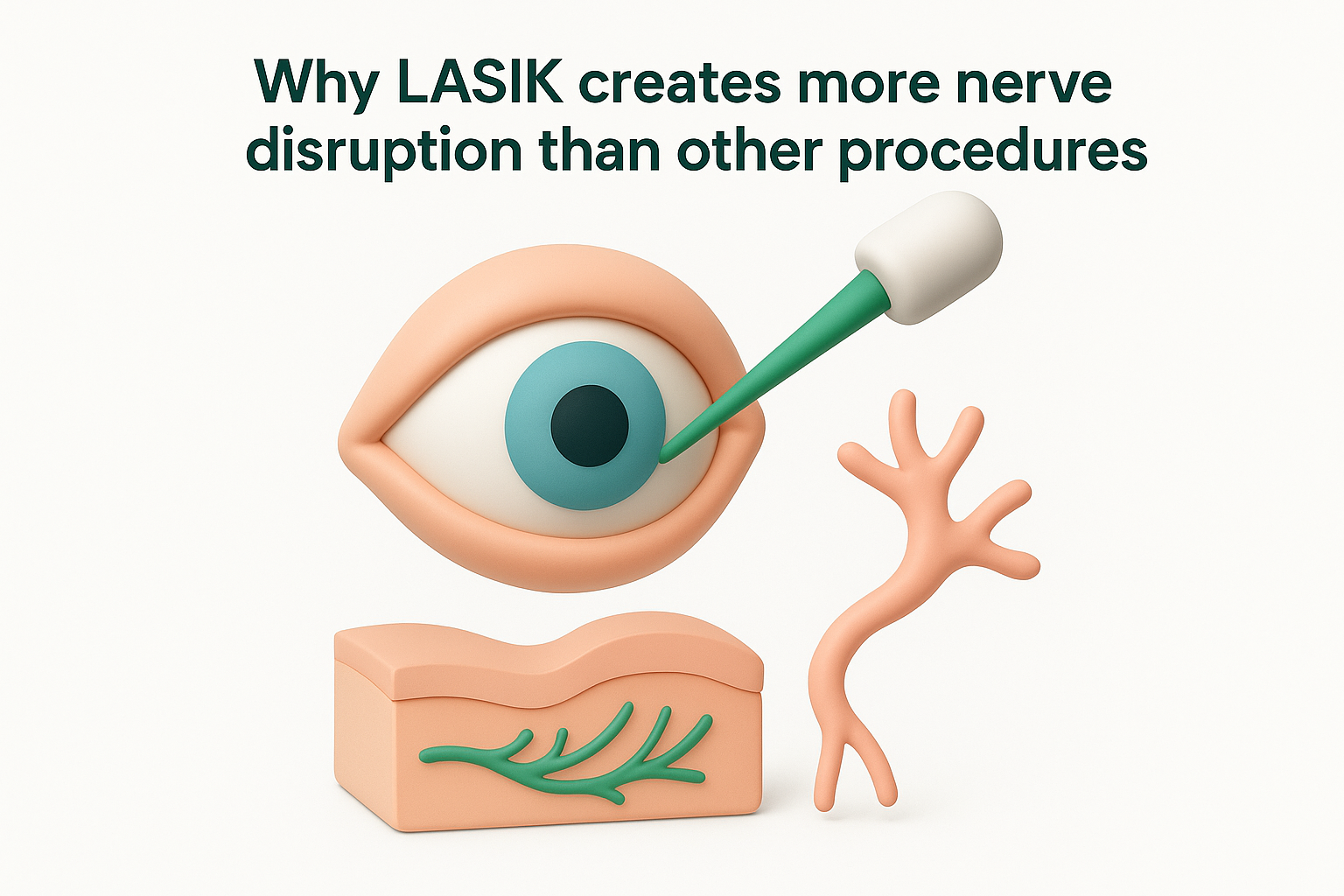
PRK and SMILE still cause nerve disruption, but through different mechanisms. In PRK, the surface epithelium is removed before the laser is applied, which causes significant early nerve disruption followed by full surface healing. SMILE uses a small keyhole incision to remove a disc of corneal tissue, preserving more of the peripheral nerve architecture. Because of these structural differences, each procedure carries a distinct dry eye profile that your surgeon should discuss with you during pre-operative planning, well before any surgical date is set.
How long it lasts and what recovery looks like
For most people, dry eyes after laser eye surgery follow a predictable arc. Symptoms are usually at their worst in the first one to three months after surgery, then gradually improve as corneal nerves regenerate and the ocular surface settles. The majority of patients see a significant reduction in dryness by the three-month mark, and most experience full resolution by six months. A smaller group continues to notice some dryness beyond that point, though this is usually manageable rather than severe.
Most patients find that consistent use of preservative-free artificial tears in the first three months makes a substantial difference to their comfort and their overall recovery experience.
What recovery looks like in the early weeks
The first two to four weeks after surgery are typically when symptoms feel most noticeable. Your eyes may feel gritty, tired, or sensitive to wind and air conditioning, and your vision may fluctuate slightly during the day as your tear film struggles to maintain stability. These early symptoms do not reflect how your final vision will look; they are a normal part of corneal surface healing and almost always improve steadily.
During this period, your surgeon will likely recommend using preservative-free lubricating eye drops throughout the day, even if your eyes do not feel obviously dry. Because nerve sensitivity is reduced in the early weeks, waiting until your eyes feel uncomfortable can mean waiting too long to apply drops. Staying ahead of dryness rather than reacting to it keeps the corneal surface healthier and supports faster healing.
How recovery progresses from three to six months
Between three and six months, corneal nerve regeneration continues at a steady pace, and most patients notice that they need fewer drops and feel more comfortable in environments like air-conditioned offices or on planes. Vision stability also tends to improve during this phase as tear film function normalises. Your surgeon will likely schedule review appointments during this window to check your ocular surface and adjust any ongoing treatment if needed.
Some patients with pre-existing dry eye or other risk factors may still notice intermittent symptoms beyond the six-month point. For these patients, symptoms are generally mild and well-controlled with simple measures. Full nerve regeneration in the cornea can take up to twelve months or longer, which is why dry eye that persists past six months does not necessarily indicate a permanent problem. It is worth raising any ongoing symptoms with your surgeon at your follow-up appointments so they can assess your tear film and confirm your recovery is progressing as expected.
Who is more likely to get ongoing dry eye
Not everyone who has laser eye surgery will experience significant dryness, and not everyone who does will find it lingers past the three-month mark. Certain risk factors make prolonged or more severe dry eyes after laser eye surgery considerably more likely. Knowing where you sit before surgery helps your surgeon tailor your pre-operative screening, choose the most appropriate procedure, and put the right post-operative support in place from day one.
Pre-existing dry eye and ocular surface conditions
If you already have some degree of dry eye before surgery, that baseline matters enormously. Your cornea starts recovery with a tear film that is already compromised, meaning the added disruption from surgery takes longer to overcome. People with blepharitis, meibomian gland dysfunction, or anterior lid disease are at higher risk because the oil layer of their tear film is already unstable before any laser touches the cornea.
Pre-operative screening for dry eye is one of the most important parts of the surgical assessment process, not a routine checkbox.
Contact lens wearers are also worth noting here. Long-term contact lens use can reduce corneal sensitivity and alter the ocular surface even before surgery occurs, which can extend the recovery timeline. Your surgeon should assess your ocular surface after a period of glasses-only wear to get an accurate picture of your baseline tear function.
Hormonal status and systemic health factors
Hormonal changes have a direct effect on tear production and quality. Women going through perimenopause or menopause produce fewer aqueous tears and tend to have more meibomian gland dysfunction, placing them at higher risk for prolonged post-operative dry eye. Certain medications, including antihistamines, antidepressants, and some blood pressure treatments, also reduce tear production independently of surgery.
Systemic conditions such as autoimmune disease, rheumatoid arthritis, and thyroid disorders can affect the lacrimal gland and ocular surface. These conditions do not necessarily exclude you from having laser surgery, but they require careful evaluation. Your surgeon needs a full medical history before any surgical planning takes place.
Prescription strength and surgical variables
The higher your prescription, the more corneal tissue needs to be removed to achieve the correction. Deeper ablations disrupt a greater volume of corneal nerve fibres, which extends the period of reduced sensitivity and increases the likelihood of prolonged dryness. People correcting high degrees of myopia or astigmatism therefore carry a higher risk than those with mild prescriptions.
The type of procedure you have also plays a role, with LASIK generally associated with a greater initial impact on nerve density than SMILE or PRK. Your surgeon can walk you through which option best balances your prescription, corneal anatomy, and dry eye risk profile.
How to get relief at home
Managing dry eyes after laser eye surgery at home is straightforward once you know what actually works. The right combination of drops, environmental adjustments, and a simple eyelid hygiene routine covers the majority of what your corneal surface needs during the recovery period. Starting these habits early, rather than waiting until symptoms feel severe, gives your ocular surface the best chance of healing smoothly.
Use preservative-free lubricating drops consistently
The most important thing you can do at home is use preservative-free artificial tears regularly, not just when your eyes feel uncomfortable. Because nerve sensitivity is reduced after surgery, your eyes may already be dry before you notice any discomfort. Using drops on a schedule, such as every one to two hours during waking hours in the first few weeks, keeps the corneal surface stable and supports healing.
Drops that contain preservatives are fine for occasional use, but if you are applying them more than four times a day, preservative-free formulations are the better option because preservatives can irritate an already sensitive corneal surface.
Gel drops or thicker lubricants last longer than standard drops and work well before bed or during extended screen sessions. Avoid drops that claim to "remove redness" because these constrict blood vessels and do not address the underlying tear film instability.
Adjust your environment and daily habits
Your surroundings have a direct effect on how quickly your tear film evaporates. Air conditioning and heating both reduce indoor humidity, and dry air is one of the most consistent triggers for post-operative dryness. A small desktop humidifier near your workstation can make a noticeable difference if you spend long hours at a desk. Placing your monitor slightly below eye level also reduces how much of your corneal surface is exposed while you work, because your upper eyelid covers more of the eye when your gaze is angled downward.
Screen use reduces your blink rate significantly, which means your tears evaporate faster and are not refreshed often enough. Setting a reminder to take a short break every 20 minutes and consciously blinking a full, slow blink several times in a row helps maintain tear film stability throughout the day.
Apply warm compresses to support your eyelid glands
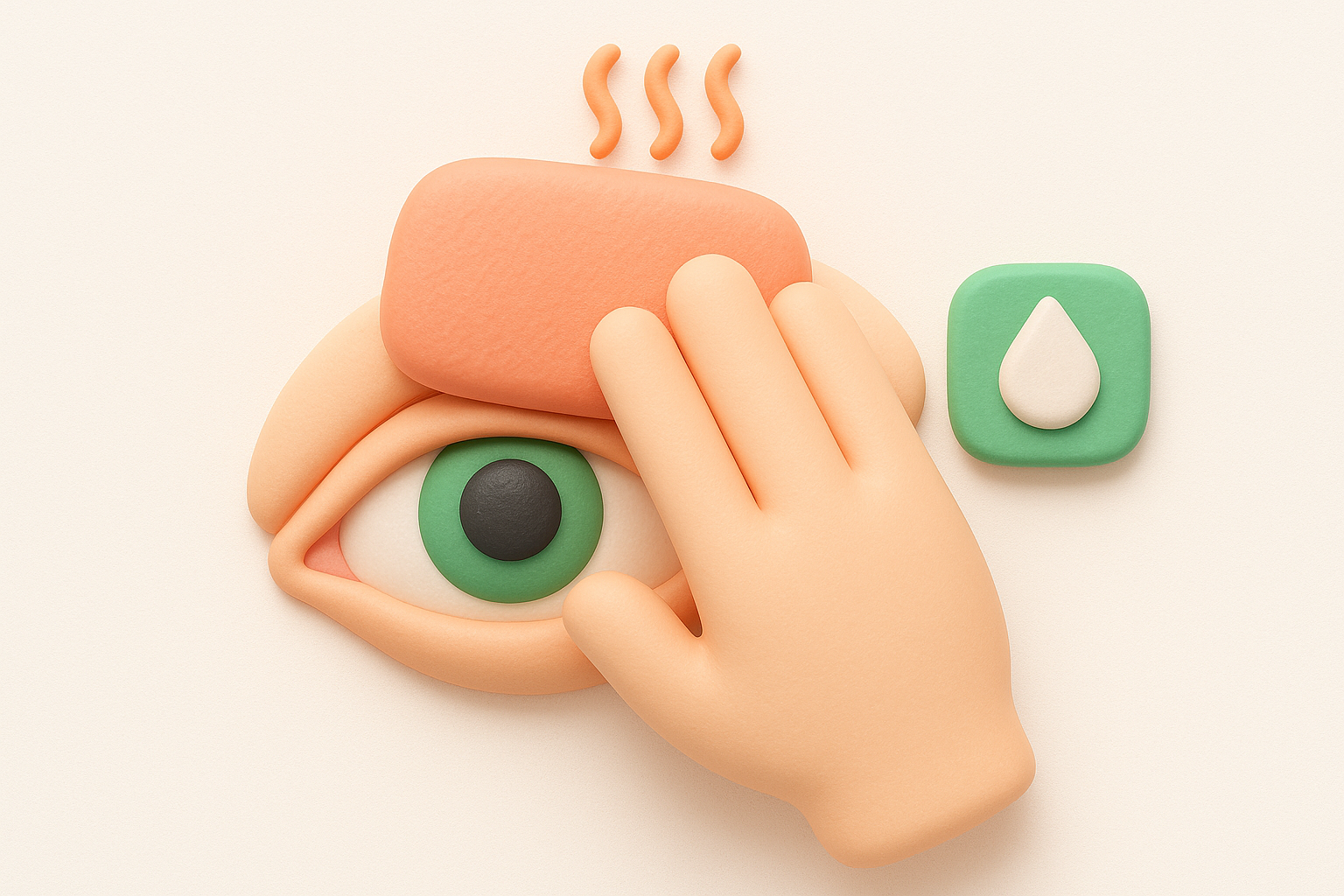
Your meibomian glands, which produce the oily layer that slows tear evaporation, respond well to gentle heat applied to the eyelids for eight to ten minutes daily. A warm compress softens the oils inside the glands and helps them flow more freely. Use a clean face cloth soaked in warm water or a purpose-made reusable heat mask. Applying gentle pressure with your fingertips along the lower lid after the compress helps to express the softened oils toward the tear film.
Medical treatments your eye doctor may use
When home care is not enough to control dry eyes after laser eye surgery, your eye doctor has several clinical options that go well beyond artificial tears. These treatments target the underlying causes of dryness rather than just masking the symptoms, and they can make a significant difference for patients whose discomfort is interfering with daily life or slowing their visual recovery. Your surgeon or a dry eye specialist will assess your tear film, meibomian gland function, and corneal surface before recommending the most appropriate pathway.
Prescription drops and anti-inflammatory medication
Inflammation is a core driver of dry eye on the ocular surface, and in cases where standard lubricants are not settling symptoms, prescription anti-inflammatory eye drops are often the next step. Cyclosporine drops work by suppressing the inflammatory signals that damage tear-producing cells, helping your lacrimal glands recover their normal output over time. They typically take several weeks to produce noticeable results, so your doctor will usually introduce them early rather than waiting until symptoms are severe.
Starting anti-inflammatory treatment early gives your ocular surface the best chance of recovering efficiently, rather than having to undo months of ongoing inflammation.
Short courses of topical corticosteroid drops are sometimes used in the immediate post-operative period to reduce acute inflammation at the corneal surface. These are prescribed carefully and for limited durations only, as prolonged steroid use carries its own risks. Your doctor will monitor your intraocular pressure if corticosteroids are part of your treatment plan.
Punctal plugs to retain tears
Punctal plugs are small dissolvable or semi-permanent inserts placed into the drainage channels at the inner corner of your eyelids. By partially blocking these channels, the plugs slow the rate at which tears drain away from your eye, keeping whatever moisture you produce on the surface for longer. They are a quick, well-tolerated in-office procedure and are particularly useful for patients whose tear production is already low before surgery.
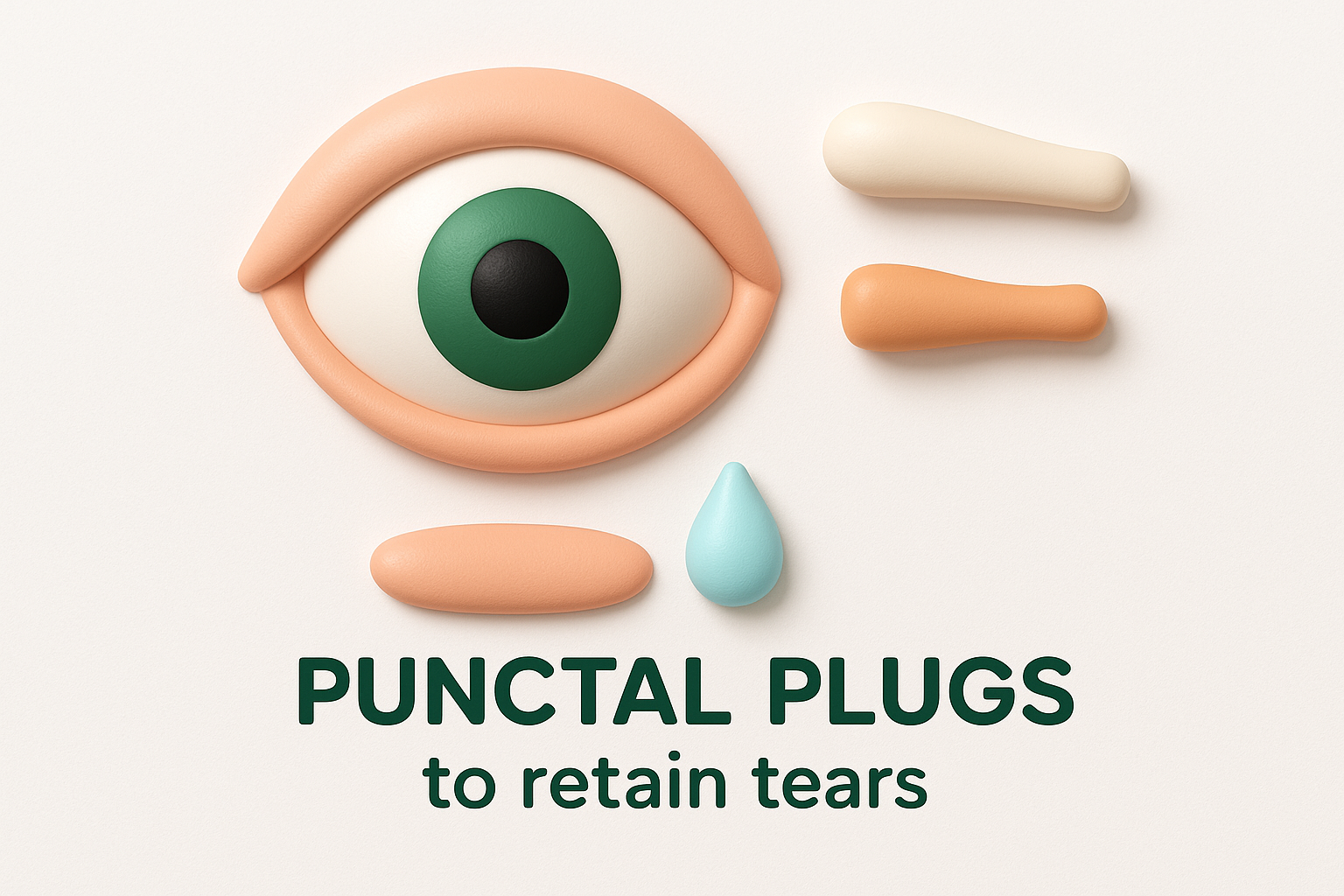
Dissolvable plugs made from collagen are often trialled first to confirm that retaining more tears genuinely improves your comfort before a longer-lasting option is considered.
Intense pulsed light therapy for meibomian gland dysfunction
For patients whose dry eye is driven primarily by poor meibomian gland function, intense pulsed light (IPL) therapy targets the abnormal blood vessels around the eyelid margins that contribute to gland inflammation. Applied in a series of sessions, IPL has shown consistent results in improving the quality of the oil layer in the tear film. Your doctor may combine it with in-office meibomian gland expression to clear blocked glands and restore normal secretion more quickly.
When symptoms may signal a complication
Some dryness after laser surgery is expected and normal, but certain patterns of symptoms point to something that needs prompt clinical attention. Knowing the difference between routine post-operative dryness and a developing complication gives you the confidence to manage recovery at home without unnecessary anxiety, while still recognising when to act quickly. The key is paying attention to how your symptoms change over time, not just how they feel on any single day.
Symptoms that should not be worsening after three months
Most dry eye symptoms improve noticeably between six and twelve weeks after surgery. If your dryness, light sensitivity, or visual fluctuation is getting worse rather than better at or beyond the three-month mark, that pattern warrants a review with your surgeon rather than simply adding more drops. Worsening symptoms can occasionally point to an issue with corneal surface healing, such as recurrent corneal erosion, where the surface epithelium fails to adhere properly and breaks down repeatedly.
Worsening symptoms after the initial recovery period should always prompt a review with your eye doctor, not a wait-and-see approach at home.
Recurrent erosion causes sharp, sudden pain, often on waking, and is distinct from the dull grittiness of routine dry eye. If you notice episodes of acute discomfort that start without warning and ease over a few hours, report this to your surgeon without delay.
Persistent pain, redness, or unexpected vision changes
Persistent redness that does not settle with lubricant drops, or pain that goes beyond mild discomfort, may indicate infection or active inflammation at the corneal surface. Dry eyes after laser eye surgery rarely cause significant redness on their own past the first two weeks, so visible redness around the eye beyond that point is worth reporting even if it seems minor.
Any sudden or progressive change in your corrected vision, such as new blurring or distortion that does not clear when you blink, may signal corneal ectasia. This is a rare but serious condition where the cornea progressively steepens after surgery, altering your prescription over time. Ectasia is uncommon and largely preventable through thorough pre-operative corneal mapping, but it requires urgent assessment and specific treatment if it does develop.
Contact your surgeon promptly if your vision changes unexpectedly at any point during recovery. Do not wait for your next scheduled appointment if something feels significantly different, because early intervention consistently produces better outcomes for the small number of patients who do experience a genuine complication.
How to lower your risk before and after surgery
Reducing your risk of dry eyes after laser eye surgery is not something that starts on the day of the procedure. The steps you take in the weeks before surgery, and the habits you maintain during recovery, have a direct bearing on how quickly your corneal surface heals and how comfortable you feel throughout. Taking an active role in your preparation gives your eyes the best possible starting point and reduces the chance of symptoms dragging on longer than necessary.
Get a thorough pre-operative assessment
Before any laser procedure, your surgeon should evaluate your baseline tear film quality and corneal nerve sensitivity, not simply confirm that your prescription is within the treatable range. A proper pre-operative assessment includes tear film testing, meibomian gland evaluation, and a review of any systemic conditions or medications that affect tear production. If dry eye is detected at this stage, treating it before surgery rather than after is always the better approach.
Addressing existing dry eye before surgery consistently leads to a smoother recovery than trying to manage it once the cornea has already been disrupted.
If you wear contact lenses, your surgeon will ask you to stop wearing them for a period before your assessment, because lenses alter the corneal surface in ways that can mask your true baseline. Following this instruction closely gives your surgeon an accurate picture of your ocular health.
Prepare your eyes in the weeks before surgery
If your surgeon identifies meibomian gland dysfunction or lid margin disease during screening, starting a warm compress routine and eyelid hygiene programme in the weeks before surgery can improve the quality of your oil layer before any laser work begins. This reduces one of the key contributors to post-operative dryness from the outset. Your surgeon may also recommend a short course of omega-3 supplements or anti-inflammatory drops during the pre-operative period.
Stopping contact lens wear early and switching to glasses gives your corneal surface time to recover its normal sensitivity and tear film stability. The longer you allow before surgery, the more reliable your pre-operative measurements will be and the more resilient your ocular surface will be going into the procedure.
Maintain consistent eye care after surgery
Once surgery is done, using your prescribed lubricating drops on schedule rather than waiting for discomfort is one of the most effective things you can do. Many patients underestimate post-operative dryness because reduced nerve sensitivity dulls the sensation of dryness itself. Attending every follow-up appointment allows your surgeon to monitor your tear film and adjust your treatment before minor dryness becomes a more persistent problem.
LASIK vs PRK vs SMILE and dry eye risk
Not all laser eye surgery procedures carry the same dry eye risk. The way each technique reshapes the cornea determines how many nerve fibres are disrupted, and that directly affects how long dryness persists after surgery. Understanding the differences between LASIK, PRK, and SMILE gives you a clearer basis for discussing which procedure fits your individual profile with your surgeon before any decision is made.
LASIK and the extent of nerve disruption
LASIK creates a thin circular flap before the laser reshapes the corneal tissue underneath. This flap cuts through a wide arc of subbasal nerve fibres, which is the main reason LASIK carries the highest initial dry eye burden of the three procedures. The nerve disruption is broad, and the flap interface can also affect how your eyelid spreads tears across the corneal surface with each blink. Symptoms of dry eyes after laser eye surgery tend to peak in the first four to six weeks with LASIK, then improve steadily as nerves begin to regenerate.
For suitable candidates, LASIK still delivers fast visual recovery and a well-established safety record, but it is best reserved for patients whose baseline tear function and corneal anatomy support that choice.
Your surgeon will assess your corneal thickness and tear film quality before recommending LASIK, because patients with pre-existing dry eye or a history of contact lens-related ocular surface changes may be better served by a different technique.
PRK and the surface healing phase
PRK removes the surface epithelium before applying the laser, which means there is no flap and no broad horizontal nerve cut as in LASIK. The trade-off is that the entire surface needs to regenerate, making the early recovery period more uncomfortable and extending the window of reduced nerve sensitivity. Many patients find that once full surface healing is complete, their long-term dry eye profile compares favourably to LASIK, which makes PRK a practical option for patients who carry a higher dry eye risk going into surgery.
SMILE and the keyhole approach
SMILE uses a small keyhole incision to remove a disc of corneal tissue from within the stroma without creating a wide surface opening. This technique preserves significantly more of the peripheral corneal nerve network compared to LASIK, and research consistently shows lower rates of post-operative dry eye as a result. Some dryness is still expected because the central nerve plexus is still affected, but the extent and duration tend to be shorter than with LASIK.
Choosing between these three procedures involves weighing your prescription, corneal anatomy, and existing tear function alongside the dry eye risk profile of each approach. Your surgeon at Bright Sight will walk you through which option makes the most sense for your individual circumstances.
What to do next
Dry eyes after laser eye surgery are a normal part of recovery for most patients, and the vast majority of people move through them without lasting problems. What makes the biggest difference is preparation: understanding your risk profile before surgery, starting lubricating drops early, and keeping your follow-up appointments so your surgeon can track how your corneal surface is healing.
If you are considering LASIK, PRK, or SMILE and want to understand which procedure suits your eyes, or if you already have some dry eye and are unsure whether laser surgery is right for you, the best starting point is a thorough consultation. Dr Capucine Odouard assesses every patient’s tear film, corneal health, and ocular surface before making any recommendation, so you leave with a clear picture of your options. Book a consultation with Dr Odouard to take the first step toward better vision with confidence.