


When your cornea becomes damaged or diseased beyond repair, a corneal graft (also called a corneal transplant) may be the only path back to clear vision. This procedure involves replacing part or all of the damaged cornea with healthy donor tissue, restoring the transparent window at the front of your eye.
Whether you’re facing keratoconus, Fuchs’ dystrophy, scarring from infection, or another corneal condition, understanding your surgical options is essential. Modern techniques have transformed corneal transplantation, with partial-thickness procedures now offering faster recovery and better outcomes than ever before. Success rates for many corneal grafts exceed 90 per cent, making this one of the most successful transplant surgeries performed today.
At Bright Sight Eye Specialists, Dr Capucine Odouard brings extensive training in corneal surgery, including advanced techniques such as DSEK and DMEK. This guide covers everything you need to know about corneal graft surgery, from the different types available to what recovery looks like and the results you can expect.
Why you might need a corneal graft
Your cornea plays a vital role in focusing light onto your retina, but when it becomes clouded, scarred, or misshapen, your vision suffers significantly. Doctors recommend a corneal graft when the damage is too severe for other treatments to work, or when your cornea’s structure has deteriorated to the point where it can no longer function properly. The decision to proceed with transplantation comes after careful evaluation of your specific condition and whether less invasive options might restore your sight.
Common corneal conditions requiring transplantation
Several eye conditions can damage your cornea severely enough to warrant a transplant. Keratoconus causes your cornea to thin and bulge outward in a cone shape, distorting your vision beyond what glasses or contact lenses can correct. You might also need a graft if you have Fuchs’ dystrophy, where cells on the back of your cornea die off, leading to swelling and cloudiness that worsens over time.
Scarring from infections presents another major reason for transplantation. Bacterial, viral, or fungal infections can leave permanent marks on your cornea that block light from passing through clearly. Chemical burns, physical injuries, and complications from previous eye surgeries may also create irreversible damage that only a transplant can address.
Your cornea must remain crystal clear for you to see properly, and even small areas of scarring or swelling can dramatically reduce your visual quality.
When other treatments stop working
You’ll typically exhaust all conservative options before your surgeon recommends transplant surgery. Eye drops, medications, and specialised contact lenses often provide relief in the early stages of corneal disease. However, these treatments only manage symptoms rather than repairing structural damage.
If your vision continues to decline despite these interventions, or if your cornea’s shape becomes too irregular to correct with external aids, transplantation becomes necessary. Failed previous grafts may also require repeat surgery, though modern techniques have significantly reduced rejection rates and improved long-term outcomes.
How corneal graft surgery works
Understanding the surgical process helps reduce anxiety about your upcoming corneal graft. Your surgeon removes the damaged portion of your cornea and replaces it with healthy tissue from a carefully screened donor. The procedure typically takes one to two hours under local or general anaesthesia, depending on which type of transplant you need and your personal preferences.
The surgical procedure itself
During surgery, your surgeon uses a specialised microscope to view your eye in fine detail. For full-thickness grafts, they cut out a circular section of your damaged cornea and stitch the donor tissue into place using ultra-fine sutures thinner than human hair. Partial-thickness procedures involve more delicate work, where your surgeon separates specific layers of corneal tissue and positions the donor graft against your eye’s inner surface.
Modern surgical techniques allow your surgeon to replace only the diseased layers of your cornea, leaving healthy tissue intact and speeding your recovery.
Preparing for your surgery
You’ll undergo thorough eye examinations and health assessments in the weeks before your procedure. Your surgeon measures your cornea precisely to ensure the donor tissue matches your eye’s dimensions. You’ll receive instructions about stopping certain medications, fasting before surgery, and arranging transport home afterwards since you cannot drive immediately following the procedure.
Types of corneal grafts used today
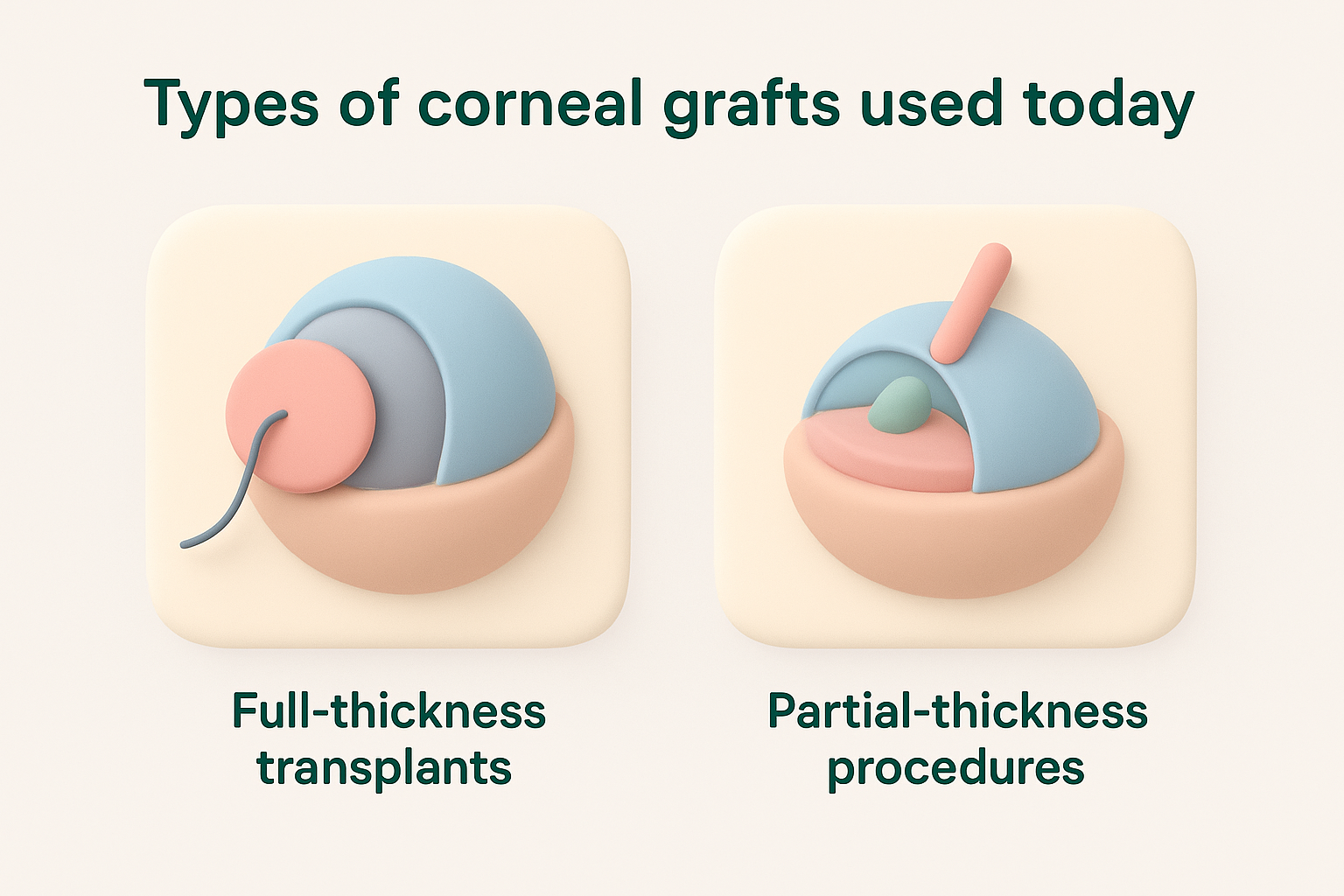
Your surgeon selects from several transplant techniques depending on which layers of your cornea need replacing. Modern corneal graft surgery has evolved dramatically, with partial-thickness procedures now accounting for the majority of transplants performed. These advanced techniques target only the diseased layers, preserving your healthy tissue and dramatically improving recovery times compared to older methods.
Full-thickness transplants
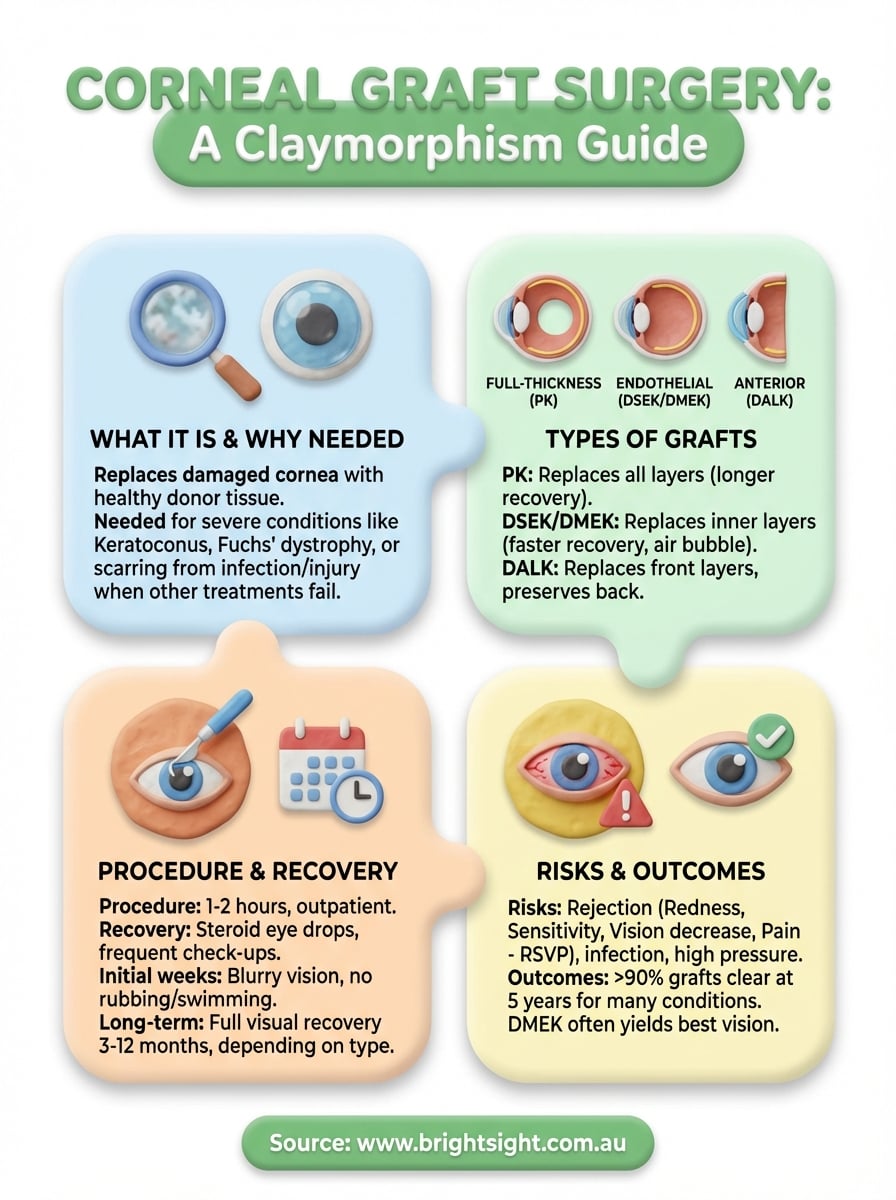
Penetrating keratoplasty (PK) replaces all five layers of your cornea with donor tissue. Surgeons perform this procedure when damage extends through your entire cornea, such as with deep scarring from injuries or severe infections. Your surgeon removes a circular section of your cornea and stitches the donor tissue into place using sutures that may stay in your eye for 12 months or longer. While recovery takes more time than partial transplants, PK remains the best option for certain conditions affecting your cornea’s full thickness.
Partial-thickness procedures
Endothelial keratoplasty techniques, including DSEK and DMEK, replace only the innermost layers of your cornea. These procedures treat conditions like Fuchs’ dystrophy that damage your corneal endothelium, the cell layer responsible for keeping your cornea clear. Your surgeon inserts the donor tissue through a small incision, positions it against your eye’s inner surface, and holds it in place with an air bubble rather than sutures.
DMEK offers the fastest visual recovery and lowest rejection rates of all corneal transplant types, with most patients achieving excellent vision within weeks.
Deep anterior lamellar keratoplasty (DALK) replaces your cornea’s front layers whilst preserving the healthy back layer, making it ideal for keratoconus patients who retain good endothelial function.
Recovery timeline and aftercare
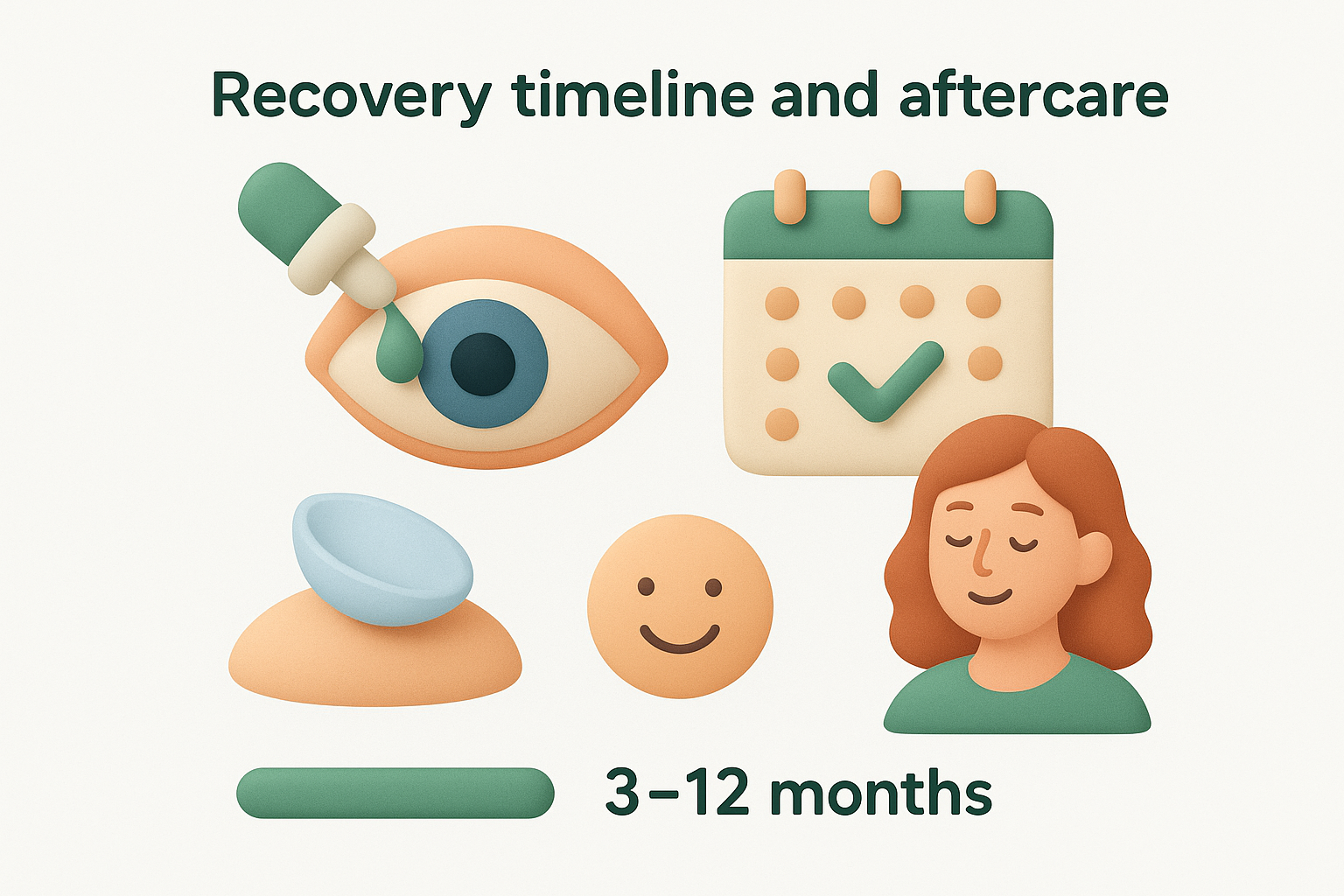
Your corneal graft requires careful attention during recovery to maximise your surgical outcome. The healing process varies significantly depending on which type of transplant you received, with partial-thickness procedures typically allowing faster visual recovery than full-thickness grafts. You’ll need to follow strict medication schedules and attend regular follow-up appointments to monitor your progress and catch any potential complications early.
First few weeks after surgery
Expect to use steroid eye drops multiple times daily to prevent rejection and reduce inflammation. Your vision will be blurry initially, improving gradually over the first few weeks as swelling subsides. You must avoid rubbing your eye, swimming, or engaging in contact sports during this critical healing period. Most patients return to light activities within days, but you’ll need someone to drive you to appointments until your surgeon clears you for driving.
Your commitment to using prescribed eye drops exactly as directed dramatically reduces your risk of graft rejection and infection.
Long-term healing process
Full visual recovery takes three to twelve months depending on your procedure type. DMEK patients often achieve excellent vision within weeks, whilst penetrating keratoplasty may require suture removal after a year before your vision stabilises completely. Continue attending regular check-ups even after you feel fully recovered, as your surgeon monitors for late complications and adjusts your treatment plan as needed.
Risks, rejection signs, and outcomes
Your corneal graft carries risks like any surgical procedure, though modern techniques have significantly reduced complication rates. Rejection remains the primary concern, occurring when your immune system attacks the donor tissue, whilst infection poses another serious threat during the healing period. Other potential complications include increased eye pressure, astigmatism requiring glasses or contact lenses, and in rare cases, graft failure necessitating repeat surgery. Understanding these risks helps you recognise problems early and seek prompt treatment.
Warning signs of rejection
You must contact your eye specialist immediately if you notice redness, pain, light sensitivity, or sudden vision loss, as these symptoms often indicate rejection. Your body may begin rejecting the donor tissue weeks, months, or even years after surgery, making lifelong monitoring essential. Early detection dramatically improves your chances of saving the graft through increased steroid treatment. Remember the acronym RSVP (Redness, Sensitivity to light, Vision decrease, Pain) to help identify rejection symptoms quickly.
Catching rejection early allows your surgeon to adjust your medication and reverse the process before permanent damage occurs.
Success rates and visual outcomes
Corneal transplant surgery achieves excellent success rates, with over 90 per cent of grafts remaining clear after five years for many conditions. Your specific outcome depends on factors including which type of transplant you received, your underlying condition, and how well you follow aftercare instructions. DMEK patients typically achieve the best visual results, often reaching 20/25 vision or better within months.
What to do next
Your decision about corneal graft surgery deserves careful consideration with an experienced specialist who understands the nuances of each transplant technique. Modern procedures like DSEK and DMEK offer excellent outcomes when performed by surgeons with specific training in these advanced methods, dramatically improving recovery times and visual results compared to traditional approaches.
Dr Capucine Odouard at Bright Sight Eye Specialists brings extensive expertise in corneal transplantation, having completed fellowship training in corneal surgery techniques. She performs both full-thickness and partial-thickness grafts, tailoring her approach to your specific condition and visual goals whilst ensuring you understand every aspect of your treatment plan from initial consultation through recovery.
If you’re experiencing declining vision from corneal disease, or your optometrist has suggested you may need transplant surgery, schedule a comprehensive evaluation. Dr Odouard will assess your condition thoroughly, explain which transplant type suits your needs best, and answer all your questions about the procedure and recovery process. Book your consultation with Dr Odouard to discuss whether corneal graft surgery is right for you.