


Your cornea is the clear, dome-shaped front surface of your eye, and when something goes wrong with it, your vision can deteriorate quickly. Whether you’re experiencing blurred sight, eye pain, or increased sensitivity to light, finding the right cornea specialist is essential for protecting your eyesight and maintaining your quality of life.
These highly trained ophthalmologists focus specifically on diagnosing and treating conditions that affect this vital structure. At Bright Sight Eye Specialists in Randwick, Dr Capucine Odouard brings extensive expertise in corneal conditions and surgery, including corneal transplants (DSEK, DMEK, corneal grafts) and laser vision correction procedures such as LASIK, PRK, and SMILE. With training from Sydney Eye Hospital and a Master of Science in Biology of Vision from University College London, she delivers evidence-based care tailored to each patient’s needs.
This article explains what a cornea specialist does, the conditions they treat, and the signs that indicate you should seek their care, giving you practical guidance to make confident decisions about your eye health.
What a cornea specialist does
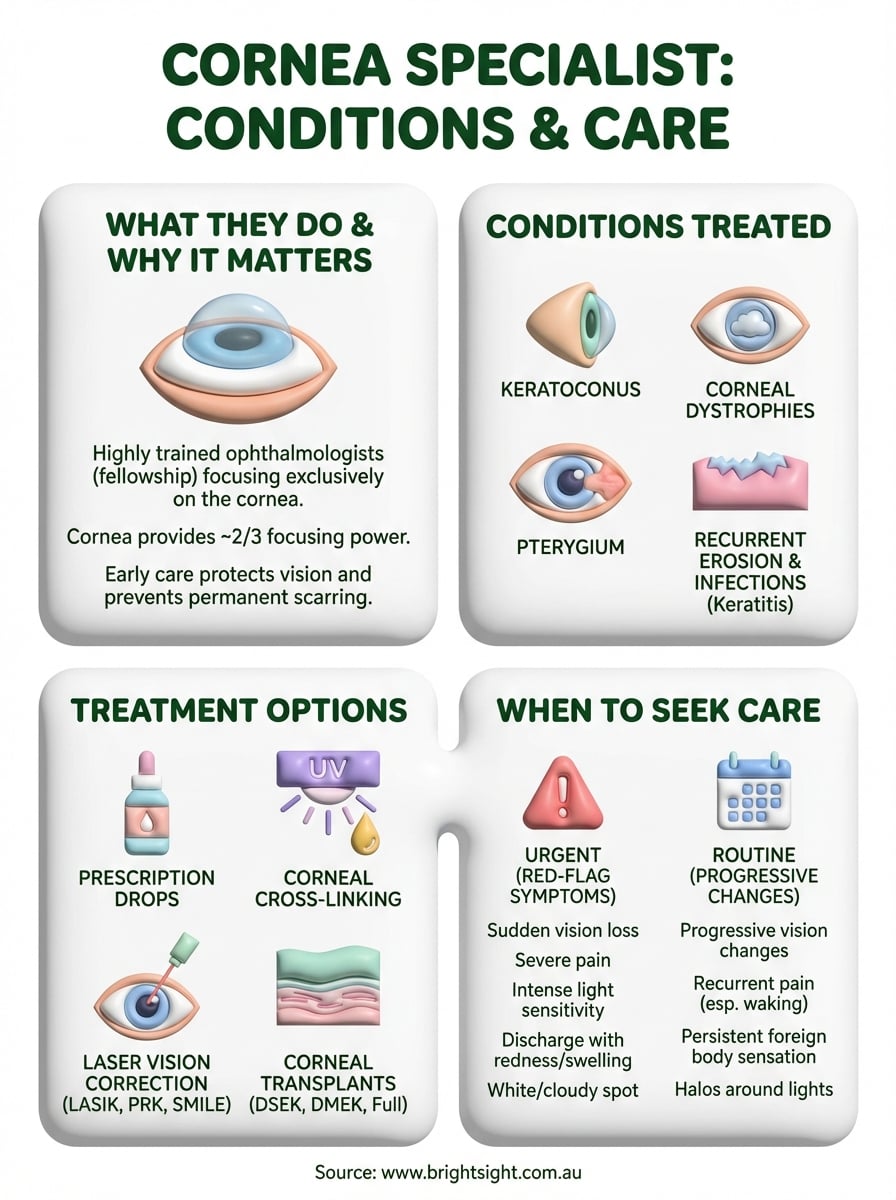
A cornea specialist (also called a corneal ophthalmologist) focuses exclusively on diagnosing and treating conditions that affect the cornea and the front surface of your eye. These medical doctors complete years of additional training beyond standard ophthalmology, allowing them to perform complex procedures that general eye doctors typically refer out. Your cornea specialist evaluates everything from minor abrasions to severe infections, scarring, and degenerative diseases that threaten your sight.

Their training and expertise
Your cornea specialist completes medical school, ophthalmology residency, and then undertakes fellowship training specifically in corneal and external eye diseases. This advanced education typically spans one to two years and covers microsurgical techniques, including corneal transplantation (DSEK, DMEK, and penetrating keratoplasty), refractive laser surgery (LASIK, PRK, SMILE), and management of complex inflammatory conditions. They also gain expertise in diagnosing rare disorders that can mimic more common problems, ensuring you receive an accurate diagnosis rather than trial-and-error treatment.
Specialized fellowship training allows cornea specialists to perform delicate procedures that require precision at the microscopic level.
What they diagnose and treat
During your consultation, a cornea specialist examines your eye using advanced imaging technology such as corneal topography, pachymetry, and anterior segment OCT scans. These tools reveal subtle changes in corneal shape, thickness, and health that standard equipment might miss. They diagnose conditions like keratoconus, corneal dystrophies, recurrent erosion syndrome, pterygium, and infectious keratitis, then develop treatment plans ranging from prescription drops to surgical intervention.
Treatment approaches vary based on your specific condition. For some patients, management involves medication and monitoring, while others benefit from procedures like corneal cross-linking to strengthen tissue or laser treatment to correct refractive errors. When medical therapy fails, your specialist may recommend transplant surgery to restore clarity and function to your cornea.
Why cornea care matters for your vision
Your cornea accounts for roughly two-thirds of your eye’s focusing power, making it essential for clear sight at every distance. When this transparent tissue becomes damaged, scarred, or diseased, light cannot pass through properly, resulting in distorted or blurred vision that glasses or contact lenses cannot fully correct. Seeking care from a cornea specialist ensures you receive targeted treatment that addresses the underlying problem rather than simply managing symptoms.
How corneal damage affects daily life
Corneal conditions directly impact your ability to perform routine tasks such as reading, driving, and recognising faces. You might experience glare from oncoming headlights, struggle with computer screens, or find yourself avoiding activities you once enjoyed. Persistent discomfort can also disrupt your sleep, affect your mood, and limit your independence, particularly if you rely on precise vision for work or hobbies.
Untreated corneal conditions can progressively worsen, making early intervention crucial for preserving your quality of life.
Long-term consequences of delayed treatment
Postponing care allows minor issues to escalate into more serious problems that require aggressive intervention. A simple infection left untreated can lead to permanent scarring, while conditions like keratoconus may progress to the point where only transplant surgery can restore function. Early diagnosis and treatment typically offer simpler solutions with better outcomes, reducing your risk of irreversible vision loss.
Conditions and treatments in cornea clinics
Your cornea specialist manages a broad spectrum of conditions that range from minor irritations to sight-threatening diseases requiring surgical intervention. Understanding what these clinics treat helps you recognise when your symptoms warrant specialist care rather than a visit to your general optometrist or GP.
Common corneal conditions
Clinics frequently address keratoconus, a progressive condition where your cornea thins and bulges into a cone shape, distorting your vision. You might also seek care for corneal dystrophies (inherited conditions causing abnormal deposits), pterygium (fleshy growths extending onto the cornea), or recurrent erosion syndrome where the surface layer repeatedly breaks down, causing sharp pain upon waking. Infections such as bacterial or fungal keratitis require urgent specialist attention to prevent permanent scarring.
Early diagnosis of corneal conditions allows your specialist to implement less invasive treatments and preserve more of your natural tissue.
Treatment approaches
Your treatment depends on your specific diagnosis and severity. Medical management includes prescription drops, ointments, or oral medications to control inflammation or infection. For structural problems, your specialist may recommend corneal cross-linking to strengthen tissue, laser procedures to reshape the surface, or surgical options like DSEK, DMEK, or full-thickness corneal transplants to replace damaged tissue with healthy donor material.
When to seek care and red-flag symptoms
Knowing when to contact a cornea specialist can mean the difference between preserving your vision and suffering permanent damage. While some symptoms develop gradually and allow time for scheduled appointments, others demand urgent attention within hours rather than days.

Symptoms requiring urgent attention
You should seek immediate care if you experience sudden vision loss, severe eye pain that doesn’t improve with rest, intense light sensitivity that forces you to keep your eyes closed, or discharge accompanied by redness and swelling. These signs often indicate serious infections or injuries that can cause irreversible scarring if left untreated. Contact your specialist’s emergency line or visit an eye hospital straightaway if you notice a white or cloudy spot on your cornea, as this may signal an active infection.
Corneal infections can progress rapidly, with some causing permanent vision loss within 24 to 48 hours if left untreated.
When to schedule a routine appointment
Book a consultation if you notice progressive vision changes that glasses cannot correct, recurrent episodes of eye pain (particularly upon waking), persistent foreign body sensation, or halos around lights. These symptoms typically indicate conditions like keratoconus or corneal dystrophies that benefit from early intervention but don’t require emergency treatment.
How to choose and prepare for your visit
Selecting the right cornea specialist starts with verifying their qualifications and experience in treating your specific condition. Look for ophthalmologists who have completed fellowship training in corneal diseases and external eye disorders, as this advanced education ensures they possess the surgical skills and diagnostic expertise your case demands. Check whether they offer the specific procedures you might need, such as corneal transplants or laser vision correction.
Finding the right specialist
Ask your optometrist or GP for referrals to experienced practitioners in your area, and research their credentials through professional organisations like the Royal Australian and New Zealand College of Ophthalmologists. Read patient reviews to understand their communication style and bedside manner, but prioritise clinical expertise and surgical outcomes over general popularity ratings.
Choosing a specialist with specific experience in your condition increases your chances of successful treatment and better long-term results.
What to bring to your appointment
Prepare a list of your current medications, including eye drops, and bring any previous eye examination records or imaging results. Write down your symptoms, when they started, and what makes them better or worse. Your insurance details and referral letter should accompany you to avoid delays in scheduling treatments or procedures.
What to do next
Taking action on corneal symptoms protects your vision and prevents minor issues from escalating into serious complications that require extensive treatment. If you’re experiencing any of the warning signs discussed in this article, don’t wait for your symptoms to worsen before seeking professional assessment. Your cornea specialist can diagnose problems early and recommend treatment options that preserve your sight while minimising discomfort and disruption to your daily routine.
Schedule a consultation if you notice changes in your vision quality, persistent eye discomfort, or any of the red-flag symptoms that warrant urgent attention. At Bright Sight Eye Specialists, Dr Capucine Odouard provides comprehensive corneal care including diagnosis, medical management, and surgical treatments such as corneal transplants and laser vision correction. Contact our Randwick clinic to book your appointment with a specialist who combines advanced training with a patient-centred approach, ensuring you receive personalised care tailored to your specific condition and lifestyle needs.