


You wake up one morning and notice something strange, a blurry spot in the centre of your vision, or colours that seem slightly washed out. These visual changes can be unsettling, especially when you’re unsure what’s causing them. If you’re experiencing disturbances in your central vision, you may be searching for answers about central serous chorioretinopathy symptoms and what they mean for your eye health.
Central serous chorioretinopathy (CSC) affects the macula, the part of your retina responsible for sharp, detailed vision. Recognising the symptoms early can make a real difference in how the condition is managed and whether active treatment becomes necessary.
At Bright Sight Eye Specialists, Dr Rahul Dubey and Dr Capucine Odouard provide expert diagnosis and treatment for retinal conditions, including CSC. This article walks you through the key symptoms to watch for, helping you understand what’s happening in your eye and when to seek professional care.
Why CSCR symptoms matter
Understanding the symptoms of central serous chorioretinopathy helps you recognise when something needs attention before it becomes more difficult to treat. Many people dismiss early visual changes as tiredness or stress, but these symptoms signal that fluid has accumulated beneath your macula, affecting your ability to see fine details clearly. The sooner you identify these changes, the better positioned you are to work with your eye specialist on the right management approach.
Impact on daily activities
CSC symptoms can make everyday tasks surprisingly difficult. Reading fine print becomes frustrating, recognising faces across a room feels uncertain, and activities like driving at night may feel less safe. You might notice that distinguishing colours becomes harder, particularly between similar shades, which can affect work tasks or hobbies that require colour precision. These disruptions to your routine aren’t just inconvenient; they’re signals that your central vision needs evaluation.
The role of early detection
Catching central serous chorioretinopathy symptoms early gives your specialist more treatment options and potentially better outcomes. When you report visual changes promptly, your ophthalmologist can assess whether the condition is likely to resolve on its own or whether intervention is necessary to prevent longer-term changes to your vision. Some cases of CSC improve without treatment, but others benefit from laser therapy or other interventions that work best when started at the right time.
Early recognition of symptoms allows for timely imaging and monitoring, which helps determine the best management strategy for your individual case.
Monitoring your symptoms also helps you and your specialist track whether the condition is improving or progressing, making it easier to adjust your care plan as needed.
What CSCR symptoms look like
The most common central serous chorioretinopathy symptoms centre around changes to your central vision, where you need clarity most. You might notice that straight lines appear wavy or bent, a phenomenon called metamorphopsia. Your vision may feel dimmer than usual, and objects might seem smaller or further away than they actually are (micropsia). These symptoms typically affect one eye at a time, though both eyes can be involved in some cases.
Central blurred vision
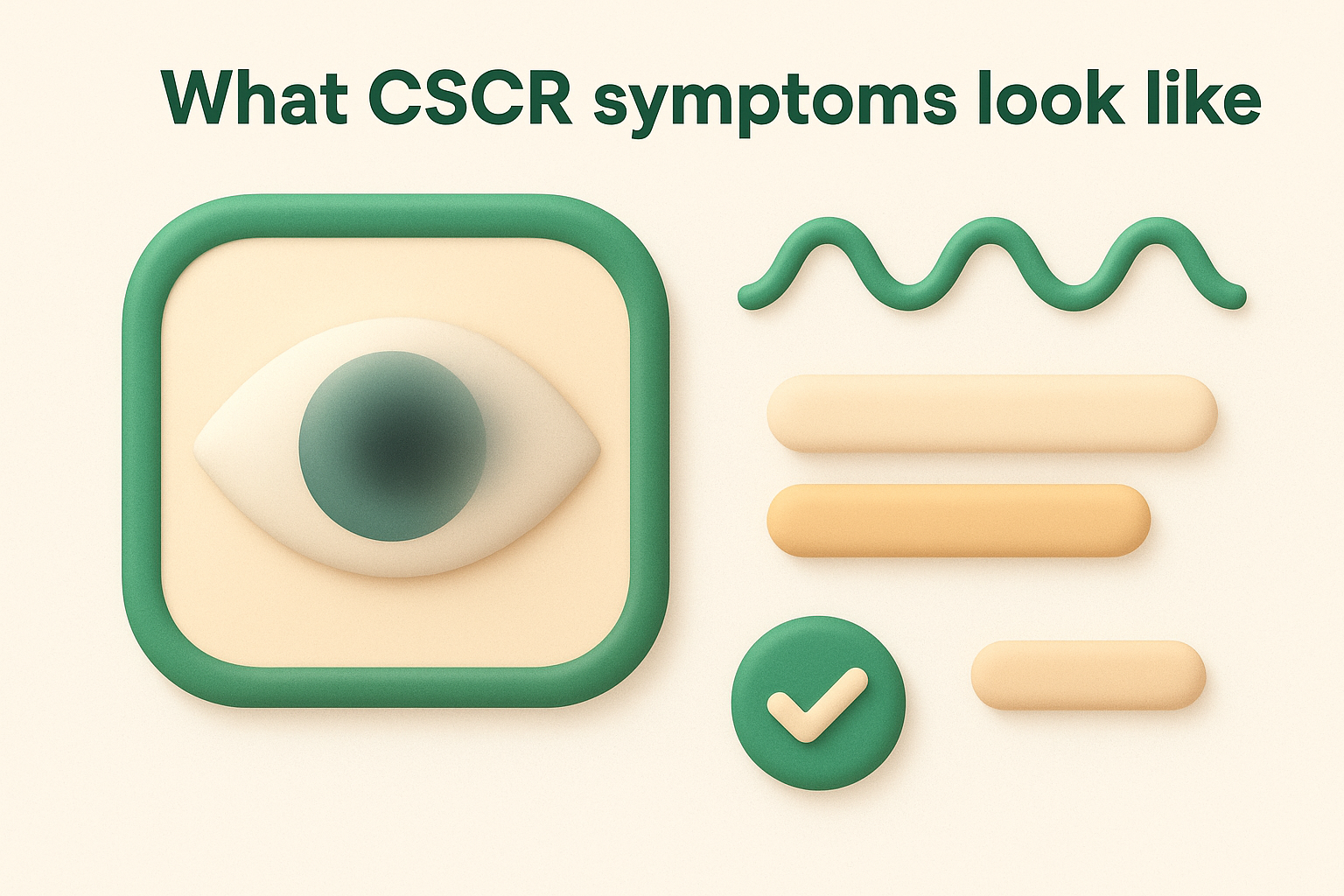
The hallmark symptom you’ll likely notice first is a blurred or grey spot in the centre of your vision. This blur sits right where you need to focus, making it difficult to read, use a computer, or recognise details in faces. The affected area appears darker or hazier than the surrounding vision, as if you’re looking through a smudged lens that won’t clear no matter how much you blink.
Visual distortions
Straight edges that should appear crisp and even may bend or ripple when you look at them directly. You might notice this when reading text, looking at doorframes, or viewing tile patterns. Colours can appear less vibrant or washed out in your affected eye compared to your other eye, and you may struggle to judge distances accurately because objects seem reduced in size.
Subtle signs people often miss
Some central serous chorioretinopathy symptoms develop so gradually that you might attribute them to fatigue, stress, or simply getting older. These quieter changes often go unnoticed until they become more pronounced, yet they can provide important early clues that something needs attention. You might dismiss a slight change in colour perception or a barely noticeable haze as temporary, when in fact these signs indicate fluid buildup beneath your macula.
Mild colour desaturation
You may notice that colours in your affected eye appear slightly duller than in your unaffected eye, but the difference feels subtle enough to question whether you’re imagining it. Comparing what each eye sees individually (by covering one eye at a time) often reveals this subtle shift in colour intensity more clearly than looking with both eyes open. This desaturation happens because the fluid beneath your retina affects how light is processed, reducing the vibrancy of what you see.
Many patients only realise they’ve been experiencing colour changes when they compare their eyes individually rather than relying on binocular vision.
Low-contrast vision difficulties
Reading in dim lighting becomes harder than it used to be, even with your glasses or contact lenses. You might struggle to distinguish between similar shades or notice that low-contrast text feels harder to process, particularly when viewing screens or printed materials in suboptimal lighting conditions.
How symptoms can change over time
Central serous chorioretinopathy symptoms don’t remain static in many cases. You might experience improvement over weeks or months as the fluid beneath your macula reabsorbs, or you could notice fluctuations in symptom severity depending on stress levels, sleep quality, and other factors. Some people find their vision returns to near-normal within a few months, whilst others develop recurrent episodes that create a pattern of improvement followed by worsening symptoms.
Acute episode progression
During the first few weeks of an acute episode, your symptoms typically reach their peak intensity before gradually improving. The central blur may feel most pronounced initially, then slowly diminish as your body begins reabsorbing the accumulated fluid. You might notice that distortions lessen first, followed by improvements in colour perception and overall clarity, though some residual changes can persist even after the fluid resolves.
Chronic and recurrent patterns
If you experience multiple episodes over months or years, the cumulative effect can lead to more persistent changes in your vision. Recurrent fluid accumulation may cause permanent alterations to your retinal structure, making symptoms less likely to resolve completely between episodes. Tracking when symptoms worsen or improve helps your specialist identify patterns and determine whether preventive treatment might reduce the frequency of recurrences.
Documenting symptom changes in a diary helps your ophthalmologist assess whether your condition follows a typical acute pattern or requires intervention for chronic recurrent disease.
How to check your vision at home
Monitoring your vision between eye appointments helps you detect changes early and provides valuable information for your specialist about how your symptoms are progressing. Simple self-tests at home can reveal whether central serous chorioretinopathy symptoms are developing or worsening, alerting you to when professional assessment becomes necessary. These tests take only a few minutes and can be repeated regularly to track any fluctuations in your visual function.
Using an Amsler grid
An Amsler grid consists of a square grid of horizontal and vertical lines with a central dot. You can find printable versions online or use digital versions on your phone or computer. Hold the grid at normal reading distance with good lighting, cover one eye, and focus on the central dot. Lines that appear wavy, bent, or missing may indicate fluid accumulation beneath your macula. Test each eye separately and note any differences between them.
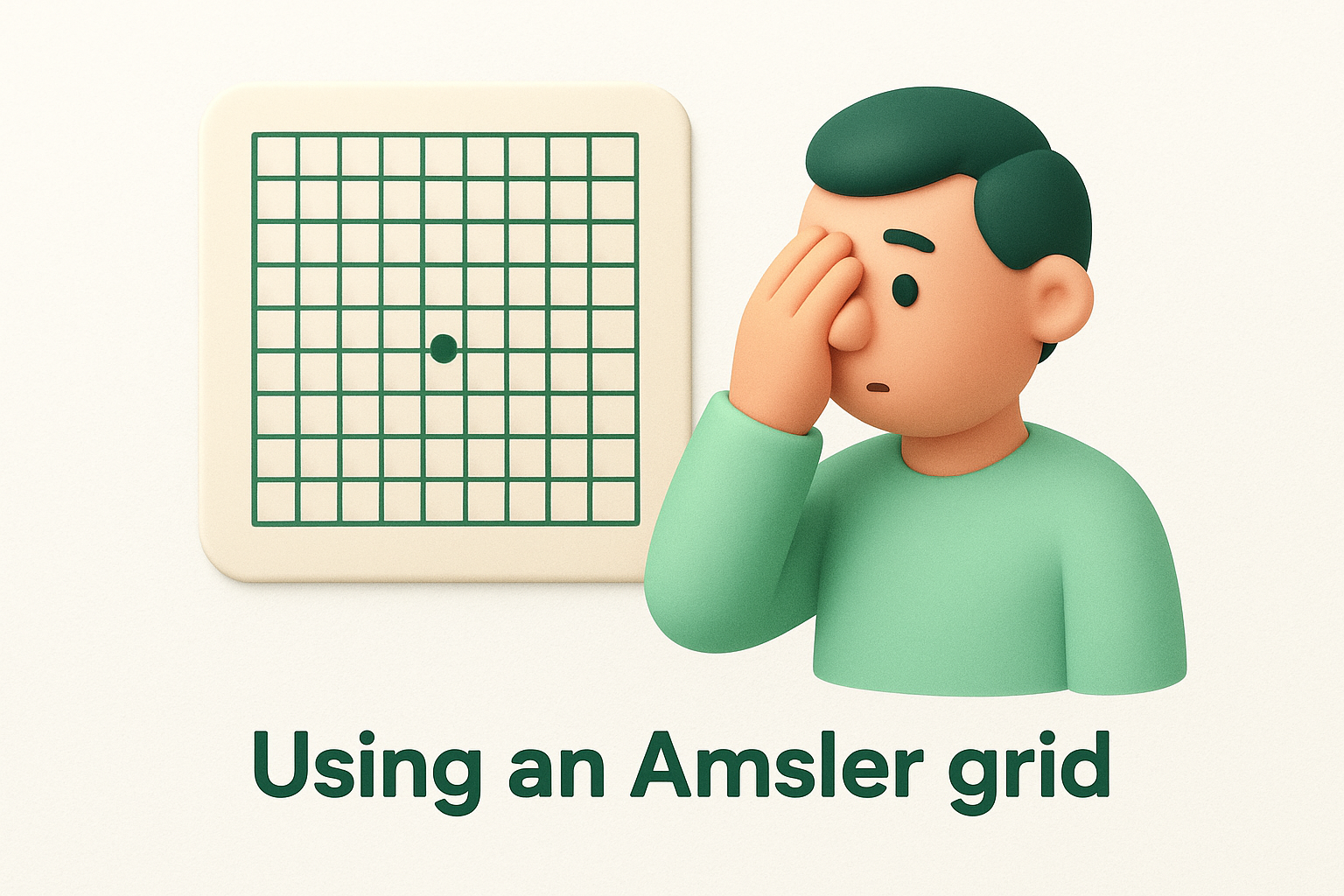
Regular Amsler grid testing helps you document subtle changes that might otherwise go unnoticed between specialist appointments.
Comparing your eyes
Cover each eye alternately whilst looking at the same object or text to compare how each eye perceives colour, clarity, and size. Note whether colours appear duller or brighter in one eye, or whether objects seem smaller or larger when viewed with your affected eye alone.
When to seek urgent eye care
Whilst many central serous chorioretinopathy symptoms develop gradually and don’t require emergency treatment, certain changes to your vision need prompt professional assessment. Understanding which symptoms warrant urgent attention helps you respond appropriately without unnecessary delay. Most CSC cases can be managed through routine appointments, but specific warning signs indicate that something more serious may be occurring alongside or instead of typical fluid accumulation.
Symptoms requiring same-day assessment
You should contact your eye specialist the same day you notice sudden severe vision loss or a rapid increase in distortion that makes it difficult to function normally. If you develop a dark curtain or shadow moving across your field of vision, this could indicate a retinal detachment rather than uncomplicated CSC. Flashes of light accompanied by a sudden increase in floaters also warrant immediate evaluation, as these symptoms can signal retinal tears or other urgent conditions.
Sudden vision changes that differ significantly from your baseline symptoms require evaluation within 24 hours to rule out complications.
When routine appointments suffice
Gradual worsening of existing symptoms or mild fluctuations in clarity typically don’t require emergency care. You can schedule a routine appointment within a few days if you notice your Amsler grid results changing slightly or if colours appear somewhat duller than last week.

Next steps
Recognising central serous chorioretinopathy symptoms gives you the information needed to make informed decisions about your eye health. The visual distortions, blurred central vision, and colour changes you’ve learned about in this article serve as your guide for understanding when your symptoms need professional evaluation. Not every visual change requires urgent care, but knowing which symptoms warrant prompt attention helps you respond appropriately.
Your vision deserves expert assessment when you notice these changes. Dr Rahul Dubey and Dr Capucine Odouard at Bright Sight Eye Specialists provide comprehensive retinal evaluations and treatment for CSC, using advanced imaging to assess fluid accumulation beneath your macula. Whether your symptoms appeared suddenly or developed gradually, proper diagnosis determines the most effective management approach for your individual case. Book your consultation at Bright Sight Eye Specialists to discuss your symptoms and explore your treatment options.