


If you’re considering cataract surgery, understanding your cataract surgery medical insurance coverage is one of the first practical steps. Many Australians aren’t sure what their private health fund actually covers, whether Medicare will help, or how much they’ll need to pay out of pocket. These details matter, knowing your options upfront can save you from unexpected bills and help you make confident decisions about your care.
At Bright Sight Eye Specialists in Randwick, we regularly guide patients through these questions. Dr Rahul Dubey and Dr Capucine Odouard offer transparent pricing and "no gap" cataract surgery options for eligible insured patients, so you know exactly where you stand before booking a procedure.
This guide breaks down what’s typically covered by private health insurance, how Medicare fits in, which policy tiers include cataract surgery, and what out-of-pocket costs you might expect. Let’s get straight to the details.
What cataract surgery medical insurance covers in Australia
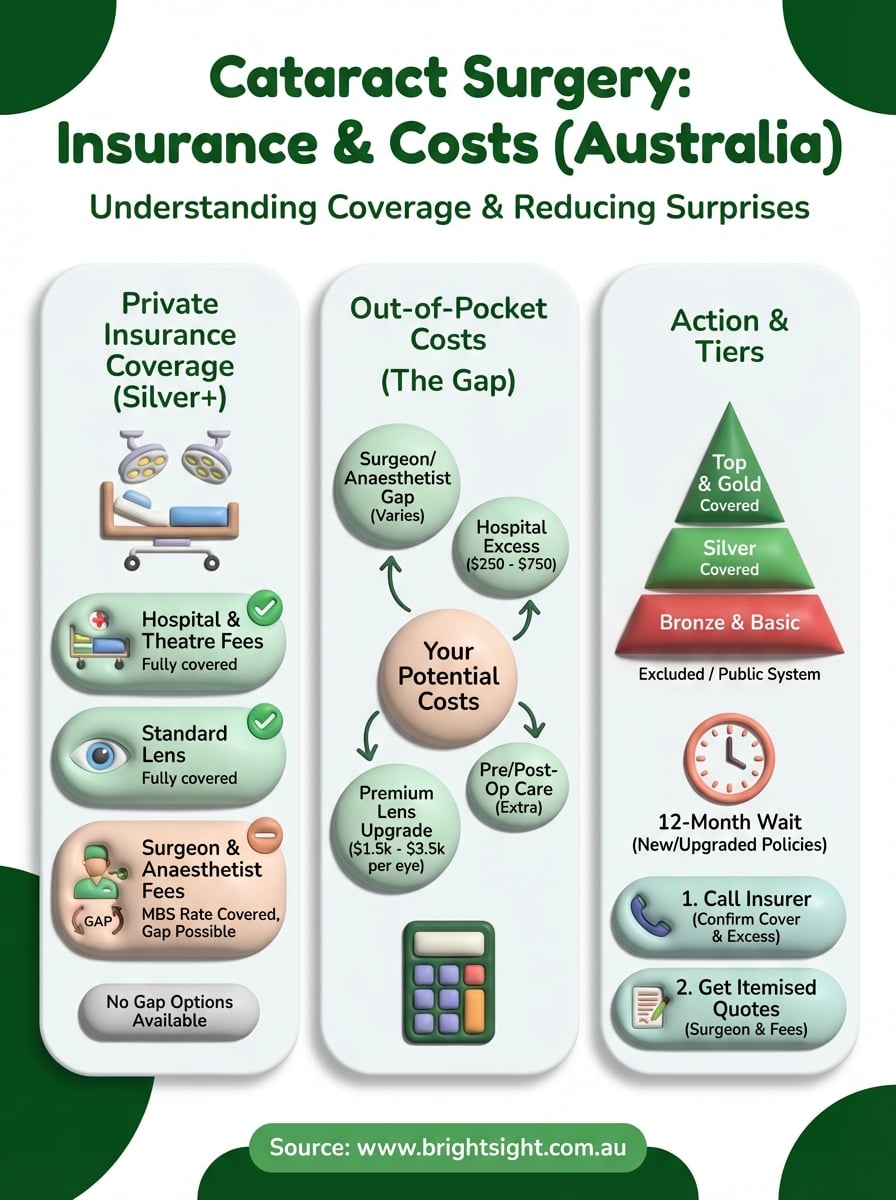
Most private health insurance policies in Australia with hospital cover include cataract surgery, but the exact benefits depend on your policy tier and whether you’re served by a contracted surgeon. Your fund typically covers part or all of the hospital accommodation costs, theatre fees, and standard lens implants. The surgeon’s fee and anaesthetist’s fee are often covered up to the Medicare Benefits Schedule (MBS) rate, though many surgeons charge above this, leaving you with a gap payment.
Standard procedure inclusions
Your policy should cover the essential components of cataract surgery: admission to a private hospital, the operating theatre, standard monofocal lens implants, and basic post-operative care. If your surgeon and hospital have an agreement with your fund, you may qualify for "no gap" surgery, meaning you pay nothing beyond your excess. These arrangements vary by insurer and provider, so it’s worth asking your surgeon’s practice directly whether they offer this option for your specific fund.
Many patients are surprised to learn that "hospital cover" doesn’t automatically mean zero out-of-pocket costs for all surgeons.
Premium lens upgrades and extras
Standard monofocal lenses are usually covered, but if you choose premium options like multifocal or extended depth of focus (EDOF) lenses, you’ll typically pay an additional out-of-pocket fee. These advanced lenses can reduce your dependence on glasses after surgery, but they fall outside standard cataract surgery medical insurance benefits. Insurers classify them as optional upgrades, so expect costs ranging from $1,500 to $3,500 per eye, depending on the lens type and your surgeon’s fees.
Medicare, public hospitals and your costs
Medicare provides a safety net for all Australians who need cataract surgery, regardless of whether you have private insurance. If you choose the public system, your surgery is fully covered through a public hospital, with no out-of-pocket costs to you. The trade-off is longer waiting times, which can range from several months to over a year depending on your clinical urgency and the hospital’s capacity.
What Medicare covers for cataract surgery
Medicare rebates apply whether you go public or private. The Medicare Benefits Schedule (MBS) sets standard rebate amounts for cataract procedures, typically covering around 75% of the MBS fee for private patients. Your cataract surgery medical insurance then covers the remaining 25% hospital component, though surgeon and anaesthetist fees often exceed the MBS rate, creating a gap.
Most Australians underestimate how long public waiting lists actually are, particularly for routine cataract cases.
Public hospital waiting times and access
Public hospitals prioritise patients based on clinical need, not the order you join the waiting list. If your cataracts significantly impair your daily function or safety, you’ll move up the queue. Otherwise, you might wait six to eighteen months or longer in some areas. Your GP or optometrist can refer you to a public ophthalmology clinic, where you’ll be assessed and placed on the waiting list.
Private health insurance tiers and waiting periods
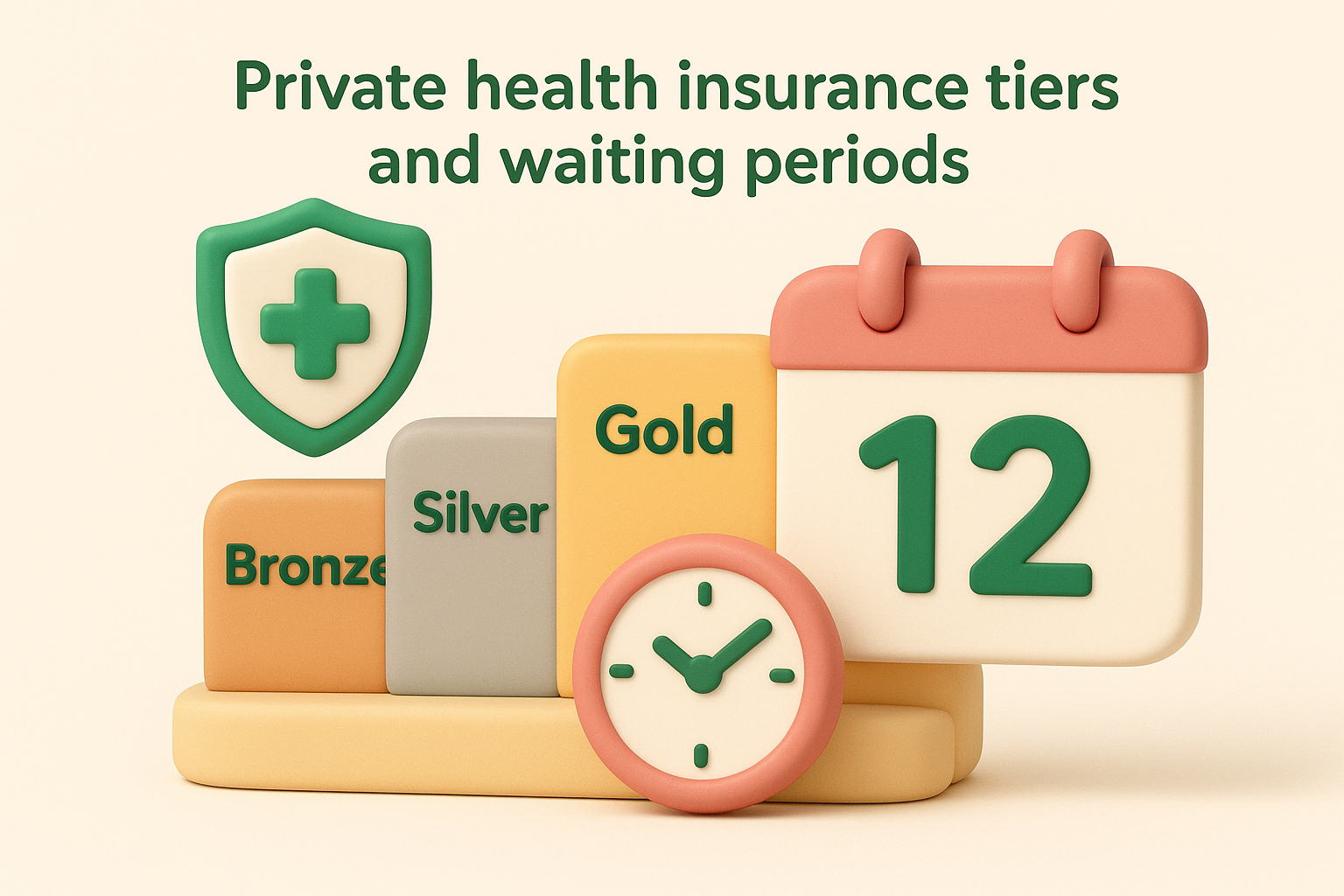
Your private health insurance tier determines whether cataract surgery is covered at all. Australian insurers categorise policies into Basic, Bronze, Silver, Gold, and sometimes Top tier. Not all tiers include eye surgery, so you’ll need to check your specific policy level before assuming you’re covered.
Basic and Bronze tiers
Basic and Bronze policies typically exclude cataract surgery altogether. These entry-level hospital covers focus on lower-cost procedures and generally won’t provide benefits for specialist eye surgery. If you’re on one of these tiers and need cataract surgery, you’ll either pay the full private cost yourself or join the public hospital waiting list.
Silver, Gold and top-tier policies
Silver policies and above almost always include cataract surgery medical insurance benefits. Gold and top-tier policies offer broader cover with fewer restrictions, often including better access to "no gap" arrangements with contracted surgeons. Your actual out-of-pocket costs still vary based on your surgeon’s fees and whether they participate in your fund’s preferred provider network.
Most people don’t realise that upgrading from Bronze to Silver can unlock cataract surgery cover within months.
Standard waiting periods you’ll face
You’ll face a 12-month waiting period for cataract surgery on new or upgraded policies. This is standard across Australian insurers for pre-existing conditions. If you’re switching funds with equivalent cover, your previous waiting periods may be recognised, allowing you to proceed sooner. Always confirm your waiting period status with your insurer before booking surgery.
What drives out-of-pocket costs
Several factors combine to determine what you’ll actually pay when you have cataract surgery under private health insurance. The surgeon’s fee and anaesthetist’s fee are the largest variables, as most specialists charge above the Medicare Benefits Schedule rate. Your out-of-pocket cost depends on whether your surgeon offers "no gap" arrangements with your specific fund, how much they charge beyond the MBS rate, and which hospital they operate in.
Surgeon and anaesthetist fees
Your surgeon typically charges a professional fee that exceeds the MBS rebate, creating a gap you’ll need to cover. This gap varies widely between surgeons, ranging from zero under "no gap" arrangements to several thousand dollars for experienced specialists. Anaesthetists also charge separately, and their fees similarly exceed MBS rates. The combined gap from both specialists usually represents the biggest portion of your out-of-pocket costs.
Many patients don’t realise that surgeon fees can vary by 300% or more within the same city.
Hospital excess and additional charges
Every private hospital admission triggers your policy excess, typically ranging from $250 to $750 depending on your fund. Some insurers waive this for "no gap" procedures. Additional charges may include pre-operative assessments, upgraded lenses, or extended post-operative care not covered by standard cataract surgery medical insurance benefits.
How to check your cover and reduce surprises
Taking three simple steps before booking your surgery will clarify your cataract surgery medical insurance benefits and prevent unexpected bills. Most confusion arises because patients don’t ask the right questions upfront, leaving them surprised when the invoices arrive weeks after their procedure.
Contact your insurer before booking
Ring your health fund’s member services line and confirm your policy tier covers cataract surgery, whether your 12-month waiting period has passed, and what your hospital excess is. Ask specifically if your chosen surgeon has a "no gap" arrangement with your fund. Get a reference number for the call and note the staff member’s name so you have a record if any coverage disputes arise later.
Most insurers can confirm your exact benefits in under five minutes, yet few patients actually make this call.
Request itemised quotes from your surgeon
Your surgeon’s practice should provide a detailed written quote showing their fee, the anaesthetist’s fee, hospital costs, and any premium lens upgrades. This quote should clearly state what Medicare and your insurer will rebate, leaving you with your expected out-of-pocket amount. If the practice can’t or won’t provide these details upfront, that’s a warning sign. Reputable specialists like those at Bright Sight Eye Specialists in Randwick routinely offer transparent pricing before you commit to surgery.
Key takeaways and next steps
Understanding your cataract surgery medical insurance coverage starts with checking your policy tier, confirming your waiting periods have passed, and requesting detailed quotes from your surgeon. Most Silver, Gold, and top-tier policies cover cataract surgery, though out-of-pocket costs vary based on surgeon fees, hospital charges, and whether you choose premium lens upgrades. Medicare provides a safety net through public hospitals with no out-of-pocket costs, but waiting times can stretch beyond twelve months.
Your next step is to ring your insurer and get confirmation of your benefits in writing. Then request itemised quotes from your surgeon’s practice so you know exactly what you’ll pay. If you’re looking for transparent pricing and "no gap" options with experienced surgeons in Sydney’s Eastern Suburbs, book a consultation at Bright Sight Eye Specialists to discuss your cataract surgery options with Dr Rahul Dubey or Dr Capucine Odouard.